Back to the Future – Reimagining the Mitsubishi i for Europe
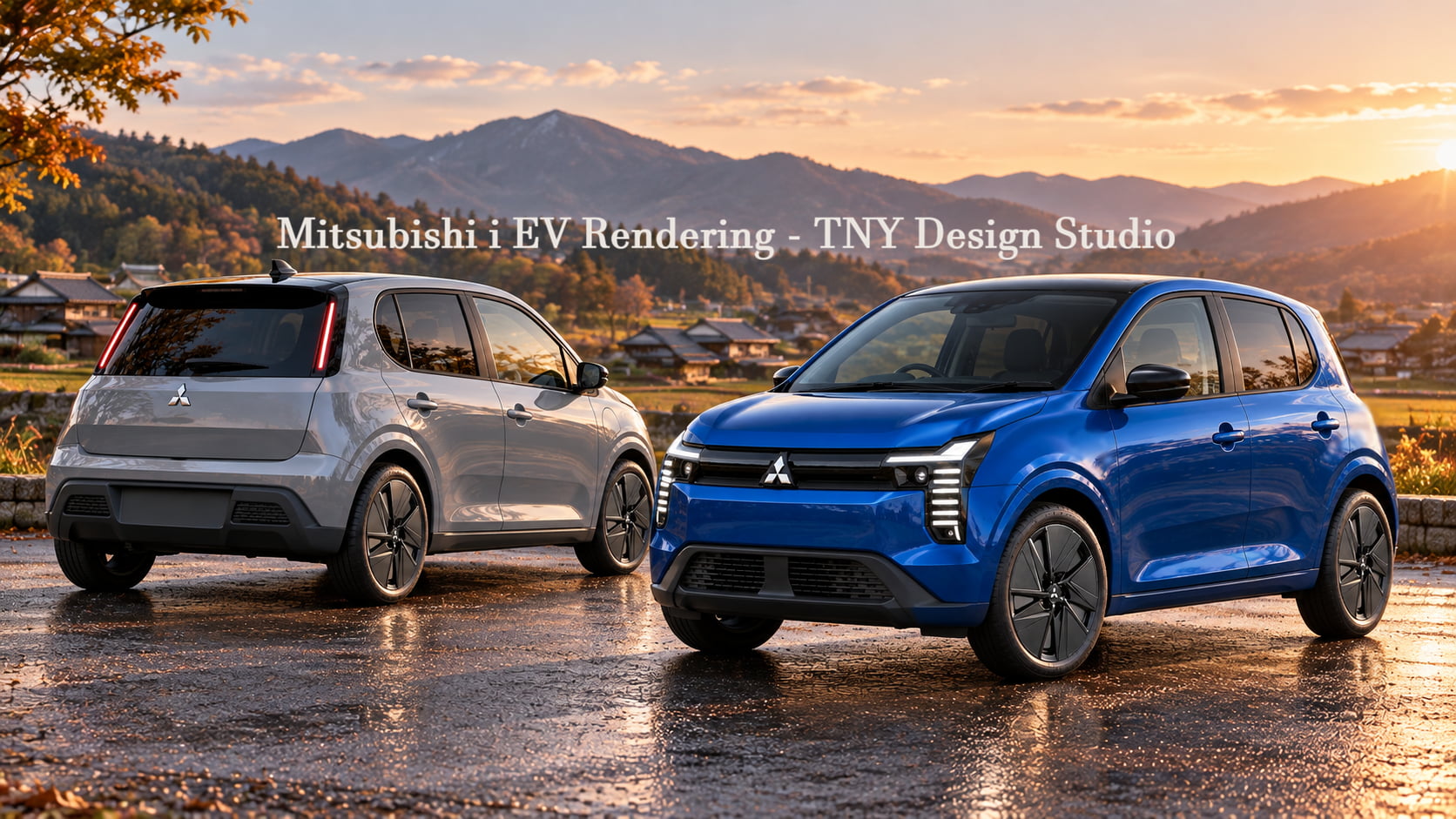
Yet a genuinely affordable city car is conspicuously absent. If Mitsubishi wants to rebuild a meaningful presence in Britain, it needs more than SUVs and pick-ups; smaller, accessible models could bring the badge back to everyday buyers.
TNY Design Studio imagines how Renault's new electric Twingo might give the Mitsubishi i a second life.
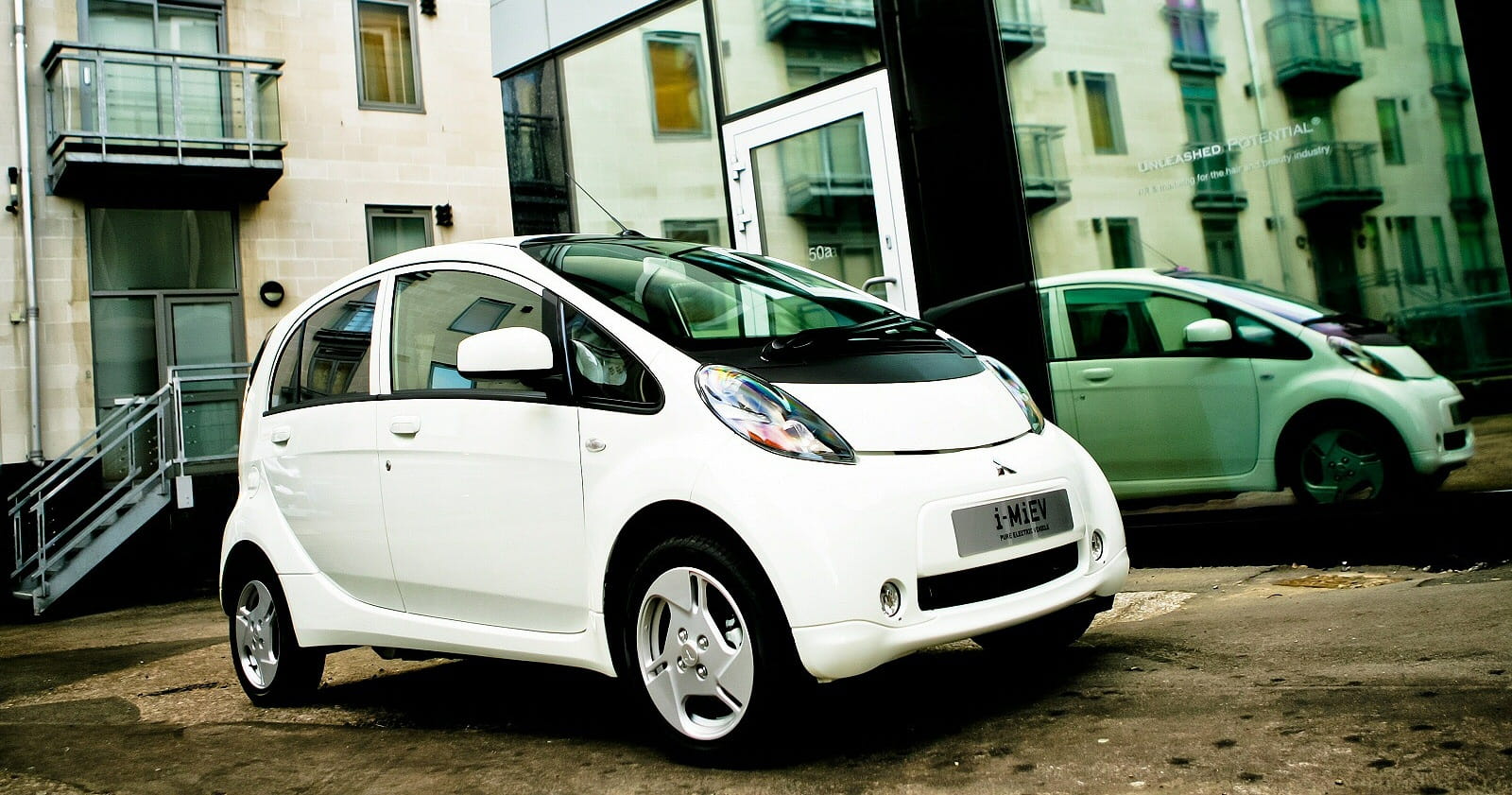
The Mitsubishi i arrived in Japan in 2006 as a kei car, measuring just 3,395mm long and 1,475mm wide. Yet its rounded, almost futuristic body concealed some remarkably clever engineering.
By positioning a 659cc three-cylinder petrol engine ahead of the rear axle, Mitsubishi could push the wheels towards the corners, achieve a 2,550mm wheelbase and create surprisingly generous space for four occupants.
Rear-wheel drive, sophisticated De Dion rear suspension and a four-speed automatic made the i rather more interesting than the average city car. Britain even received the turbocharged petrol version in 2007, priced at around £9,000, although it remained a rare sight.
More importantly for Europe, its unconventional packaging provided the perfect foundation for the electric i-MiEV, which would later underpin the Peugeot iOn and Citroën C-Zero. (Image credit: Mitsubishi)
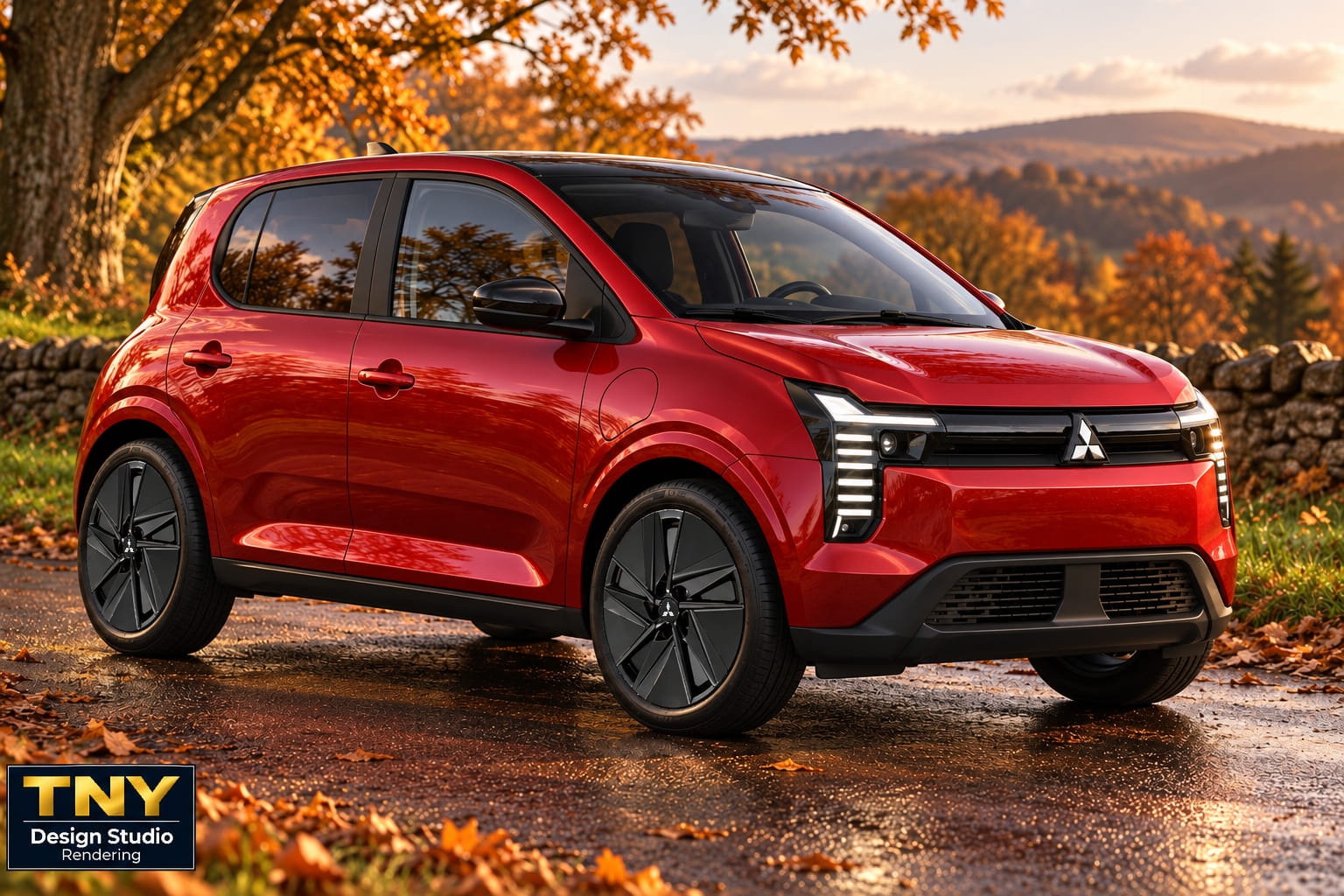
A Twingo-based i could inherit Renault's 27.5kWh LFP battery and 82PS motor, delivering up to 163 miles of WLTP range. That's a considerable improvement over the original i-MiEV's 16kWh battery, 67PS motor and 93-mile NEDC range, although the testing standards differ.
Practicality could improve too. Where the i-MiEV offered just 166 litres of boot space due partly to its rear-mounted powertrain, the Twingo provides up to 360 litres with its independently sliding rear seats pushed forward. A revived i could offer similar flexibility without sacrificing its city-friendly dimensions.
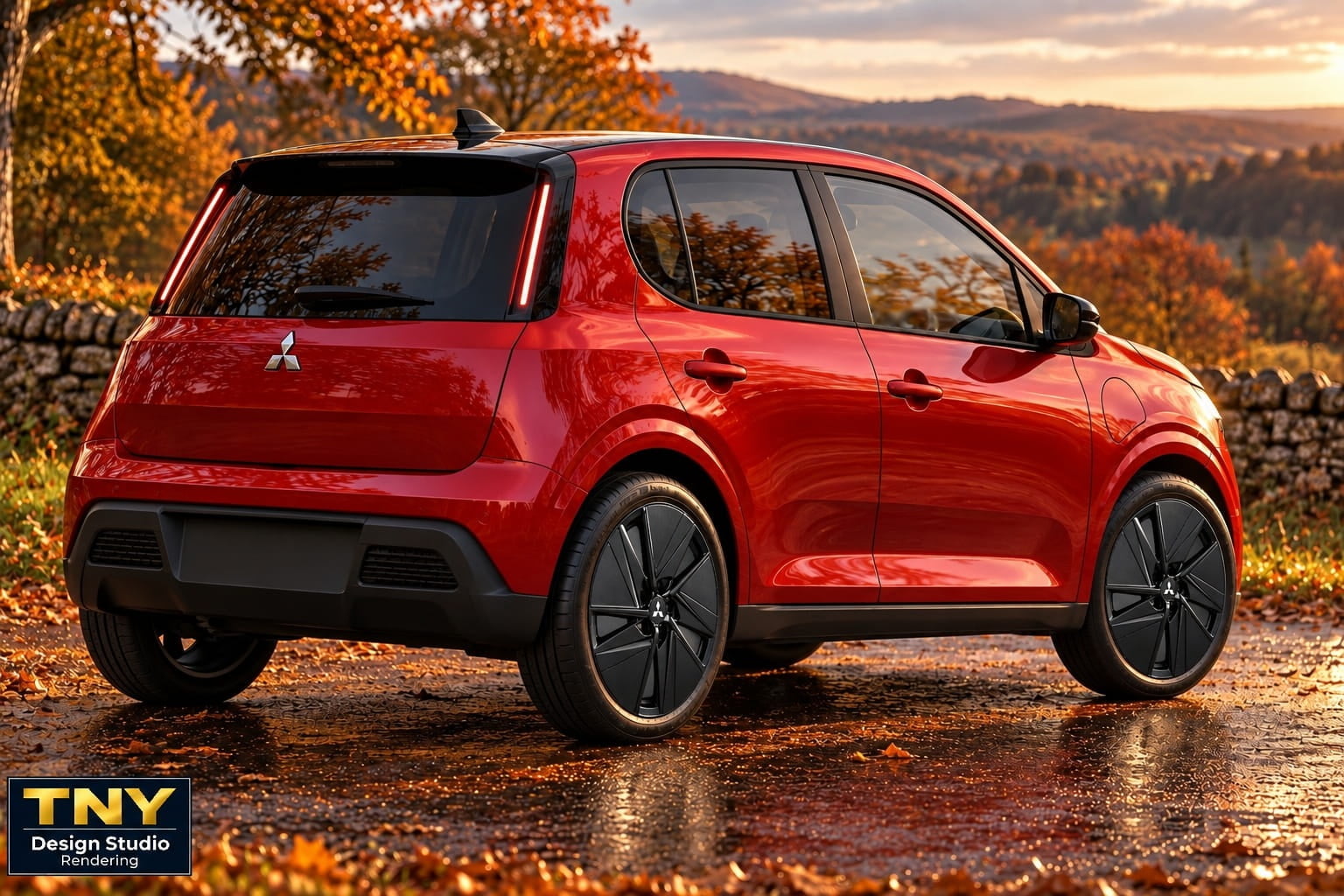
From the rear, our Mitsubishi i rendering retains one of the original car's most distinctive features: its high-mounted rear light clusters, now reimagined as slim vertical LED strips alongside the rear window. We've deliberately kept the tailgate and surrounding bodywork clean, preserving the simplicity that made the first-generation i so appealing.
There's also a logical place for it in Mitsubishi's European range. The Renault Clio-based Colt measures 4,053mm long, while the new electric Twingo is just 3,790mm, leaving a 263mm difference between the two.
A revived i could comfortably sit beneath the Colt, offering an affordable, four-seat electric city car without competing directly with its larger sibling. With Mitsubishi already relying on Renault for several European models, extending that relationship into the smallest segment seems an entirely plausible next step.
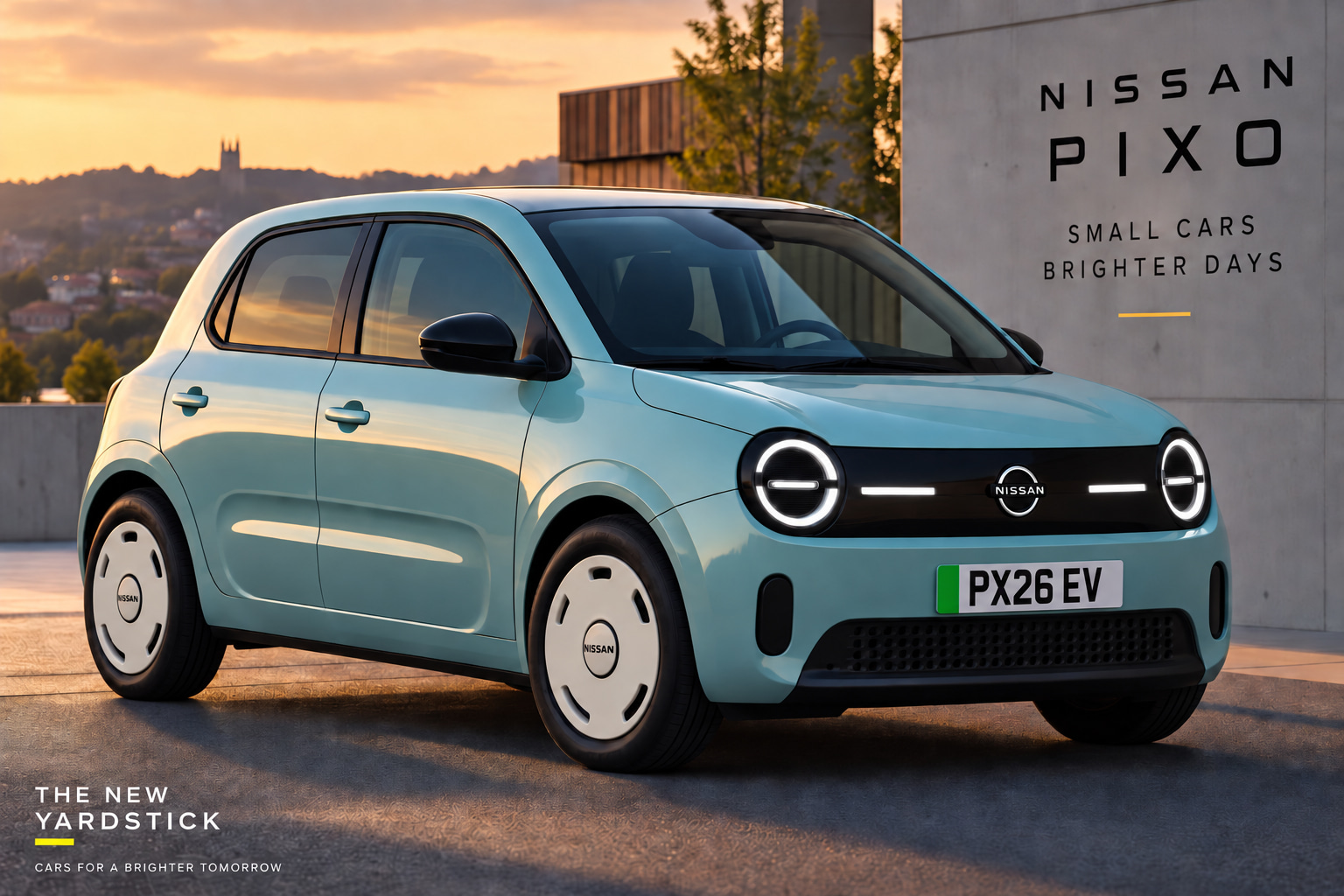
Renault's new Twingo is set to provide the foundations for a growing family of affordable electric city cars across the Renault-Nissan-Mitsubishi Alliance. The next-generation Dacia Spring and Nissan Pixo are both set to draw on the same architecture, with TNY having previously explored both models through our own Design Studio renderings.
Could Mitsubishi be the next brand to join this expanding family?
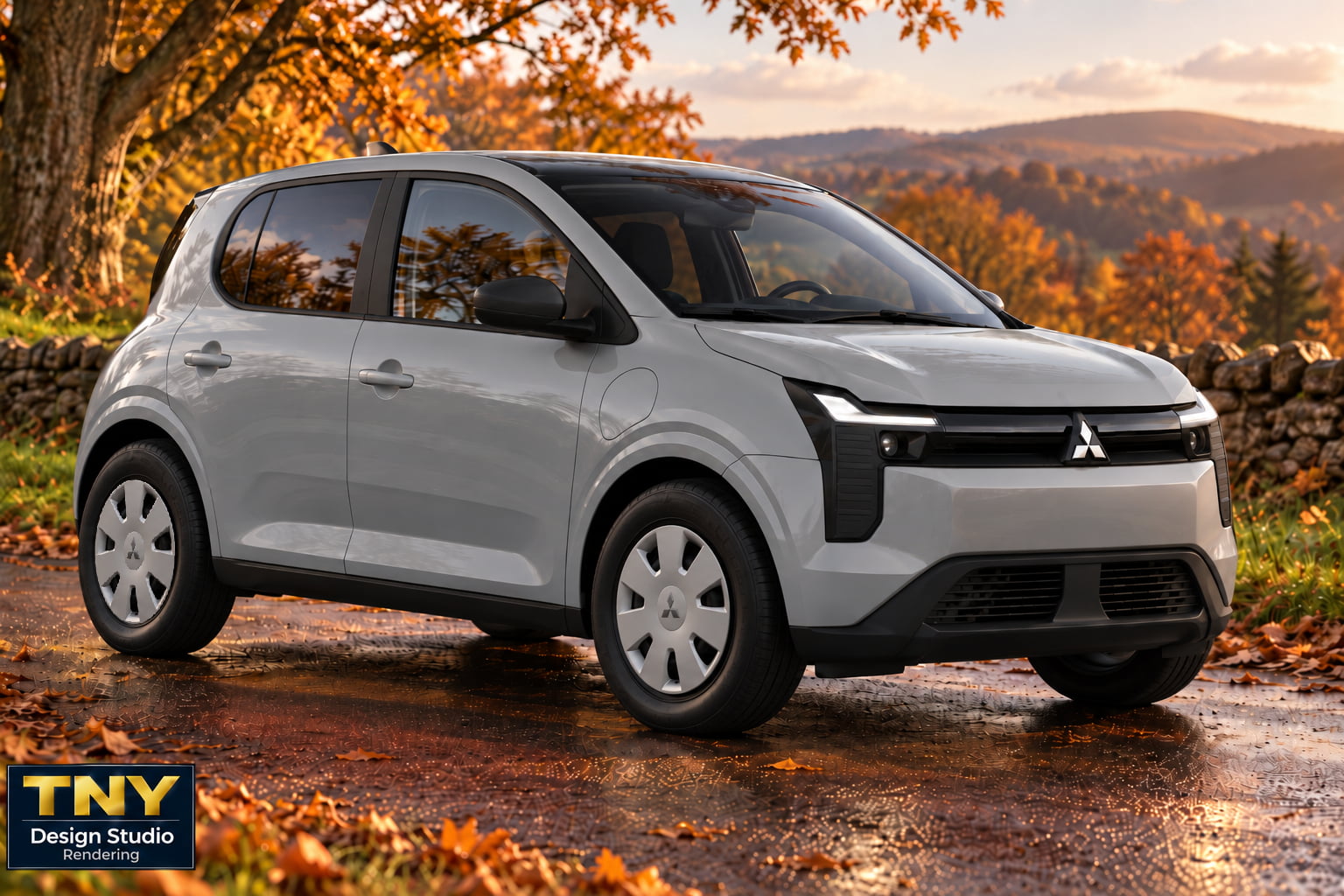
Our entry-level Mitsubishi i rendering imagines how an especially affordable version might look. Finished in non-metallic paint, with simple wheel trims, unpainted plastic mirrors and simplified lighting, it deliberately avoids unnecessary decoration.
For Mitsubishi, a revived i wouldn't need to be complicated or expensive. A straightforward, affordable electric city car could fill a noticeable gap in its European range, bringing back some of the originality and small-car ingenuity that made the first generation so interesting.
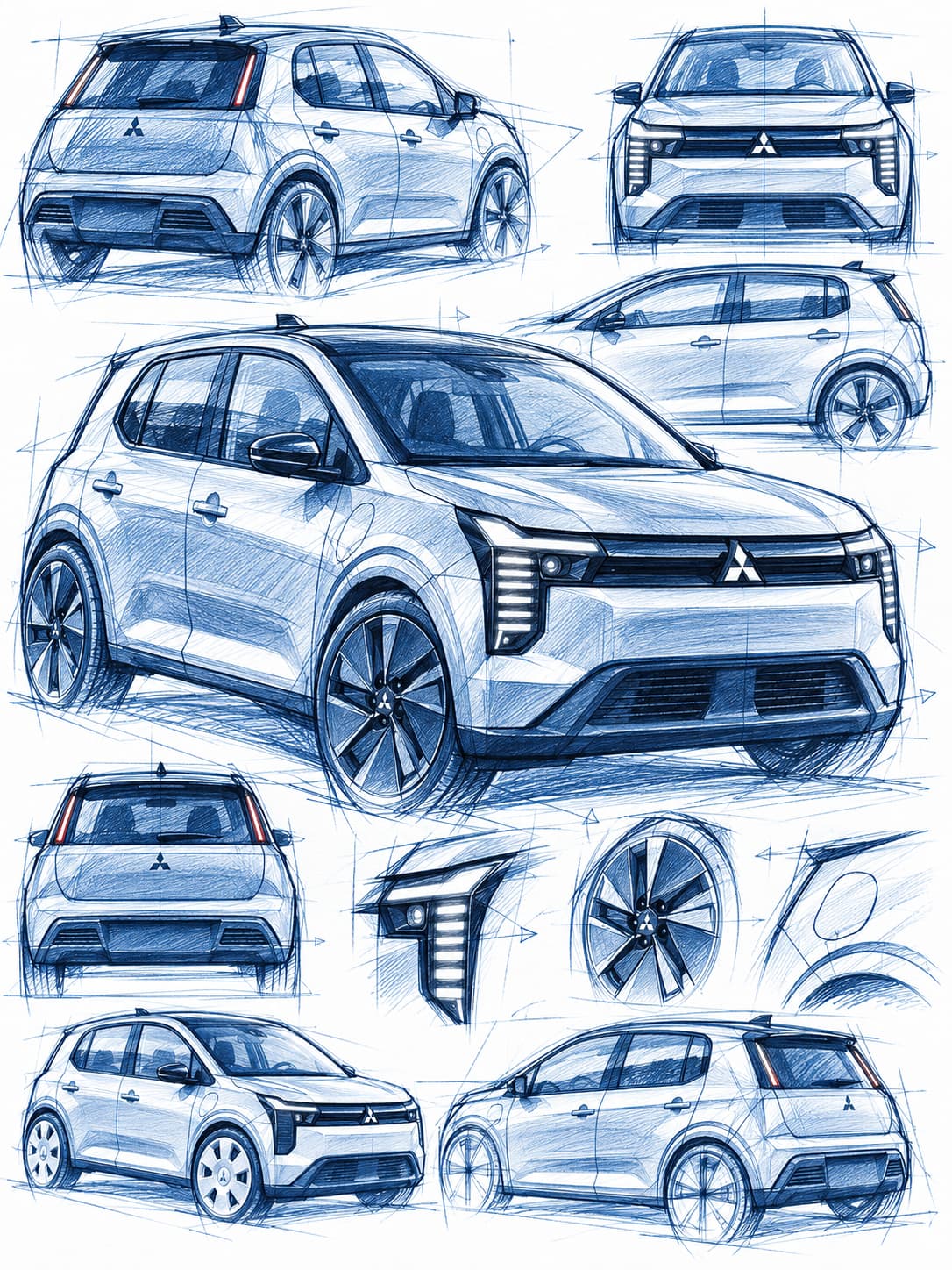
The original Mitsubishi i was a small car with big ideas, proving that clever engineering could make even the tiniest vehicles feel innovative. Its electric successor arrived ahead of its time, helping to lay the foundations for an industry-wide shift towards electrification.
Nearly two decades later, the market looks very different. Affordable electric city cars are finally beginning to gain momentum, and Mitsubishi already has access to the technology through its relationship with Renault.
A revived i wouldn't need to reinvent the electric car. It would simply need to be affordable, practical and distinctive, much like the original. For a brand rebuilding its European presence, perhaps looking back at one of its smallest creations could be a very sensible way forward.
Legal & Image Credits

TNY Design Studio is an independent editorial project. The 2028 Mitsubishi i EV designs are speculative renderings created by The New Yardstick and are not official Mitsubishi products or announcements. Proposed specifications and platform sharing are illustrative and subject to change.

Mitsubishi, Renault, Nissan, Dacia, Peugeot and Citroën names and trademarks remain the property of their respective owners. The historical Mitsubishi i-MiEV photograph is credited to Mitsubishi Motors. All concept renderings and design sketches are original TNY Design Studio illustrations.

© 2026 The New Yardstick. All rights reserved.
You should also read:
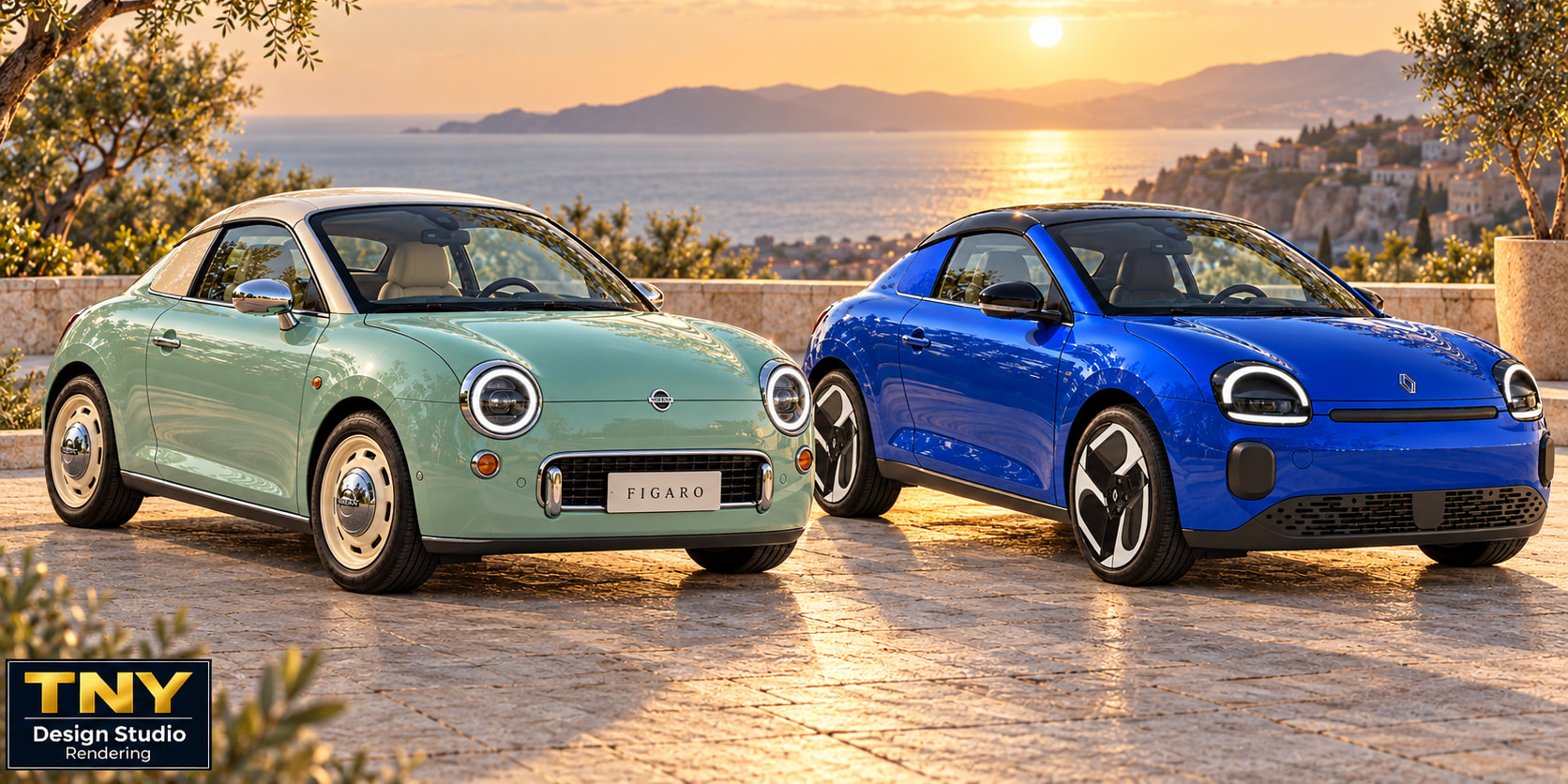
Two Forgotten Names, One Electric Future – Reimagining the Nissan Figaro and Renault Wind
Small electric cars are finally becoming affordable, but that doesn't mean they all need to follow the same formula. Renault's new Twingo E-Tech demonstrates what can be achieved with compact, cost-effective electric engineering, raising an intriguing question about what else those foundations could support. For TNY Design Studio, two names immediately spring to…
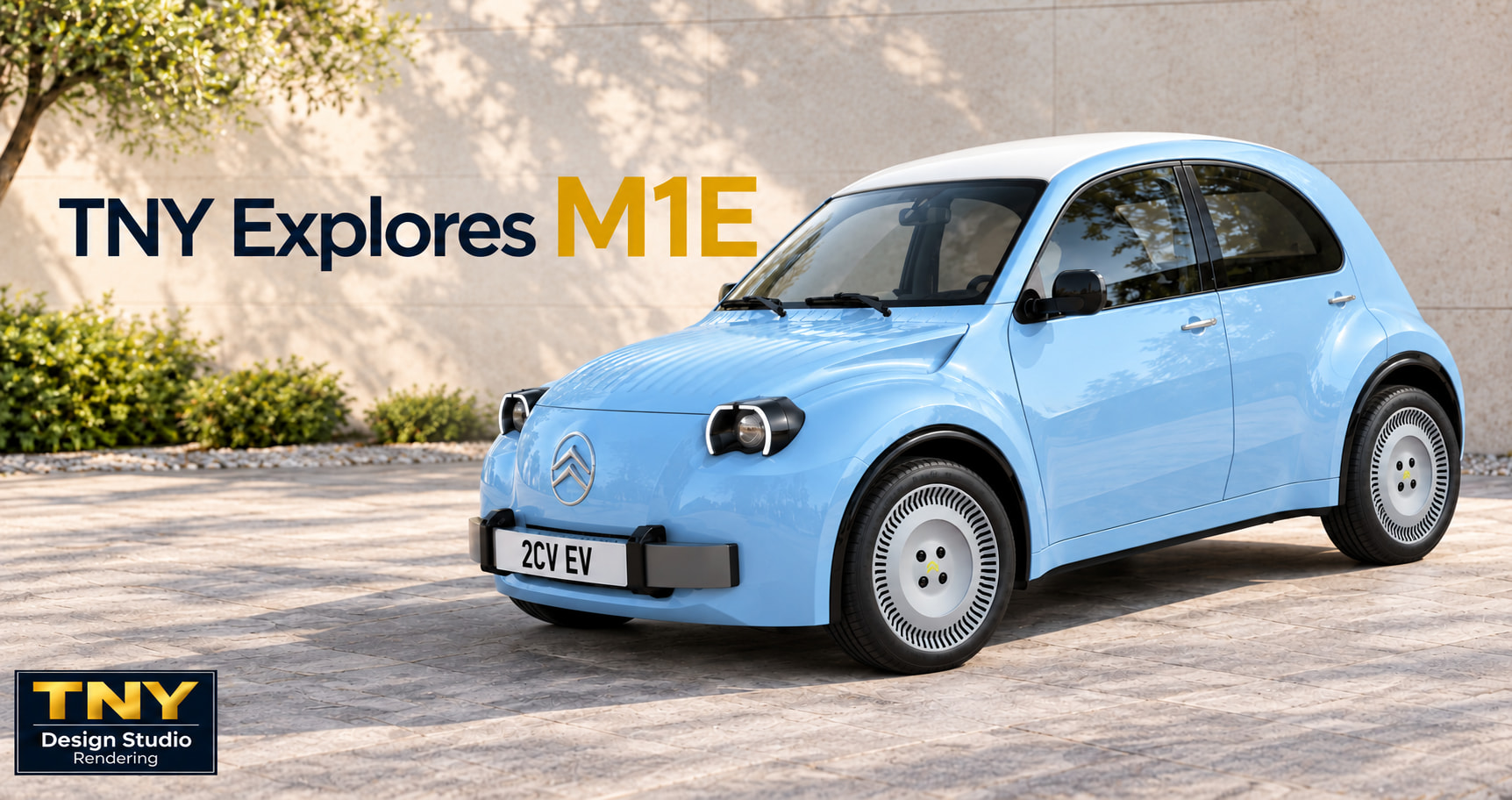
The Art of Thinking Small – Europe's M1E Revolution Explored
At the 2026 Paris Motor Show, Citroën’s reborn 2CV offered an intriguing glimpse of what Europe’s small-car market could look like from 2028. Compact, electric, full of character and targeting a price of around €15,000, it represents a return to the idea that affordable cars can still be desirable. Behind that vision…
From Bestseller to Beyond – TNY Design Studio Explores Jaecoo's Future
Few new car brands have arrived in Britain with quite the impact of Jaecoo. Launched here in January 2025, the Chinese SUV marque had already put its Jaecoo 7 at the top of the UK sales chart twice by September 2026, recording 10,813 registrations in that month alone. Behind it stands Chery,…
Taking Pride in the Little Things – Reimagining Kia’s Small Cars
Over the past 20 years, Kia has transformed itself from a budget alternative into one of the world's most successful and increasingly desirable car manufacturers. The humble Picanto has played an important part in that journey, offering affordable, practical motoring to generations of buyers. Yet its future looks increasingly uncertain, with tightening…
Škoda's Small Car Future: Cheaper EVs and a New Life for the Scala
Škoda has built its reputation on delivering practical, spacious cars at sensible prices. Models like the Scala demonstrate just how much car the Czech manufacturer can offer for the money, but as the industry moves towards electrification, can Škoda bring that same value to its smallest electric models? The incoming Epiq is…
Nissan Pixo: Could Britain's Former Cheapest Car Make an Electric Comeback?
When the Nissan Pixo arrived in the UK in 2009, it quickly established itself at the very bottom of Britain's new-car market. For the majority of its short life, it was Britain's cheapest new car — a position that became an important part of the little Nissan's identity. Then, in 2013, Dacia…
Stellantis Vans 2030: What Comes Next for Europe's Biggest Van Family?
Stellantis has built one of Europe’s biggest commercial vehicle operations, with familiar names from Citroën, Fiat, Peugeot, Opel and Vauxhall covering almost every corner of the van market. But the automotive world is changing faster than the traditionally slow-moving commercial vehicle cycle. Battery technology continues to improve, hybrid powertrains are finding new…
Rebuilding Nissan: The Cars That Could Fix Its Confusing European Line-Up
Around 20 years ago, Nissan changed the shape of the mainstream car market. The Qashqai replaced the dependable but forgettable Almera and helped turn the crossover into a family-car staple. The Juke followed, proving equally disruptive, while in 2010 the Leaf brought electric motoring to the masses. All three were game-changing cars…