Riversimple: What Comes After the Rasa? TNY Design Studio Explores
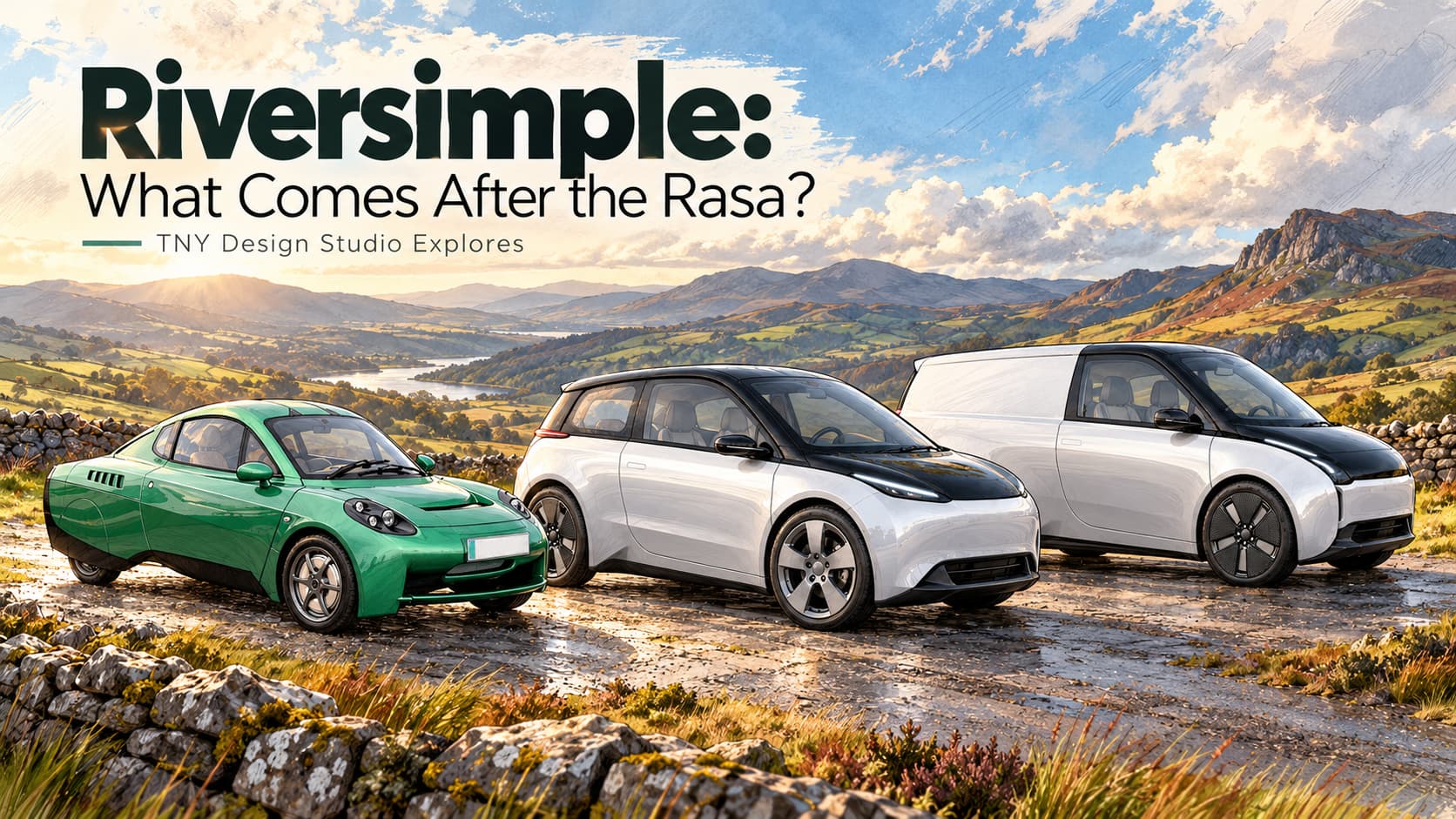
build a genuinely lightweight hydrogen-electric vehicle, make it as efficient as possible, and change the way customers pay to use it. From an astonishing one-seat economy experiment to the distinctive Rasa, the journey has been anything but ordinary.
Now, with fresh engineering projects and plans for an entire family of vehicles, TNY Design Studio looks back at the story so far and imagines what could come next for one of Wales's most intriguing automotive companies.
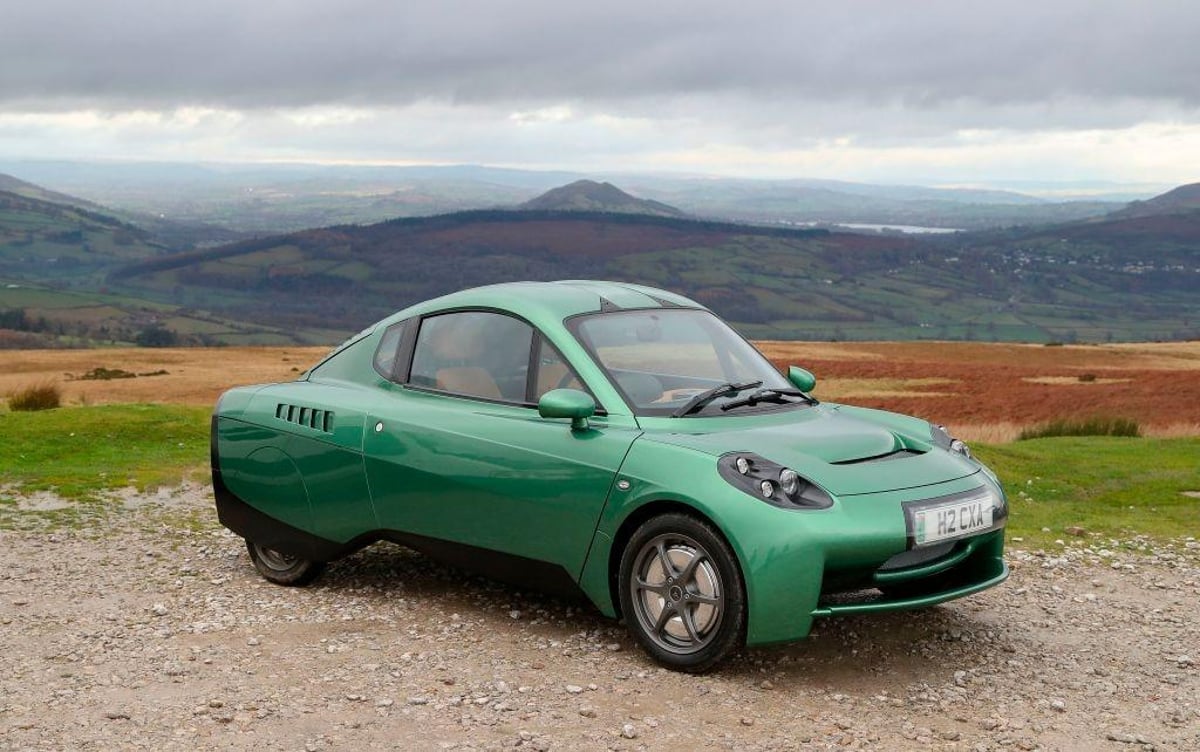
For many, the first encounter with Riversimple came in early 2016, when the remarkable Rasa Alpha was unveiled. This was no conventional small car with its petrol engine replaced by a fuel cell. The two-seater had been engineered around efficiency from the outset, with a lightweight composite structure, four in-wheel electric motors and supercapacitors to capture braking energy and support acceleration.
The Alpha used an 8kW hydrogen fuel cell to sustain cruising and replenish stored energy. Riversimple quoted 0–60mph in a little over nine seconds, while the Rasa aimed for a range of roughly 300 miles on just 1.5kg of hydrogen and refuelling measured in minutes rather than hours. These were company targets rather than certified production-car figures.
The next important step was the Rasa Beta, unveiled in 2019 ahead of public trials beginning in 2020. It featured a larger 12kW fuel cell and further refinements to packaging, software and energy management. Trial vehicles gathered valuable experience through projects in Abergavenny and Pembrokeshire, helping transform the Rasa from an experimental concept into a working test bed for Riversimple's wider ambitions.
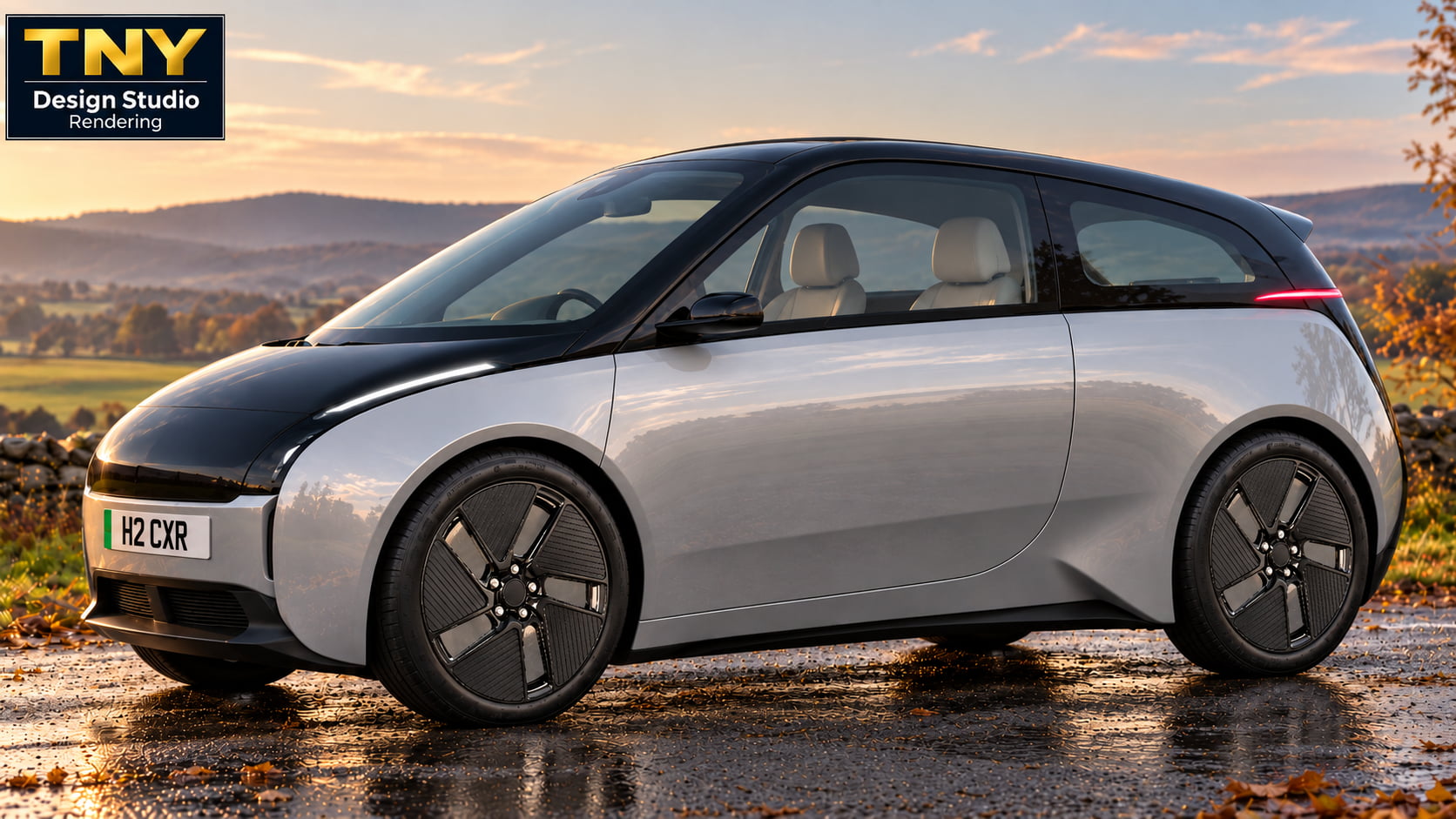
That brings us to our first Design Studio rendering: a compact, more conventional two-seat Riversimple hatchback. We've retained the brand's flowing surfaces but imagined an everyday shape with a more useful rear end. The result is less experimental than the Rasa. It asks a simple question: if Riversimple wants to bring hydrogen motoring to ordinary drivers, could a small, efficient runabout be the right starting point?
It's not a model invented entirely from thin air. Riversimple's own waiting-list page outlines a proposed two-door, two-seat hatchback with a minimum 330-mile range, a targeted 0–60mph time of 9.5 seconds and a three-minute refuelling time. The company says its proposed subscription and mileage charges are intended to deliver total running costs comparable with a basic petrol MINI. That is a target for the complete cost of motoring, not an announced vehicle purchase price.
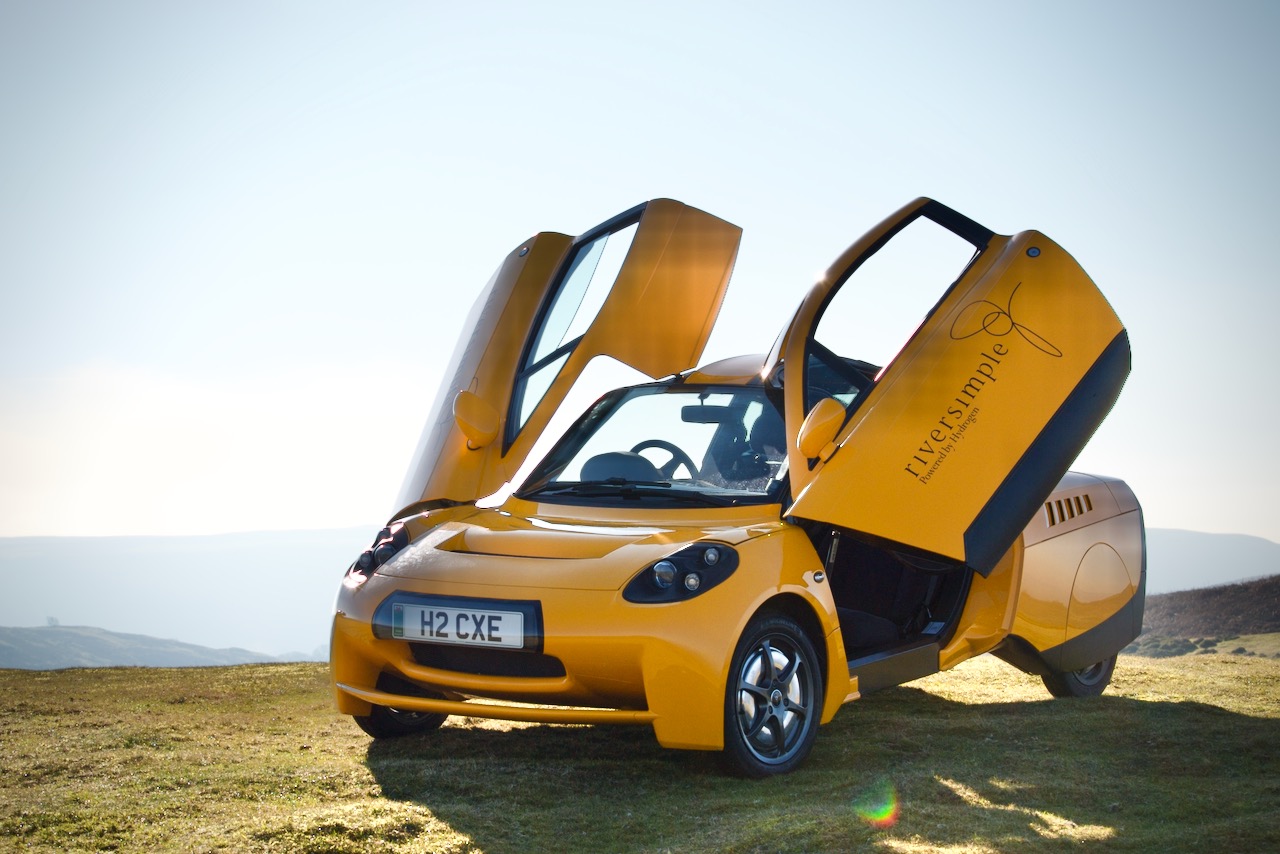
Riversimple's planned business model is almost as unusual as its cars. Rather than selling the vehicle to the customer, the company intends to retain ownership and charge a fixed monthly subscription plus a mileage rate.
Its proposed package includes insurance, maintenance, tyres and even hydrogen fuel. The driver pays to use the car rather than to buy it outright. Riversimple explains its proposed subscription service on its website.
A vehicle that lasts longer can potentially serve several subscribers during its lifetime. Of course, that raises a new challenge too: Riversimple would need the capital to manufacture and retain a fleet of vehicles, rather than simply collecting a conventional sale price. For this model to succeed, the economics must work in the real world, not just on paper.
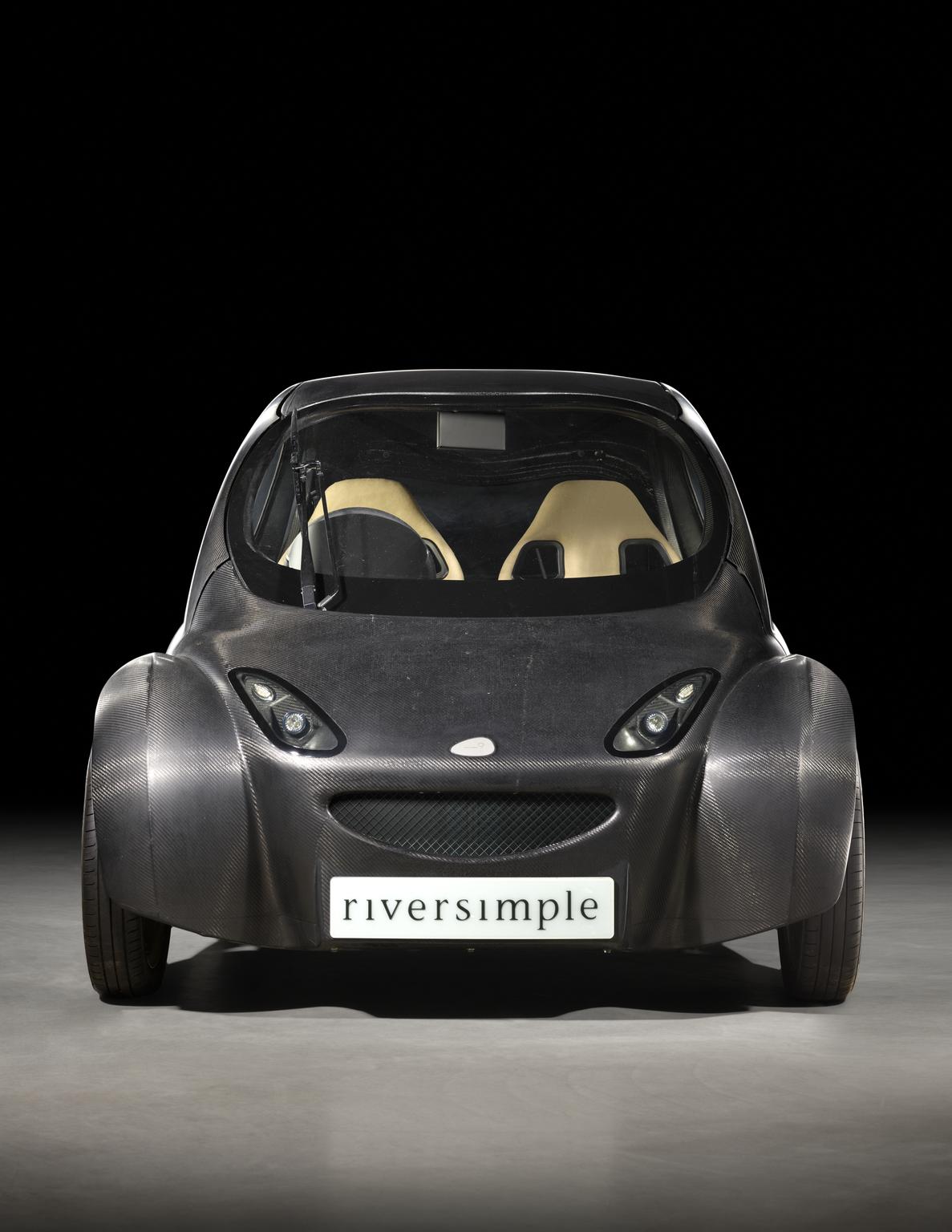
To understand the Rasa, it's worth travelling back to 2009. The Riversimple Hyrban was a compact, two-seat technology demonstrator developed over the following years to test the company's network-electric approach. Its 6kW powertrain combined a hydrogen fuel cell with supercapacitors, using stored braking energy for bursts of acceleration while the fuel cell handled more constant demands.
Riversimple quoted 0–50mph in around eight seconds and a 50mph cruising capability. They aren't dazzling performance figures by modern standards, but for such a tiny fuel-cell system they represented an important achievement.
The Hyrban demonstrated that remarkable efficiency did not necessarily have to mean an impractically slow car. One example became part of the Science Museum's collection — a fitting recognition of an unusual piece of British engineering.
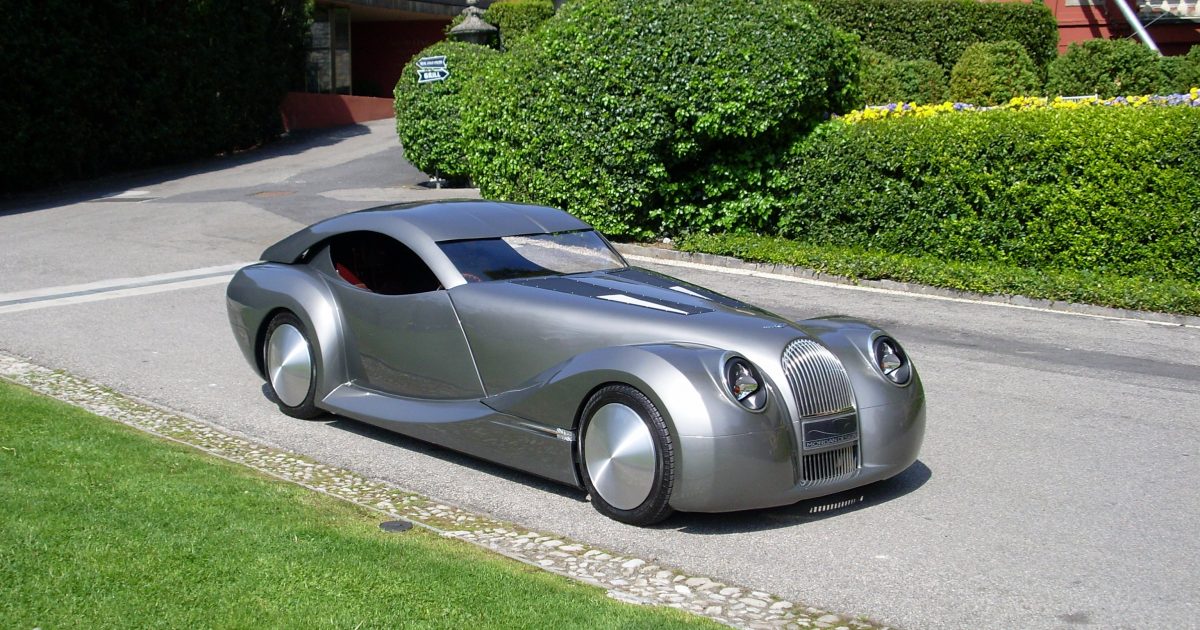
Riversimple's history also includes one of Britain's most traditional sports-car names. Between 2005 and 2008, Hugo Spowers and collaborators including the Morgan Motor Company worked on the extraordinary Morgan LIFECar — a research project designed to explore how hydrogen-electric technology could meet the expectations of a lightweight sports car.
Revealed at the 2008 Geneva Motor Show, the LIFECar brought together Morgan's distinctive approach to car design with advanced fuel-cell research. It was a development demonstrator, not a showroom model, but it helped show that hydrogen propulsion could be interesting for reasons other than economy alone. Behind that striking bodywork lay the early thinking that would eventually feed into the much smaller Hyrban and Rasa.
Hugo Spowers had established OScar Automotive in the early 2000s after a career in motorsport; the business became Riversimple in 2007. By 2026, the venture's roots therefore stretched back roughly a quarter of a century. It's a remarkably long period of continuous experimentation for a small independent automotive project, and one that makes the company's persistence especially noteworthy.
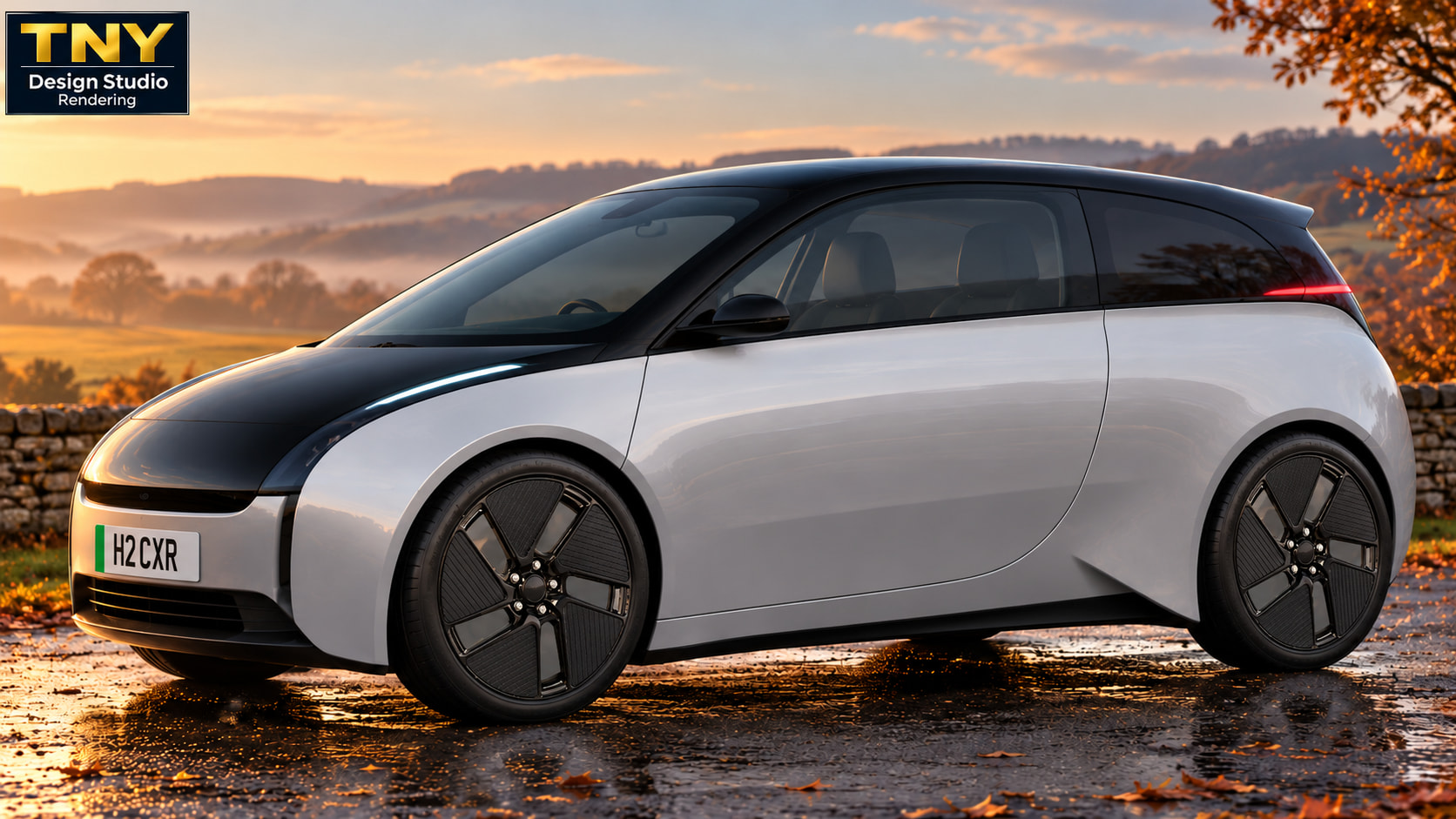
Our second new rendering asks what happens when Riversimple goes beyond two seats. Until now, its best-known experimental cars have favoured small passenger compartments and very low weight. That's helped efficiency, packaging and aerodynamics, but it also restricts the number of people who can use them. A genuinely practical four-seater could introduce Riversimple to a far wider audience.
Again, there is real substance behind the speculation. Riversimple's own proposed range includes a two-door, four-seat hatchback with a minimum 300-mile range and a targeted 0–60mph time of 10.5 seconds. The company indicates that its subscription and mileage charges would be about 5% higher than for the two-seater. If achievable, that's an intriguing trade-off for two extra seats.
And there's an encouraging new development. In 2026, Riversimple announced its leadership of the £1.7 million ZELLOR project, aiming to demonstrate a four-seat hydrogen-electric vehicle weighing less than 1,000kg and capable of more than 400 miles.
These are much larger and heavier vehicles than Riversimple's designs, but they underline that fuel-cell development continues across the industry. Perhaps a tiny Welsh manufacturer could find its own place in that market.
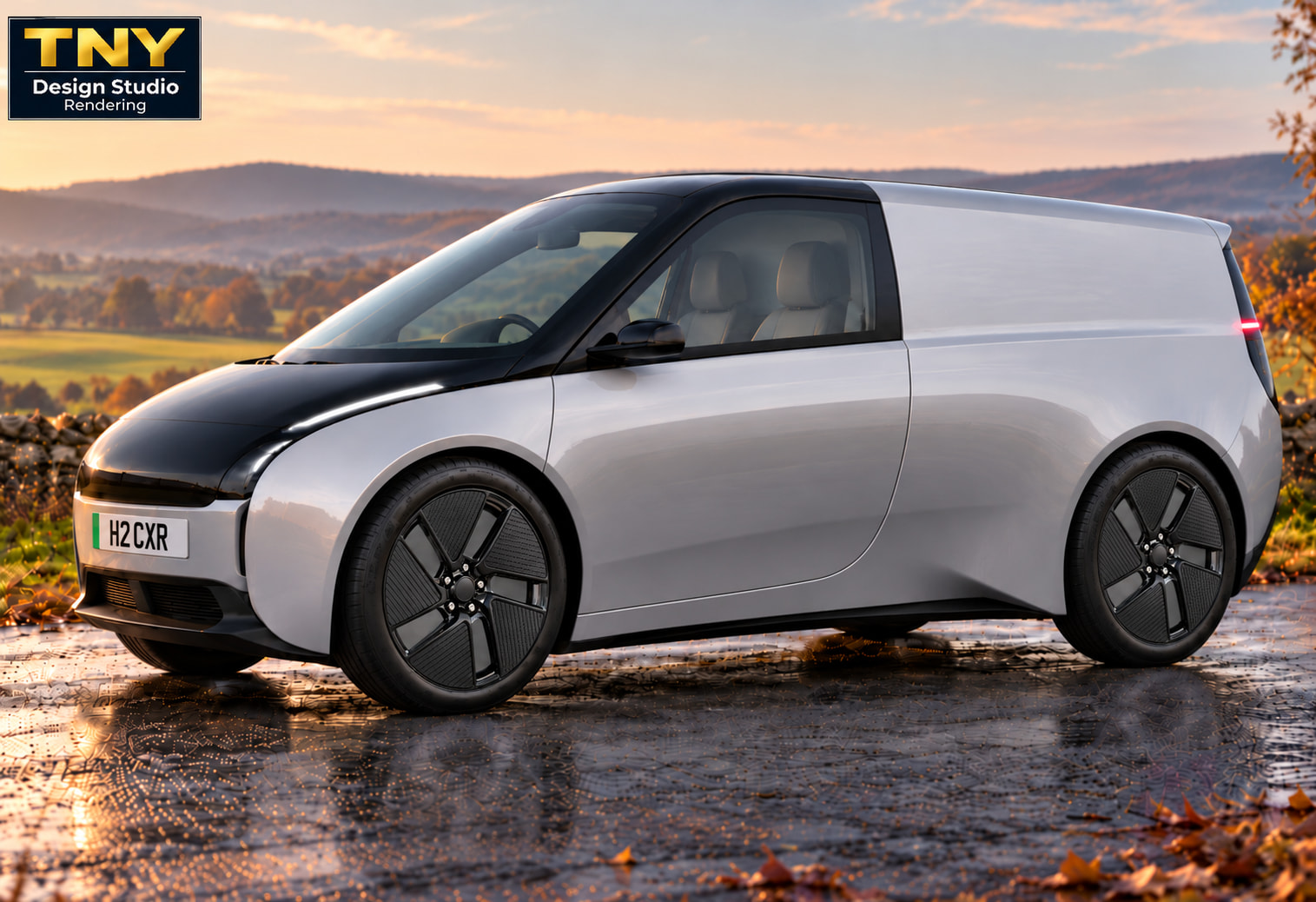
The third TNY design is a compact, two-seat commercial van. We've retained the passenger car's front end and overall height while extending and squaring off the rear bodywork to create a more useful load space. A small van doesn't need sports-car acceleration or luxury equipment; for urban deliveries and local services, ease of use, running costs and availability often matter more.
Riversimple is already considering this category. Its official waiting list includes a small runabout van with the same projected range, performance and subscription pricing as the two-seat hatchback. Shared engineering could therefore become an important part of a future vehicle family, although Riversimple has not confirmed final production specifications, dimensions or payload capacities.
Hydrogen also has a foothold in British commercial transport. Northern Ireland manufacturer Wrightbus builds fuel-cell buses including the StreetDeck Hydroliner, with examples used in UK public transport.
Larger fleet operators can sometimes support dedicated refuelling facilities and predictable routes, something private motorists rarely can. A lightweight Riversimple van could suit that localised model, especially where other hydrogen vehicles already operate.
However, a bus depot's hydrogen pump is not automatically a public filling station, and hydrogen supply remains a major challenge. Fleet growth might help justify new infrastructure, but will not necessarily create a convenient national network for car drivers. That's why a regional deployment strategy may be a more realistic first step than an immediate nationwide launch.
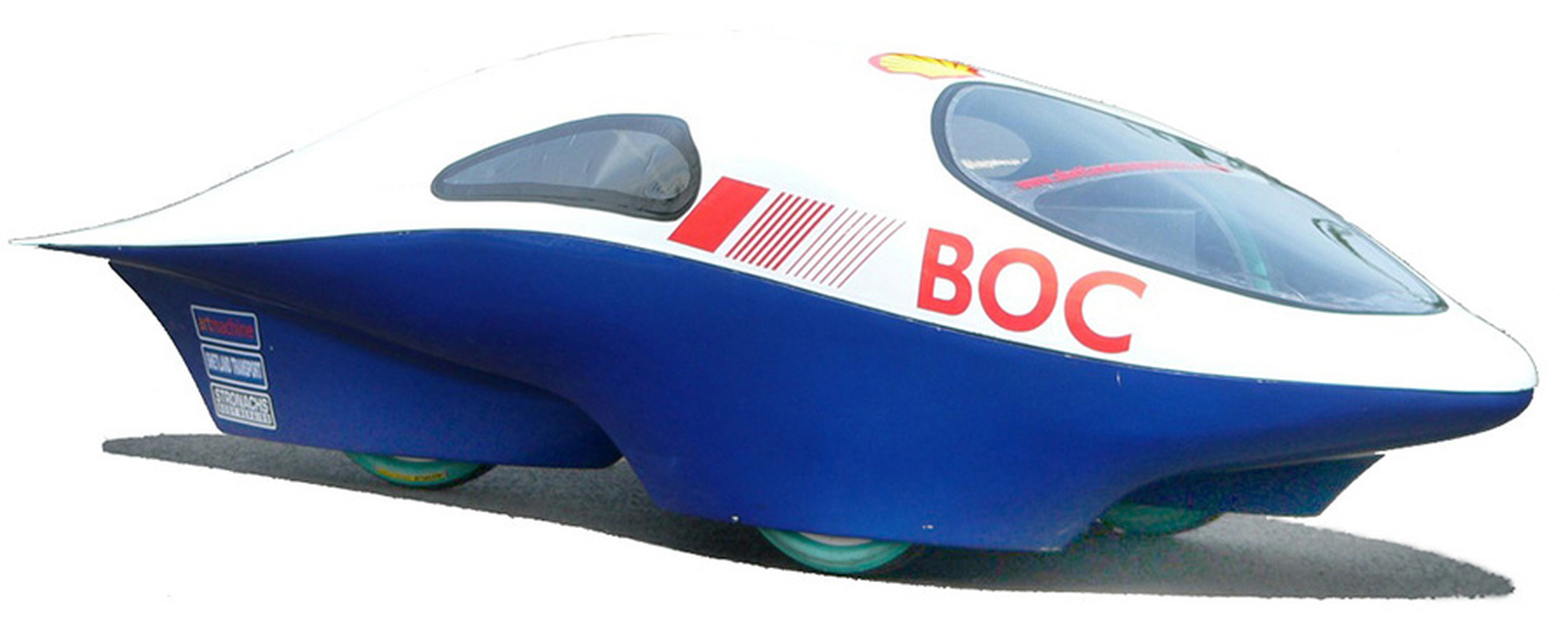
And yet the Riversimple story reaches further back than the LIFECar. In 2004, Hugo Spowers was involved in the tiny, single-seat BOC Shell Eco-Marathon project, developed with BOC, siGEN, Shetland Composites and OScar Automotive. Looking at the little blue-and-white machine today, it seems almost impossibly distant from the more polished Rasas.
The figures remain remarkable: a vehicle weighing approximately 40kg, powered by a 25-watt hydrogen fuel cell, and engineered around a target efficiency exceeding 10,795mpg equivalent.
Riversimple has described a theoretical ability to travel around the world using the energy equivalent of just two gallons of fuel. That was a comparison illustrating its extraordinary efficiency ambitions, not a claim that the vehicle was a practical road car capable of such a journey.
It was an experiment, but an important one. The recurring Riversimple principles — minimise weight, reduce energy demand and rethink familiar automotive assumptions — were already visible more than twenty years ago.
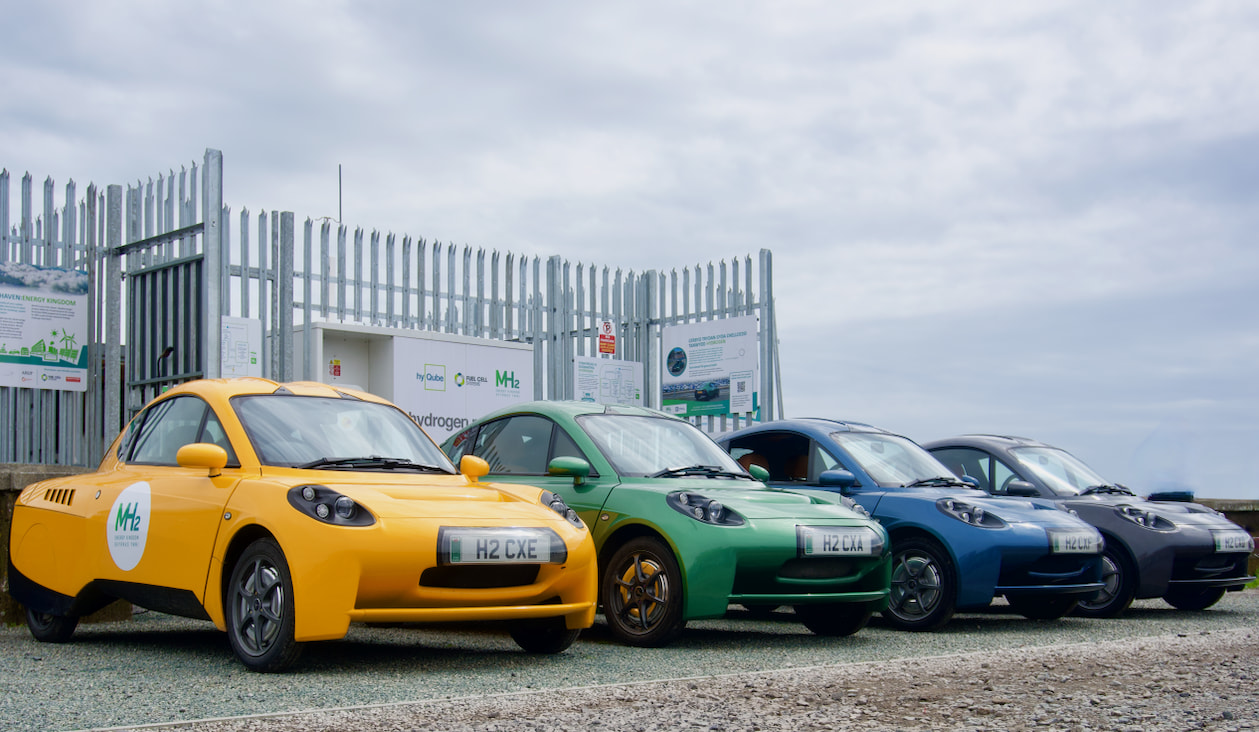
For a company that has not yet become a mass-market carmaker, Riversimple has a surprisingly substantial history. It has created several generations of working hydrogen vehicles, developed an unusual low-power architecture, put Rasas into real-world trials and kept specialist engineering activity in Wales.
Public hydrogen filling stations remain scarce across Britain. Refuelling in just three minutes is an attractive prospect, but a much wider infrastructure network will be needed to unlock the technology's full potential.
But it would be a mistake to confuse those obstacles with a lack of progress. Hydrogen is finding applications in some buses and other fleet vehicles, and manufacturers such as Toyota, Hyundai and BMW continue investing in fuel-cell technology.
Riversimple's particularly lightweight approach offers another possibility entirely: use much less hydrogen in the first place. With the ZELLOR project underway and three possible vehicle types outlined, there are still genuinely interesting chapters to be written.
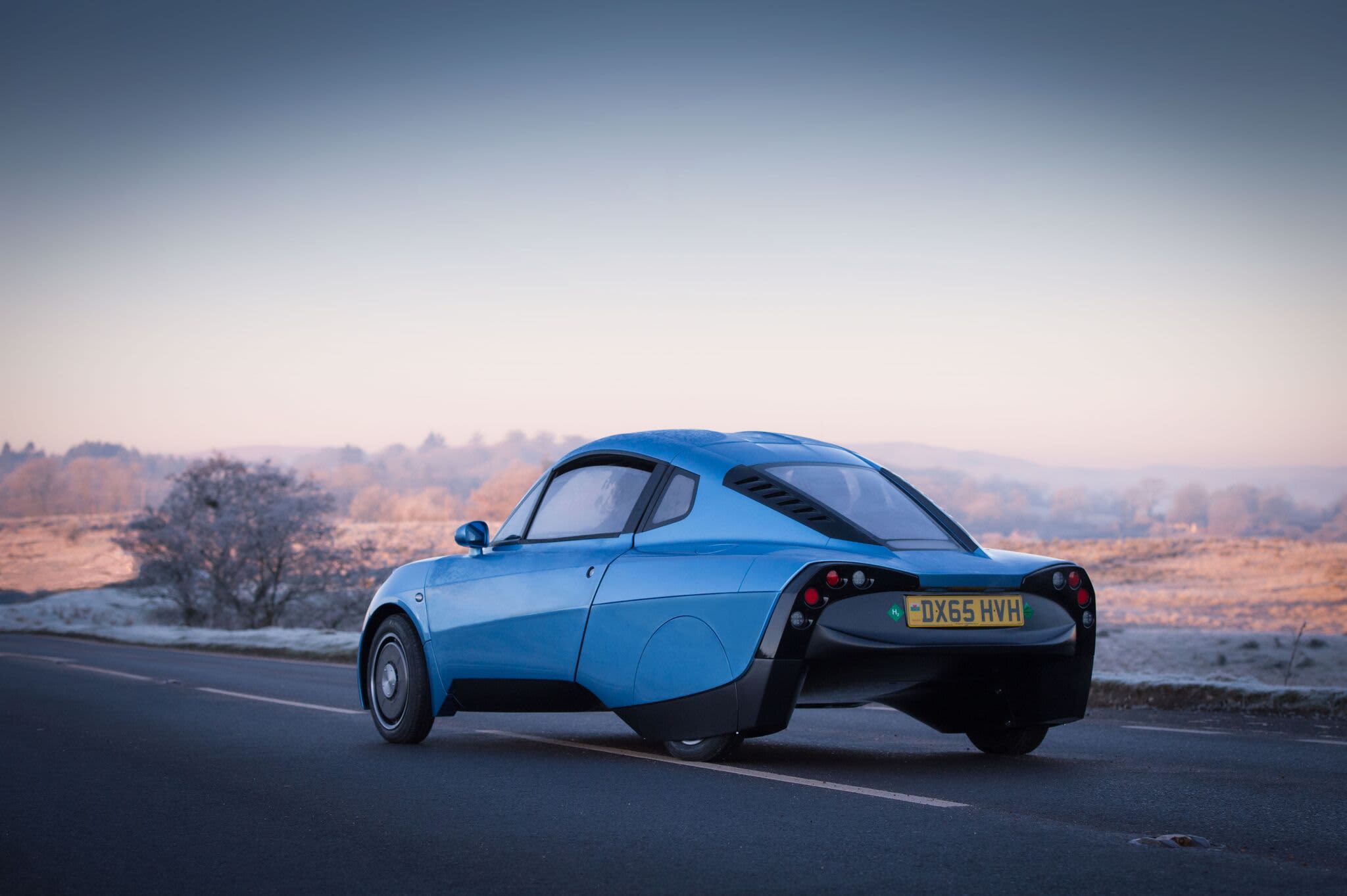
From a 40kg economy experiment in 2004 to the Rasa, public trials and today's ambitions for more practical vehicles, Riversimple has followed a path very different from the rest of the industry. Our two-seat hatchback, four-seater and compact van are TNY Design Studio's interpretations of where that journey might lead, not previews of confirmed production models.
Yet the company itself is considering all three categories, and its latest engineering programme provides a reason to keep paying attention. Electric cars may dominate the headlines, but there could still be room for a small Welsh company prepared to approach hydrogen from an entirely different angle.
The real challenge now is turning decades of intriguing engineering into everyday vehicles that people can actually use.
LEGAL & IMAGE CREDITS

This is an independent TNY Design Studio editorial feature and is not affiliated with or endorsed by Riversimple or any other manufacturer mentioned.

All TNY vehicle renderings are unofficial, AI-assisted speculative illustrations and do not represent confirmed production designs. Future specifications and plans are based on publicly available information and may change.

Historical vehicle imagery: Riversimple, Morgan Motor Company and BOC Shell Eco-Marathon project. All original images, names and trademarks remain the property of their respective rights holders.
You should also read:

From Bestseller to Beyond – TNY Design Studio Explores Jaecoo's Future
Few new car brands have arrived in Britain with quite the impact of Jaecoo. Launched here in January 2025, the Chinese SUV marque had already put its Jaecoo 7 at the top of the UK sales chart twice by September 2026, recording 10,813 registrations in that month alone. Behind it stands Chery,…
Paris Motor Show 2026: TNY Explores the Biggest Reveals from Day One
The 2026 Paris Motor Show has opened its doors, bringing one of Europe's biggest motoring events back into the spotlight. With more than 100 exhibitors, nearly 60 vehicle manufacturers and dozens of new models and concepts, this year's show promises plenty to explore. Beyond the spectacular concept cars and elaborate displays, Paris…

What Are the Best Fun Cars You Can Buy for £6,000?
A £6,000 budget opens the door to a surprisingly varied selection of interesting used cars. Rather than simply chasing the newest or lowest-mileage option, this is the point where buyers can start looking for something with real character. That might mean a proper rear-wheel-drive coupé, a lightweight hot hatch, a rare premium…

TNY Design Studio Explores BMW’s Next SUV Generation — From X1 to X8
BMW is entering one of the most significant design transitions in its recent history. The arrival of Neue Klasse isn't simply about introducing a new generation of electric cars; its technology and dramatically simplified design language are beginning to influence BMW's entire range. For the company's SUVs, that creates an especially interesting…
What Does £1,500 Buy in 2026? Eight Used Cars We’d Look At
Cheap cars do not automatically have to mean bad cars. At the bottom end of the used market, £1,500 will inevitably involve compromises — higher mileage, older interiors and the odd cosmetic scar — but there are still plenty of genuinely useful, dependable cars available for the money. The trick is looking…
Volvo’s 13-Car Plan — Design Studio Explores the New Range
Volvo has changed dramatically under Geely ownership. What was already a respected premium brand has gained the investment, technology and global scale needed to compete far more directly with the likes of BMW and Mercedes-Benz. That is a significant shift from the Ford era, when Volvo produced some excellent cars but often…
Hyundai's 100-Car Plan: What Comes Next for One of the World's Fastest-Changing Car Makers?
Twenty years ago, Hyundai was still fighting to prove that it could match the established European and Japanese brands. Today, that description feels almost unrecognisable. Hyundai has become a genuinely global manufacturer, producing everything from affordable small cars to sophisticated EVs, large SUVs and increasingly serious performance models. Now it wants to…
Stellantis Vans 2030: What Comes Next for Europe's Biggest Van Family?
Stellantis has built one of Europe’s biggest commercial vehicle operations, with familiar names from Citroën, Fiat, Peugeot, Opel and Vauxhall covering almost every corner of the van market. But the automotive world is changing faster than the traditionally slow-moving commercial vehicle cycle. Battery technology continues to improve, hybrid powertrains are finding new…