Wrightbus Buses & Coaches
Wrightbus Buses & Coaches
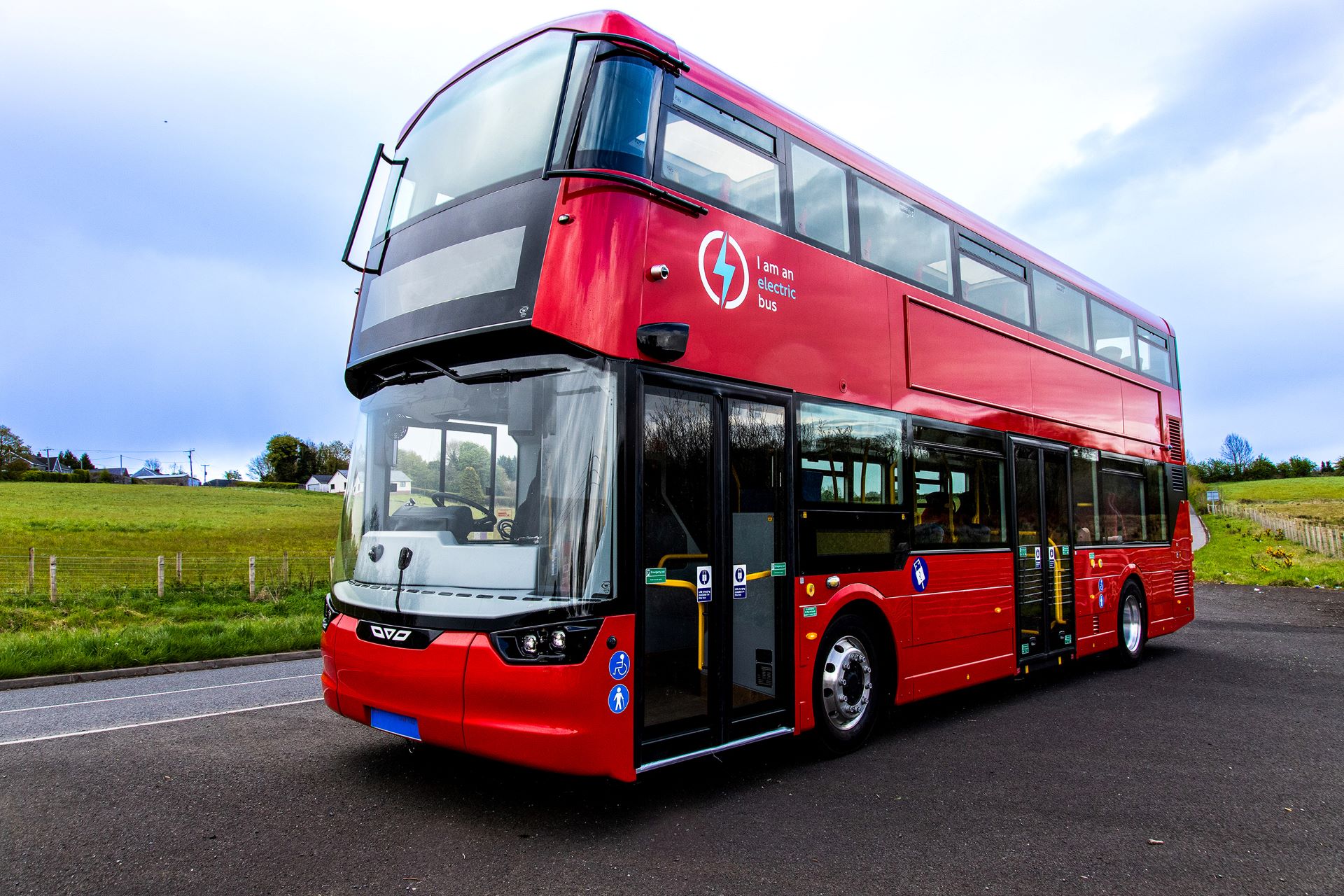
Wrightbus StreetDeck Electroliner
The StreetDeck Electroliner is Wrightbus's fully electric double-decker, designed for demanding urban and regional bus services. The second generation, introduced in 2025, replaces earlier battery technology with a more efficient 442kWh lithium iron phosphate system, providing a claimed range of up to 275 miles. Faster charging and improved battery durability make the bus easier to integrate into intensive daily schedules, while seating for up to 73 passengers ensures it retains the practicality expected of a conventional double-decker. The Electroliner shares much of its technology with the single-deck GB Kite, simplifying maintenance for operators running both types. An electric open-top StreetDeck is also offered for sightseeing services, although its published battery specifications differ from the latest enclosed model.
Price From: POA / specification dependent
Manufacturer: Wrightbus
Powertrain: Electric
Battery: 442kWh CATL lithium iron phosphate (LFP)
Range: Up to 275 miles, manufacturer claim
Charging: CCS2 DC, up to 150kW standard / optional high-power charging up to 380kW
Charge Time: Approximately 2 hours 45 minutes at 150kW or 1 hour 15 minutes at 380kW, manufacturer figures
Seats: Up to 73 passengers
Total Passenger Capacity: Up to 84, including standing
Typical Licence: Category D
Drive: Electric rear-axle drive
Length: 10,732mm, Generation 2 specification
Width: 2,520mm
Height: 4,395mm
Doors: One or two, specification dependent
Accessibility: Low-floor entrance with wheelchair ramp and accessible passenger area
Battery Warranty: Up to 15 years, subject to manufacturer terms
Other Versions: Open-top electric StreetDeck for sightseeing operations, with separate battery and range specifications
UK Availability: Current British-market model
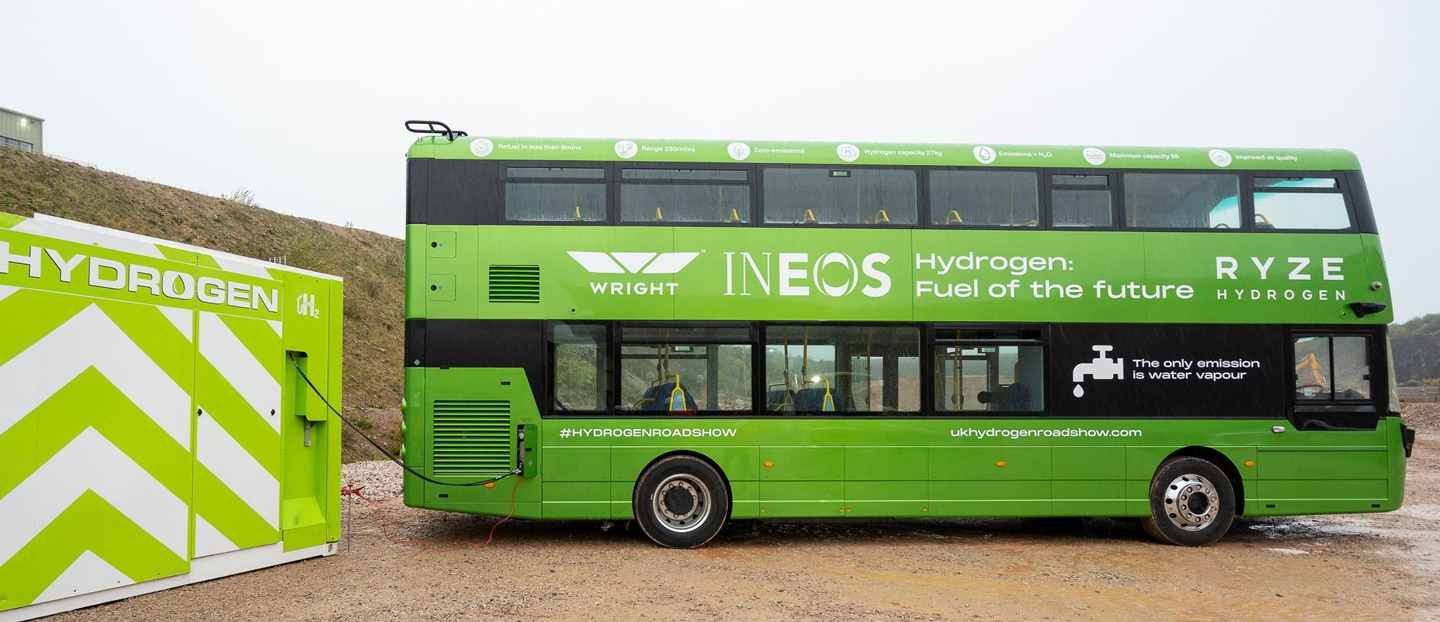
Wrightbus StreetDeck Hydroliner
The StreetDeck Hydroliner is Wrightbus's hydrogen fuel-cell double-decker, offering zero-tailpipe-emission operation without relying on large traction batteries or lengthy depot charging. Its latest specification combines a 70kW Ballard fuel cell with a 111kWh battery, using hydrogen to generate electricity for the drivetrain. Wrightbus quotes a range of more than 300 miles and refuelling in approximately eight minutes under suitable conditions. The updated model also benefits from improved drivetrain efficiency and component commonality with the single-deck GB Kite Hydroliner. With capacity for up to 90 passengers, including standing accommodation, it provides an alternative to battery-electric buses where hydrogen infrastructure is available and intensive daily operation makes rapid refuelling attractive.
Price From: POA / specification dependent
Manufacturer: Wrightbus
Powertrain: Hydrogen fuel-cell electric
Fuel Cell: Ballard FCmove-HD
Fuel Cell Output: 70kW net
Electric Drivetrain: Voith electric drive system
Battery: 111kWh Forsee ZEN Slim
Hydrogen Storage: Approximately 27kg
Hydrogen Pressure: 350 bar
Range: More than 300 miles claimed
Refuelling: Approximately 8 minutes under suitable station conditions
Total Passenger Capacity: Up to 90, including standing passengers
Seated Capacity: Configuration dependent
Typical Licence: Category D
Drive: Electric rear-axle drive
Gross Vehicle Weight: 19,500kg
Doors: One or two
Accessibility: Low-floor passenger accommodation, wheelchair ramp and PSVAR-compliant configurations
UK Availability: Current British-market hydrogen bus
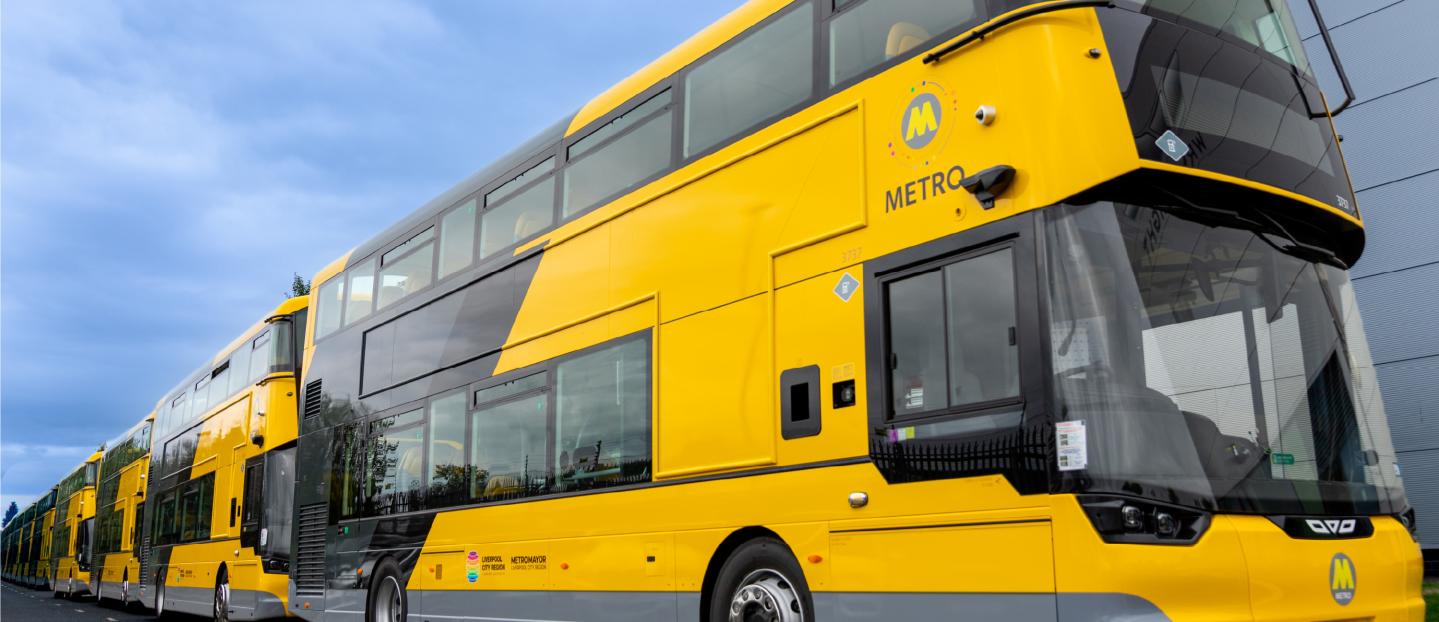
Wrightbus StreetDeck Ultroliner
The StreetDeck Ultroliner remains Wrightbus's conventional diesel double-decker, providing a practical option for operators unable to move immediately to electric or hydrogen buses. The latest generation introduces a Cummins 6.7-litre six-cylinder diesel engine with up to 300hp, paired with a seven-speed Voith automatic gearbox. A Mercedes-Benz four-cylinder diesel remains another published option. Three body lengths offer seating for up to 83 passengers, with a maximum total capacity of 100 in selected layouts. Modern passenger equipment and accessibility features make the Ultroliner suitable for busy public transport routes, while Wrightbus's NewPower programme provides a possible future route to battery-electric conversion. New examples entered service in Liverpool during September 2026.
Price From: POA / specification dependent
Manufacturer: Wrightbus
Powertrain: Diesel / mild-hybrid assistance
Engines: 6.7-litre Cummins six-cylinder or 5.1-litre Mercedes-Benz four-cylinder Euro VI diesel
Cummins Power: 187kW / 250hp or 224kW / 300hp
Cummins Torque: 1,000–1,200Nm
Transmission: 7-speed Voith DIWA.8 NXT automatic with Cummins engine; 4-speed Voith with Mercedes engine
Seats: Up to 83 passengers in the longest published layout
Total Passenger Capacity: Up to 100 including standing, configuration dependent
Typical Licence: Category D
Drive: Rear-wheel drive
Body Lengths: 10,567 / 10,990 / 11,467mm
Width: 2,520mm
Height: 4,395mm
Gross Vehicle Weight: 18,600kg
Fuel Tank: 190 or 245 litres
Doors: One or two
Accessibility: Low-floor entrance with wheelchair ramp and configurable accessible accommodation
Passenger Equipment: Optional air conditioning, USB charging, passenger information systems and seatbelts
Electric Conversion: Eligible vehicles may be converted through Wrightbus NewPower, subject to assessment
UK Availability: Current model, with new UK deliveries in 2026
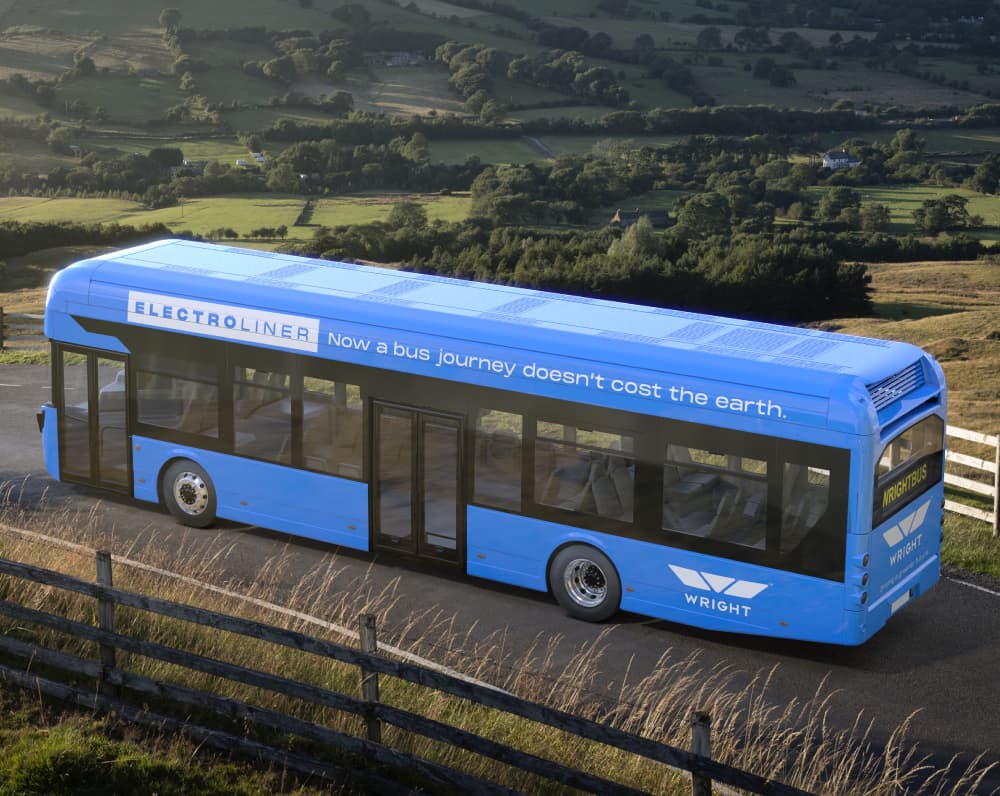
Wrightbus GB Kite Electroliner & Hydroliner
The GB Kite is Wrightbus's modern single-deck bus family, available with either battery-electric or hydrogen fuel-cell propulsion. The second-generation Electroliner introduces CATL lithium iron phosphate batteries with capacities of 442kWh or 528kWh, with Wrightbus claiming up to approximately 365 miles from the larger battery. The Hydroliner instead generates electricity using a hydrogen fuel cell, with several hydrogen storage configurations and a claimed maximum range of up to 640 miles under favourable conditions. Both versions feature low-floor passenger access, flexible seating and standing areas, and modern passenger equipment. They share many components with Wrightbus's StreetDeck double-deckers, helping operators simplify parts inventories and maintenance across mixed fleets.
Price From: POA / specification dependent
Manufacturer: Wrightbus
Powertrains: Electric / Hydrogen fuel-cell electric
Electroliner Battery: 442kWh or 528kWh CATL LFP
Electroliner Range: Up to approximately 365 miles with 528kWh battery, manufacturer claim
Electroliner Drivetrain: Voith electric drive system
Electroliner Charging: CCS2 DC, up to 150kW standard with higher-power charging options
Hydroliner Fuel Cell: Ballard FCmove, 70kW module
Hydroliner Battery: 54kWh
Hydrogen Storage: 32 / 40 / 50kg options in published configurations
Hydrogen Pressure: 350 bar
Hydroliner Range: Up to 640 miles claimed; dependent on hydrogen storage configuration and operating conditions
Electroliner Total Capacity: Up to 82 passengers including standing
Hydroliner Total Capacity: Up to 90 passengers including standing
Seated Capacity: Configuration dependent
Typical Licence: Category D
Drive: Electric rear-axle drive
Body Lengths: Multiple single-deck configurations, dependent on version
Doors: One or two
Accessibility: Low-floor boarding with wheelchair ramp and accessible passenger accommodation
Passenger Equipment: Air conditioning, passenger displays, USB charging and configurable seating options
UK Availability: Both powertrains advertised in Wrightbus's current British range
View GB Kite Hydroliner →
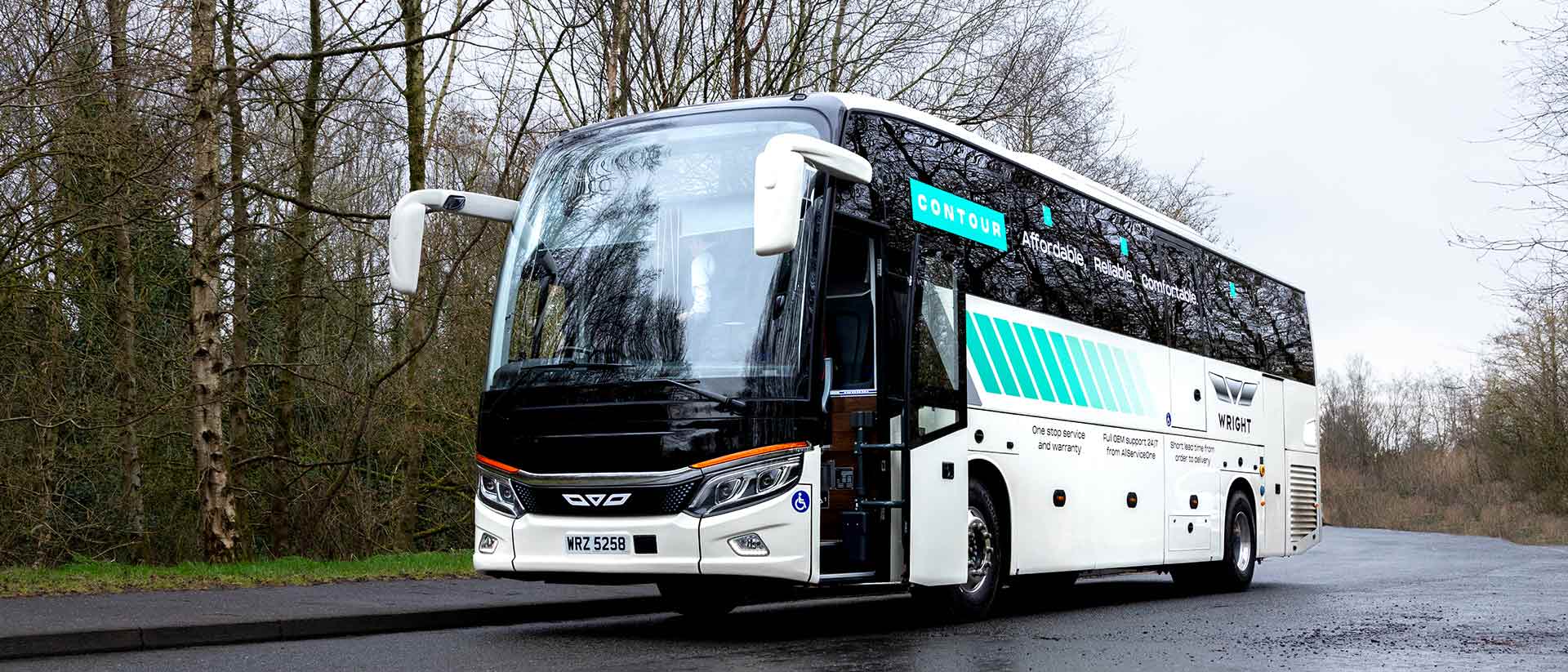
Wright Contour
The Contour marks Wrightbus's return to the touring-coach market after more than three decades, reviving a name originally used during the 1980s. Introduced in March 2025, the new model offers up to 55 reclining passenger seats within a 12.2-metre body, with USB charging, modern safety equipment and substantial luggage accommodation. A 400hp Cummins diesel engine and ZF automatic transmission provide the power, while operators can choose PSVAR-compliant, prepared or conventional interiors. The Contour is marketed in Britain and Europe, with an initial order for 39 coaches from Ireland's Bus Éireann scheduled for delivery during 2026. Wrightbus also has a hydrogen touring coach under development, although a confirmed current production model has not yet been established.
Price From: POA / specification dependent
Manufacturer: Wrightbus
Powertrain: Diesel
Engine: Cummins X11 Euro VI six-cylinder diesel
Power: 400bhp
Transmission: ZF automatic
Seats: Up to 55 passengers, plus driver and optional guide seat
Typical Licence: Category D
Length: 12,200mm
Width: 2,550mm
Height: 3,770mm
Passenger Equipment: Reclining seats, individual USB charging, three-point seatbelts, adjustable armrests and air conditioning
Driver Equipment: Digital display, reversing camera and modern driver-assistance equipment
Accessibility: PSVAR-compliant, PSVAR-prepared and conventional configurations available
Warranty: Two years / 200,000km, subject to terms
UK Availability: Marketed for UK and European operators; new Irish orders confirmed
Important Information

Prices, specifications, dimensions, seating capacities, weights, power outputs and equipment are based primarily on information published by vehicle manufacturers and their official UK representatives. Specifications can vary by body length, drivetrain, interior layout, model year and individual operator requirements.

Prices shown are UK prices where available and are intended as a guide. Where an official UK list price is unavailable, pricing is shown as POA. Prices can vary according to contract size, optional equipment, accessibility requirements and operator-specific configurations.

Passenger seating capacity must not be confused with total passenger capacity. Urban buses may accommodate additional standing passengers, while wheelchair spaces, door arrangements and other interior equipment can affect the number of available seats.

Electric vehicle battery capacities, driving ranges and charging times are manufacturer claims based on stated conditions. Real-world results depend on passenger load, operating speed, weather, heating, route characteristics and battery condition. Maximum charging power may require optional equipment and suitable infrastructure.

Hydrogen fuel-cell vehicle ranges and refuelling times depend on storage configuration, hydrogen pressure, station capability and operating conditions. Fuel-cell buses produce no tailpipe carbon dioxide emissions during normal hydrogen operation, but the overall environmental impact depends on how the hydrogen is produced and supplied.

Licence categories shown are a general guide only. Individual driving entitlement can vary according to passenger-seat count, vehicle weight, vehicle length, licence issue date, grandfather rights, Section 19 operation and other exemptions. Passenger-seat counts used for licence purposes exclude the driver. Always check the vehicle's plated specification and your own driving-licence entitlement before driving.

Specifications are checked against the latest information reasonably available to The New Yardstick at the time of publication or update. Manufacturers may alter specifications, prices, equipment or availability without notice. Wrightbus NewPower conversions are separate from factory-new vehicle sales.

Image Credits: Vehicle and product photography remains the property of Wrightbus, its approved suppliers or the respective copyright holder unless otherwise stated. Images are used for editorial and informational purposes.