Nissan Pixo: Could Britain's Former Cheapest Car Make an Electric Comeback?
When the Nissan Pixo arrived in the UK in 2009, it quickly established itself at the very bottom of Britain's new-car market. For the majority of its short life, it was Britain's cheapest new car — a position that became an important part of the little Nissan's identity.
Then, in 2013, Dacia changed the game. The considerably larger Sandero arrived with its now-famous £5,995 starting price, bringing the Pixo's time at the bottom of the market to an abrupt end and resetting expectations of just how much car Britain's cheapest models could offer.
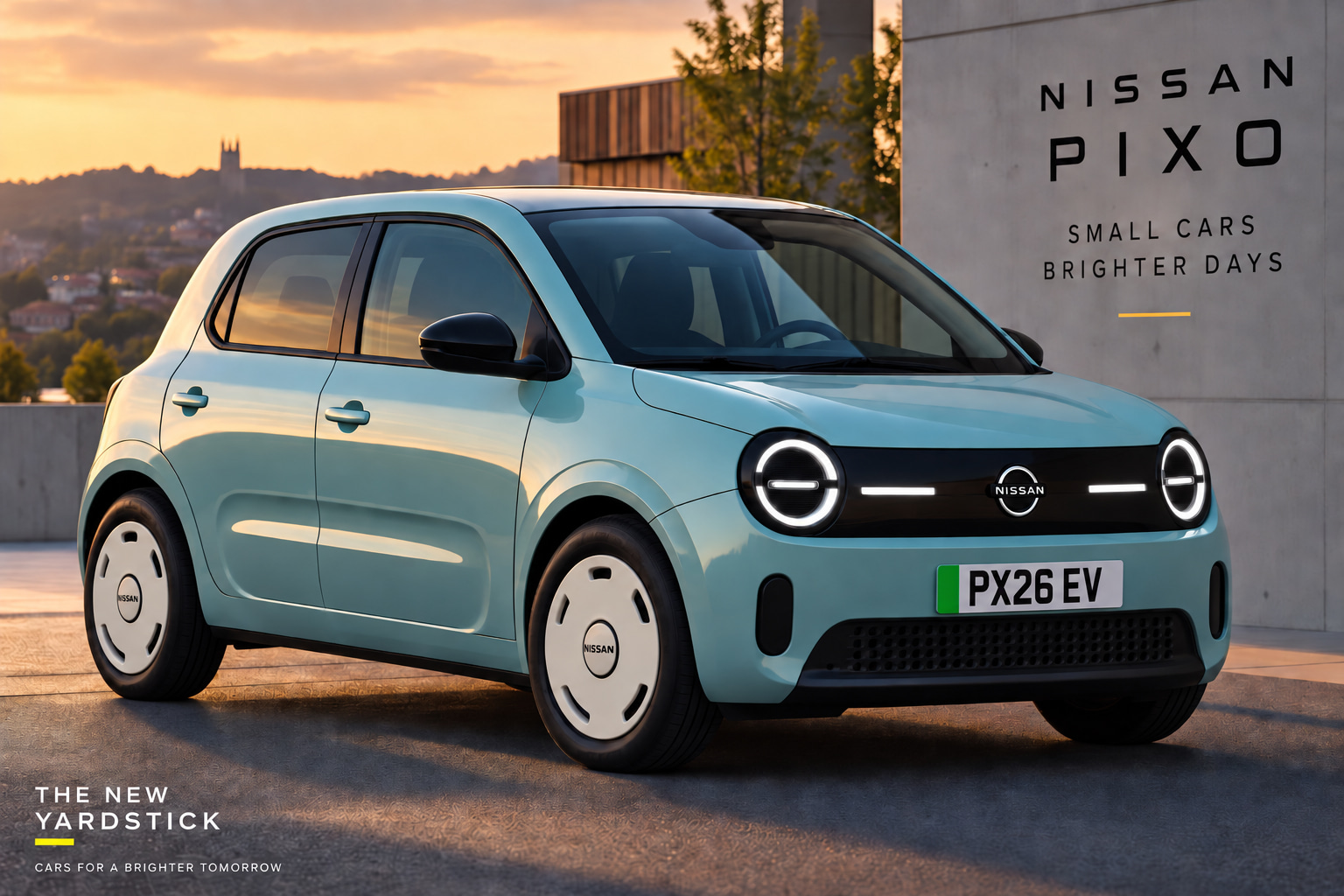
Today, Dacia is once again responsible for Britain's cheapest new car with the Spring. This time, however, a reborn Pixo wouldn't necessarily be fighting Dacia's approach to cheap motoring from the outside. By using the small-EV programme underpinning the new Renault Twingo E-Tech and upcoming Dacia Spring, Nissan could create a genuinely low-cost electric car of its own, sitting substantially below the current Micra EV.
It would return the Pixo to exactly the part of the market where people remember it: simple, small and among the cheapest new cars in Britain. Image: The New Yardstick Design Studio
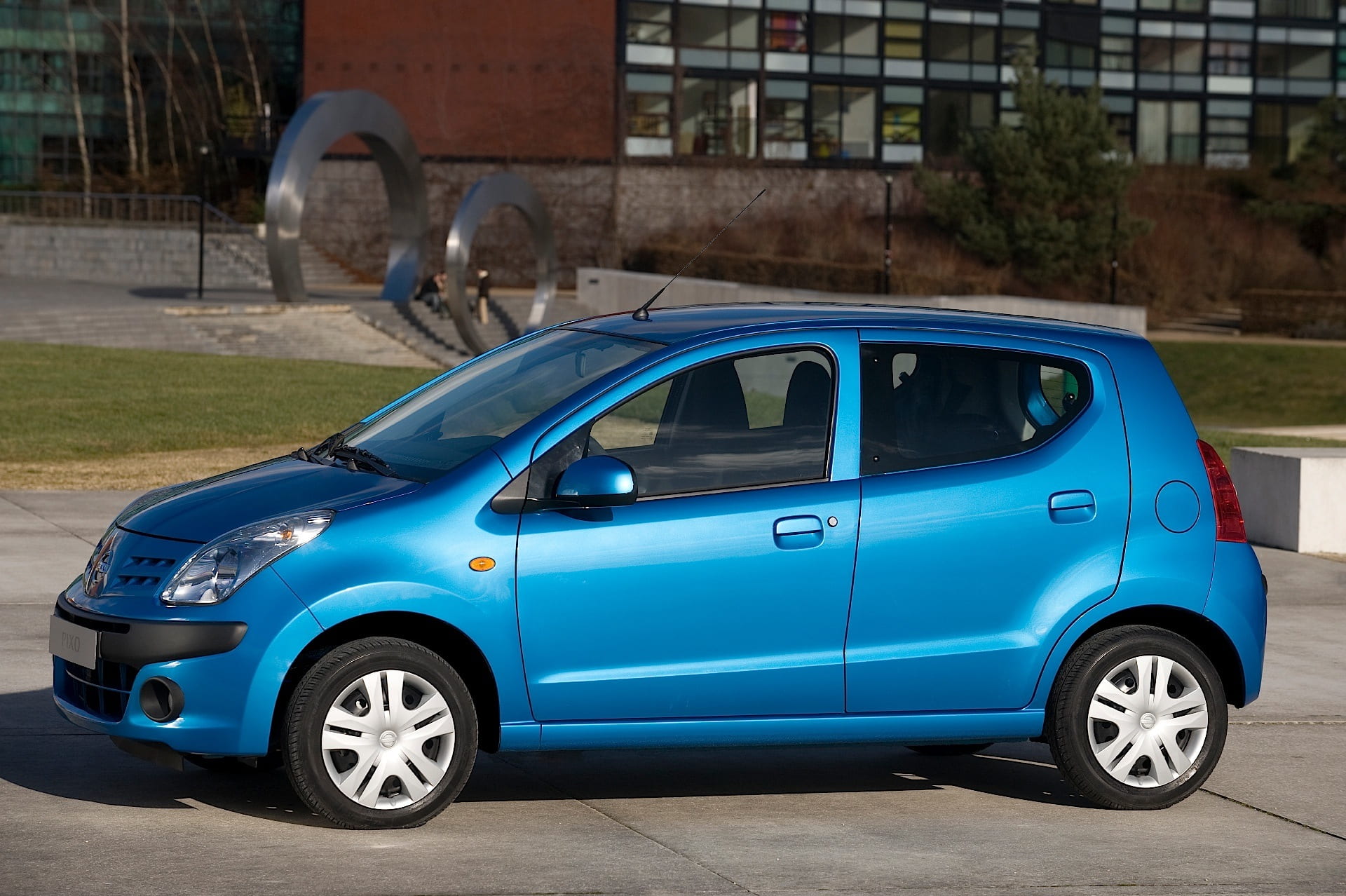
That makes the idea of a Renault-developed successor rather more appropriate than it might initially appear. The badge, partner and technology would change, but the philosophy would be remarkably similar: take an existing small-car programme, give it a Nissan identity and use the economies of scale to put Nissan back at the cheapest end of the market.
Nearly two decades later, globalisation has only made that approach more common. Nissan already shares technology extensively with Renault, while the next Twingo and upcoming Dacia Spring provide something its own European range currently lacks — the foundations for a genuinely inexpensive A-segment EV. Image: Nissan
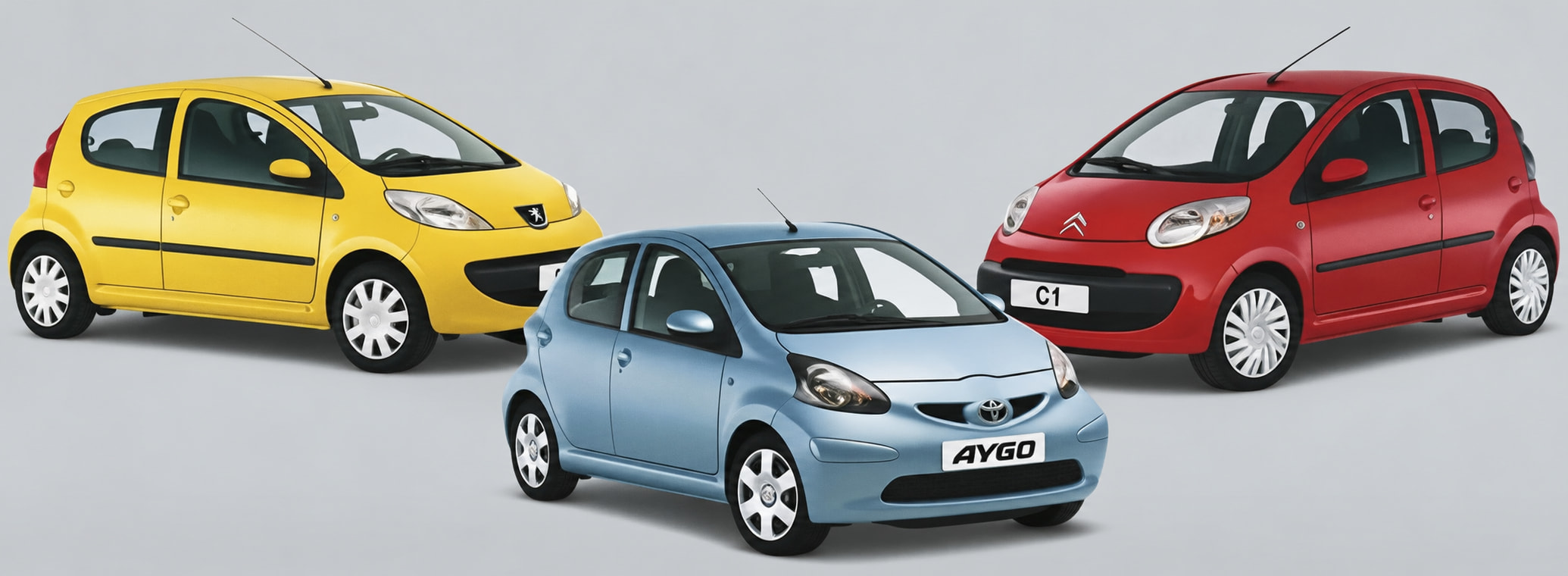
Twenty years ago, Toyota joined forces with Peugeot and Citroën to create the Aygo, 107 and C1. One Japanese manufacturer and two European brands shared the basic engineering and production of three closely related cars, helping make them cheap to buy, cheap to run and viable to produce.
Two decades later, the same Japanese-European formula could be coming back in electric form. This time it is Nissan representing Japan, alongside European partners Renault and Dacia. The new Twingo and upcoming Spring already share their small-EV foundations, while Nissan's upcoming entry-level EV is clearly heading in the same direction, with Twingo-like proportions and a remarkably similar window line.
If that Nissan becomes the Pixo, the parallels will be difficult to miss. Once again, two European brands and one Japanese manufacturer would be sharing the expensive foundations of three distinct city cars, spreading development costs while giving each its own design and identity.
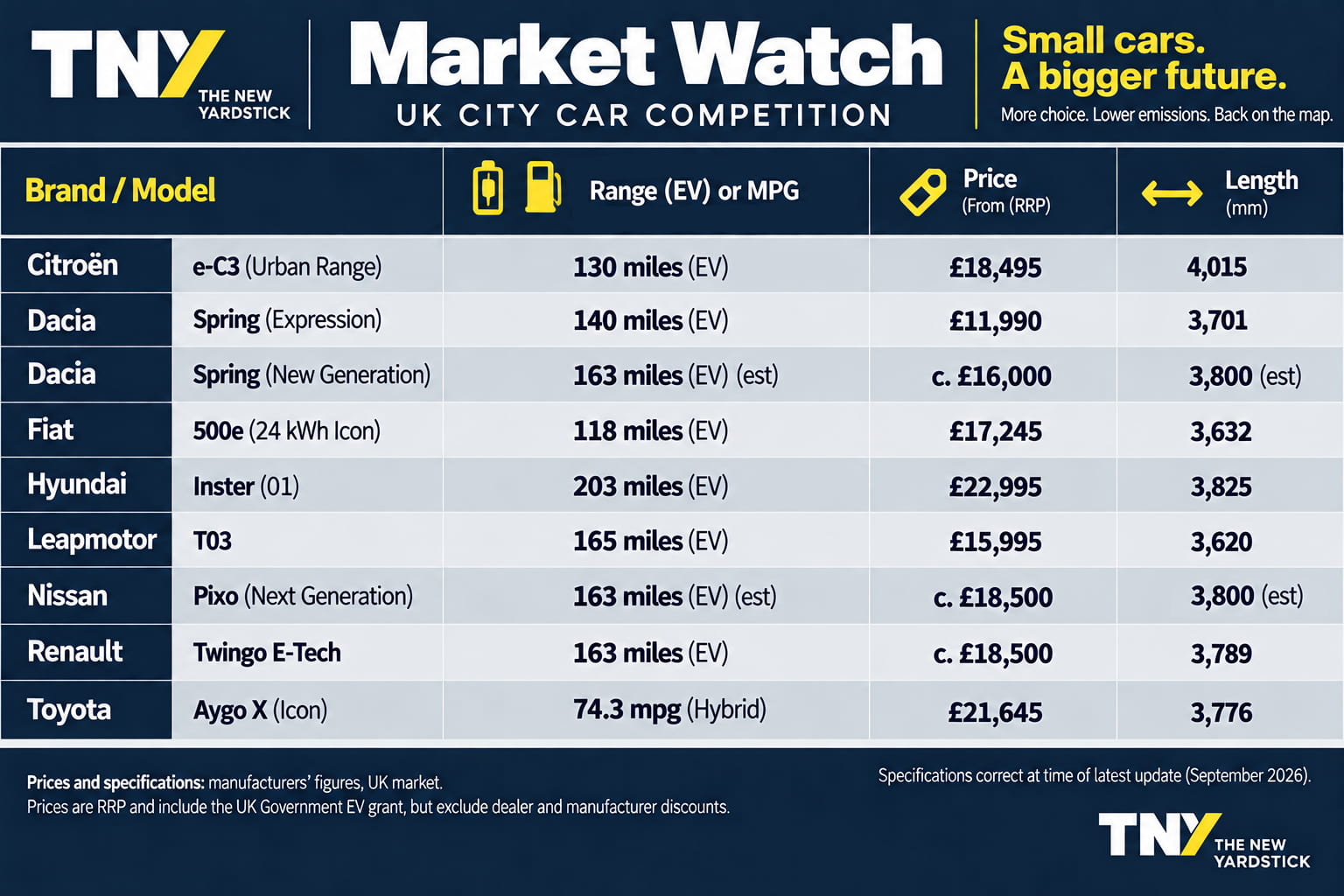
For a while, Europe's city-car segment looked close to extinction. Tiny petrol cars offered manufacturers slim profit margins, while increasingly expensive emissions and safety requirements made developing a new generation difficult to justify. Now electrification and shared platforms are giving the class another chance.
Toyota's Aygo X has gone hybrid, the Fiat 500e has been joined by a new 500 Hybrid, while the Leapmotor T03, Hyundai Inster and Dacia Spring have already pushed small EVs towards genuinely affordable territory.
Next come the new Renault Twingo E-Tech and upcoming Spring, followed by small Hyundai and Kia EVs and Volkswagen Group's new entry-level Volkswagen and Škoda models. Suddenly, Britain could have a surprisingly crowded selection of city cars competing around or below £20,000.
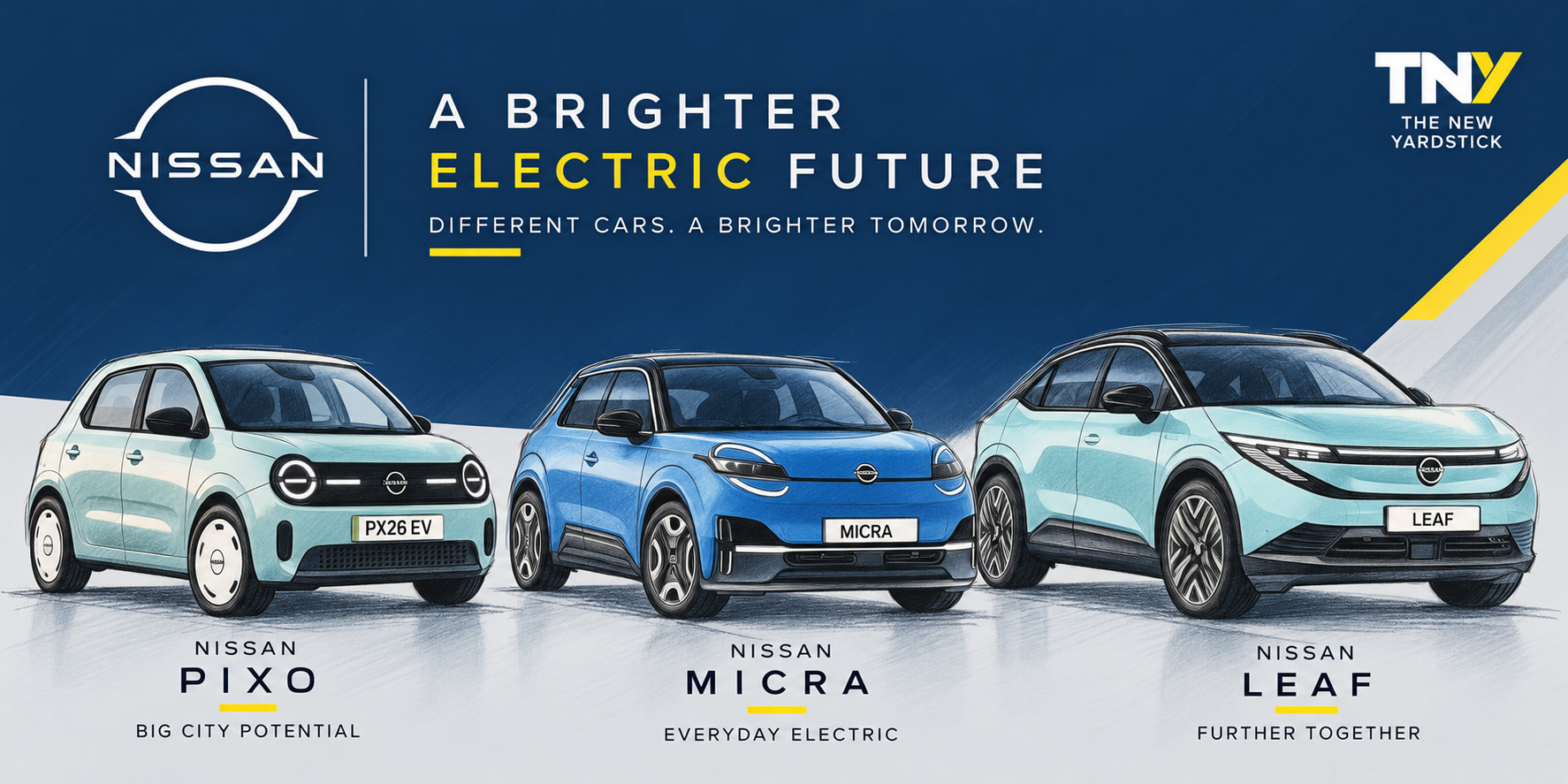
The Leaf then gives Nissan another fresh electric option for buyers wanting something different again, with greater range and a more crossover-like approach. Together, Pixo, Micra and Leaf could give Nissan three distinct new EVs covering different prices and priorities at the smaller end of the market.
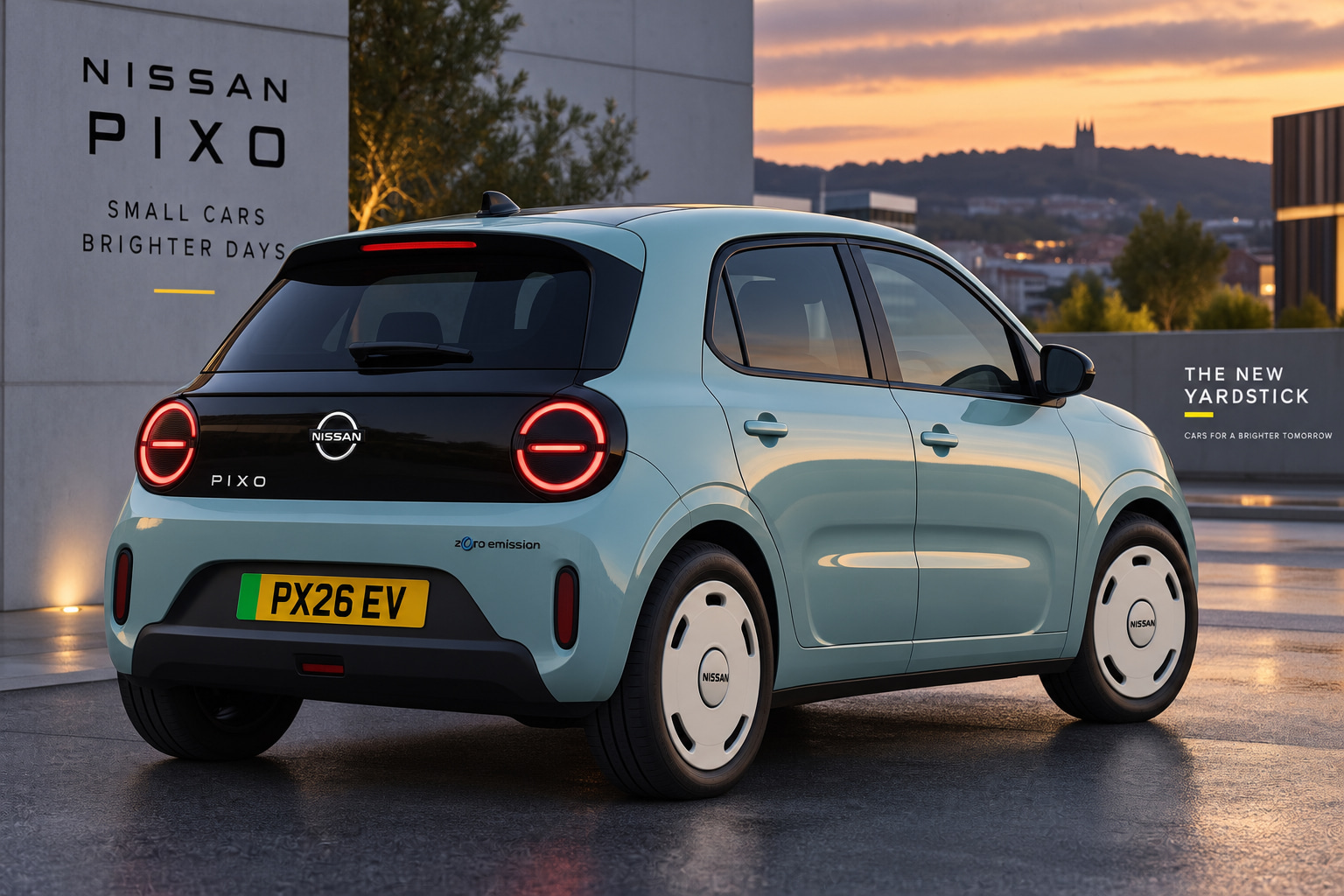
With the Micra and Leaf already giving Nissan two fresh electric models further up the range, a Pixo priced comfortably below them could complete one of the most convincing small-EV line-ups on the UK market.
The technology would be completely different from 2009, but the objective would be remarkably familiar. If Nissan really wants to put an electric car back near the bottom of Britain's price lists, the Pixo might be exactly the right name for it. Image: The New Yardstick Design Studio.
You should also read:
Hyundai's 100-Car Plan: What Comes Next for One of the World's Fastest-Changing Car Makers?
Twenty years ago, Hyundai was still fighting to prove that it could match the established European and Japanese brands. Today, that description feels almost unrecognisable. Hyundai has become a genuinely global manufacturer, producing everything from affordable small cars to sophisticated EVs, large SUVs and increasingly serious performance models. Now it wants to…
Rebuilding Nissan: The Cars That Could Fix Its Confusing European Line-Up
Around 20 years ago, Nissan changed the shape of the mainstream car market. The Qashqai replaced the dependable but forgettable Almera and helped turn the crossover into a family-car staple. The Juke followed, proving equally disruptive, while in 2010 the Leaf brought electric motoring to the masses. All three were game-changing cars…
Could These Two Models Complete Suzuki's Future Line-up?
Suzuki's range has become one of the simplest on sale, but two clear opportunities remain. At the bottom sits the biggest omission of all: there's no modern successor to cars like the Alto, Celerio or Ignis. An affordable city car has long been one of Suzuki's greatest strengths, and an electric replacement…
Alpine A190: The Affordable Electric Hot Hatch Alpine Should Build
Few brands have reinvented themselves as successfully as Alpine. The A290 has already shown that an electric hot hatch can be genuinely exciting, but there may still be room for something even smaller. In this Design Studio feature, we imagine the Alpine A190: a compact performance EV based on the Renault Twingo…
MG GO: Our Vision for Britain's Next Affordable Electric Hatchback
MG has become one of Britain's fastest-growing car brands, but one gap remains in its expanding electric line-up: a compact hatchback sitting below the MG4. In this Design Studio feature, we imagine the MG GO, an affordable electric supermini positioned as the EV sibling to today's MG3. At around four metres long,…
Could Nissan's Next GT-R Spawn an Entire Skyline Family?
Few performance cars have disrupted the supercar establishment quite like the Nissan GT-R. When the R35 arrived in 2007, its hand-built 3.8-litre twin-turbo V6, advanced all-wheel-drive system and everyday usability allowed it to embarrass far more expensive rivals, including Ferrari's 458 Italia, while costing little more than a third of the price.
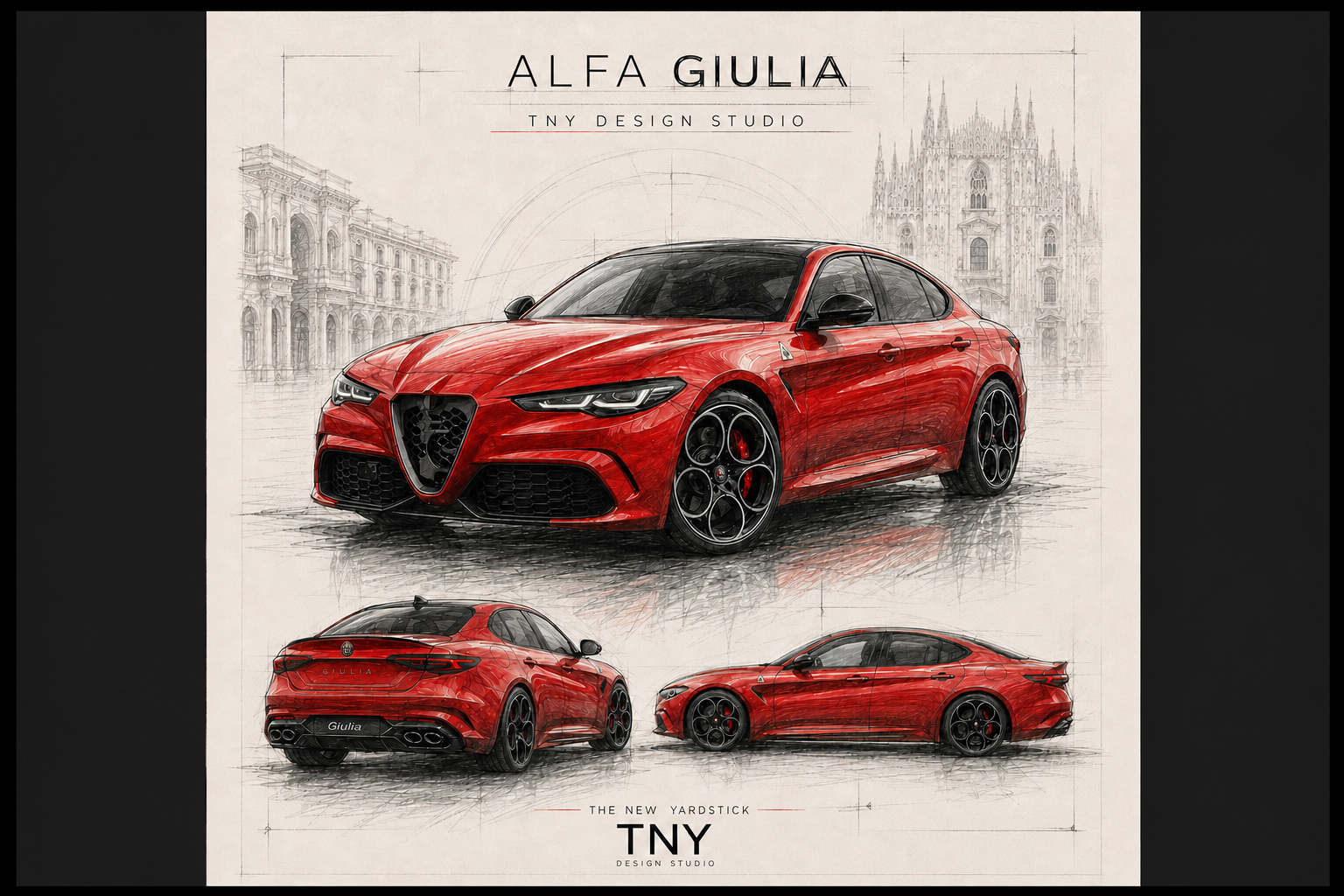
Design Studio: Three Ways Alfa Romeo Could Reinvent the Giulia
Design Studio is where ideas take centre stage, and few future models are more important than the next Alfa Romeo Giulia. With the brand preparing to transition onto Stellantis' STLA Medium platform, the challenge is no longer simply replacing an acclaimed sports saloon – it's deciding what the Giulia should become. Should…
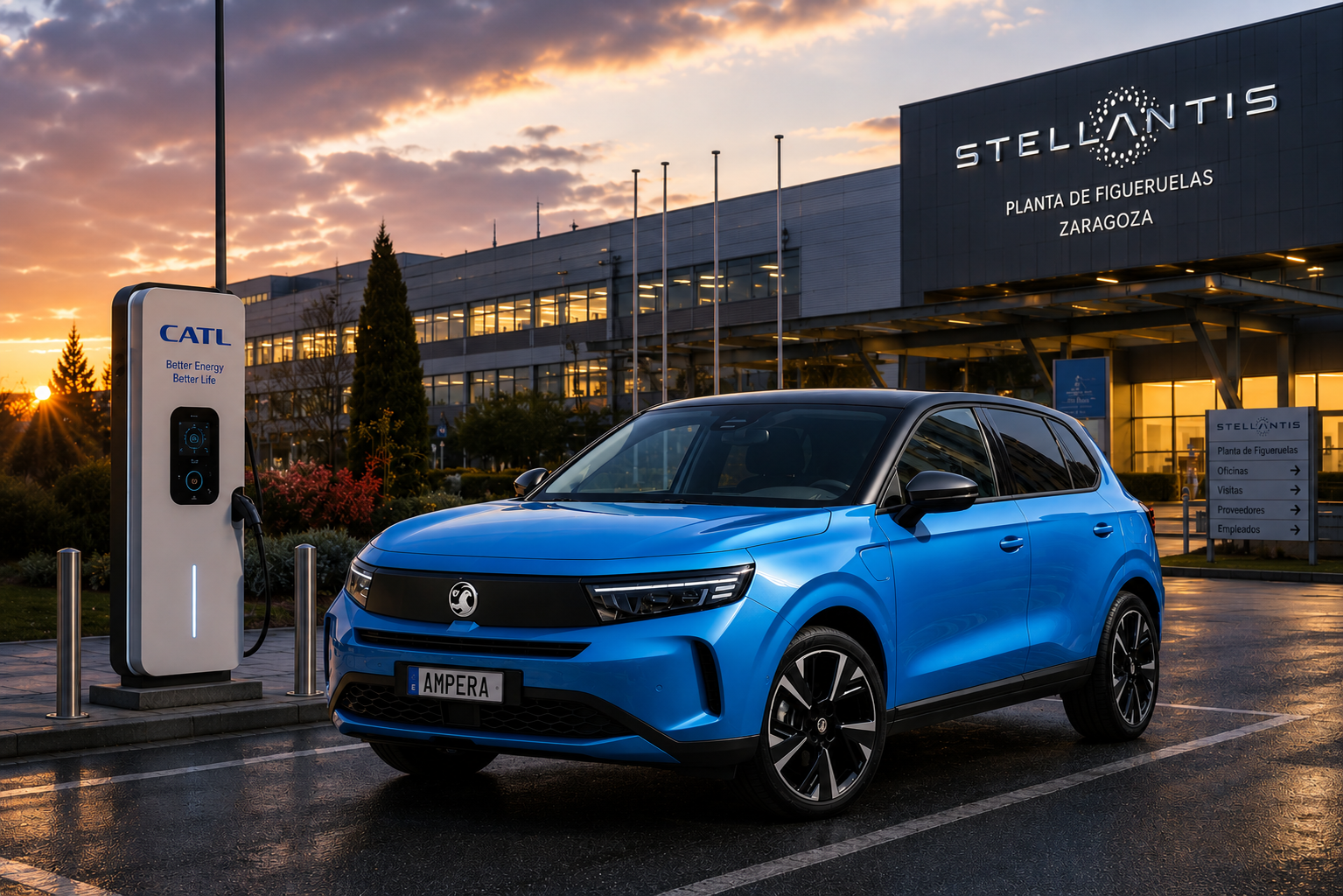
The Return of Ampera? How Leapmotor Could Give Vauxhall Its Smartest SUV Yet
Vauxhall was ahead of its time. Back in 2012, the Ampera introduced range-extender electric technology to European buyers years before most manufacturers had considered the idea. Our custom rendering explores how a Vauxhall SUV based on Leapmotor technology could look. Europe isn't exactly spoilt for choice when it comes to REEVs (range-extending…