Could Nissan's Next GT-R Spawn an Entire Skyline Family?
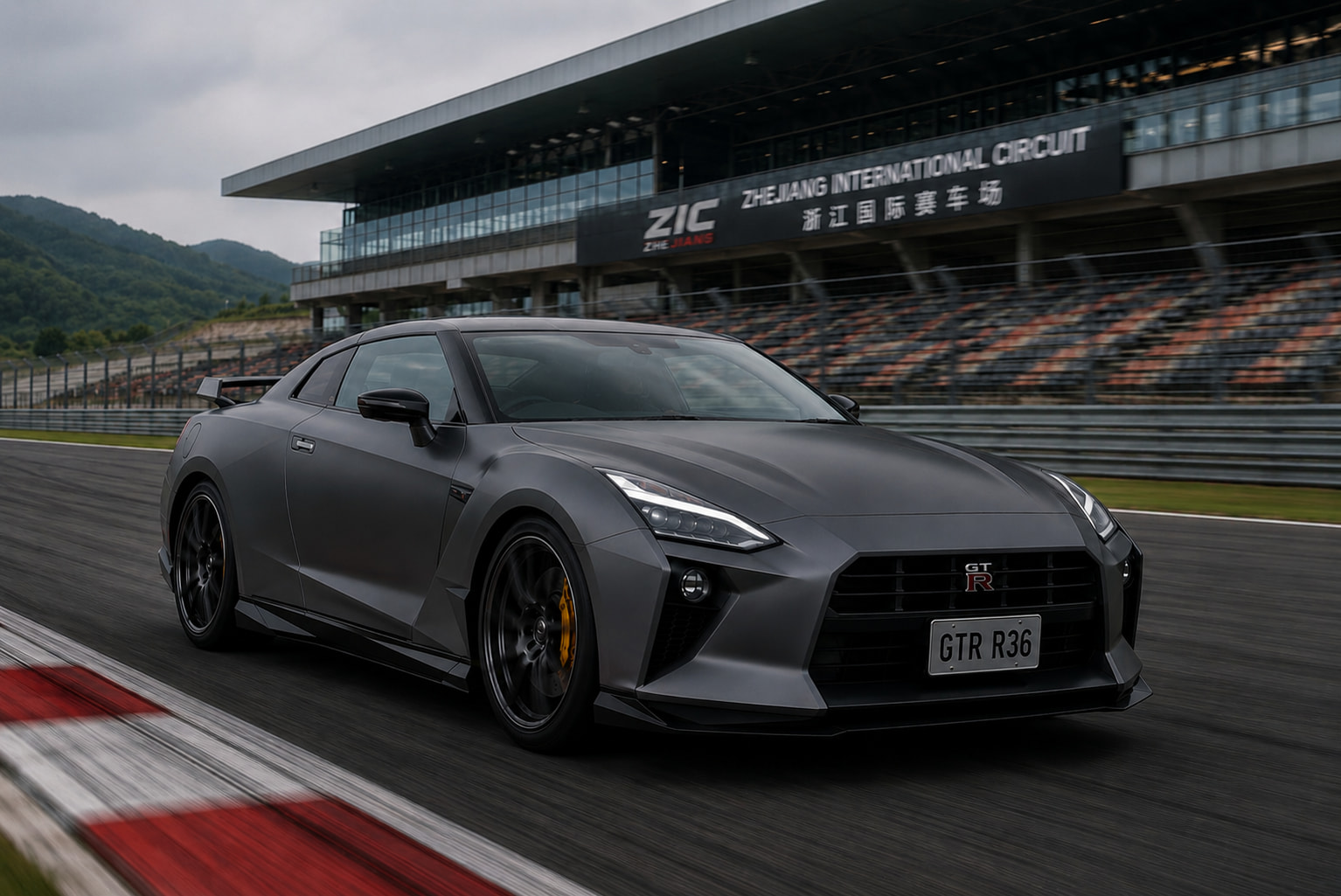
Few performance cars have disrupted the supercar establishment quite like the Nissan GT-R. When the R35 arrived in 2007, its hand-built 3.8-litre twin-turbo V6, advanced all-wheel-drive system and everyday usability allowed it to embarrass far more expensive rivals, including Ferrari's 458 Italia, while costing little more than a third of the price. It was proof that clever engineering could beat prestige.
Nearly two decades later, however, the automotive landscape has changed. Electrification, tightening emissions regulations and rapidly evolving performance technology mean the GT-R formula needs rethinking.
In this feature, we take a closer look at what the next GT-R could become. Our renderings imagine how a plug-in hybrid version could build on the strengths of today's car, delivering even greater performance while giving Nissan a better chance of meeting increasingly strict CO₂ regulations around the world.
We also explore how the GT-R's design and technology could inspire a new generation of Skyline models, including a saloon and crossover for Nissan, with luxury Infiniti versions helping spread development costs across both brands.
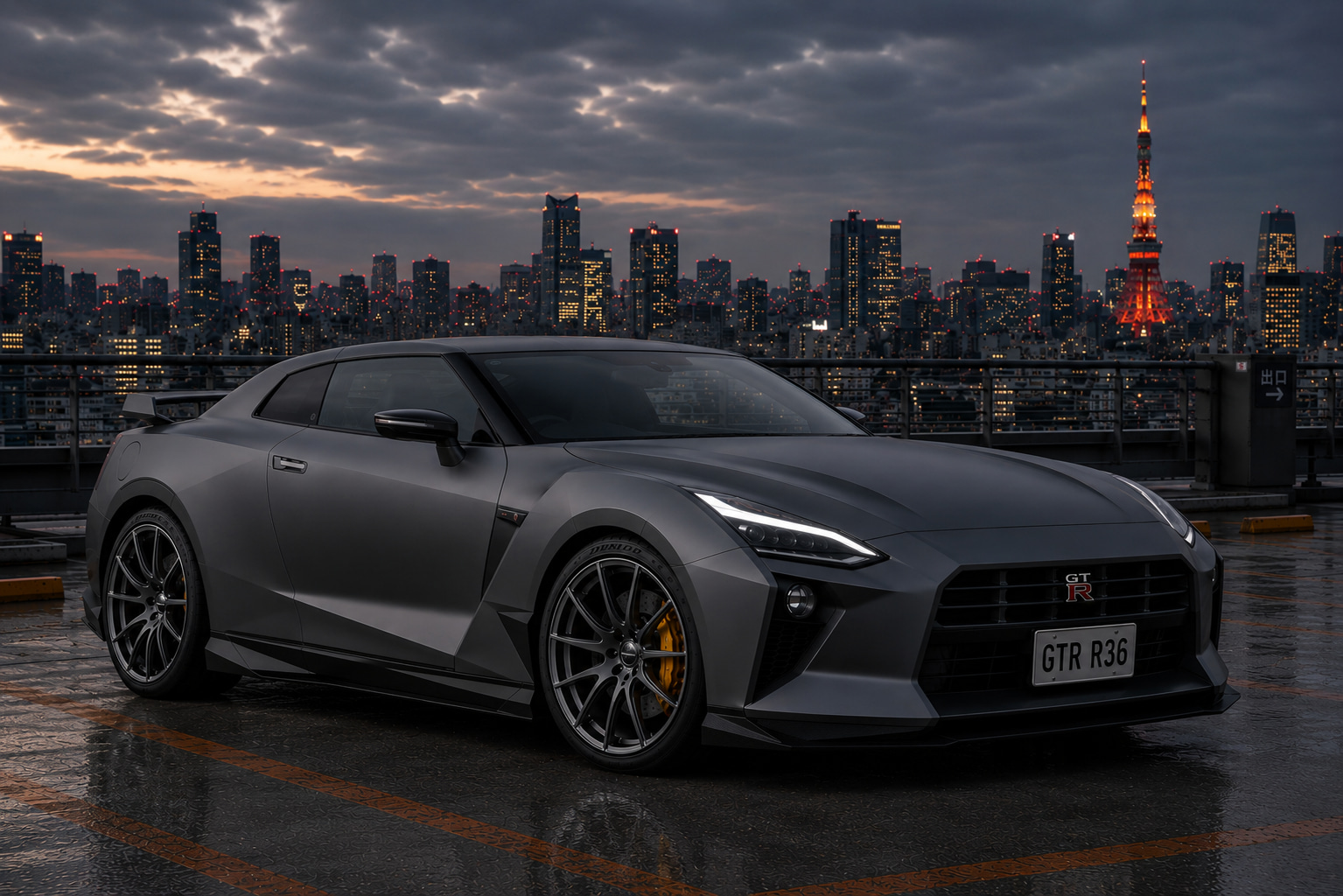
Our rendering stays close to the proportions of the original GT-R, keeping its wide stance and instantly recognisable shape while giving it a cleaner, more modern look. The biggest changes, though, would be underneath the bodywork.
Nissan has already confirmed that the next GT-R is unlikely to be fully electric, instead looking at keeping its famous 3.8-litre twin-turbo V6 with performance-focused electrification, either as a hybrid or plug-in hybrid.
That would bring instant electric torque, better efficiency and lower CO₂ emissions without losing the character that made the GT-R so special. The challenge for Nissan is huge. The R35 earned a reputation as one of the greatest performance cars of its generation, so its successor has some very big shoes to fill.
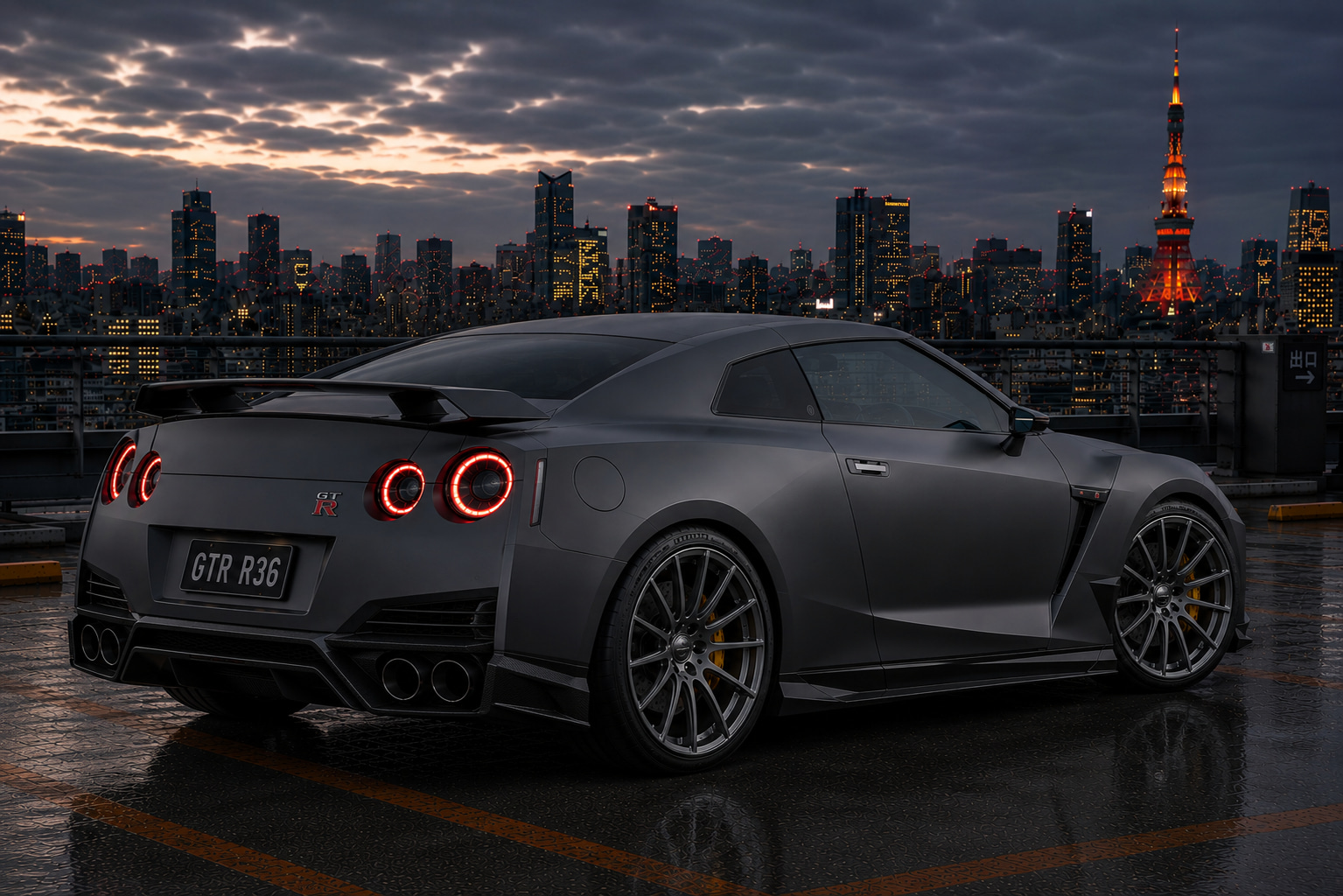
One of the GT-R's biggest strengths was that it wasn't just quicker than many exotic supercars - it was also far more practical. While rivals often offered cramped 2+2 seating and limited luggage space, the GT-R could genuinely carry four adults in comfort, with a boot large enough for weekends away or everyday shopping.
That combination made it a performance car you could happily use every day. Our rendering keeps those qualities at its heart, combining the GT-R's muscular proportions with a practical cabin and usable luggage space.
Even in an era of electrification, there's no reason Nissan should sacrifice the everyday usability that helped make the GT-R so successful.
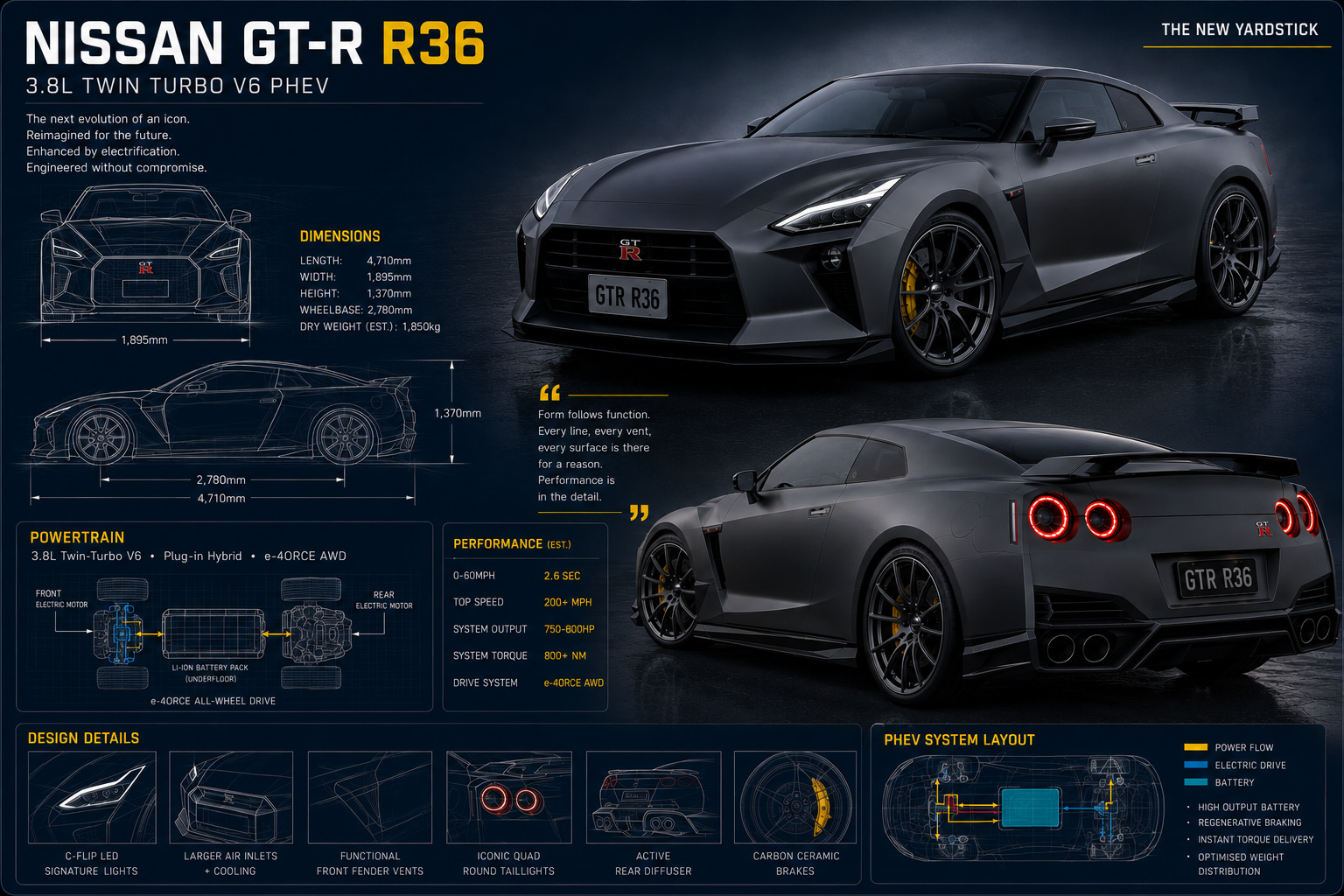
Electrification is also likely to push the next GT-R into entirely new performance territory. With a plug-in hybrid system adding instant electric torque to the famous 3.8-litre twin-turbo V6, outputs of more than 800hp look entirely achievable. That would put the GT-R firmly in the company of mid-engined supercars from Ferrari, Maserati and McLaren, many of which now cost well over £200,000 before options.
The original R35 GT-R became famous because it offered comparable performance for around £55,000 when it first arrived, completely changing expectations of what a supercar could cost. Times have changed, however. Rising development costs, stricter emissions regulations and electrification mean a six-figure starting price is almost inevitable.
Even so, if Nissan can once again deliver supercar performance for significantly less than its rivals, the GT-R could still represent outstanding value.
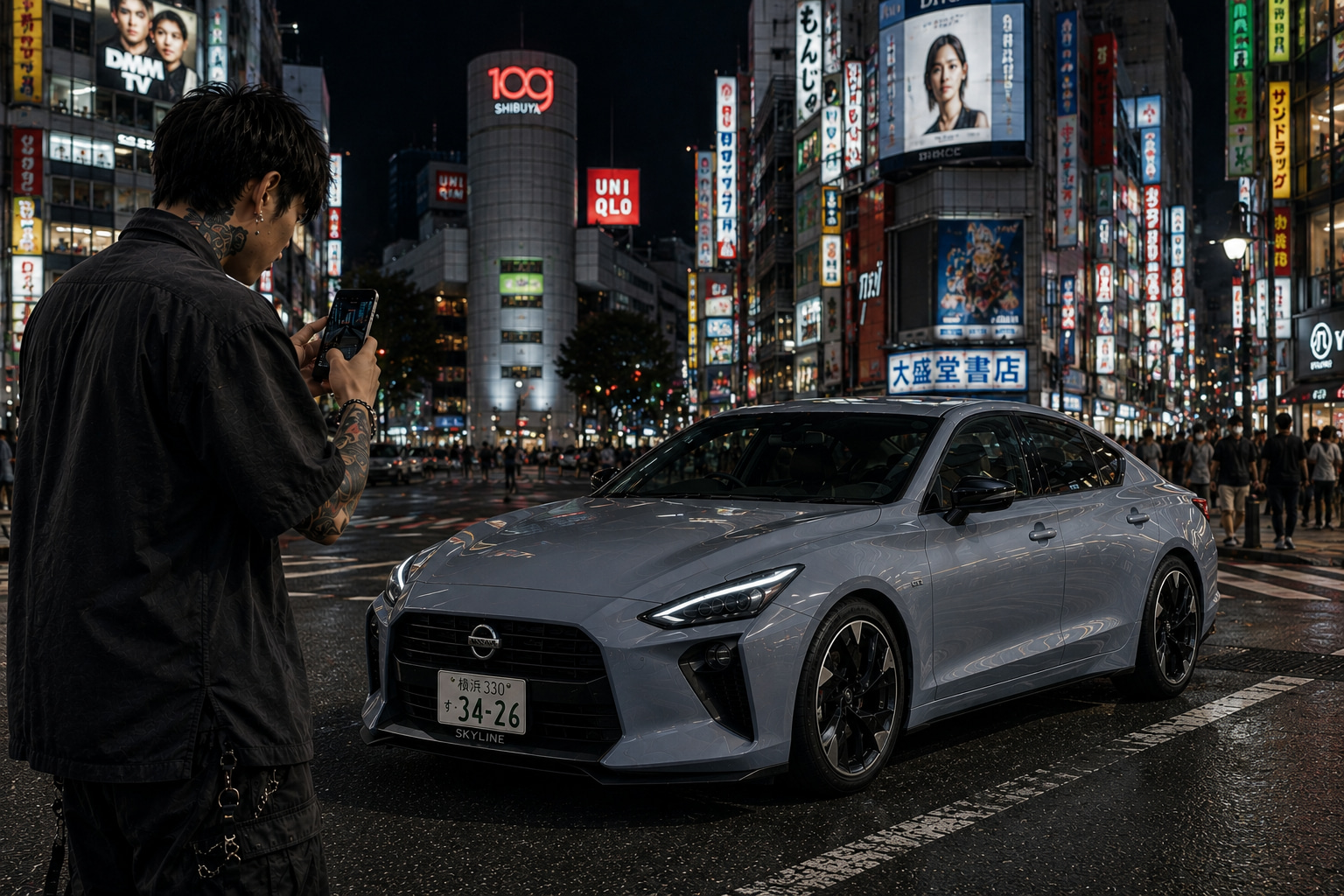
While the GT-R would remain Nissan's flagship performance car, its bold new design could also breathe life back into another legendary name. Our Skyline saloon adopts many of the GT-R's styling cues, creating a family resemblance without turning it into a four-door supercar.
Under the bonnet, the focus would shift from outright performance to everyday usability, with a range of turbocharged four-cylinder petrol, hybrid and plug-in hybrid powertrains replacing the GT-R's powerful twin-turbo V6.
Outputs of around 220hp to 350hp would make it a genuine rival for the BMW 3 Series, Mercedes-Benz C-Class and Lexus IS. Rather than replacing the GT-R, the Skyline would expand its influence, giving Nissan a modern sporting saloon with global appeal once again.
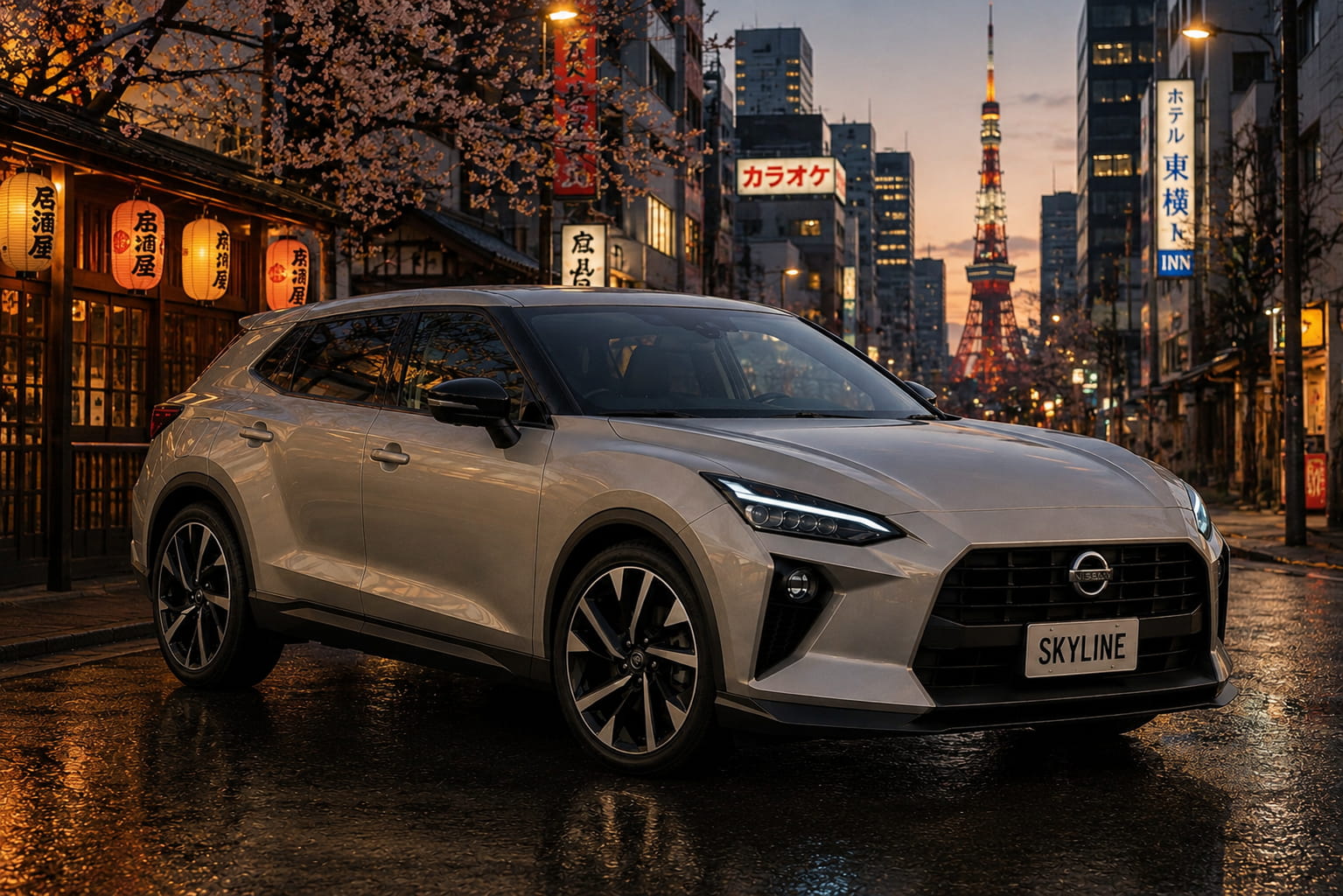
If the Skyline saloon keeps enthusiasts interested, the Skyline crossover could become the model that really pays the bills. SUVs continue to dominate sales around the world, and combining the Skyline name with GT-R-inspired styling could give Nissan a genuinely desirable family SUV.
Sharp handling, bold looks and a practical interior would help it stand out in an increasingly crowded market, while a range of turbocharged petrol, hybrid and plug-in hybrid powertrains would keep running costs competitive. In Japan, it could become a natural rival to the Lexus RX, while offering buyers something with a more sporting character.
More importantly, it would give Nissan another profitable model carrying the Skyline name, helping justify investment in the GT-R and creating a stronger performance-focused family across both Nissan and Infiniti.
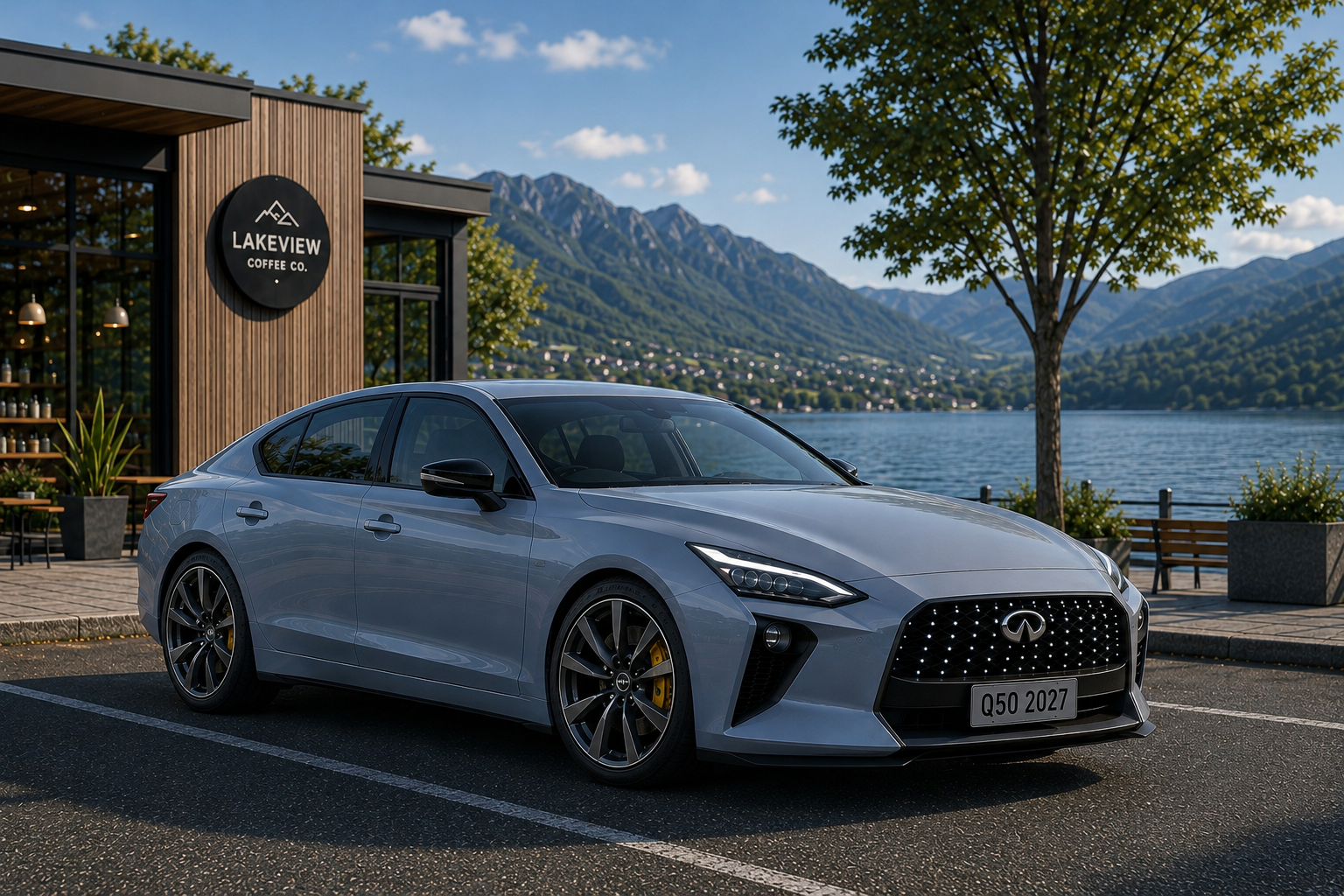
For global markets, especially the United States, Infiniti’s shrinking car range has become a serious weakness for the wider Nissan group. Our rendering shows how naturally the Skyline saloon could once again become an Infiniti Q50, using the same core design but with a more upmarket grille, cabin and finish.
The Q50 was once a central Infiniti model and was even sold in Britain and Europe, yet it received too little investment during its long life and disappeared without an immediate replacement.
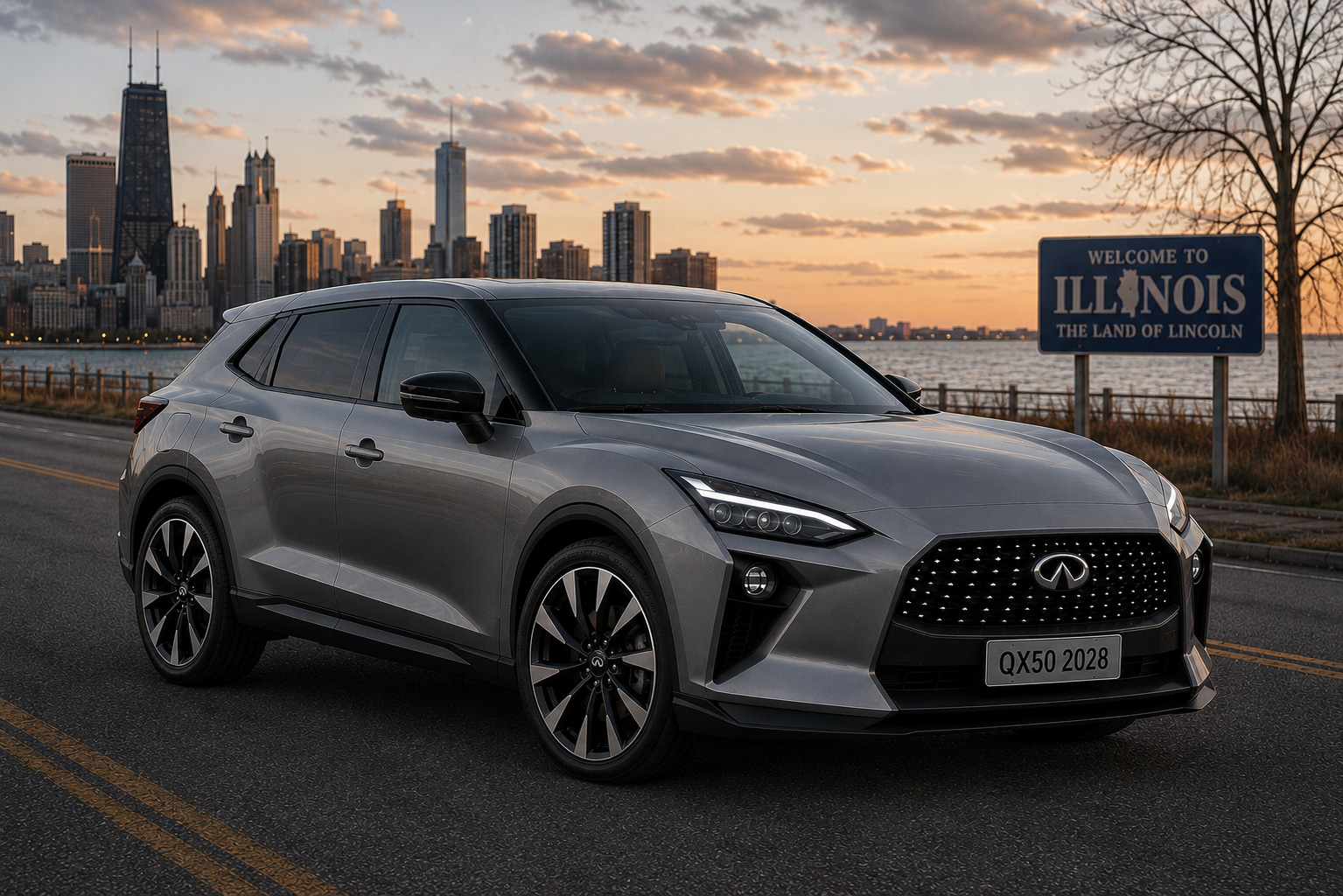
The QX50 would be just as important to Infiniti's revival. While the Q50 would target buyers looking for a compact executive saloon with a sharper driving experience, the QX50 would offer the extra practicality that many families ultimately need.
A higher driving position, more rear passenger space and a larger boot would make it a far more versatile everyday car, while GT-R-inspired styling would help it stand out in a crowded premium SUV market.
Together, the Q50 and QX50 would give Infiniti a strong two-car entry point, appealing to both traditional saloon buyers and the growing number choosing SUVs. More importantly, they would help rebuild a modern, stylish showroom with products capable of attracting a much wider range of customers than the brand does today.
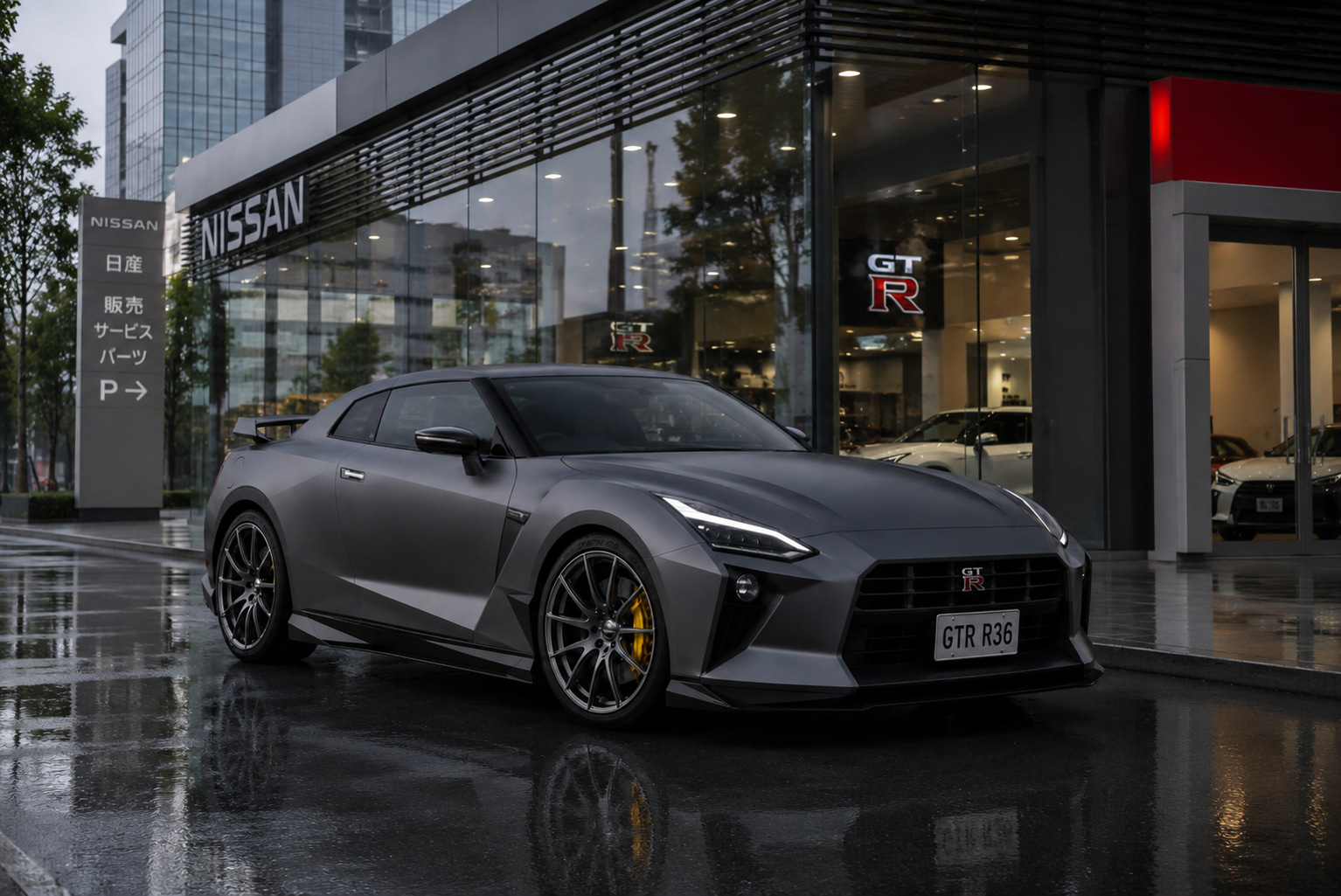
The next GT-R will have a huge job on its hands. It won't just need to replace one of the greatest Japanese performance cars ever built, it could also become the model that reshapes Nissan's image for the next decade. Halo cars have always done more than generate sales - they create excitement that spreads across an entire showroom.
If Nissan can use GT-R styling and technology to inspire a new Skyline saloon and crossover, with Infiniti versions following for global markets, the investment becomes much easier to justify.
Premium models like the Q50, QX50 and GT-R would give the Nissan Group a stronger presence at the top end of the market, while helping improve profitability. With several new Nissan and Infiniti models expected over the next two years, there is a real opportunity to rebuild both brands.
Whether the GT-R remains a standalone icon or becomes the foundation of a wider performance family, time will tell - If Nissan gets the next GT-R right, it could become far more than a flagship performance car - it could become the foundation for an entirely new generation of Skyline and Infiniti models.
(Image Credits: The New Yardstick)
You should also read:
TNY Design Studio Explores BMW’s Next SUV Generation — From X1 to X8
BMW is entering one of the most significant design transitions in its recent history. The arrival of Neue Klasse isn't simply about introducing a new generation of electric cars; its technology and dramatically simplified design language are beginning to influence BMW's entire range. For the company's SUVs, that creates an especially interesting…
Audi’s Next Chapter: A2, E5 and a New Push Upmarket
Audi wants to move upmarket, but its product strategy is starting to pull in two very different directions. In China, the new E5 Sportback shows just how far the brand can go, combining 800V charging, advanced software and a new generation of digital architecture developed with SAIC. In Europe, meanwhile, Audi is…
Nissan Pixo: Could Britain's Former Cheapest Car Make an Electric Comeback?
When the Nissan Pixo arrived in the UK in 2009, it quickly established itself at the very bottom of Britain's new-car market. For the majority of its short life, it was Britain's cheapest new car — a position that became an important part of the little Nissan's identity. Then, in 2013, Dacia…
Hyundai's 100-Car Plan: What Comes Next for One of the World's Fastest-Changing Car Makers?
Twenty years ago, Hyundai was still fighting to prove that it could match the established European and Japanese brands. Today, that description feels almost unrecognisable. Hyundai has become a genuinely global manufacturer, producing everything from affordable small cars to sophisticated EVs, large SUVs and increasingly serious performance models. Now it wants to…
Stellantis Vans 2030: What Comes Next for Europe's Biggest Van Family?
Stellantis has built one of Europe’s biggest commercial vehicle operations, with familiar names from Citroën, Fiat, Peugeot, Opel and Vauxhall covering almost every corner of the van market. But the automotive world is changing faster than the traditionally slow-moving commercial vehicle cycle. Battery technology continues to improve, hybrid powertrains are finding new…
Rebuilding Nissan: The Cars That Could Fix Its Confusing European Line-Up
Around 20 years ago, Nissan changed the shape of the mainstream car market. The Qashqai replaced the dependable but forgettable Almera and helped turn the crossover into a family-car staple. The Juke followed, proving equally disruptive, while in 2010 the Leaf brought electric motoring to the masses. All three were game-changing cars…
Could These Two Models Complete Suzuki's Future Line-up?
Suzuki's range has become one of the simplest on sale, but two clear opportunities remain. At the bottom sits the biggest omission of all: there's no modern successor to cars like the Alto, Celerio or Ignis. An affordable city car has long been one of Suzuki's greatest strengths, and an electric replacement…
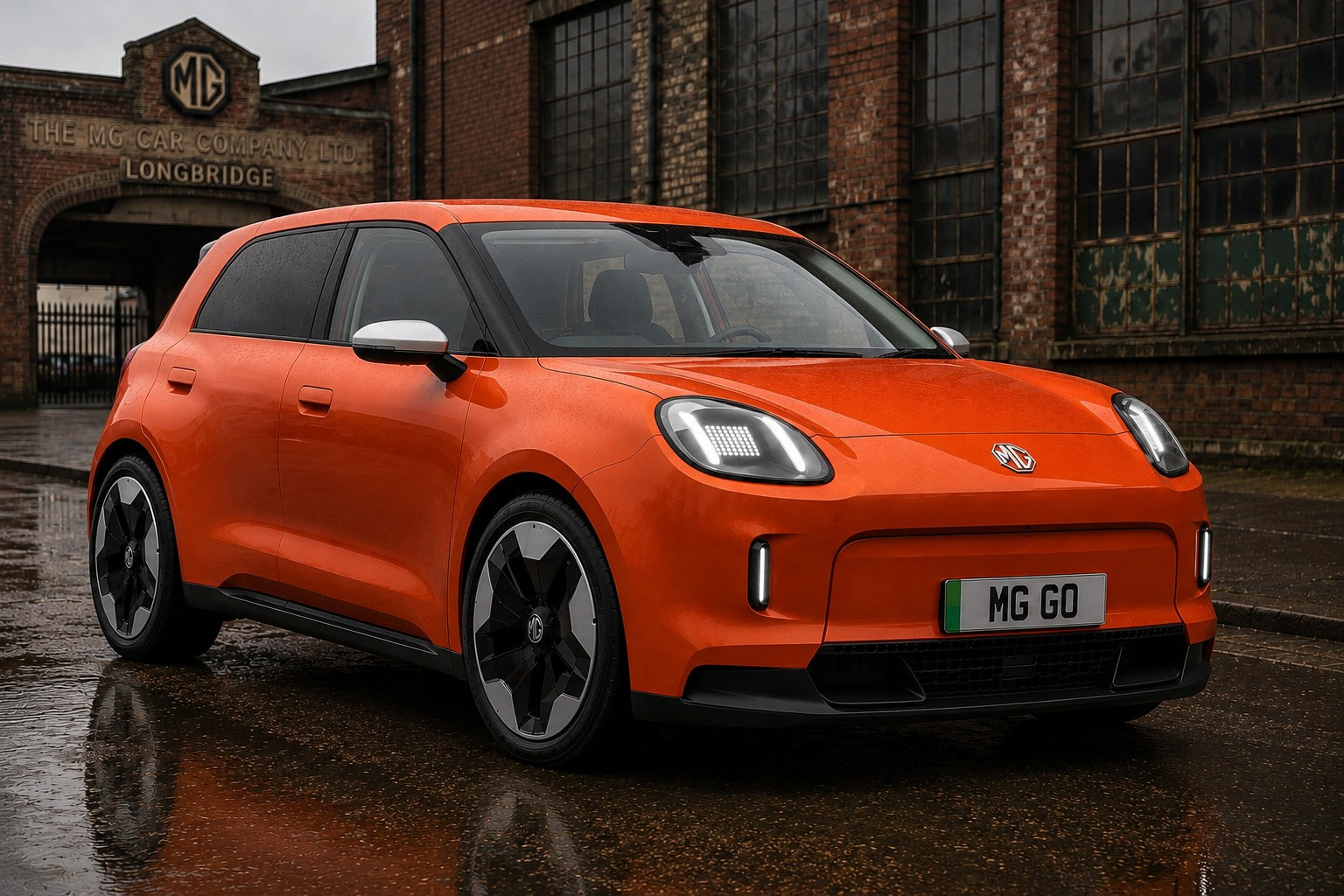
MG GO: Our Vision for Britain's Next Affordable Electric Hatchback
MG has become one of Britain's fastest-growing car brands, but one gap remains in its expanding electric line-up: a compact hatchback sitting below the MG4. In this Design Studio feature, we imagine the MG GO, an affordable electric supermini positioned as the EV sibling to today's MG3. At around four metres long,…