From Sodium to Solid-State: TNY Explores the Future of Electric Car Batteries
We use the Vauxhall Frontera Electric as our budget benchmark, exploring how optimised LFP, LMFP and sodium-ion batteries might improve an accessible family SUV.
At the other end of the scale, the Volvo EX60 P12 AWD provides a high-end yardstick, already promising up to 503 miles from its 112kWh usable battery. Here, we examine how silicon-rich anodes, semi-solid-state and all-solid-state technology could take battery performance further.
Some advances are already reaching production, while others remain expensive or technically challenging. But the direction of travel is clear: more energy, less weight and potentially better value.
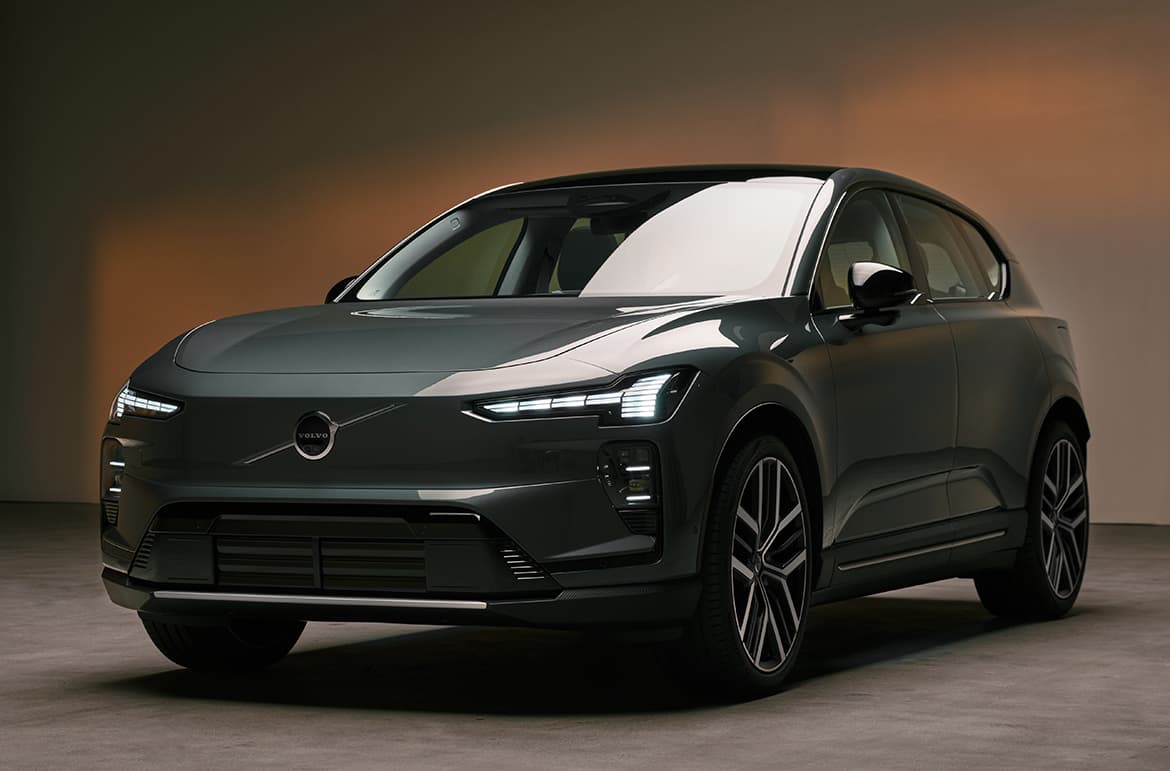
The Volvo EX60 P12 AWD uses a high-nickel nickel-manganese-cobalt (NMC) lithium-ion battery, with a conventional liquid electrolyte rather than a solid-state design. Its cathode combines nickel, manganese and cobalt, while the anode is graphite-based.
The pack has a 117kWh gross capacity, of which 112kWh is usable, and operates on an 800V electrical architecture. Volvo claims up to 503 miles of WLTP range, supported by a dual-motor, 680hp powertrain.
The complete vehicle has a published running order mass of approximately 2,405kg; Volvo has not published a separately verified figure for the complete battery pack's own weight.
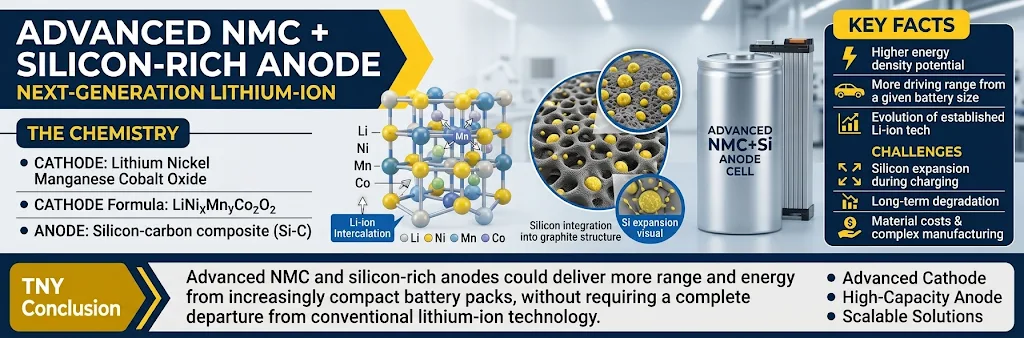
Replacing the conventional graphite anode with a silicon-rich alternative could make the EX60's battery both lighter and more energy-dense. Silicon can store considerably more lithium than graphite, potentially allowing the existing 112kWh usable pack to be reduced in weight. Our estimates suggest a potential saving of around 30–80kg, while retaining the P12's 503-mile WLTP range.
Alternatively, Volvo could use the same battery weight and physical space to accommodate more energy. A pack offering around 118–123kWh usable capacity could potentially push the P12 towards 530–553 miles, assuming unchanged vehicle efficiency.
We estimate the current NMC pack would cost around $15,000–17,000 to manufacture, compared with approximately $16,000–19,000 for this higher-capacity silicon-rich alternative.
However, silicon expands significantly during charging, placing stress on the anode and potentially accelerating degradation. Maintaining fast charging, safety and long-term durability remains a major engineering challenge.
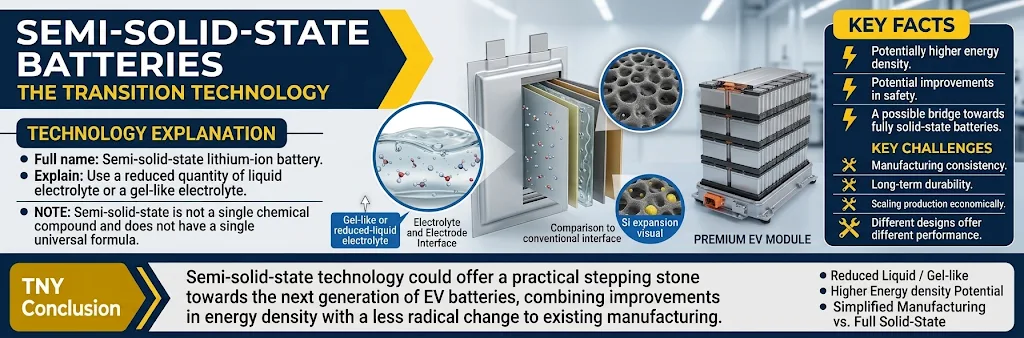
Semi-solid-state batteries replace some of the conventional liquid electrolyte with a gel-like or solid electrolyte, potentially improving energy density, thermal stability and safety. Applied to the EX60, this could allow the existing 112kWh usable battery to become substantially lighter, with our estimates suggesting a potential saving of around 60–140kg.
Alternatively, Volvo could use a similar battery weight and physical footprint to accommodate around 120–125kWh of usable energy, potentially increasing the P12's WLTP range to approximately 539–562 miles.
However, this technology remains expensive to manufacture at automotive scale. We estimate a potential pack cost of $29,000–38,000, compared with $15,000–17,000 for conventional NMC.
Although the electrolyte could improve thermal stability, maintaining consistent performance, long-term durability and economical mass production remain significant challenges.
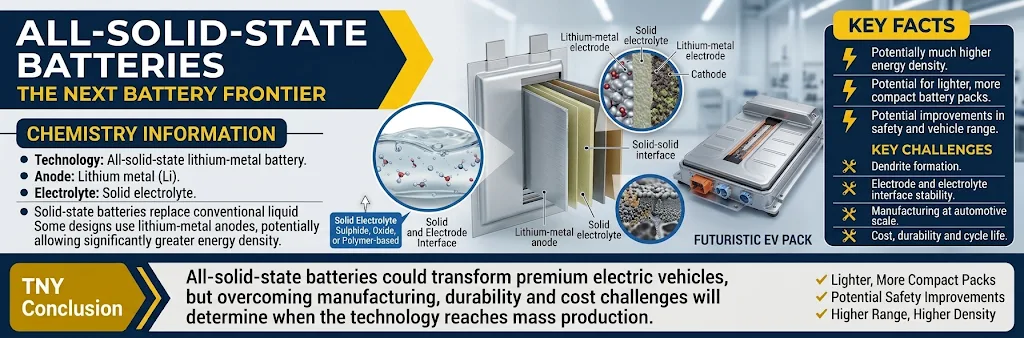
An all-solid-state battery could represent a much bigger step forward for the EX60, replacing its liquid electrolyte with a solid alternative and potentially using a lithium-metal anode. This could substantially increase energy density, allowing the existing 112kWh usable pack to become around 50–170kg lighter while retaining the P12's 503-mile WLTP range.
Alternatively, Volvo could use a similar battery weight and physical footprint to accommodate approximately 125–130kWh of usable energy, potentially taking the P12 towards 562–584 miles.
However, early-production costs could be substantial, with our estimates putting a complete pack at around $47,000–94,000.
The technology promises impressive energy density and potentially improved safety, but challenges remain around manufacturing consistency, maintaining contact between solid materials, lithium dendrite formation and long-term durability. Mass production at competitive prices remains a significant hurdle.
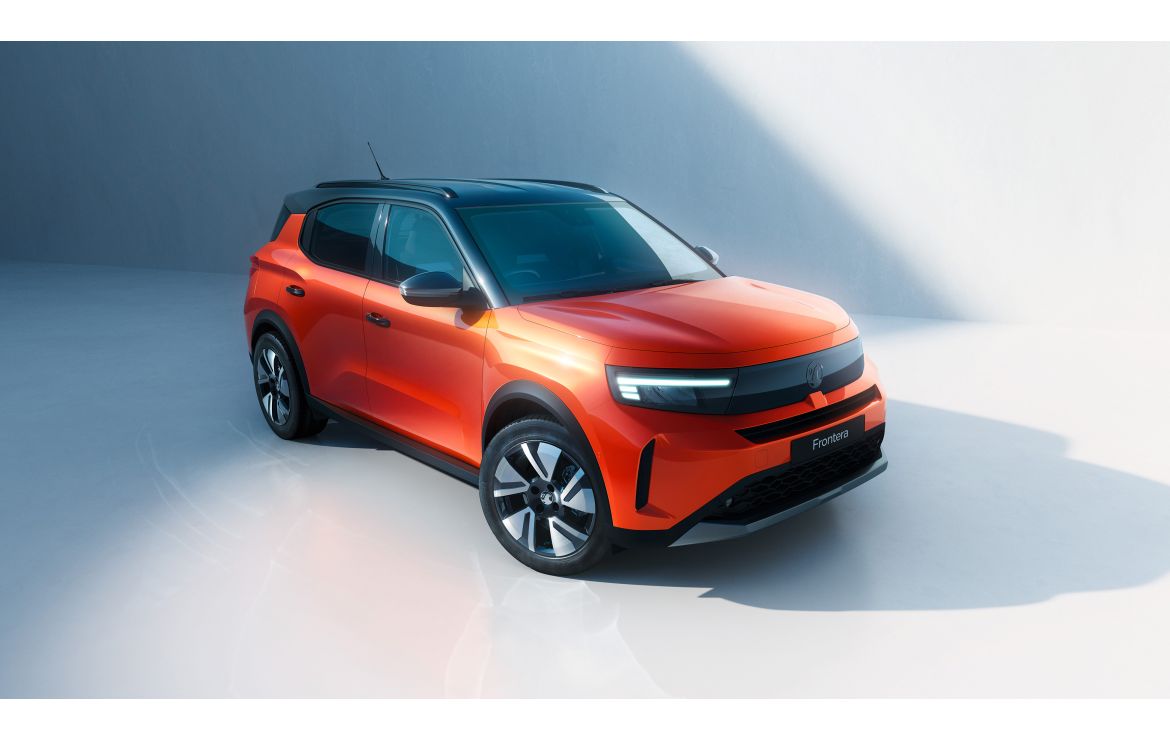
The longer-range version uses nickel manganese cobalt (NMC) chemistry, demonstrating how different batteries can serve different price and range requirements.
LFP has helped reduce EV costs by avoiding the nickel and cobalt used in conventional NMC batteries, but further improvements are possible.
Optimised LFP manufacturing could lower prices, lithium manganese iron phosphate (LMFP) promises greater energy density, while sodium-ion offers an alternative using more abundant raw materials.
For an affordable family SUV, even modest improvements matter. Cheaper batteries could bring purchase prices down, while greater energy density could deliver more range without requiring a larger, heavier pack. We explore four potential options using the Frontera as our benchmark.
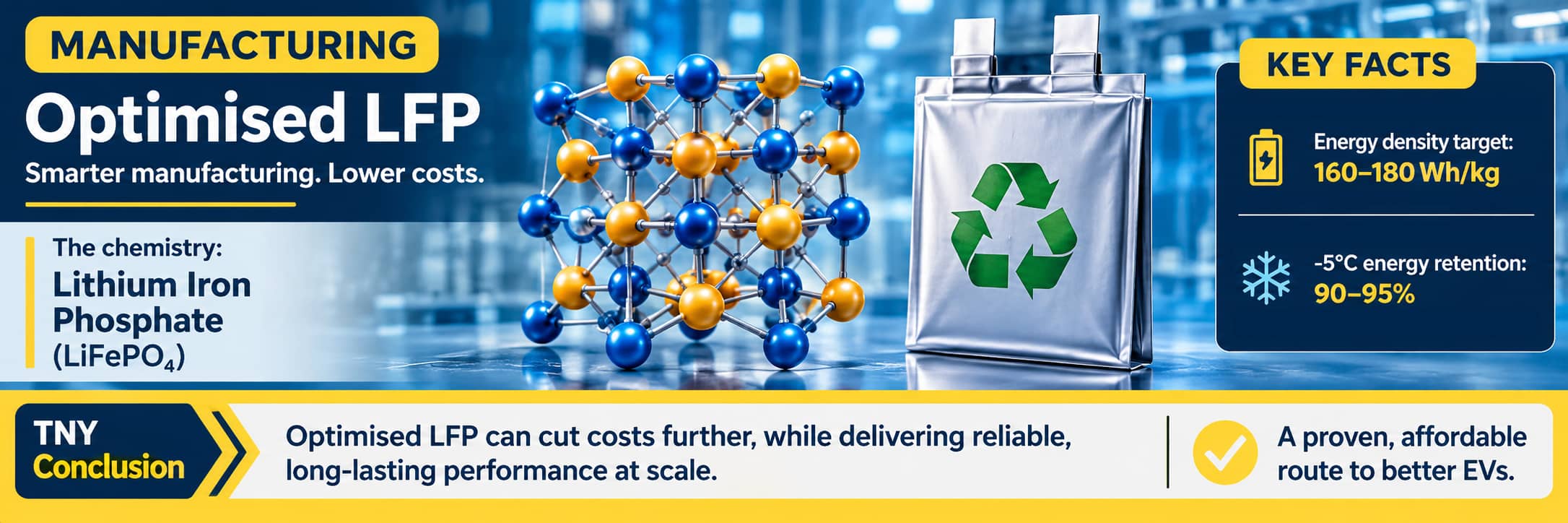
Optimising the existing LFP chemistry could be one of the most straightforward ways to improve the Frontera's battery without introducing an entirely new material. Advances in electrode coatings, particle sizing, cell manufacturing and battery-pack integration could increase energy density while reducing production costs. Better cell-to-pack designs could also reduce the amount of supporting structure required around the cells.
The existing 44kWh pack could potentially become around 10–20kg lighter, with manufacturing improvements bringing its estimated cost down from around $3,300–3,800 to $2,900–3,400. With capacity unchanged, the Frontera would retain its 186-mile WLTP range, although a small efficiency improvement could take this towards 190 miles.
Alternatively, using the weight and packaging savings to accommodate a larger battery could potentially increase capacity to around 46–48kWh, lifting range to approximately 194–203 miles.
The advantage is that LFP already benefits from an established supply chain, relatively abundant materials and good durability. However, improvements are likely to be incremental rather than revolutionary, and LFP will still have a lower energy-density ceiling than more advanced lithium-ion chemistries.
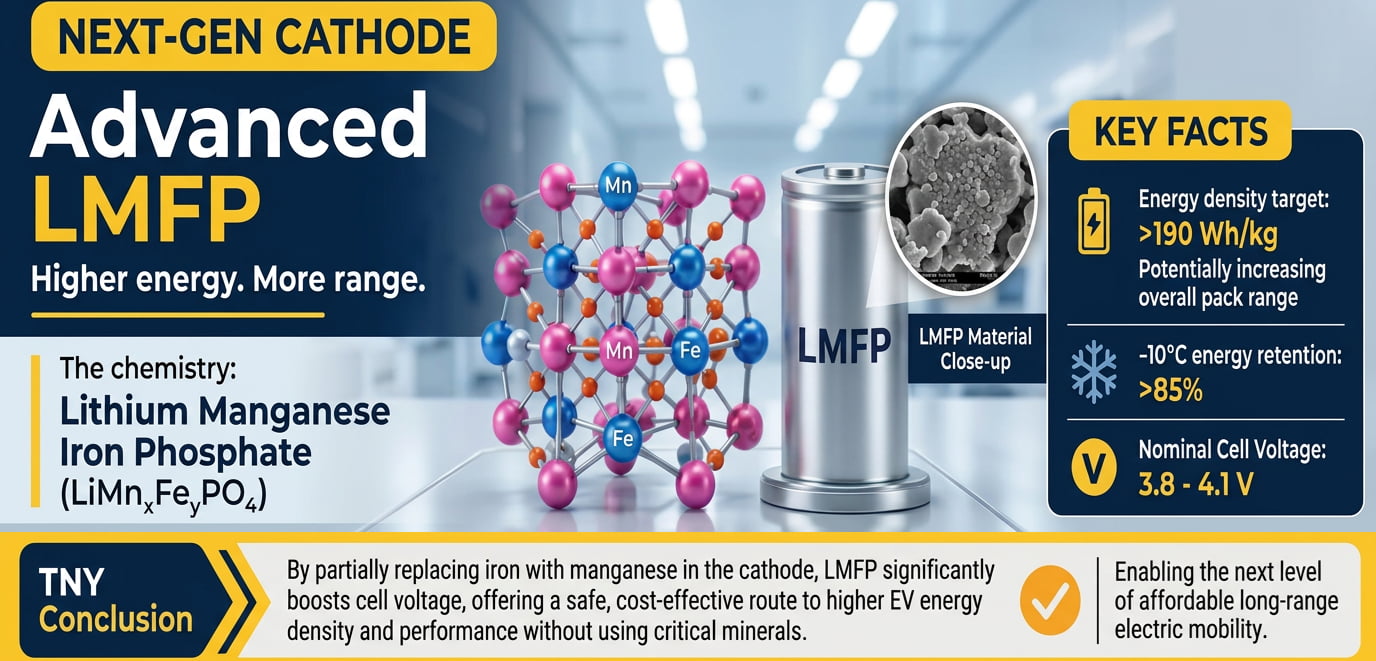
LMFP builds on LFP by replacing some of the iron in its cathode with manganese. This increases the battery's operating voltage, allowing it to store more energy without relying on expensive nickel and cobalt. It retains many of the cost and thermal-stability advantages associated with phosphate-based batteries, while potentially delivering around 10–20% greater energy density than conventional LFP.
With greater energy density, LMFP could make a 44kWh battery around 255–295kg, compared with an estimated 285–330kg for the existing LFP pack. We estimate a pack cost of approximately $3,000–3,600. Keeping capacity unchanged would leave the Frontera close to its existing 186-mile range, but using the improved density to increase capacity to around 48–51kWh could potentially deliver 203–216 miles.
That would offer a meaningful improvement without moving to a conventional nickel-rich NMC battery. However, manganese introduces additional challenges. Slower lithium-ion movement, reduced electrical conductivity and manganese dissolution can affect charging performance and long-term durability. Manufacturers must overcome these issues before LMFP can realise its full potential at scale.
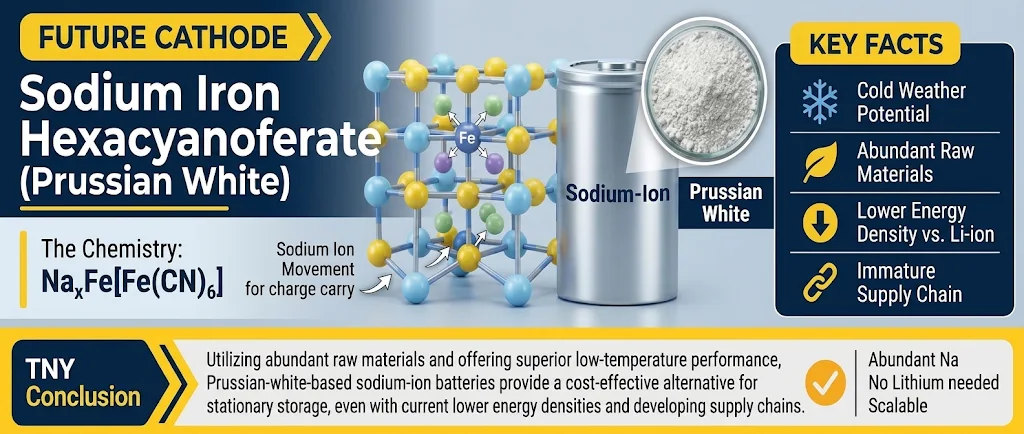
Sodium-ion batteries take a different approach, replacing lithium with sodium, an abundant and widely available material. Our example uses a Prussian-white cathode and a hard-carbon anode, with aluminium current collectors on both sides of the cell. This reduces reliance on several critical battery materials and could eventually offer manufacturers a cheaper alternative to lithium-based chemistries.
Sodium-ion presents a different compromise. Its estimated 44kWh pack could weigh around 295–350kg, with a potential cost of $3,000–3,700. That means it may not immediately offer a weight or price advantage over LFP.
At the same capacity, the Frontera could still achieve a broadly comparable range, although its lower energy density could make it heavier. If the same weight and packaging allowance were retained, a more realistic capacity might be around 40–44kWh, giving an estimated 170–186 miles.
Its appeal would instead lie in material availability, supply-chain diversification and potential cold-weather performance. However, the technology needs further development and greater manufacturing scale before it can become a commercially competitive alternative
What Does the Future Hold for EV Batteries?
The next generation of battery technology could change electric cars in ways that go far beyond extending their driving range.
For affordable models such as the Vauxhall Frontera, improvements to established LFP chemistry, the arrival of LMFP and the development of sodium-ion could help reduce costs, improve efficiency and make electric motoring more accessible. At the premium end, silicon-rich anodes and solid-state technologies could allow cars such as the Volvo EX60 to carry lighter battery packs, travel further or achieve both.
However, progress will not happen overnight. Manufacturing costs, material availability, charging performance, durability and the ability to produce cells at enormous scale will determine which technologies make it into mainstream vehicles. Some advances are already moving towards production, while others remain years away from widespread adoption.
Ultimately, the most successful battery will not necessarily be the one with the highest energy density. It will be the one that delivers the best balance of price, range, weight, reliability and practicality for the driver. And as battery technology continues to evolve, that balance could make electric cars an increasingly compelling choice.
Disclaimer and Image Credits
This article represents The New Yardstick's independent research, analysis and editorial interpretation of current and emerging battery technologies. All projected specifications, performance figures, battery weights, costs, ranges and comparisons are our own estimates for illustrative purposes only. They are not official manufacturer figures, confirmed production specifications or supplier quotations, and should not be interpreted as guarantees of future performance.

The technologies discussed are at different stages of development, and their eventual capabilities, availability and commercial viability may differ from the scenarios presented. Figures are based on our own research and assumptions, with guidance from publicly available technical information. Actual results will depend on battery design, vehicle engineering, manufacturing methods and operating conditions.

Vehicle imagery is credited to Vauxhall and Volvo, respectively. All trademarks and manufacturer names remain the property of their respective owners. The New Yardstick is an independent editorial publication and is not affiliated with, endorsed by or acting on behalf of either manufacturer.
You should also read:
Two Forgotten Names, One Electric Future – Reimagining the Nissan Figaro and Renault Wind
Small electric cars are finally becoming affordable, but that doesn't mean they all need to follow the same formula. Renault's new Twingo E-Tech demonstrates what can be achieved with compact, cost-effective electric engineering, raising an intriguing question about what else those foundations could support. For TNY Design Studio, two names immediately spring to…

From Bestseller to Beyond – TNY Design Studio Explores Jaecoo's Future
Few new car brands have arrived in Britain with quite the impact of Jaecoo. Launched here in January 2025, the Chinese SUV marque had already put its Jaecoo 7 at the top of the UK sales chart twice by September 2026, recording 10,813 registrations in that month alone. Behind it stands Chery,…
An Estate for Every Budget – 12 of the Best from £2,000 to £20,000
Estate cars have long been among the most sensible vehicles on the road, but today's used market offers some particularly extraordinary value. From dependable family transport costing little more than £2,000 to enormous executive estates with almost 700 litres of luggage space, there's something here for virtually every budget. Spend a little…
Riversimple: What Comes After the Rasa? TNY Design Studio Explores
Hidden among the hills of Mid-Wales is a carmaker that has spent more than two decades questioning almost everything about the conventional car. Riversimple isn't chasing enormous batteries, huge horsepower figures or ever-heavier SUVs. Instead, founder Hugo Spowers and his team have pursued an unusually simple idea: build a genuinely lightweight hydrogen-electric…
Back to the Future – Reimagining the Mitsubishi i for Europe
Few small cars have been as quietly ambitious as the Mitsubishi i. Launched in Japan with a rear-mounted petrol engine, it later became the i-MiEV, one of the earliest mass-produced electric cars. Two decades on, Mitsubishi is again leaning heavily on partnerships, with Renault-derived models underpinning much of its European range. Yet…
Paris Motor Show 2026: TNY Explores the Biggest Reveals from Day One
The 2026 Paris Motor Show has opened its doors, bringing one of Europe's biggest motoring events back into the spotlight. With more than 100 exhibitors, nearly 60 vehicle manufacturers and dozens of new models and concepts, this year's show promises plenty to explore. Beyond the spectacular concept cars and elaborate displays, Paris…
Škoda's Small Car Future: Cheaper EVs and a New Life for the Scala
Škoda has built its reputation on delivering practical, spacious cars at sensible prices. Models like the Scala demonstrate just how much car the Czech manufacturer can offer for the money, but as the industry moves towards electrification, can Škoda bring that same value to its smallest electric models? The incoming Epiq is…
TNY Design Studio Explores BMW’s Next SUV Generation — From X1 to X8
BMW is entering one of the most significant design transitions in its recent history. The arrival of Neue Klasse isn't simply about introducing a new generation of electric cars; its technology and dramatically simplified design language are beginning to influence BMW's entire range. For the company's SUVs, that creates an especially interesting…