What happens when the government mandates electric vans, but the market cannot afford to buy them?
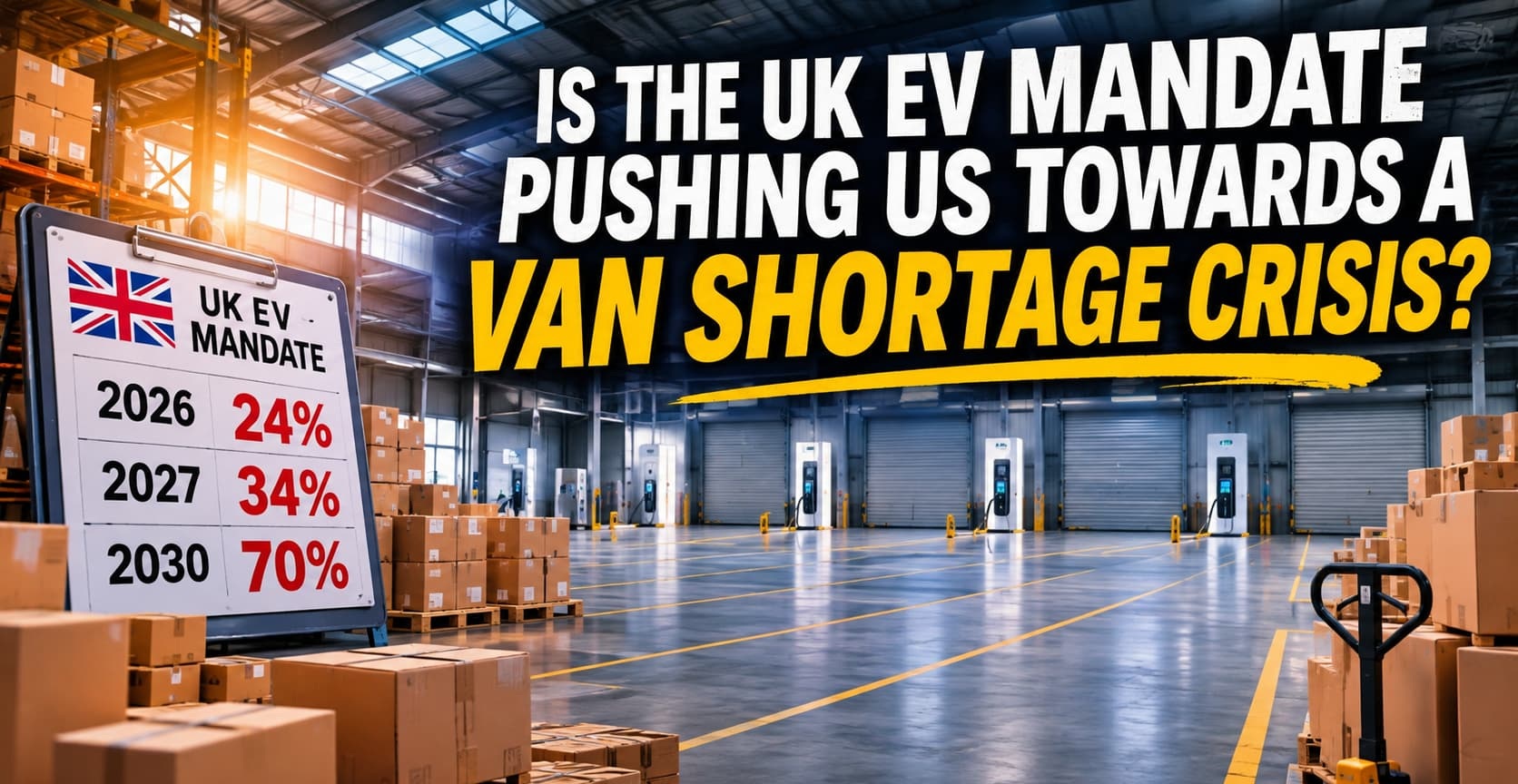
Britain's van manufacturers are facing an increasingly difficult challenge. Under the Government's Zero Emission Vehicle (ZEV) mandate, manufacturers face a headline target equivalent to 24% of new van sales being zero-emission in 2026, rising to 34% in 2027 and 70% by 2030.
In 2025, battery-electric vans accounted for just 8.7% of new registrations for vehicles up to 3.5 tonnes, falling considerably short of the 16% mandate target. The situation has improved during 2026, but progress remains slow.
By October, electric vans up to 3.5 tonnes accounted for just 9.7% of registrations year-to-date, against a target of 24%. Even including heavier electric commercial vehicles, the overall LCV figure reached only 11%, with vans up to 3.5 tonnes remaining below 10%.
The problem isn't simply that businesses are reluctant to go electric. Purchase prices remain high, charging infrastructure is poorly suited to working vans, and depreciation can make leasing costs difficult to justify. Manufacturers are being asked to deliver a transition that their customers cannot always afford or accommodate.
So, with 2030 approaching, is Britain heading towards an electric van revolution, or a commercial vehicle crisis?
Britain's Electric Van Mandate
Government targets versus actual battery-electric market share, 2024–2030
Actual figures: 2024 and 2025 full-year registrations; 2026 January–October year-to-date. No actual figures are available yet for 2027–2030. Shortfalls are measured in percentage points.
Source: Society of Motor Manufacturers and Traders (SMMT); UK Government ZEV mandate targets.
In the commercial vehicle sector, however, that same regulatory framework has collided with commercial reality.
Missing the target can be expensive. Under the ZEV mandate, manufacturers face a compliance payment of £15,000 for each van allowance they fall short of from 2025 onwards, after taking account of available trading and flexibility mechanisms.
This is not a straightforward fine on every diesel van sold: the rules allow manufacturers to acquire additional allowances through several routes before a payment becomes necessary. Nevertheless, the potential financial exposure is substantial, particularly for manufacturers with large commercial vehicle ranges and limited electric sales.
Unlike company car drivers, van operators do not buy vehicles for tax-shielded badge appeal. They buy them as depreciating capital tools where payload, towing capacity, winter range, and rapid turnaround times dictate profitability.
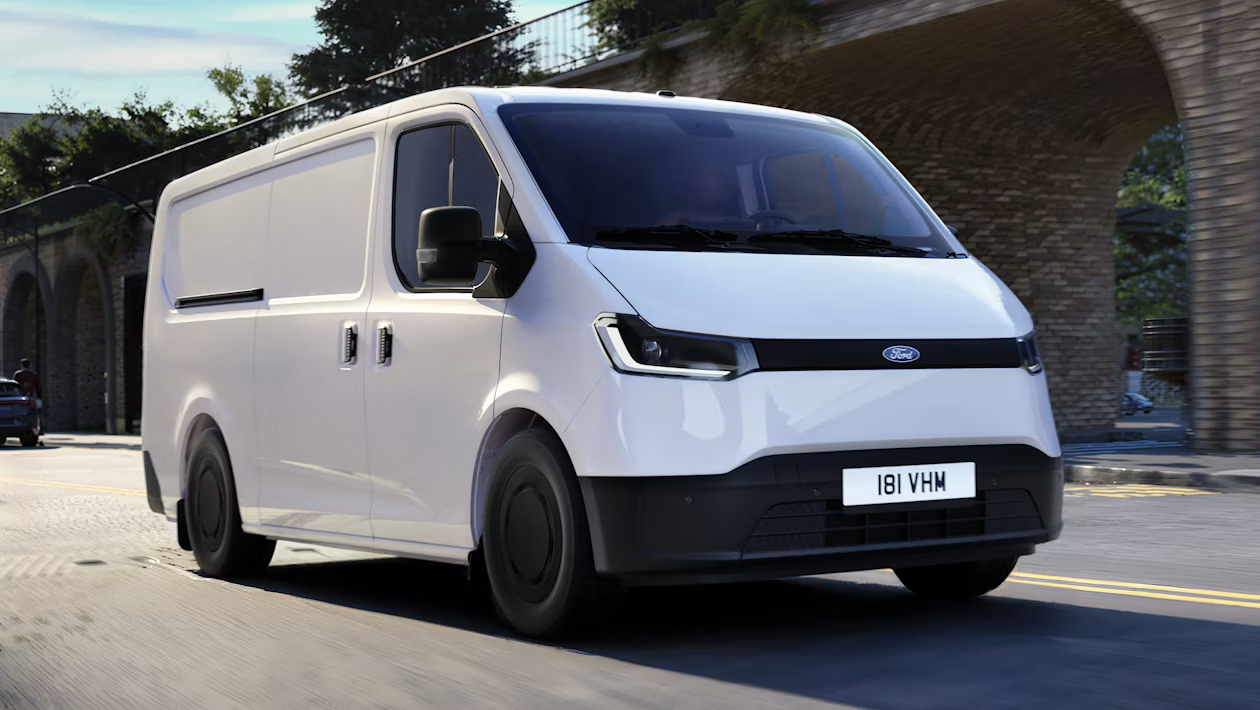
For tradespeople, rural contractors, and regional logistics operators, the arithmetic still fails to stack up:
Upfront Capital Cost: Even with the Plug-in Van Grant (£2,500 for small vans; £5,000 for large vans), electric equivalents can carry a £10,000–£15,000 price premium over diesel counterparts.
Operational Friction: Cold-weather range degradation, heavy payloads, and a public charging network designed for passenger cars rather than long-wheelbase vans make single-shift regional work difficult without depot infrastructure.
Residual Uncertainty: Weak used demand for first-generation electric vans has left leasing companies pricing steep depreciation into monthly rentals.
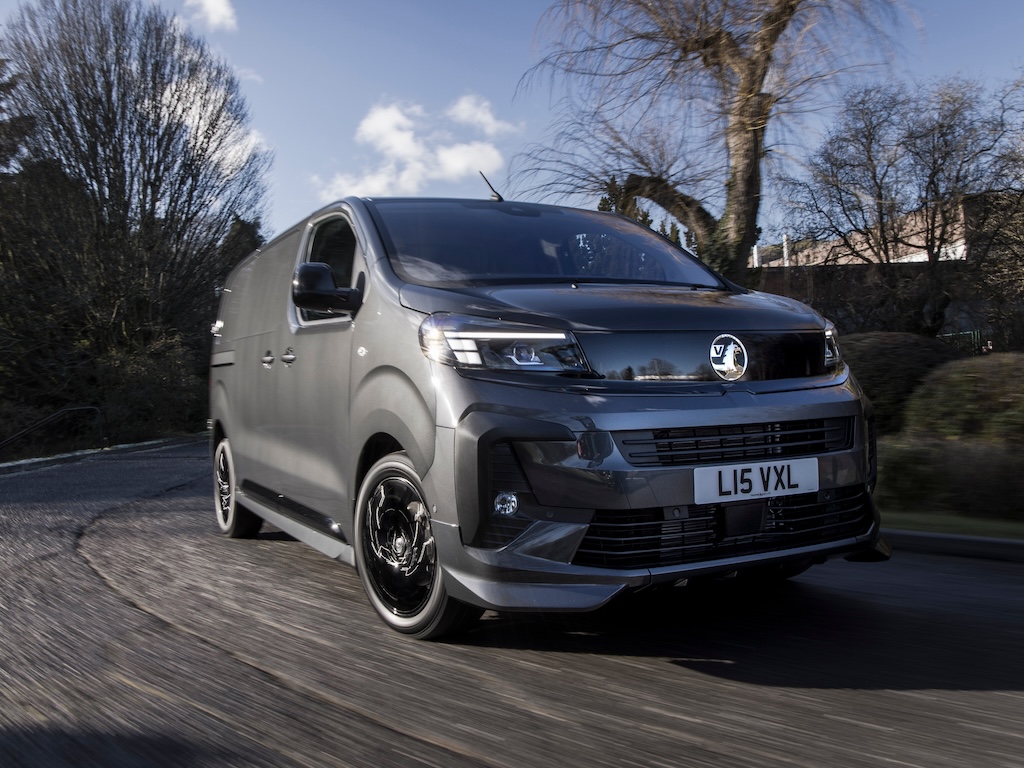
Despite the widening gap between electric van registrations and the mandated targets, manufacturers have not simply been left to pay penalties on every missing electric vehicle.
The ZEV mandate contains a series of compliance mechanisms that allow manufacturers to trade allowances, carry credits forward from previous years, borrow against future allocations and, in certain circumstances, transfer credits between the car and van schemes.
These provisions have helped soften the immediate financial impact of the transition, although they do not resolve the underlying problem of weak electric van demand.
Under the Vehicle Emissions Trading Schemes (VETS) rules, brands have stayed compliant through four principal compliance mechanisms:
Banking Previous Allowances: Manufacturers that outperform their ZEV targets can carry surplus allowances forward, providing a reserve that can be used to help meet future compliance obligations.
Borrowing Against Future Years: Manufacturers can borrow allowances from future compliance periods, subject to regulatory limits. These allowances must be repaid by 2030, with interest applied to the borrowed balance.
Trading and Cross-Scheme Transfers: Manufacturers can acquire allowances from other participants or, where the regulations permit, trade allowances between the car and van schemes. One car-scheme allowance can be exchanged for 0.4 van-scheme credits, providing an additional route for manufacturers with surplus car allowances to meet their van obligations.
CO₂ Allowance Conversions: Manufacturers can also use qualifying surplus allowances from their vehicle emissions trading schemes to offset ZEV mandate shortfalls. These conversions are subject to annual limits and fixed exchange rates, providing another route towards compliance without requiring every missing electric vehicle to be replaced by a direct purchase of credits.
The wider danger for British businesses is not merely higher van prices; it is structural supply withdrawal.
Right-hand-drive commercial vehicles already represent a relatively small, bespoke engineering run for European manufacturers. If Westminster insists on enforcing unachievable quotas backed by £15,000 fines, global OEMs will simply cap UK diesel imports rather than subsidise loss-making sales—leaving British fleets facing acute shortages and inflated used values.
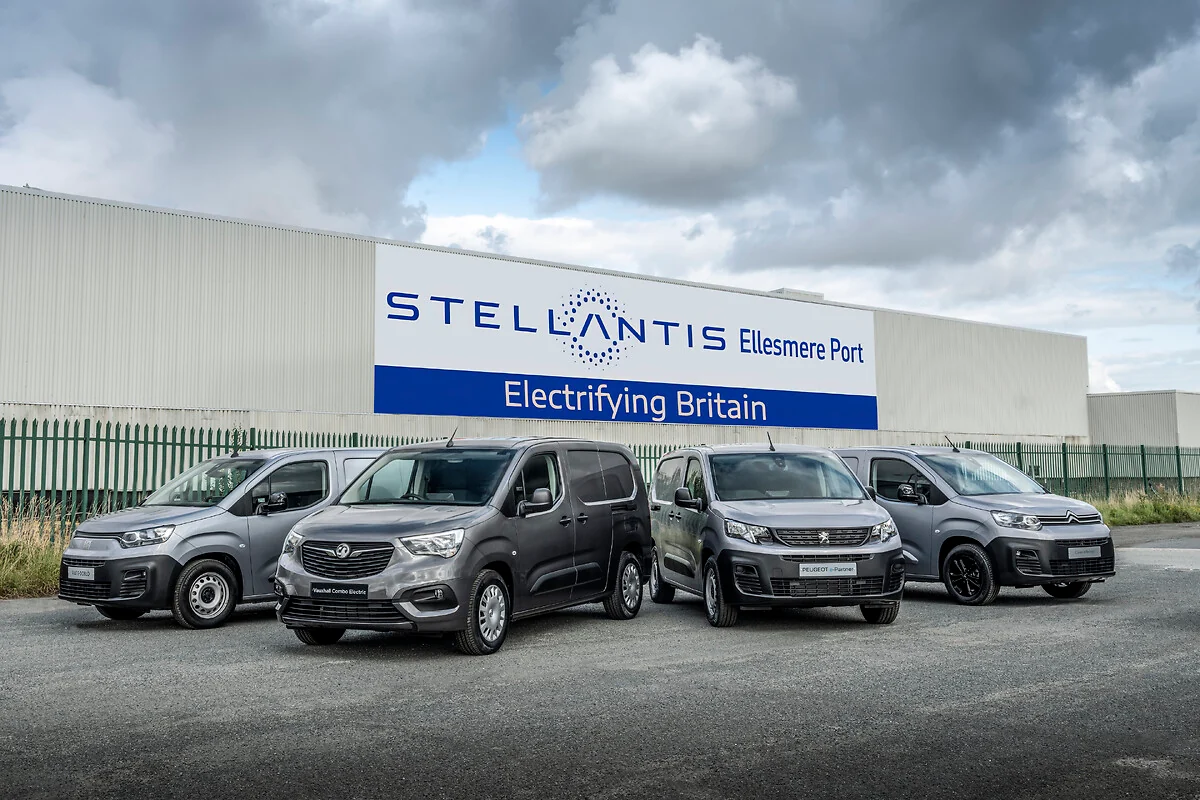
Nowhere is this tension sharper than at Ellesmere Port. Following the closure of Vauxhall's Luton manufacturing facility in 2025, the Cheshire plant became Stellantis's sole remaining UK vehicle assembly factory. It also occupies a particularly important position within the group's electric vehicle strategy, having been established as Stellantis's first dedicated battery-electric vehicle manufacturing facility.
Its future therefore has significance beyond a single factory: it represents a substantial part of Britain's remaining commercial vehicle manufacturing capacity.

The Government's review of the ZEV mandate has now reached a critical stage. A joint consultation involving the UK Government and devolved administrations closed on 23 October 2026, inviting views on how the regulations should operate in the years ahead. The Government has said it intends to publish its response by the end of 2026, with any changes potentially taking effect from the 2027 compliance year.
For manufacturers and fleet operators, the outcome could prove significant. The 2027 van target is scheduled to rise to 34%, yet electric van registrations remain substantially below that level. Whether ministers retain the existing trajectory, introduce additional flexibility or revise elements of the scheme remains to be seen.
Britain's electric van transition is not necessarily doomed. Battery technology is improving, charging infrastructure is expanding and manufacturers are introducing increasingly capable electric commercial vehicles. But the timetable must reflect the realities of the businesses expected to buy them.
Editorial Disclaimer: This article reflects information, market data and regulatory requirements available at the time of publication. Figures and policies may change, and forecasts or comments about future market conditions represent editorial analysis rather than confirmed outcomes. Every effort has been made to ensure accuracy, but readers should check current manufacturer and Government information before making purchasing or business decisions.

Image Credits: Manufacturer and vehicle press images are credited to their respective copyright holders, including Ford, Maxus and Stellantis. All other image rights remain with their respective owners. Original graphics and editorial content © The New Yardstick.
You should also read:

Market Watch: How Far Does £200 a Month Go in 2026?
In a market where new-car prices seem to climb with every model launch, £200 a month might not sound like enough to get into something fresh from the factory. Yet look beyond the headline offers and there are still some genuinely tempting deals. For this edition of Market Watch, The New Yardstick…
Market Watch: Britain's Forgotten Cars Are Making a Comeback
As The New Yardstick reaches its 75th article and launches its Instagram account, we're taking a moment to look beyond new vehicle launches and future technologies. While exploring Instagram's automotive community, we discovered a surprisingly enthusiastic following for the ordinary cars of the 1990s and 2000s. From dedicated owners to small enthusiast…

Two Forgotten Names, One Electric Future – Reimagining the Nissan Figaro and Renault Wind
Small electric cars are finally becoming affordable, but that doesn't mean they all need to follow the same formula. Renault's new Twingo E-Tech demonstrates what can be achieved with compact, cost-effective electric engineering, raising an intriguing question about what else those foundations could support. For TNY Design Studio, two names immediately spring to…

Riversimple: What Comes After the Rasa? TNY Design Studio Explores
Hidden among the hills of Mid-Wales is a carmaker that has spent more than two decades questioning almost everything about the conventional car. Riversimple isn't chasing enormous batteries, huge horsepower figures or ever-heavier SUVs. Instead, founder Hugo Spowers and his team have pursued an unusually simple idea: build a genuinely lightweight hydrogen-electric…

Market Watch: Ten Sensible Classics That Could Save You Money
Classic cars aren't usually associated with sensible motoring. They're often regarded as expensive hobbies, requiring constant attention and substantial maintenance budgets. Yet some of Britain's forgotten family cars could offer a surprisingly affordable alternative to an ordinary used vehicle. For this edition of TNY Market Watch, we're exploring ten practical petrol-powered classics…

TNY Market Watch — Eight Dependable Asian Cars You Can Buy for Under £8,000
Buying a dependable used car doesn't have to mean spending a fortune or settling for something dull. With a budget of £8,000, there's an increasingly varied selection of affordable, economical cars available, including models that would have cost considerably more just a few years ago. Asian manufacturers have long enjoyed strong reputations…

TNY Market Watch: Nine Family Car Bargains with Savings Up to £11,000
Buying a practical family car doesn't have to mean spending £30,000 or more. While new-car prices have climbed considerably in recent years, pre-registered vehicles and discounted new-stock clearance offers continue to provide some remarkable bargains, often with thousands of pounds knocked off the original list price. From compact crossovers and spacious family…

What Are the Best Fun Cars You Can Buy for £6,000?
A £6,000 budget opens the door to a surprisingly varied selection of interesting used cars. Rather than simply chasing the newest or lowest-mileage option, this is the point where buyers can start looking for something with real character. That might mean a proper rear-wheel-drive coupé, a lightweight hot hatch, a rare premium…