Small, Smart Again? Why Smart May Be Heading Back to its Urban Roots
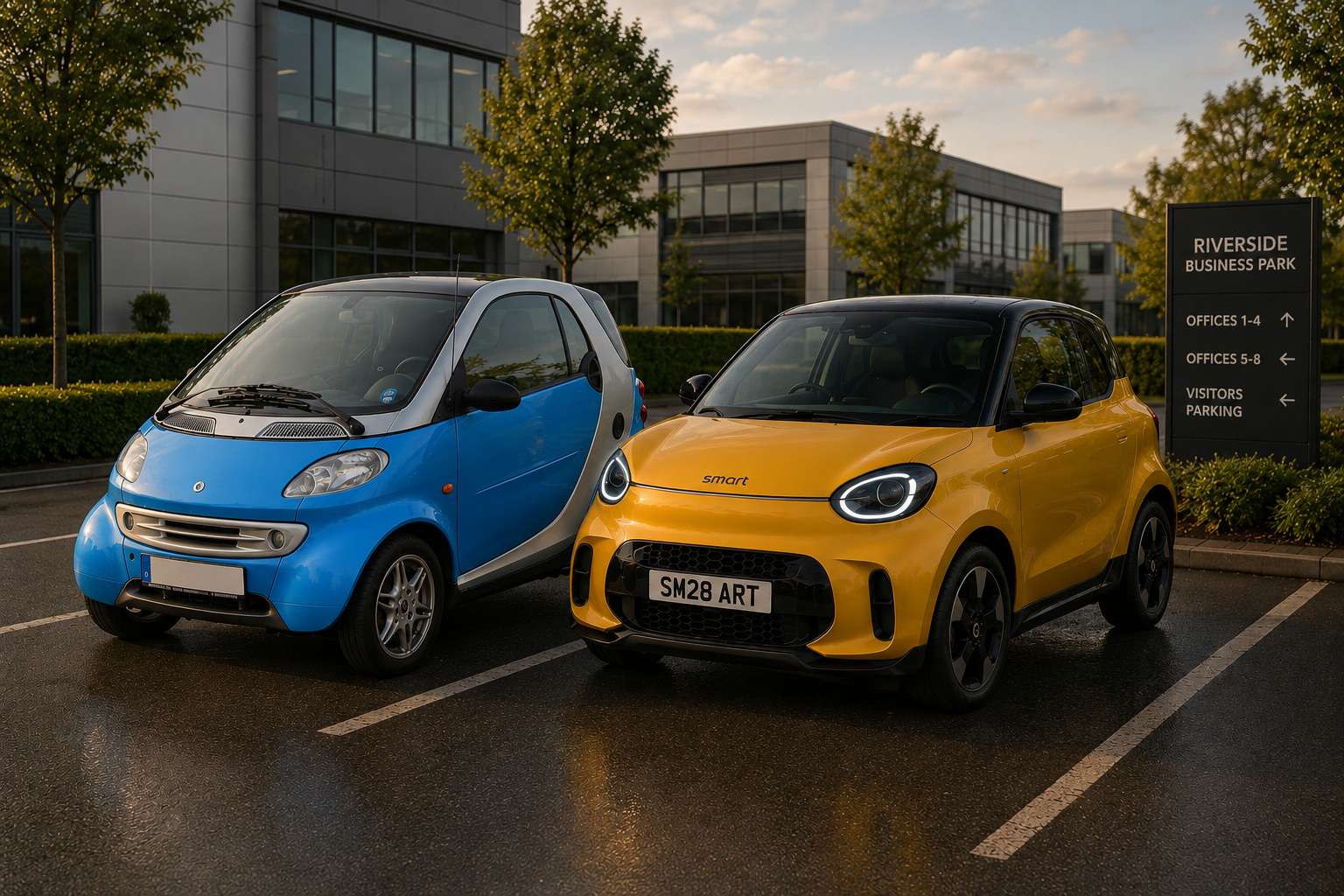
For most of its history, Smart built its reputation around doing one thing exceptionally well.
Our exclusive image compares the original Smart Fortwo and our "next generation" interpretation. Tiny dimensions, clever packaging and a focus on urban mobility made the original Fortwo one of the most recognisable city cars ever produced. Yet the Smart of today looks very different. SUVs such as the Smart #1 and #3 have helped reposition the brand for the electric era, moving it into larger and more profitable market segments. (Image credit: The New Yardstick)
The problem is that Europe is already crowded with electric crossovers.
Many buyers who might once have considered a Smart are instead choosing technically similar alternatives from elsewhere within the Geely family. Models such as the Volvo EX30 combine familiar Scandinavian styling with competitive pricing, while a growing number of Chinese brands continue to increase pressure at the lower end of the market.
As a result, Smart's rapid expansion into larger vehicles has yet to fully replicate the success of its original city-car formula. Questions are increasingly being asked about whether the brand's future lies in becoming another electric SUV manufacturer, or returning to the compact urban vehicles that made it famous in the first place.
Our design studies explore one possible answer.
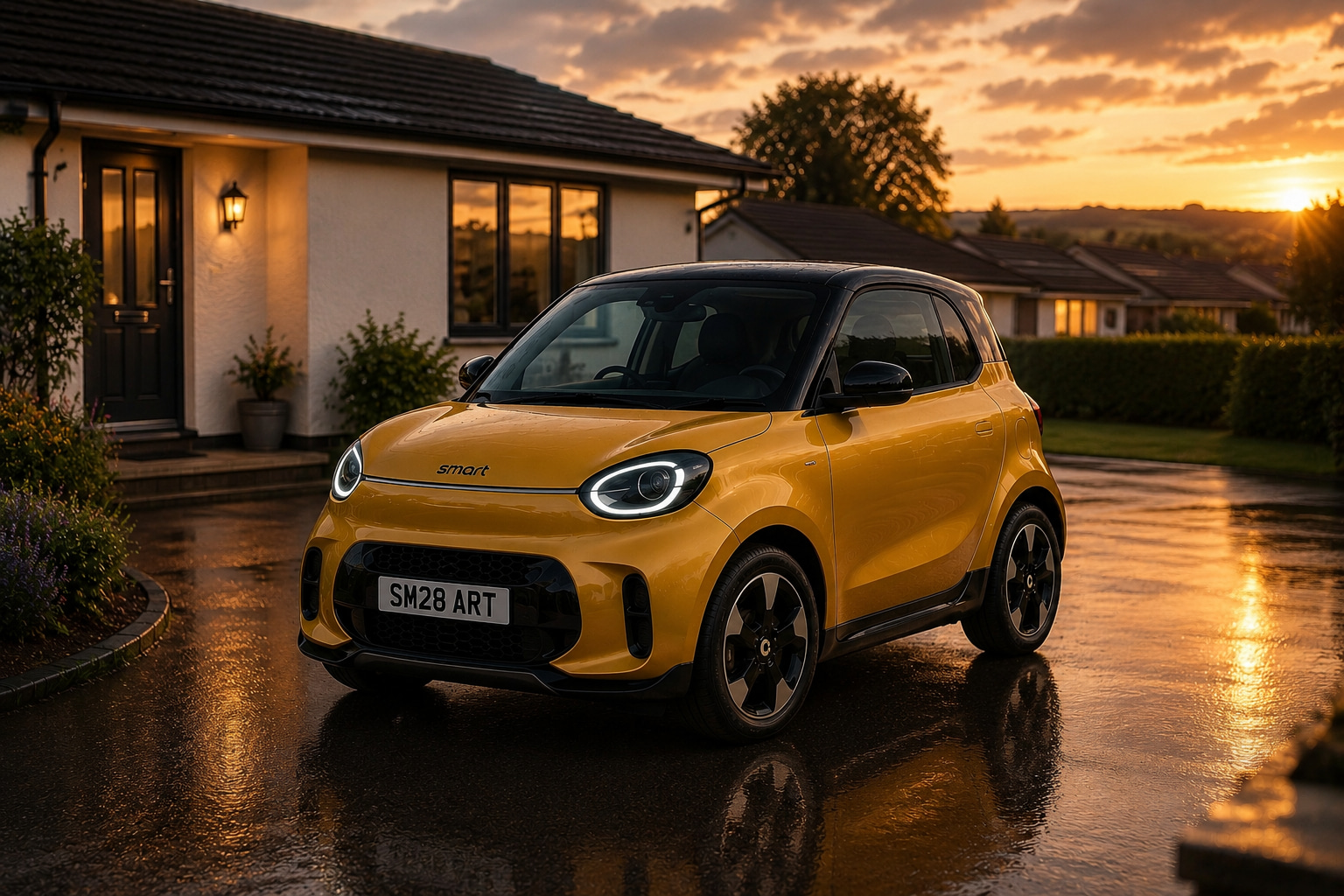
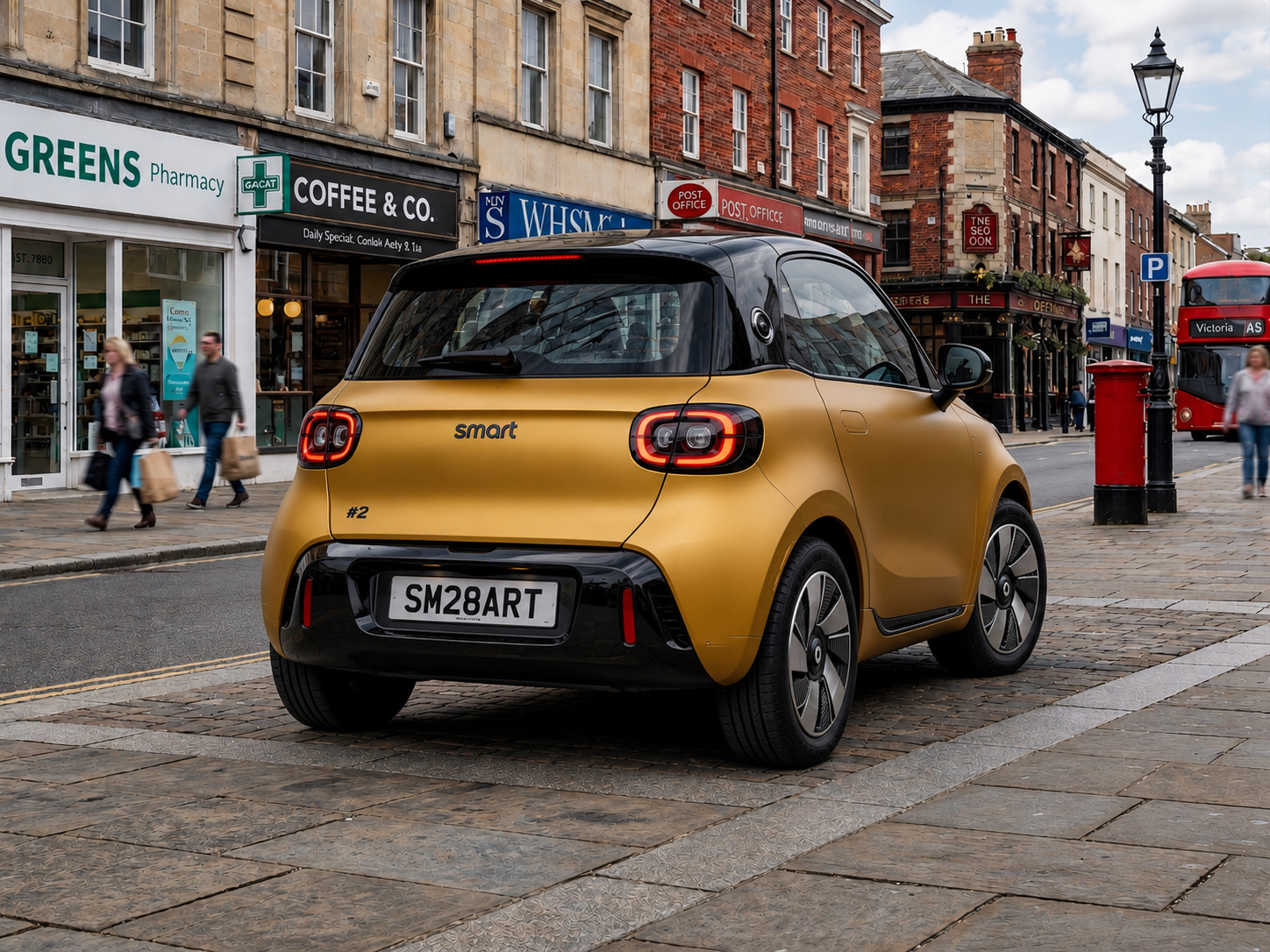
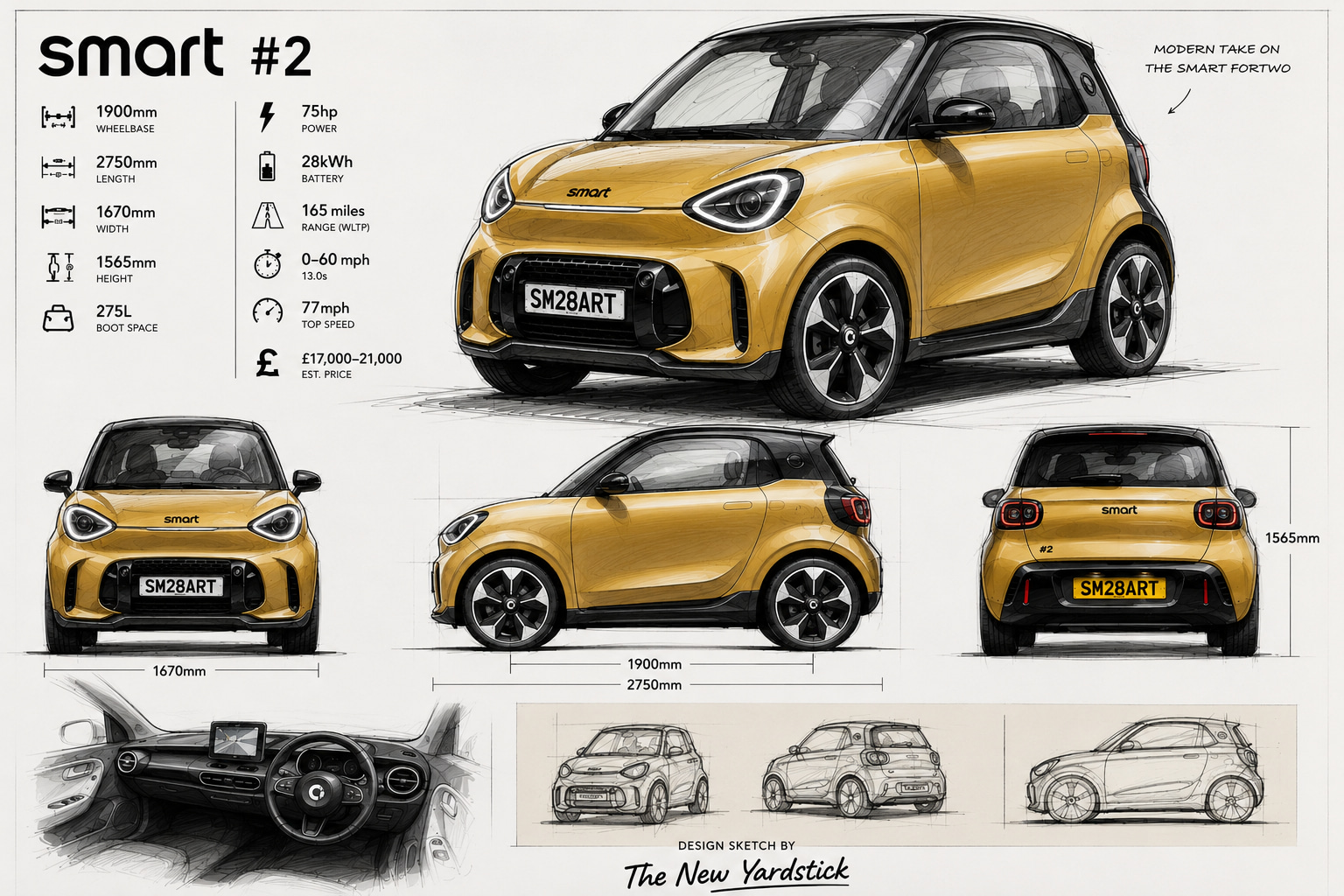
Our Smart #2 design study imagines a spiritual successor to the original Fortwo. At just 2,750mm long and retaining a two-door layout, it focuses on exactly the same priorities that made the original car such a success: compact dimensions, low running costs and effortless urban mobility.
Unlike today's increasingly powerful electric vehicles, the emphasis here is on efficiency rather than performance. A modest 75hp motor, 28kWh battery and estimated 165-mile range would be sufficient for most city drivers. A projected price of between £17,000 and £21,000 would place it at a slight premium to cars such as the Dacia Spring and Leapmotor T03 while offering greater flexibility in tight urban environments.
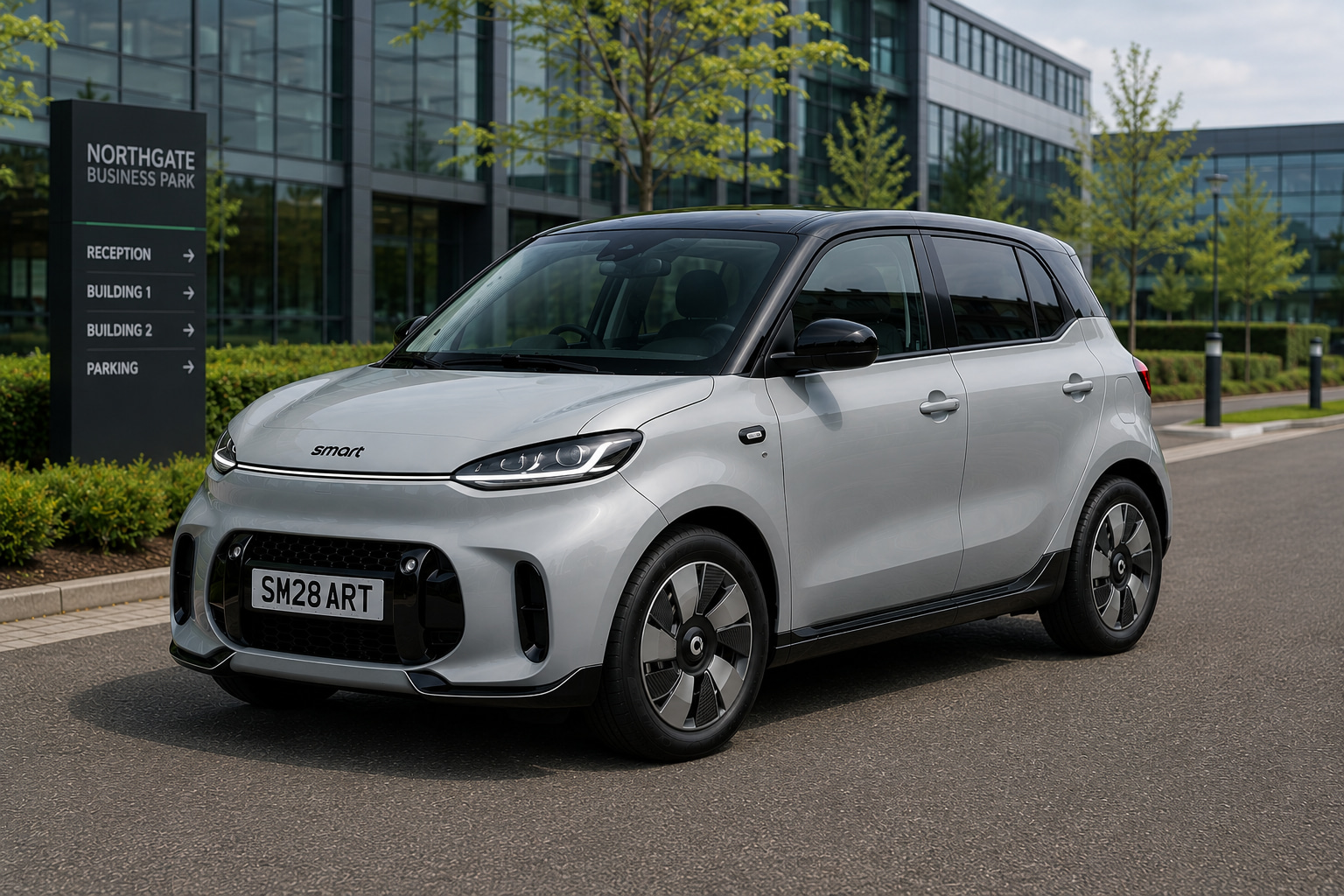
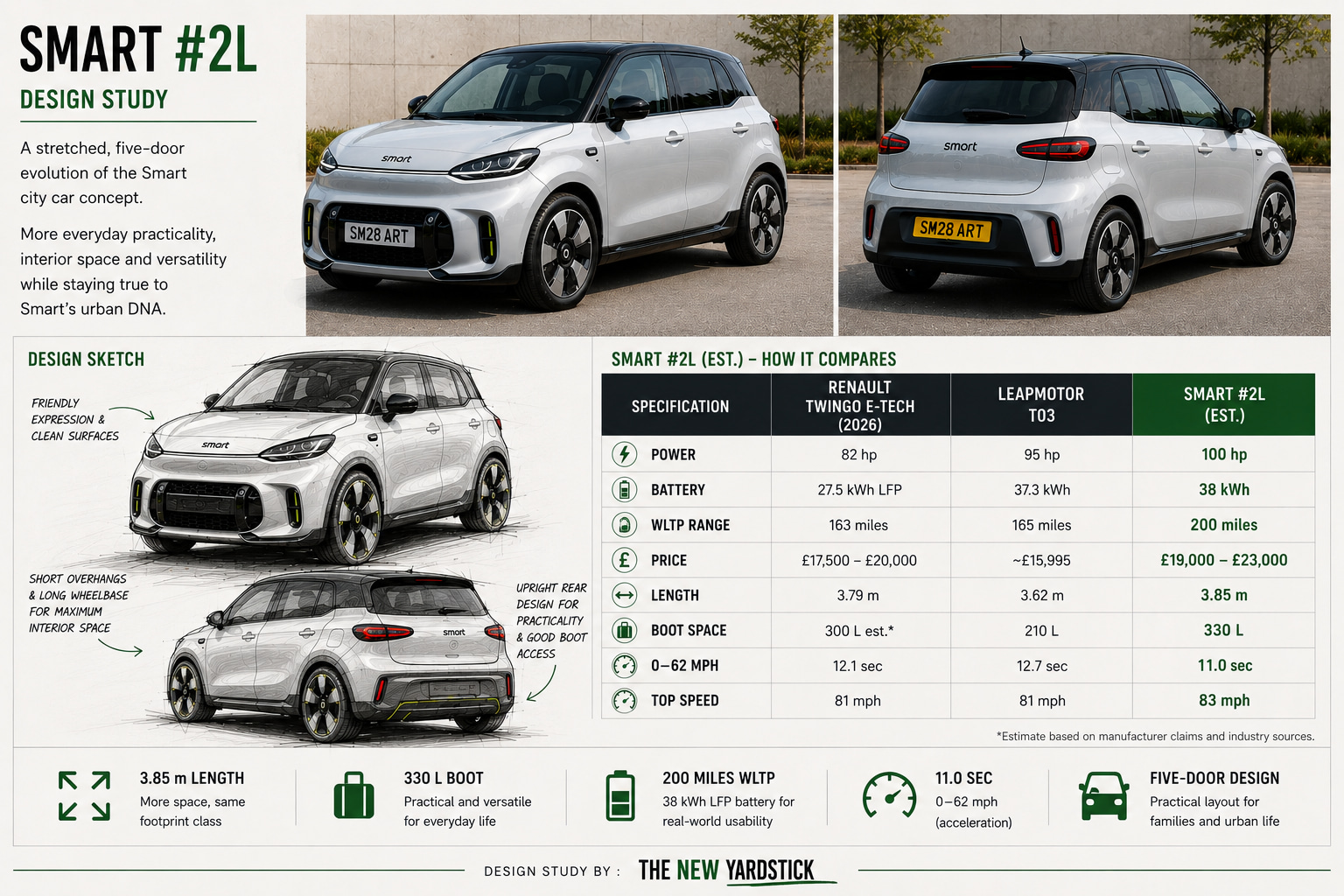
Growing to 3,850mm in length and featuring five doors and four seats, the #2L would provide the practicality many buyers require while remaining significantly smaller than most mainstream superminis. A 38kWh battery, 100hp motor and 200-mile range could position it against rivals such as the Renault Twingo and Hyundai Inster.
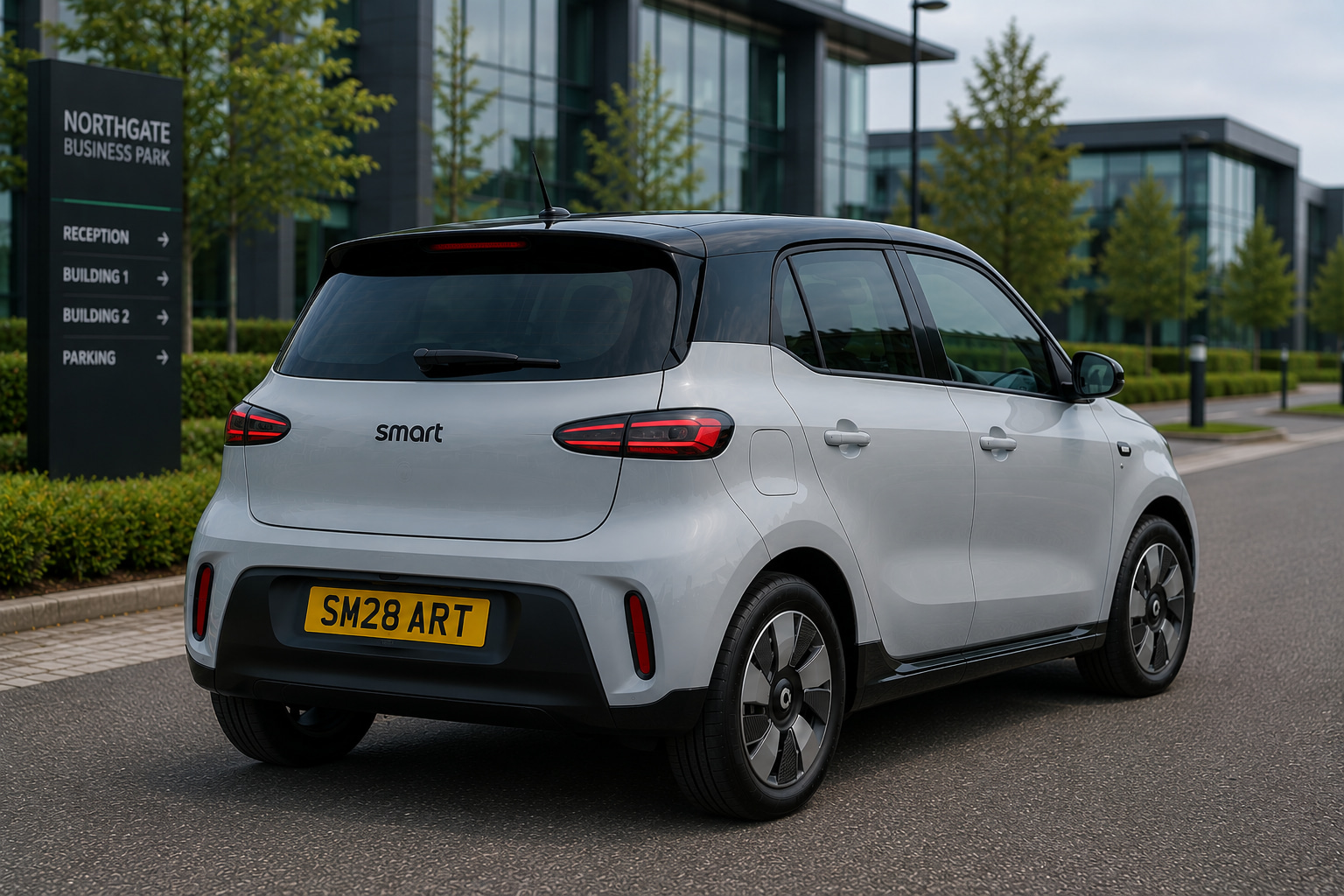
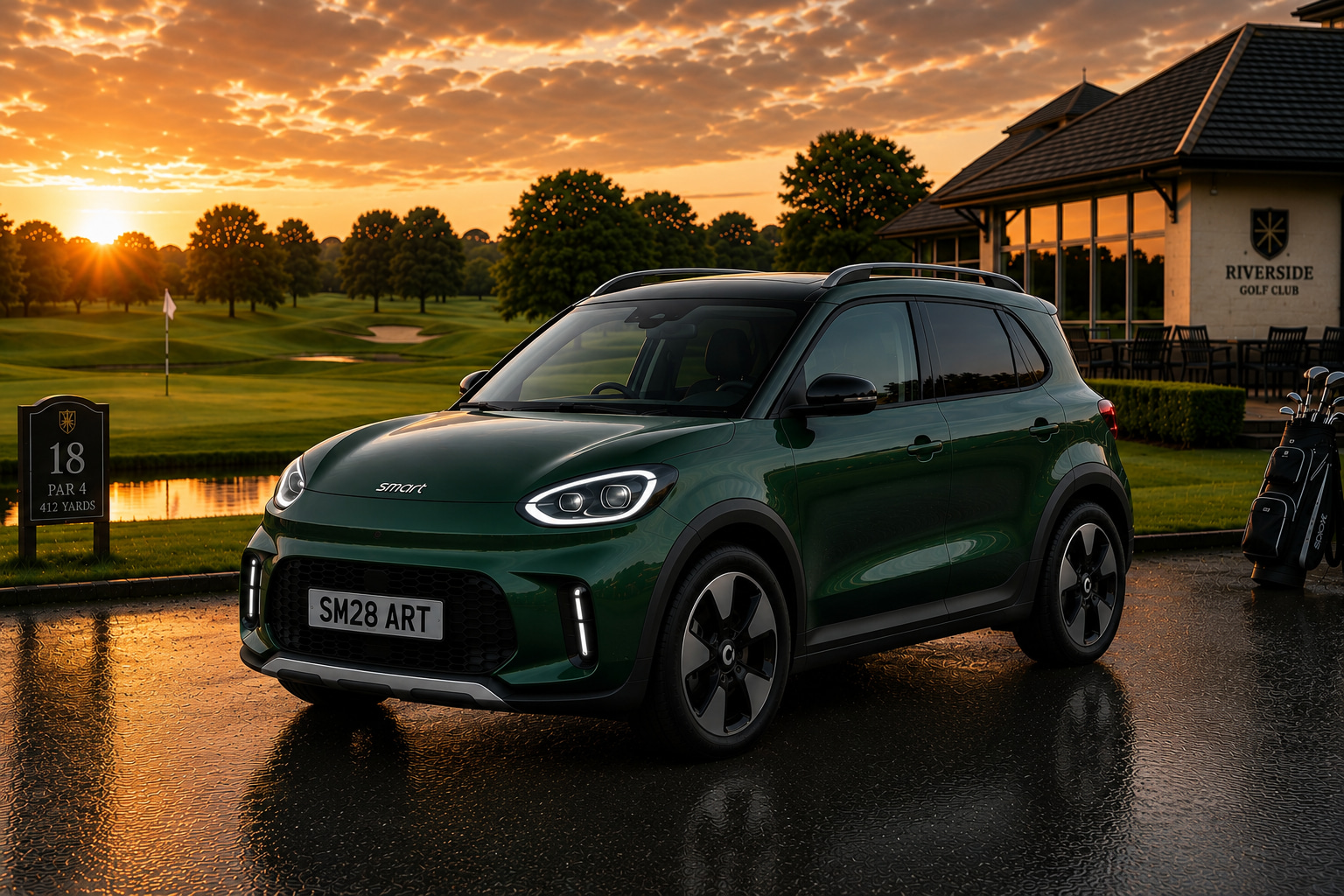
Rather than developing a separate SUV platform, Smart could apply crossover styling, additional ride height and more rugged design cues to the existing #2L architecture. At 3,920mm long, the #2X would remain a genuinely compact vehicle while appealing to buyers who increasingly favour SUV-inspired styling.
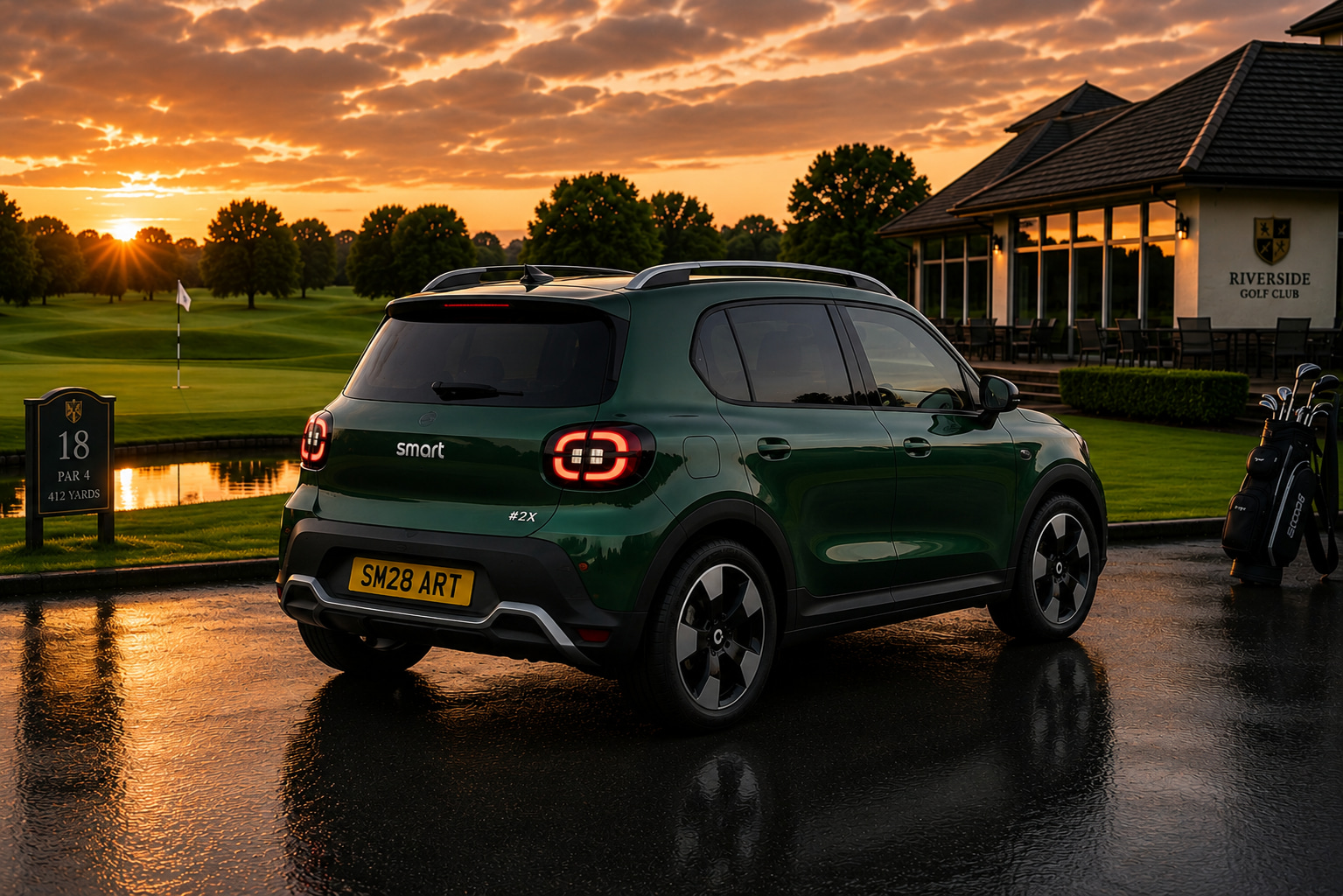
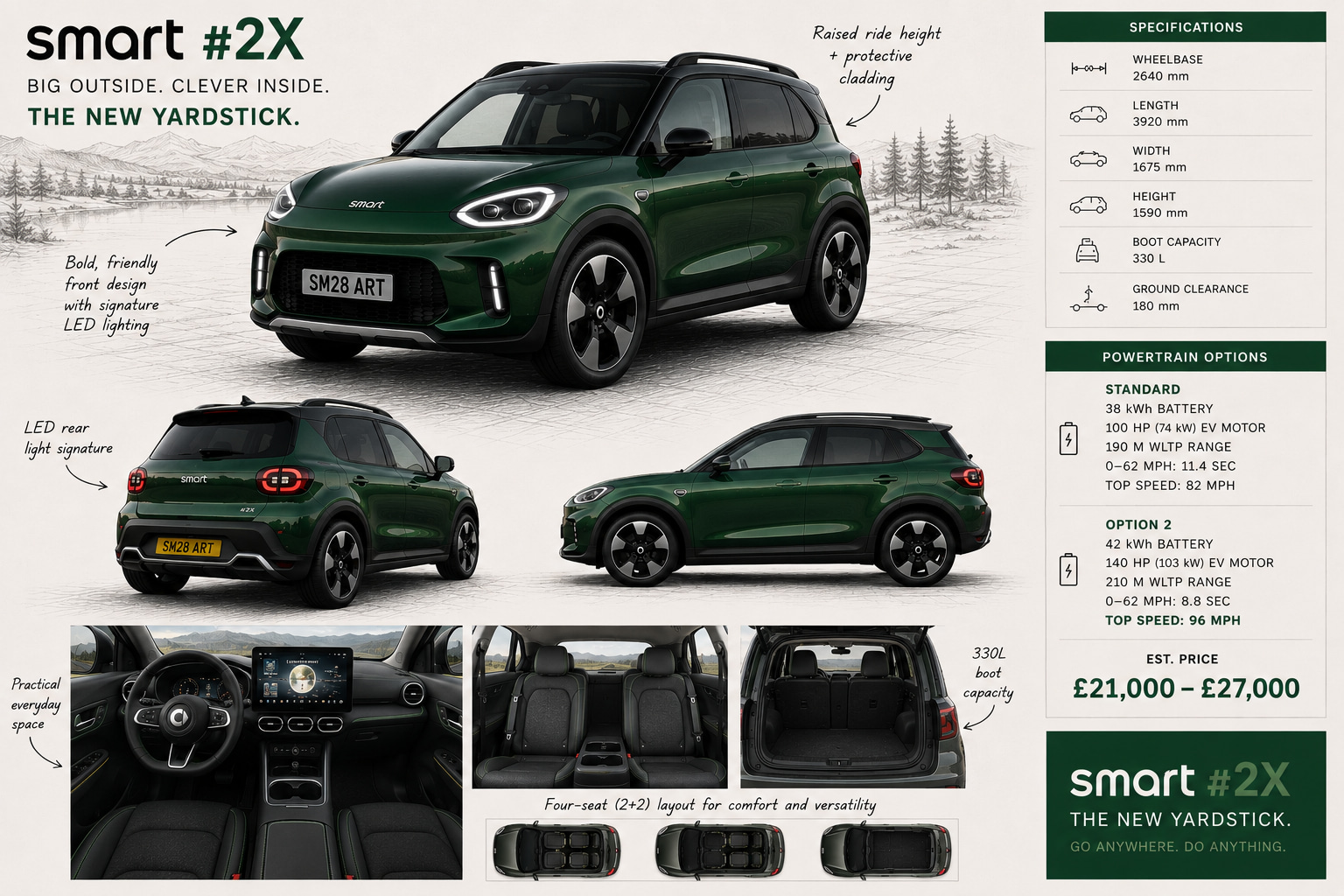
At approximately 4.2 metres long, it would act as the natural stepping stone between Smart's compact urban vehicles and the larger premium SUVs that increasingly define the brand's global ambitions.
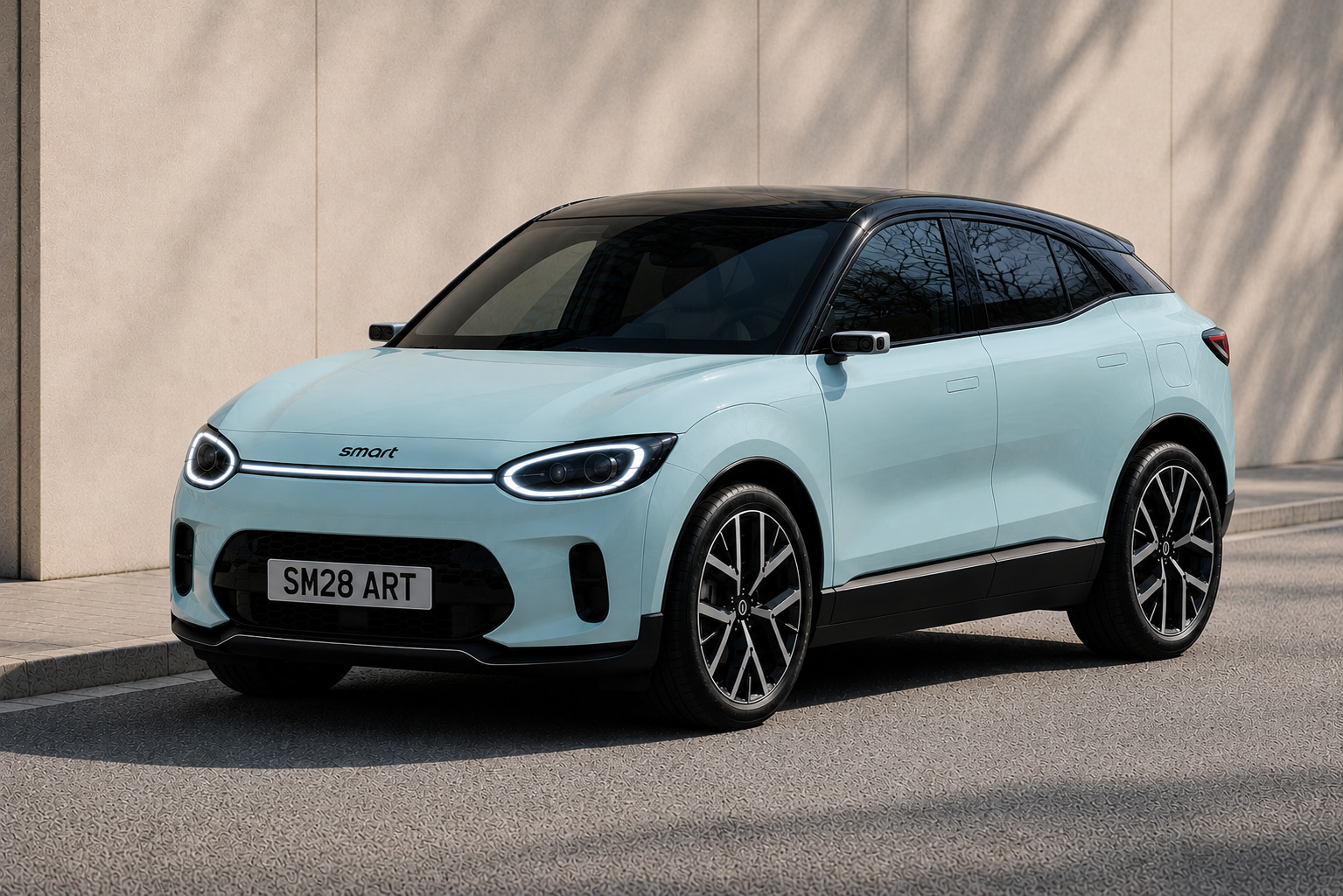
While today's Smart #1 starts with a surprisingly powerful 272hp motor, our proposal explores a more accessible approach. An entry-level 161hp version paired with a 51kWh battery would offer more than enough performance for everyday use while reducing both purchase costs and energy consumption.
Higher-specification models could continue to utilise larger 69kWh battery packs, while performance-focused Brabus variants could adopt the latest twin-motor technology from elsewhere within the Geely Group portfolio.
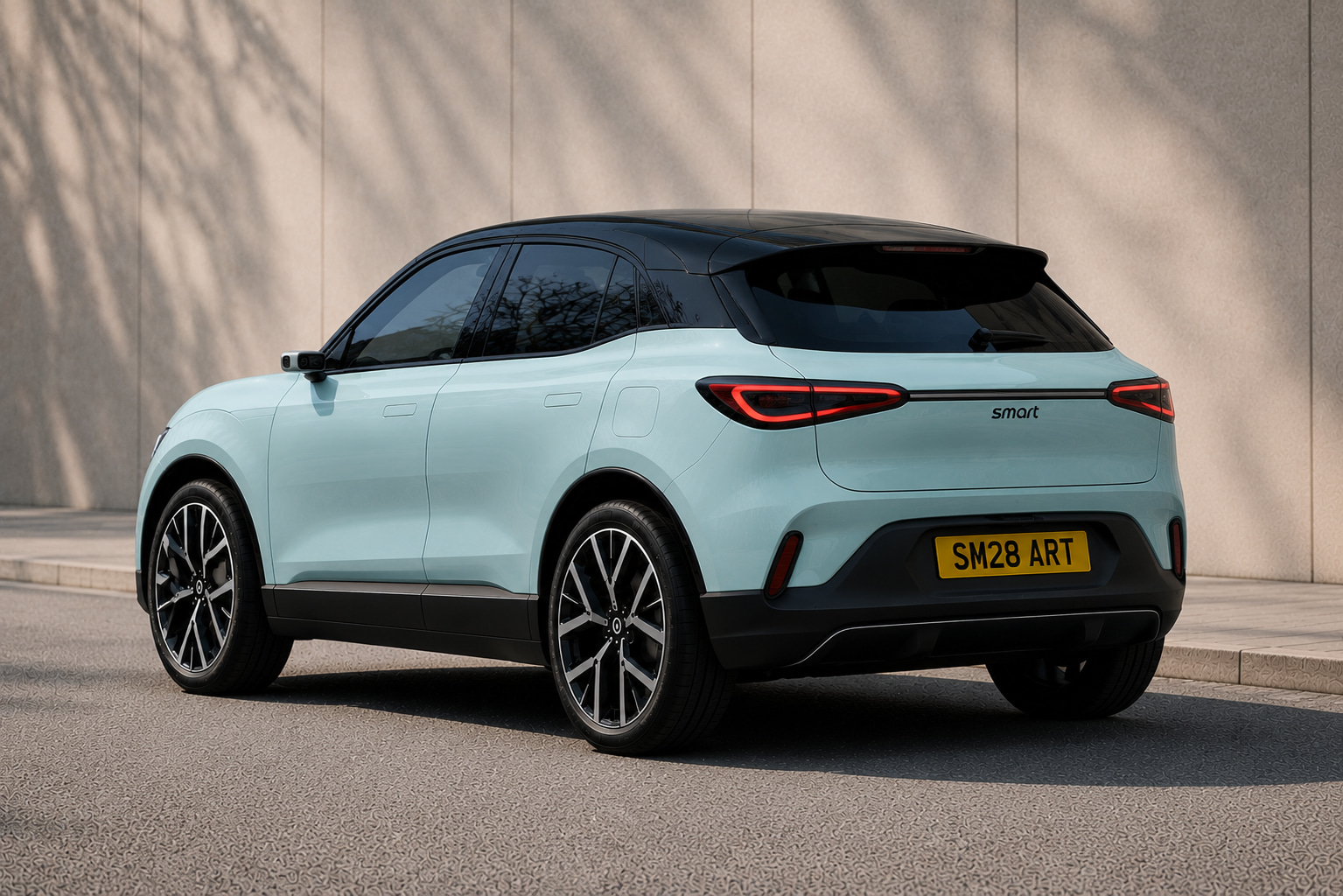
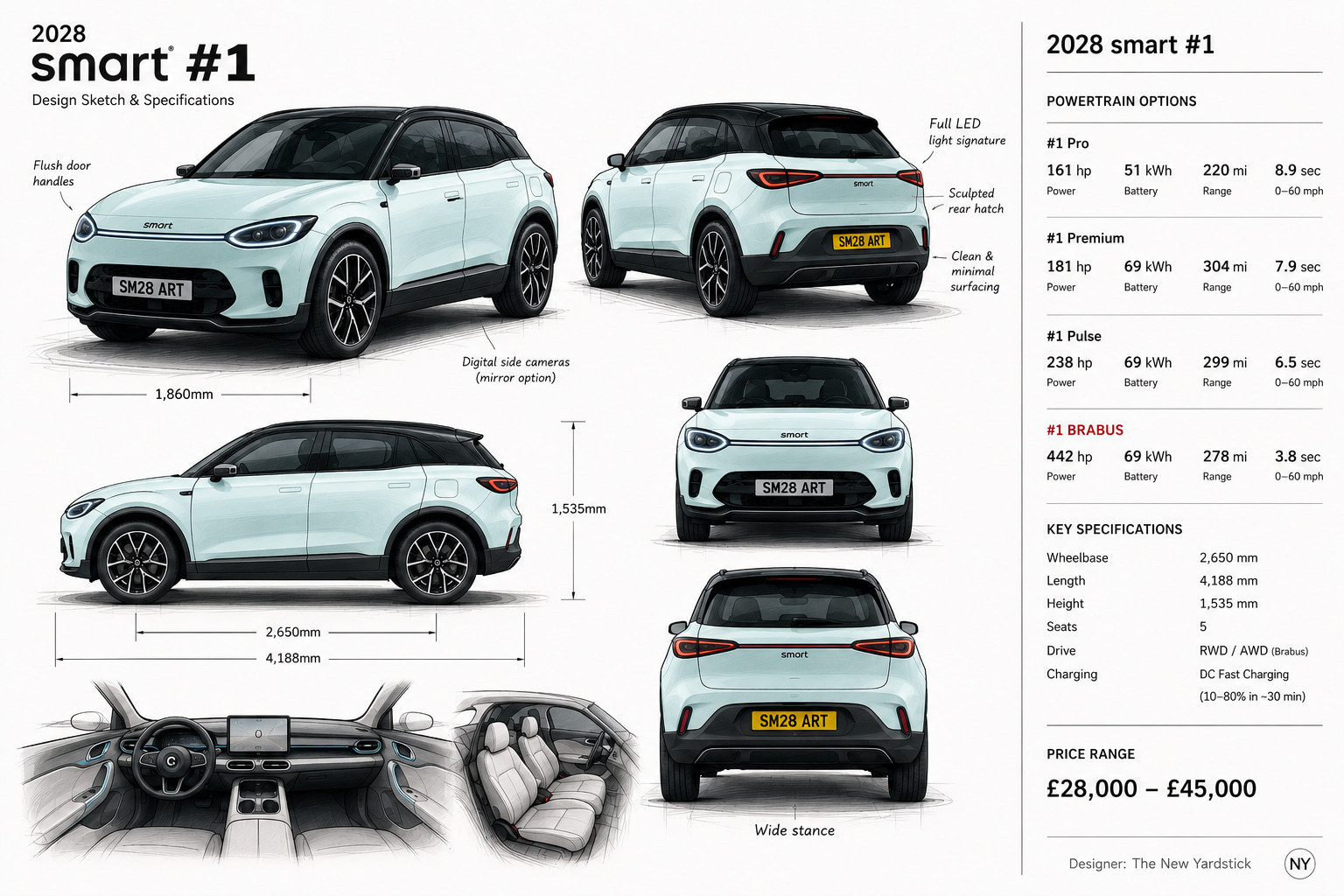
By using the #2L as the basis for both conventional and SUV-inspired variants, Smart could cover both A and B-segment buyers with minimal additional engineering investment. Combined with a next-generation #1, the brand would have a complete portfolio capable of competing with established European manufacturers across multiple segments.
Whether Smart ultimately follows this route remains to be seen. But as competition intensifies and Europe's electric vehicle market continues to mature, returning to the principles that made the brand famous may prove to be one of its smartest decisions yet.
You should also read:
Nissan Pixo: Could Britain's Former Cheapest Car Make an Electric Comeback?
When the Nissan Pixo arrived in the UK in 2009, it quickly established itself at the very bottom of Britain's new-car market. For the majority of its short life, it was Britain's cheapest new car — a position that became an important part of the little Nissan's identity. Then, in 2013, Dacia…
MG GO: Our Vision for Britain's Next Affordable Electric Hatchback
MG has become one of Britain's fastest-growing car brands, but one gap remains in its expanding electric line-up: a compact hatchback sitting below the MG4. In this Design Studio feature, we imagine the MG GO, an affordable electric supermini positioned as the EV sibling to today's MG3. At around four metres long,…
BMW and Mercedes Are Reinventing the Premium Hatchback - But Not in the Same Way
The premium hatchback market is approaching a major turning point. By around 2028, both the BMW 1 Series and Mercedes-Benz A-Class are expected to enter a new generation, but with two very different strategies. BMW is likely to split its compact range in two, a new generation of petrol and hybrid 1…

No, Volkswagen Doesn’t Need to Fire 100,000 Workers - Here’s the Smarter Path Forward
Volkswagen should stop chasing the profit margins of its peak global-expansion years and instead optimise for long-term stability. During 2025, the Volkswagen Group recorded €321.9 billion in revenue and an operating profit of €8.9 billion - figures most automotive manufacturers would gladly accept. Yet much of the discussion surrounding Europe's largest carmaker…
The New Yardstick: Rethinking Urban Motion
Imagine a city where movement feels effortless — where quiet, electric microcars glide through neighbourhoods, connecting homes, cafés, and workplaces with zero fuss and zero emissions. This isn’t a distant dream; it’s the next chapter in urban life. Microcars are redefining what mobility means. They take up half the space, cost a…
The Return of Ampera? How Leapmotor Could Give Vauxhall Its Smartest SUV Yet
Vauxhall was ahead of its time. Back in 2012, the Ampera introduced range-extender electric technology to European buyers years before most manufacturers had considered the idea. Our custom rendering explores how a Vauxhall SUV based on Leapmotor technology could look. Europe isn't exactly spoilt for choice when it comes to REEVs (range-extending…
Beyond the Highway: The Case for a Stripped-Back, Industrial Ami
The Citroën Ami is one of the smartest urban vehicles of the modern era. Yet despite its tiny dimensions, minimal battery pack, and quadricycle classification, it still costs around £8,000 in many markets. The reason is simple: it has been engineered to operate on public roads. But what if it didn’t have…
Back to the Frame: The Mitsubishi Pajero Returns to its Rugged Roots
For five years, the off-road world has felt a little less legendary. Since the final fourth-generation SUV rolled off the line in 2021—known globally as the Pajero, as the Shogun in the UK, and as the Montero in North America—Mitsubishi’s lineup has lacked its true north: a flagship that could bridge the…