Paris Motor Show 2026: TNY’s Complete Preview of the Cars and Concepts to Watch
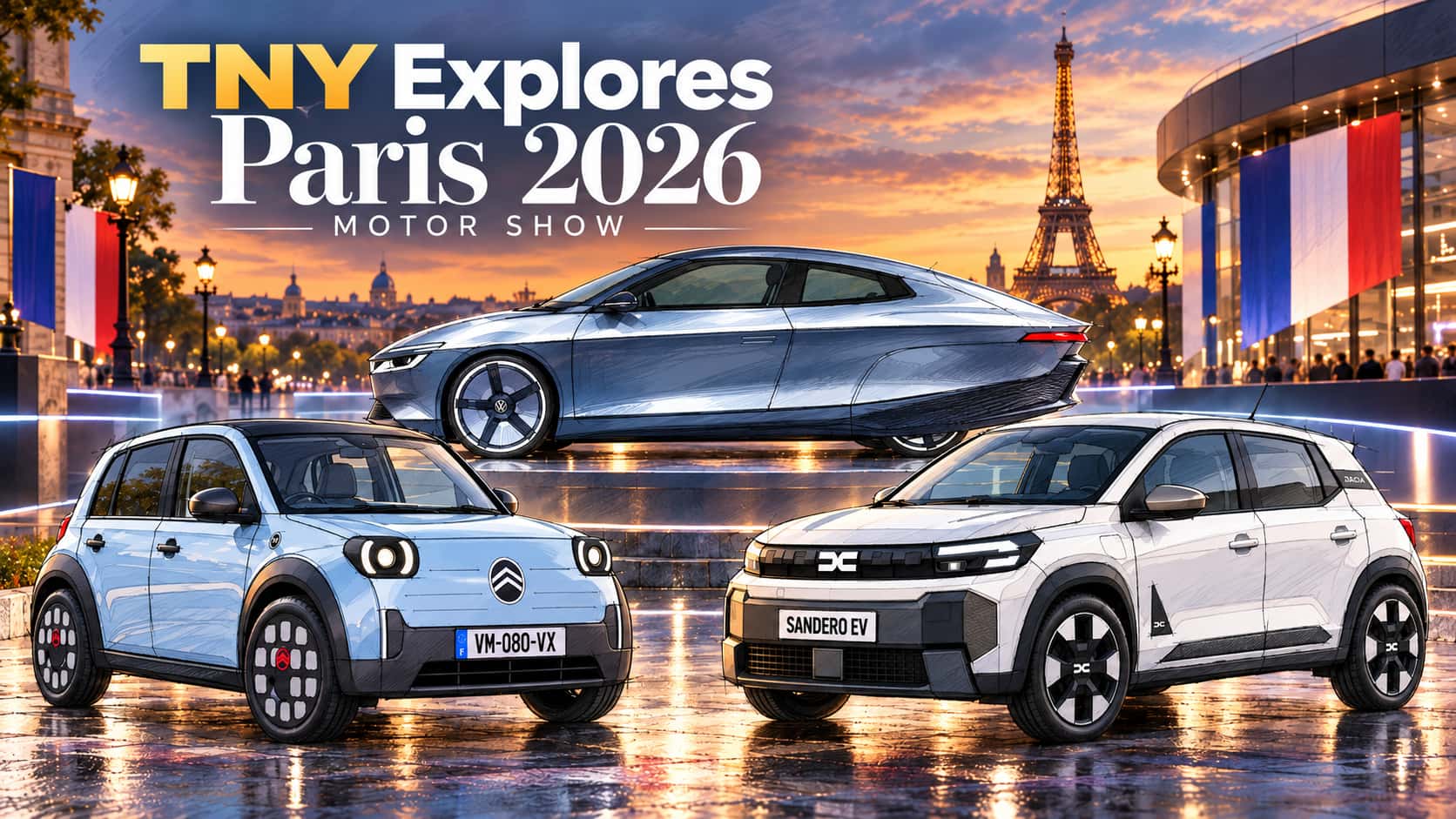
Europe’s biggest manufacturers are arriving with new electric cars, hybrids, concepts and major design previews, while Chinese brands are appearing in greater numbers than ever and rapidly expanding into everything from affordable city cars to luxury estates, SUVs and performance models.
The American, Korean and Japanese manufacturers bring their own very different ideas, from autonomous transport and ultra-fast charging to increasingly affordable EVs and revived enthusiast nameplates.
Alongside the confirmed launches, TNY Design Studio has created a substantial collection of original renderings exploring what several of these technologies, platforms and design directions could lead to next.
This is TNY’s complete preview of the cars, concepts and ideas worth watching in Paris.
Renault arrives at its home motor show with one of the broadest line-ups in Paris, spanning its latest electric cars, hybrids, concepts and performance models. Rather than trying to cover everything at once, the bigger story is how quickly Renault's range — and the technology beneath it — is changing.
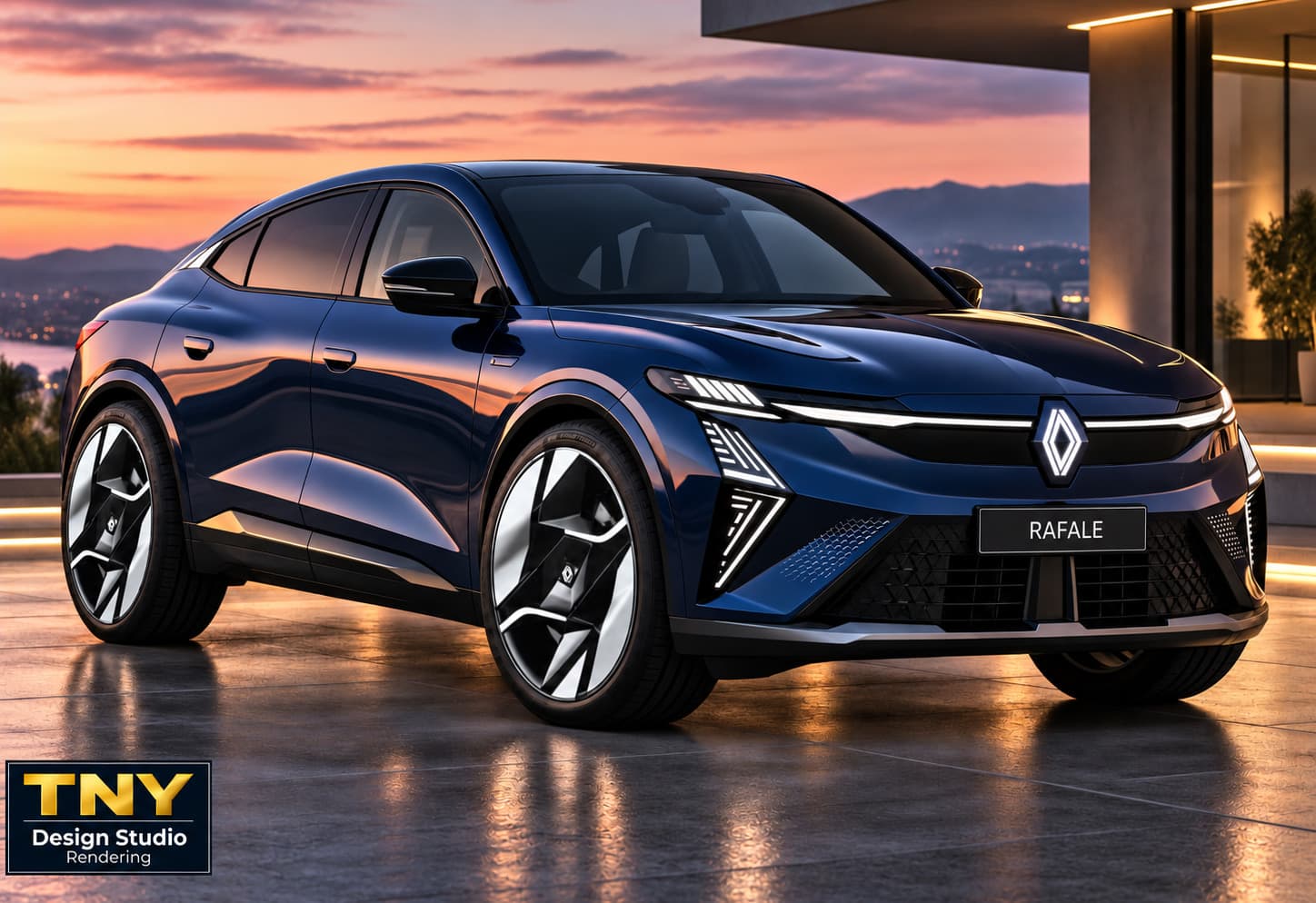
Our TNY Design Studio rendering imagines what that could eventually mean for the Rafale. The current model is still relatively young, so this is firmly a look further ahead rather than a prediction of an imminent replacement.
Renault Group's new RGEV Medium 2.0 architecture gives that idea some substance. Designed for B+ to D-segment models, the modular EV platform introduces 800-volt electrical hardware, ultra-fast charging and the potential for up to around 466 miles of WLTP range. Combined with Renault's next-generation software-defined vehicle architecture, it points towards a much more advanced generation of larger Renaults later this decade.
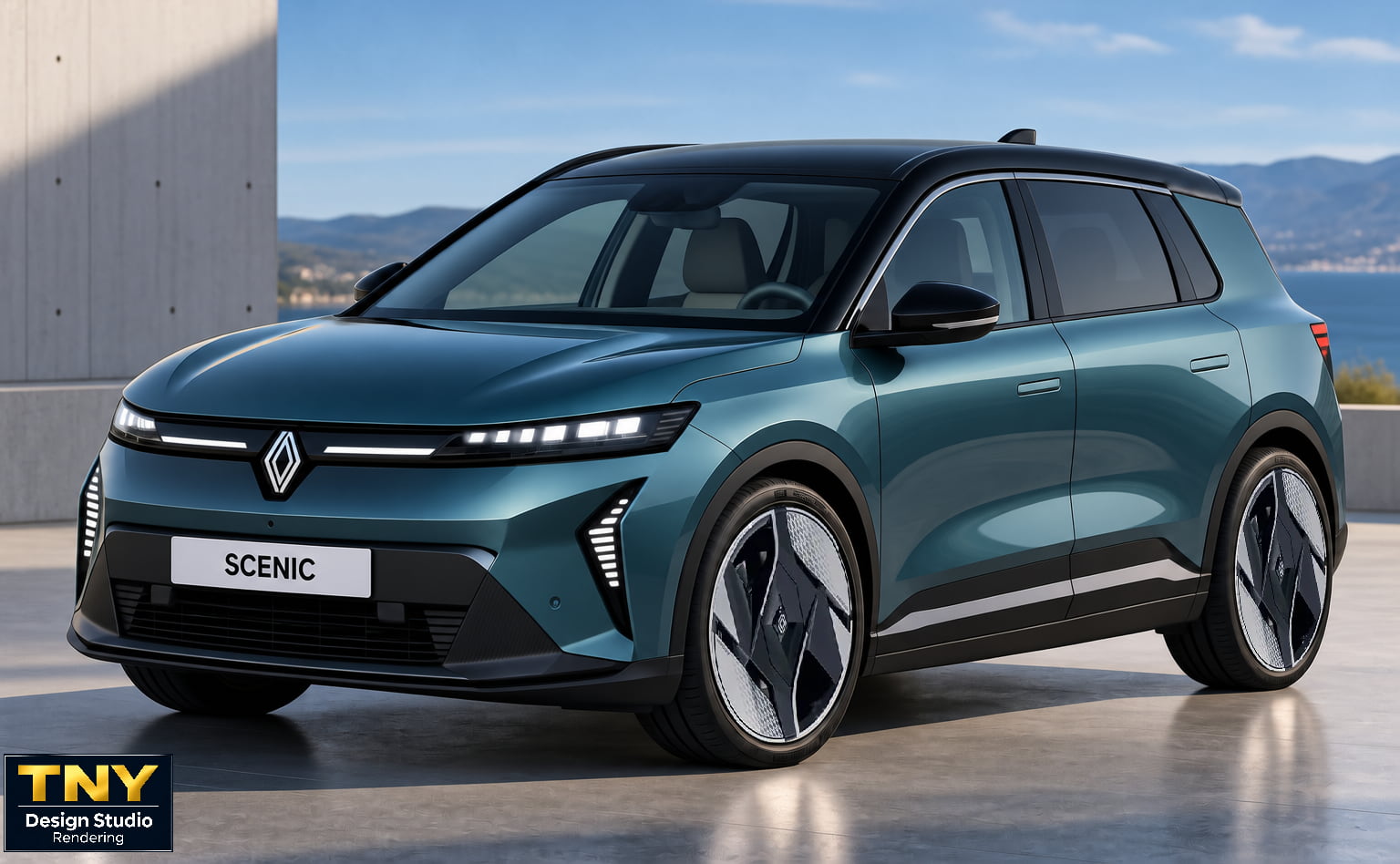
The Scenic is another Renault we have pushed into the next product cycle. Today's Scenic E-Tech only arrived in 2024, but Renault's new futuREady strategy suggests its range could evolve more quickly than traditional seven-year replacement cycles might imply.
Renault is planning 12 new European models by 2030, including a fresh wave of C- and D-segment cars and a new generation of EVs based around its RGEV Medium 2.0 architecture. That makes the Scenic particularly interesting: as one of Renault's most important family cars, it is an obvious candidate to eventually benefit from the group's 800-volt technology, faster charging and next-generation software architecture.
Our TNY Design Studio rendering explores what that next Scenic could look like, retaining the current car's upright, practical character while introducing cleaner surfacing and Renault's developing next-generation design language.
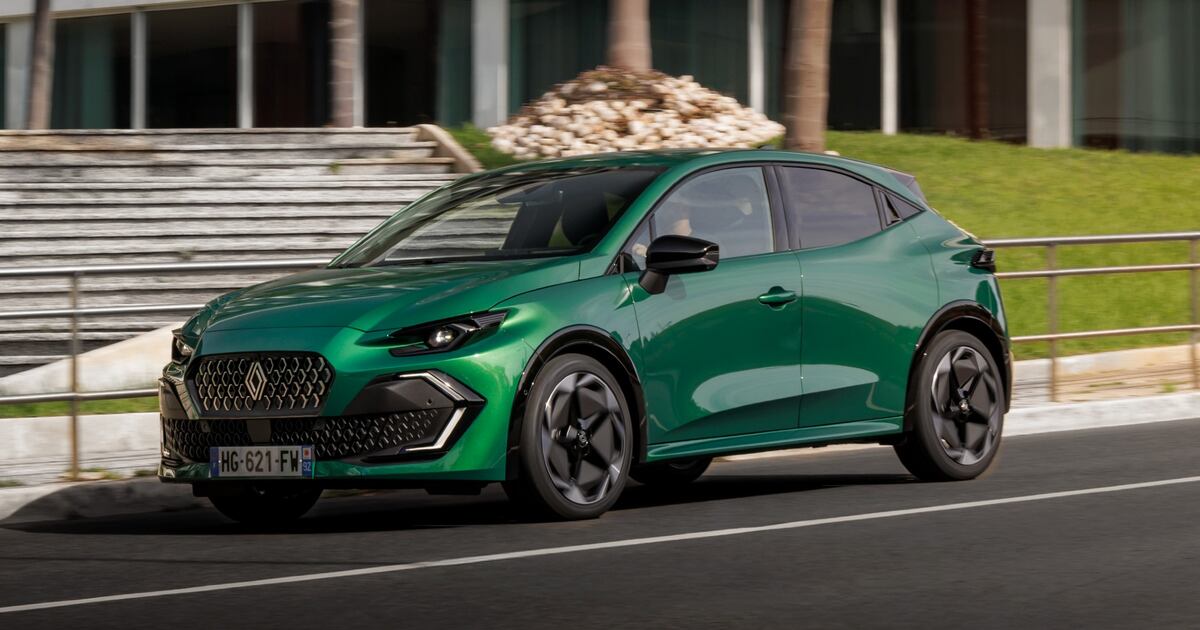
The sixth-generation Clio gives Renault's Paris display a particularly relevant angle for UK readers. Revealed in 2025 and already on sale in parts of Europe, the new model is not due to reach Britain until 2027. Renault UK is already promoting the incoming car, though final UK specifications and pricing have yet to be announced.
At 4.05 metres long, the latest Clio is larger and more assertive than its predecessor, while introducing the sharper design language that will increasingly spread across Renault's range. Its headline powertrain is the new 160hp full-hybrid E-Tech system, joined by a 115hp petrol engine and, in some European markets, an LPG option.
Paris therefore gives British buyers an early opportunity to see one of Renault's most important forthcoming UK cars in finished production form.
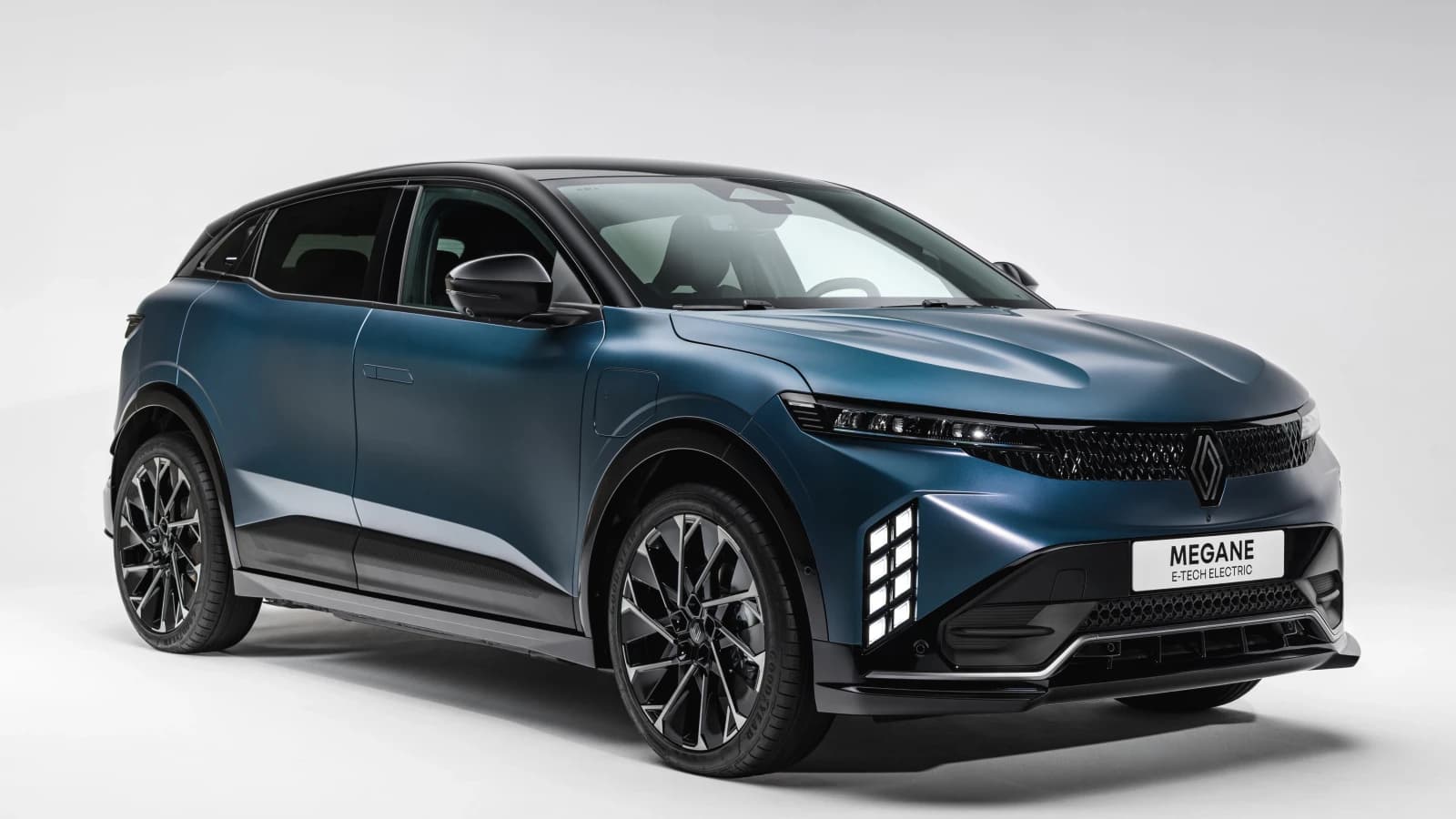
The updated Megane E-Tech electric is another important part of Renault's Paris story — and one that has just become considerably more attractive for UK buyers.
Its biggest technical change is a new 67kWh LFP battery, replacing the previous 60kWh NMC pack. Range rises to 310 miles WLTP, while peak DC charging increases to 165kW, cutting a 15-80% charge to around 24 minutes. Renault says the switch to LFP gives the Megane a better balance of cost, range and charging performance.
The timing is particularly good for Britain. From October, the facelifted Megane qualifies for the full £3,750 Electric Car Grant, bringing the entry-level Techno down to £28,245. Renault UK's latest offer pages confirm that price and the upgraded grant.
Combined with its sharper front-end design, the result is a much more competitive Megane than the car Renault launched in 2022.
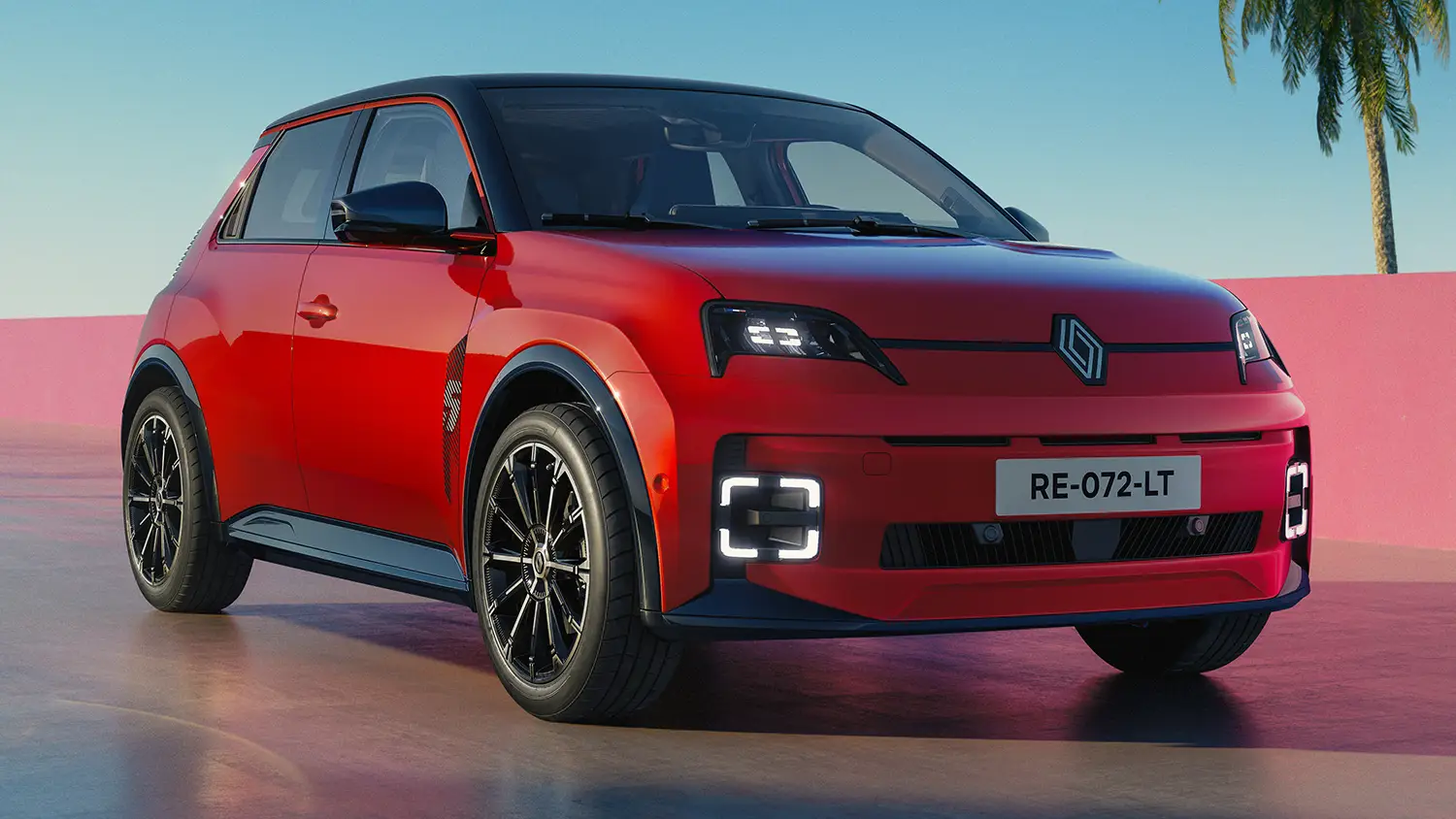
Renault’s 5 has been making headlines for several years now, long before it entered production — and a motor show in the model’s native country isn’t about to change that.
The latest development is particularly important at the affordable end of the range. Renault is introducing a new Five version with a 36.5kWh LFP cell-to-pack battery, 110hp motor derived from the same family as the new Twingo’s and up to 190 miles of WLTP range. DC rapid charging also becomes standard.
It could have implications beyond the 5. Renault Group says several Renault and Alpine models will adopt its lower-cost LFP technology, which it sees as particularly suited to smaller, standard-range EVs.
That naturally raises the Renault 4. No LFP version has yet been confirmed, but with the 4 sharing its AmpR Small foundations with the 5, similar lower-cost battery technology would be a logical future addition.
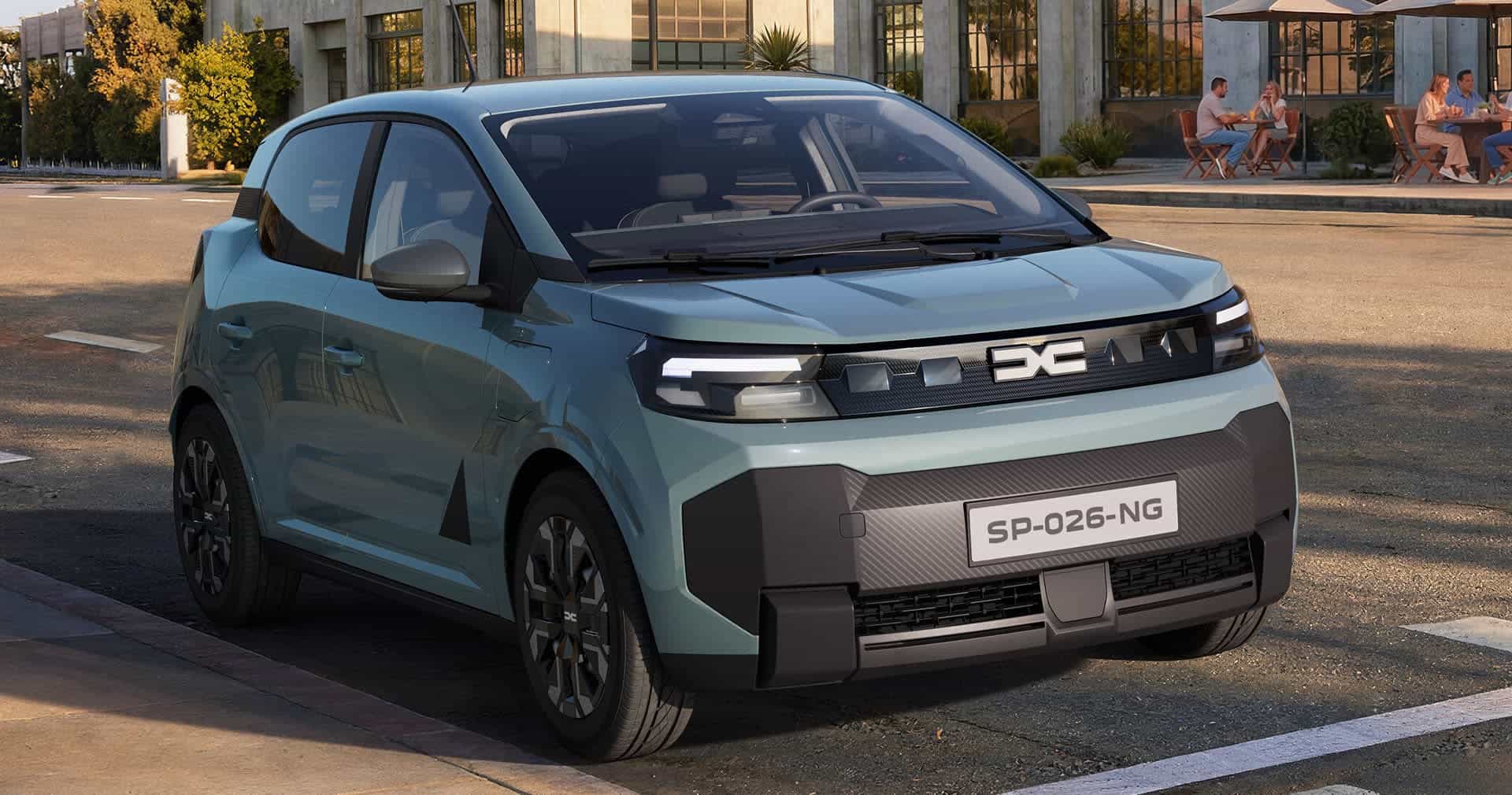
Dacia arrives in Paris at an important point in its transformation. Long associated with simple, affordable combustion cars, the brand is now beginning a much broader electric push, with four fully electric models planned by the end of the decade.
The new Spring provides the clearest starting point. This is a full second-generation model, replacing the original rather than simply updating it, while keeping the same basic mission: make electric motoring as affordable and uncomplicated as possible.
Its importance goes beyond a single city car. More than 210,000 examples of the original Spring were sold, proving there is substantial demand for genuinely inexpensive EVs in Europe.
With Renault Group simultaneously developing cheaper LFP batteries, simplified electric hardware and new small-car platforms, Dacia now has access to technology that could allow electrification to spread much further across its range without abandoning the value-led positioning that defines the brand.
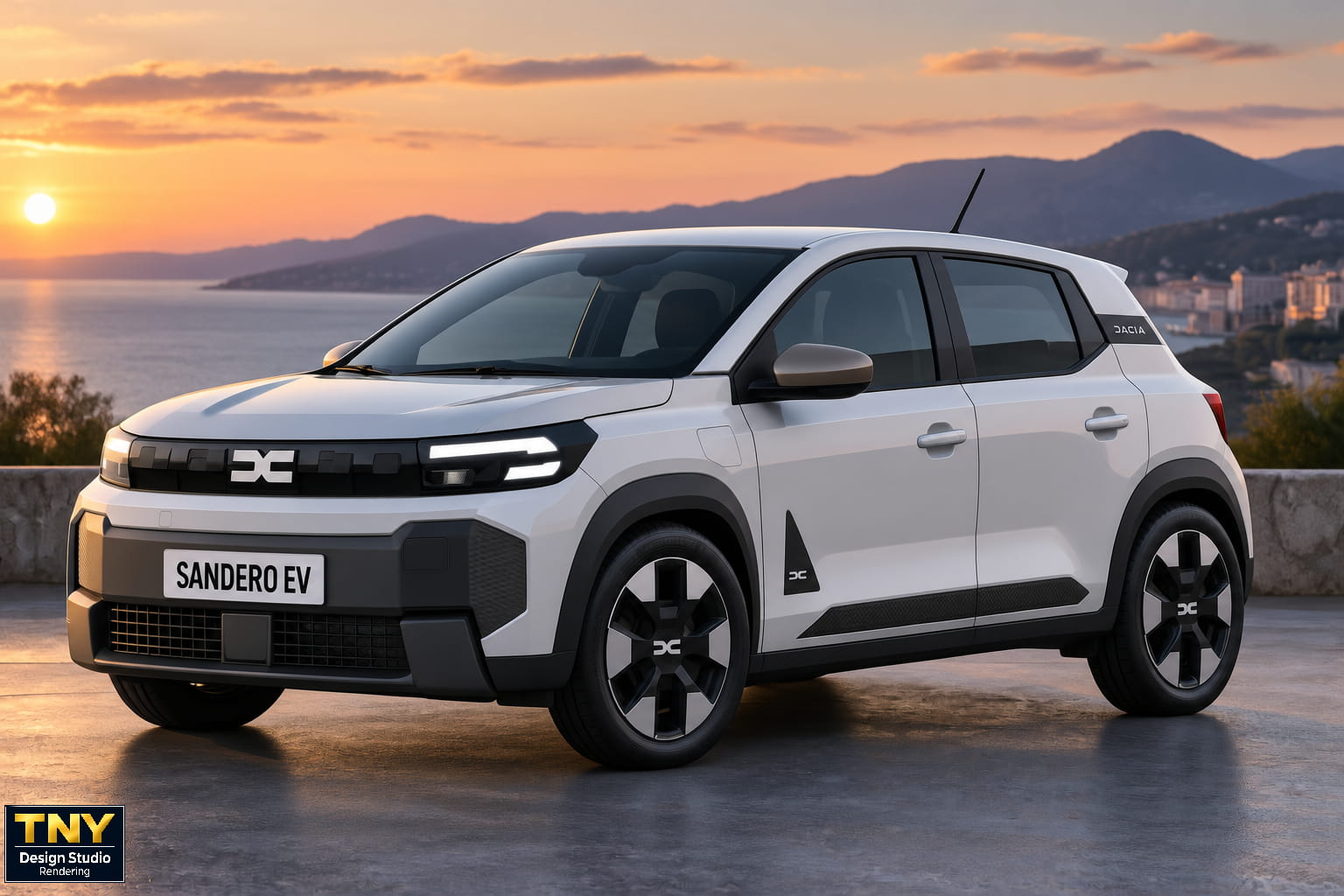
Dacia has already indicated that its best-selling nameplate will eventually gain an electric version. Our TNY Design Studio concept imagines one possible direction, taking the new Spring’s tougher, more upright styling and stretching it into a larger, more practical B-segment hatchback.
There could also be an interesting opportunity emerging from Brussels. The EU’s proposed new M1E category is intended to encourage small, affordable electric cars built in Europe, with vehicles of up to 4.2 metres potentially benefiting from regulatory and CO₂ incentives.
Combined with Renault Group’s increasingly affordable LFP batteries and small-EV hardware, that could give Dacia the ingredients to create a genuinely low-cost European Sandero EV rather than simply electrifying the existing car at a premium.
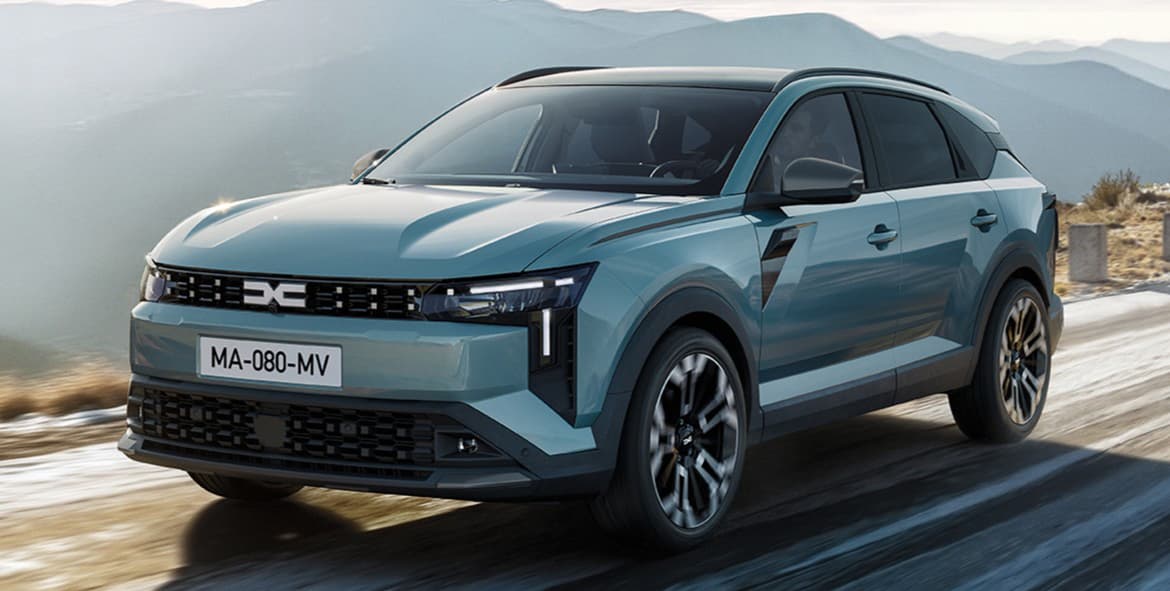
At the other end of Dacia’s Paris display sits the new Striker, showing just how far the brand’s ambitions now stretch beyond the entry-level end of the market.
Where Spring is all about compact, low-cost electric mobility, the Striker moves Dacia further into the family-car heartland. Its combination of SUV stance, estate-like practicality and more substantial road presence gives the brand a larger, more versatile model aimed at buyers who need space and usability without abandoning Dacia’s value-led appeal.
That makes it an important car for Paris. Together, Spring and Striker help frame the two directions now shaping Dacia: one focused on keeping electric cars accessible, the other on broadening the range with bigger, more mature products that can pull the brand further upmarket without losing its core identity.
From Dacia’s pursuit of affordable motoring, Renault Group moves to the opposite end of the spectrum with Alpine.
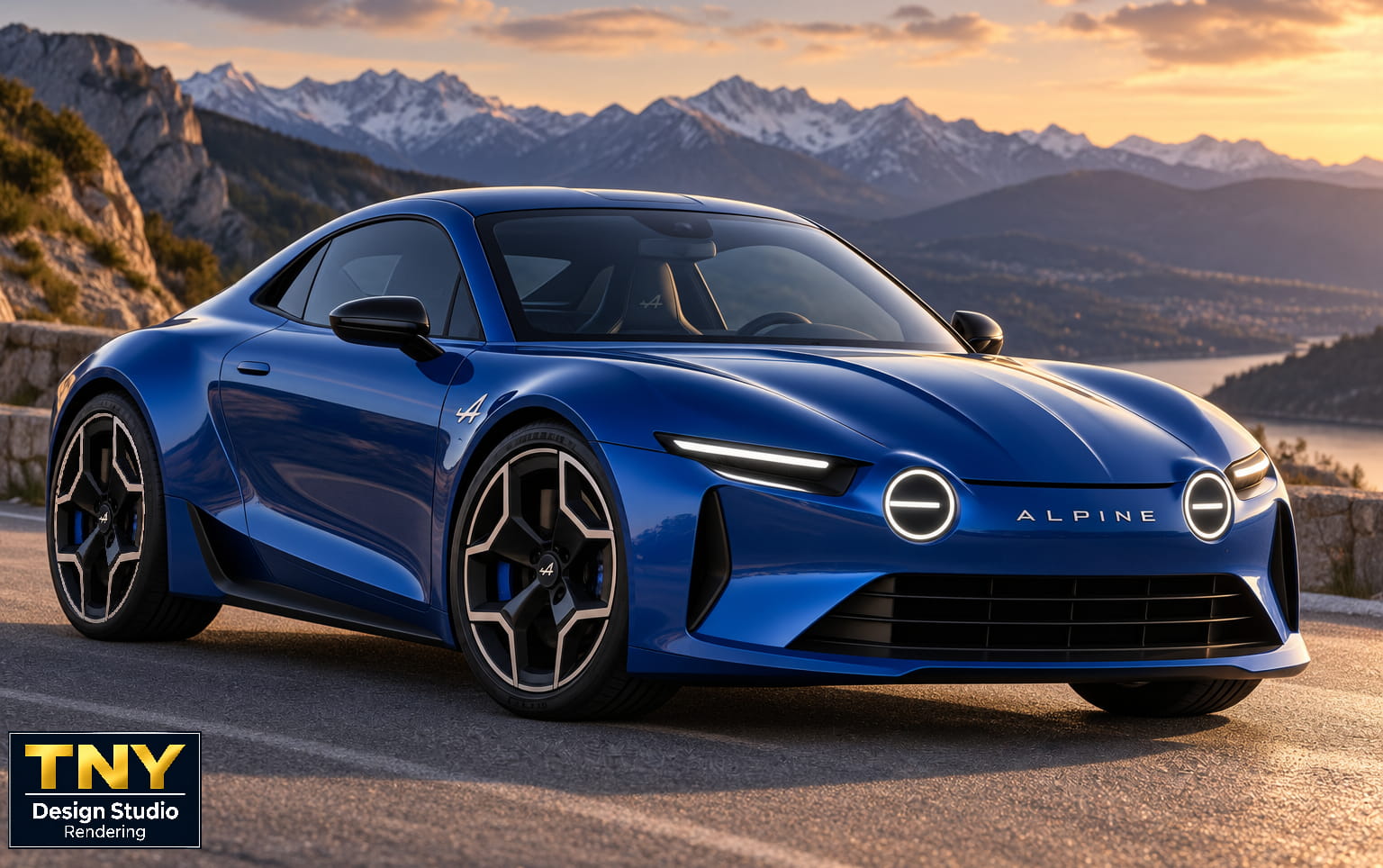
The French performance brand is expanding rapidly beyond the outgoing A110, with the A290 and A390 already broadening its reach. Its most important next step, however, remains the third-generation A110.
Alpine has previewed its shape through an official sculpture, while development prototypes have already demonstrated the new Alpine Performance Platform — a dedicated electric architecture engineered around lightweight performance rather than adapted from a mainstream Renault base.
Our TNY Design Studio rendering imagines how the production A110 EV could look when it arrives, retaining the compact proportions and simplicity that have defined both previous generations.
Together, Renault, Dacia and Alpine show just how broad Renault Group’s ambitions have become. Renault is accelerating its technology and product cycles, Dacia is pushing electrification while protecting affordability, and Alpine is moving further into premium performance.
Paris 2026 brings all three strategies together, offering one of the clearest snapshots yet of how quickly Renault Group is evolving.
After Renault Group, attention turns to Stellantis — and few of its brands have as much reason to make a statement in Paris as Peugeot.
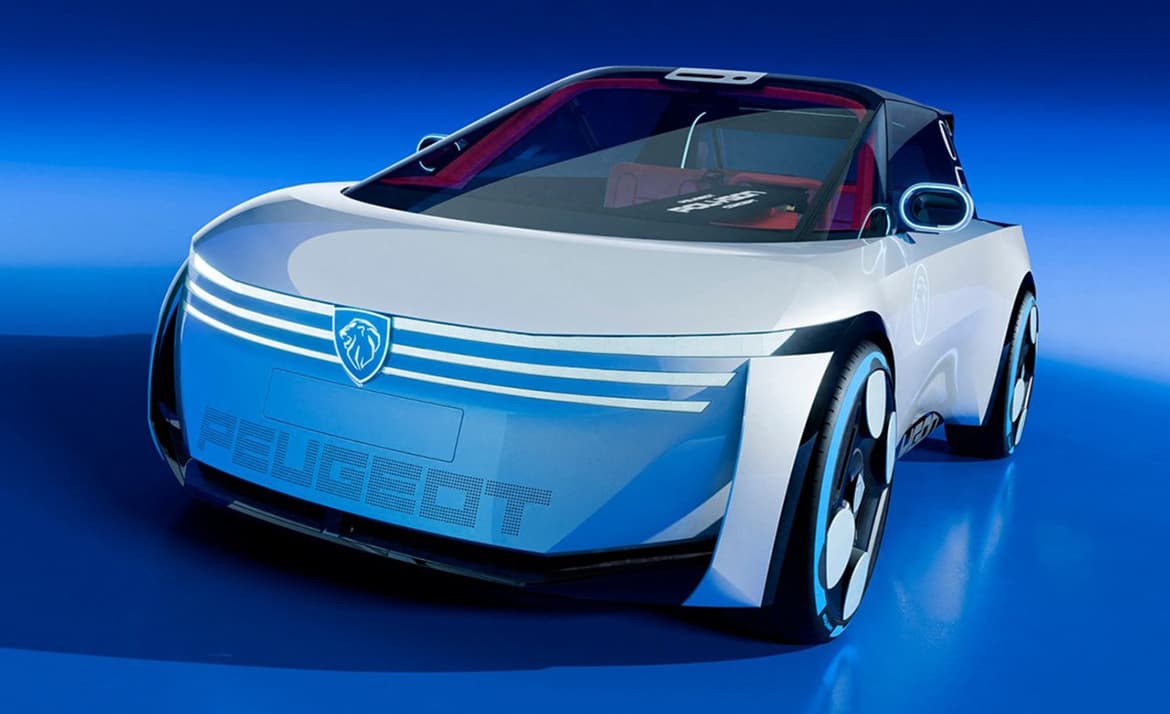
The French marque will occupy almost 1,300m² in Hall 4, bringing its full production range alongside two world-premiere concepts and the 9X8 race car. At the centre of that display sits the Polygon Concept, Peugeot’s clearest preview yet of how its next generation of cars could look and feel.
First revealed in late 2025, Polygon introduces the sharper design language Peugeot intends to develop through the second half of the decade. Just as importantly, it showcases the Hypersquare steering control and steer-by-wire technology that will underpin a new generation of i-Cockpit interiors.
Paris gives Peugeot the chance to place that future-facing technology alongside the cars buyers can actually purchase today — making Polygon an ideal starting point for looking at what comes next.
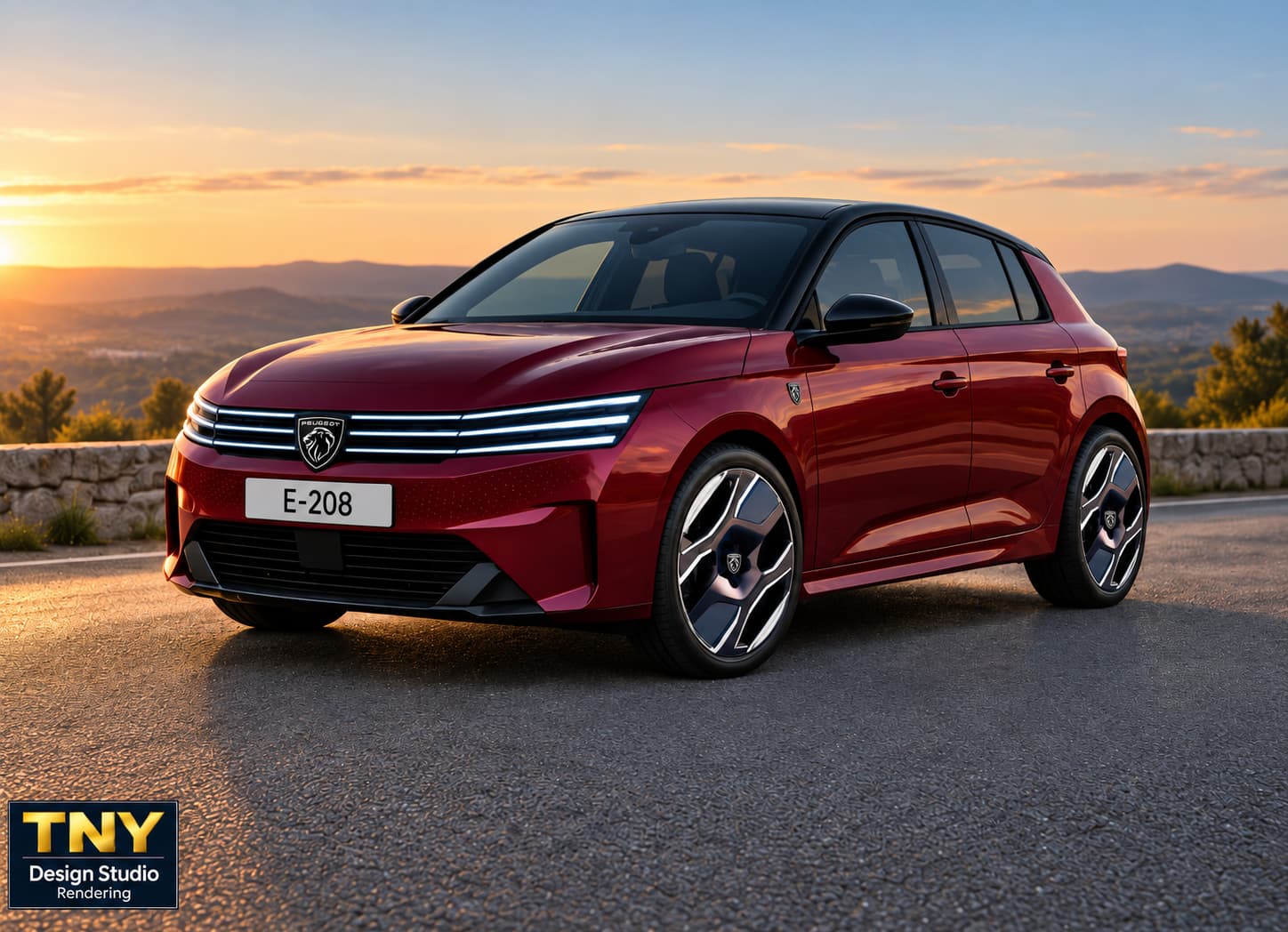
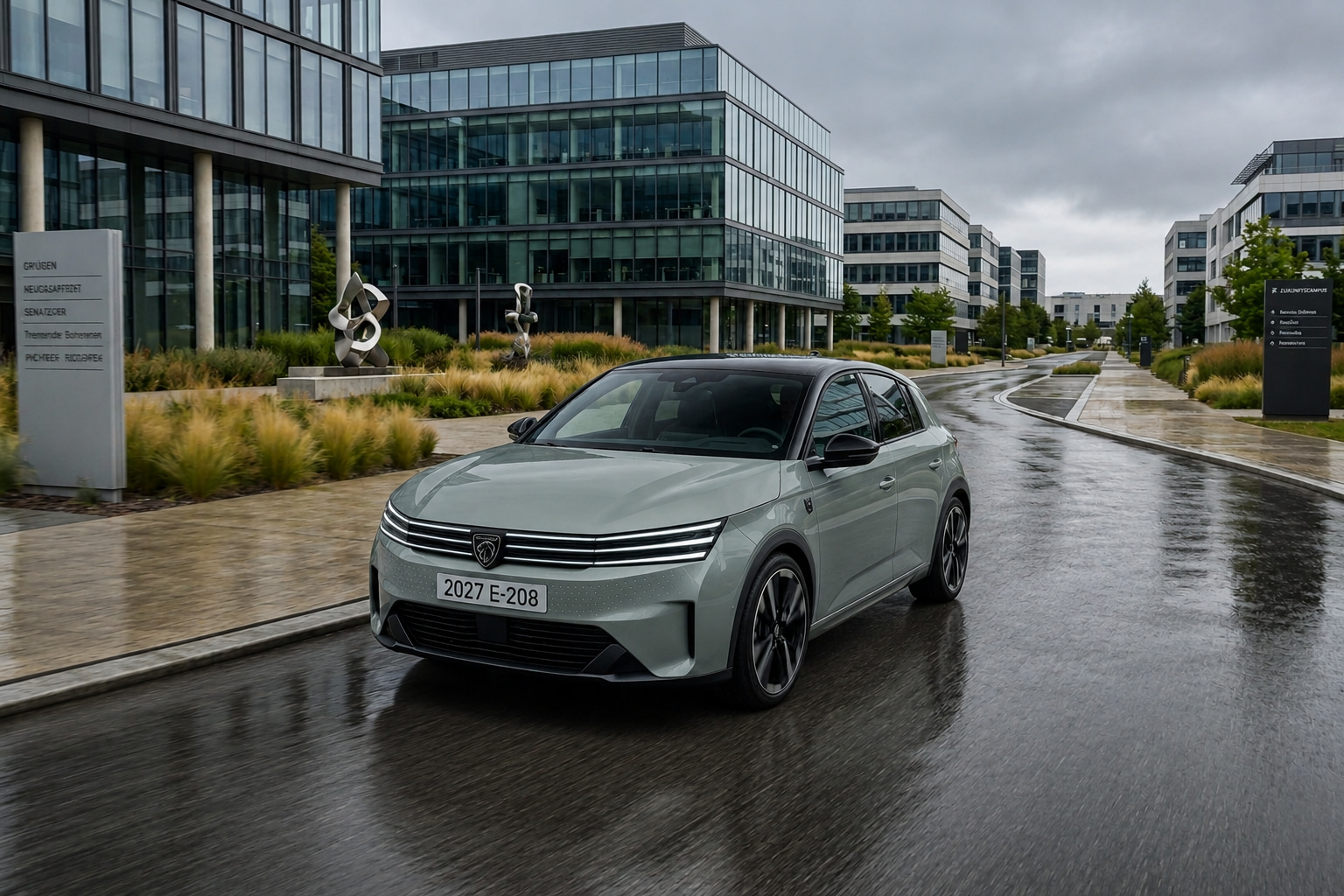
If the Polygon Concept shows Peugeot’s design direction in abstract form, our TNY Design Studio rendering explores what that could mean for one of the brand’s most important real-world models.
The 208 remains central to Peugeot’s range, so any major shift in styling or technology is likely to matter here first. That is why Polygon feels so relevant. Its sharper proportions, cleaner surfacing and more technical front-end treatment all point towards the kind of visual changes that could shape Peugeot’s next generation of small cars.
Our rendering imagines those themes translated into a production-ready e-208. It keeps the compact hatchback proportions that have made the 208 such an important player in Europe, but introduces a more assertive stance and a design language that feels much closer to Peugeot’s next phase.
Seen in that light, Polygon is more than a standalone concept. It is an early clue to how future Peugeots — especially cars like the 208 — could begin to evolve.
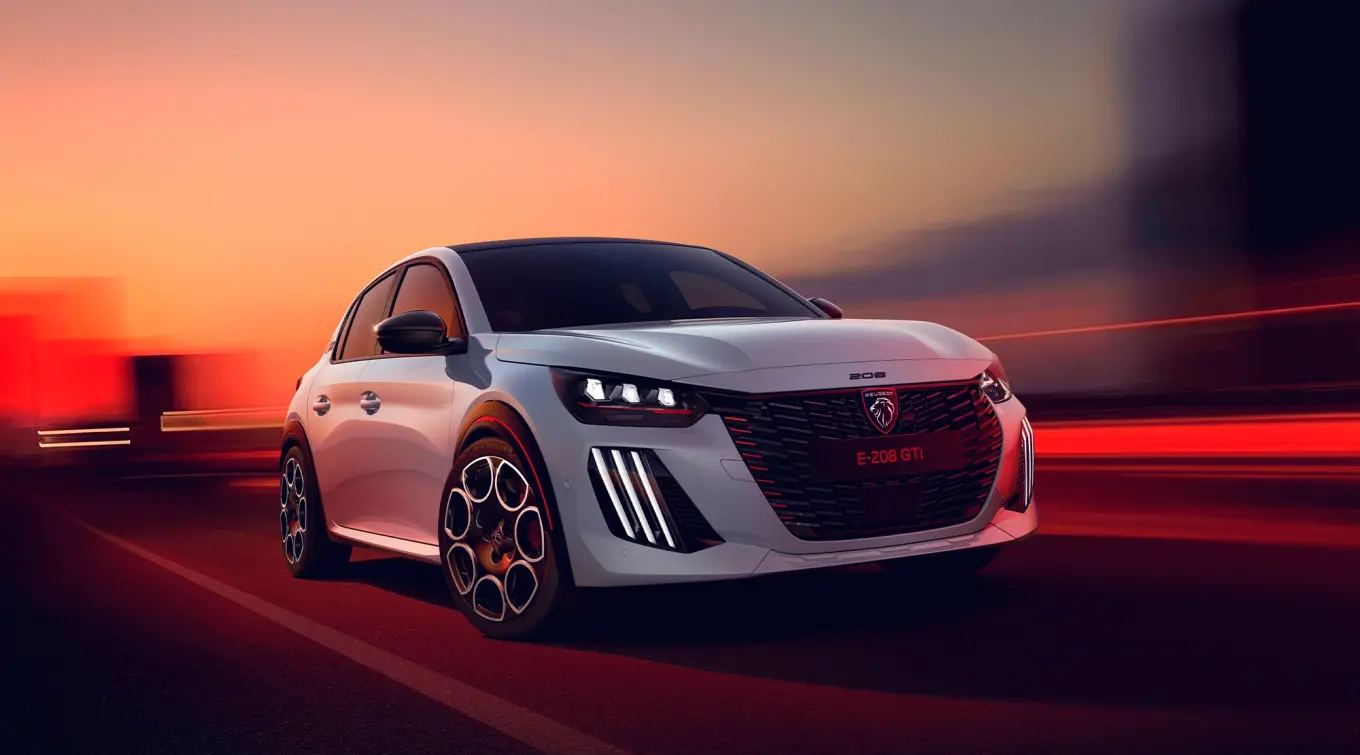
Alongside the future-looking Polygon Concept, Peugeot is also bringing something much more immediate to Paris: the production E-208 GTi.
Developed by Peugeot Sport, the electric hot hatch produces 281PS and 345Nm, reaching 62mph in 5.5 seconds while offering up to 233 miles of WLTP range. UK pricing starts at £34,995.
Paris will also put the E-208 GTi alongside the original 205 GTi, creating a deliberate link between one of Peugeot’s most famous performance cars and its new electric successor.
It makes the GTi particularly significant for Peugeot. Rather than leaving its performance badge behind as the range electrifies, the company is attempting to carry that heritage directly into the EV era.
Further up the range, Concept 8 provides another intriguing glimpse at Peugeot’s future. Revealed in Beijing, the dramatic SUV study officially previews the design direction of Peugeot’s next generation of large SUVs, with production derivatives initially being developed with Dongfeng for China and other international markets.
Forum-Peugeot has also reported that Concept 8 is expected to appear in Paris, although Peugeot has yet to confirm this in its official show programme.
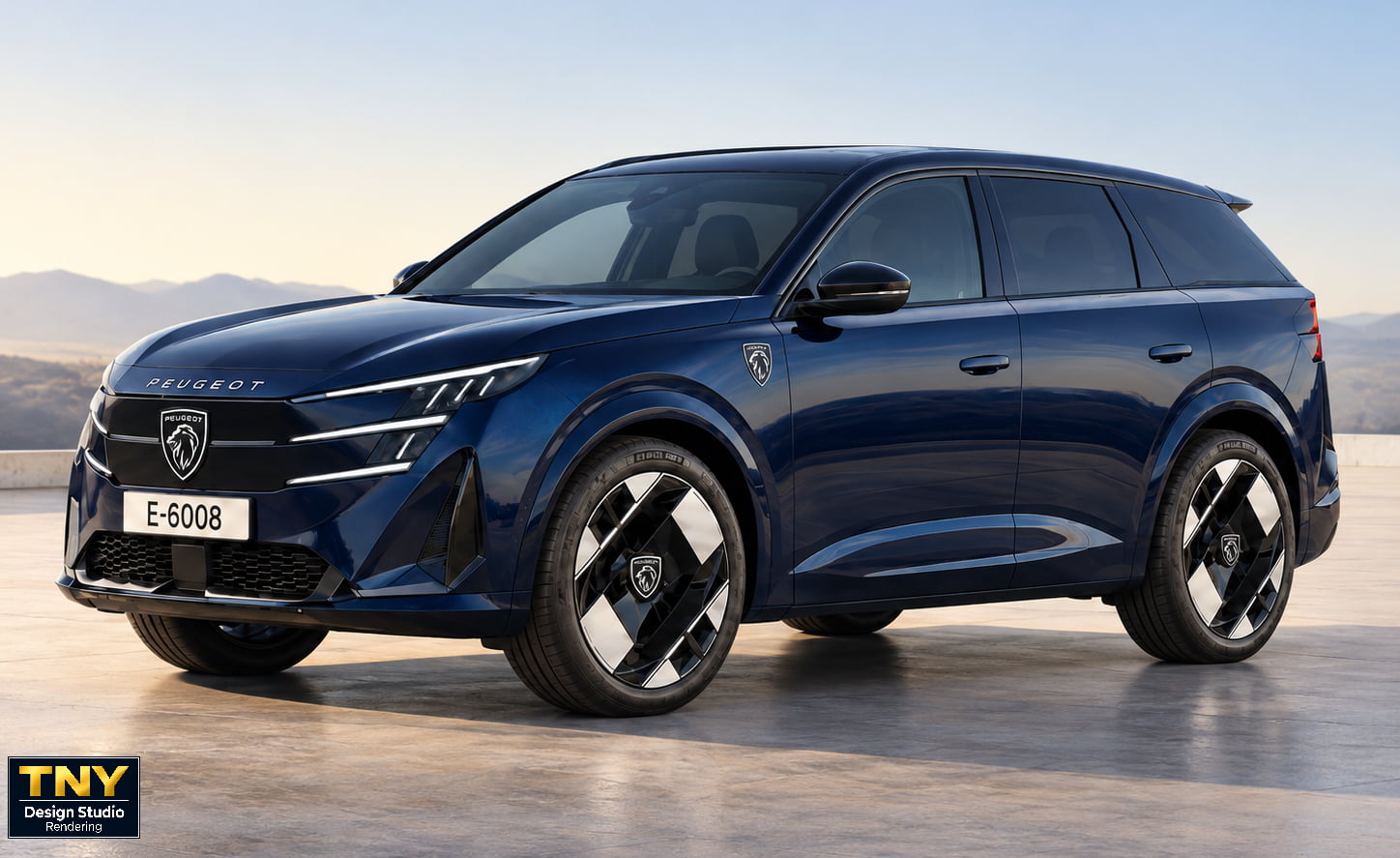
Our TNY Design Studio E-6008 asks a slightly different question: what if some of that thinking eventually filtered into Peugeot’s European range?
The result takes Concept 8’s cleaner surfaces, imposing stance and new lighting treatment and applies them to a possible flagship above today’s 5008. It isn’t a confirmed Peugeot project, but Concept 8 makes the idea of a larger, more ambitious Peugeot SUV considerably easier to imagine.
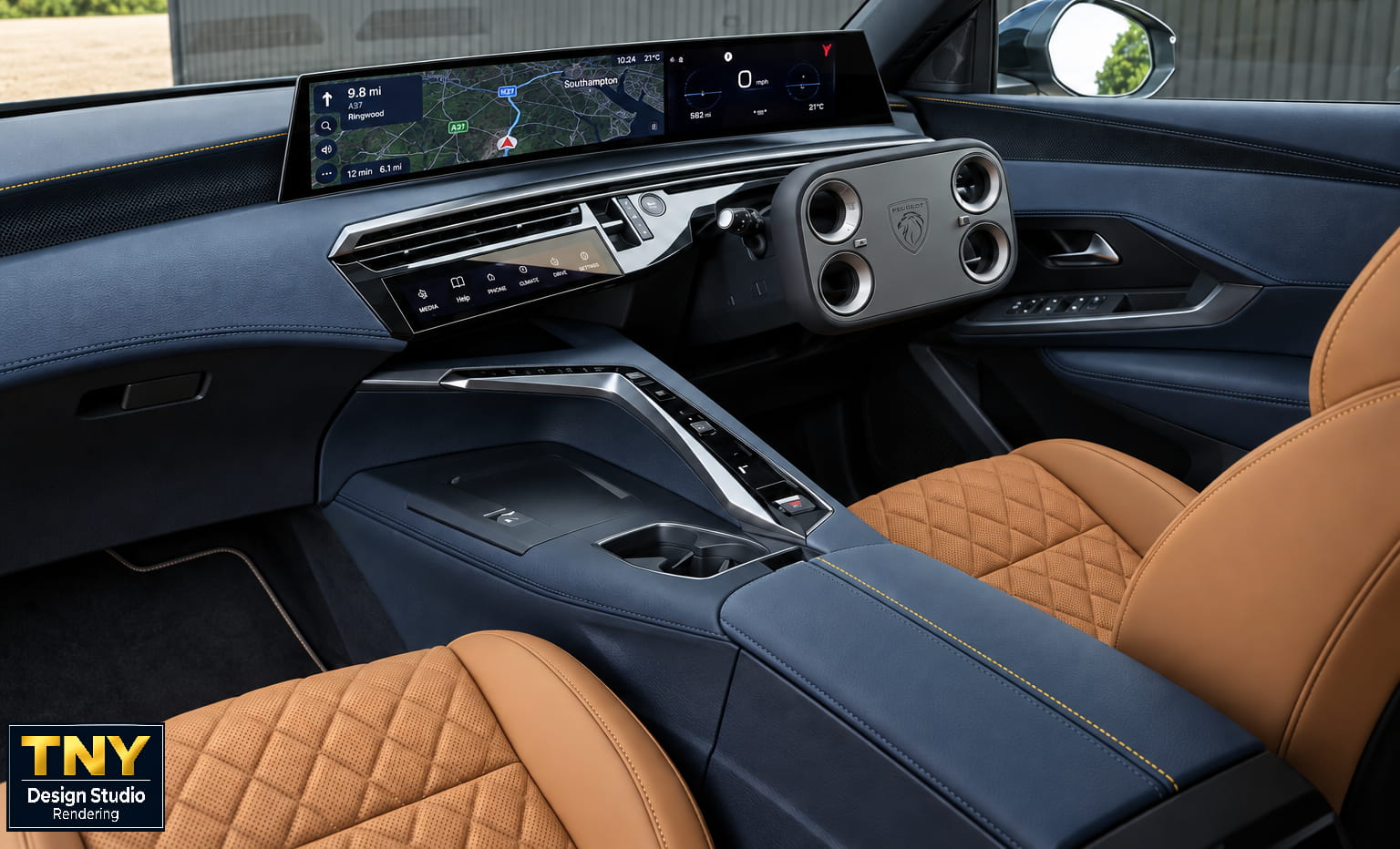
Peugeot’s next phase will not be defined by exterior styling alone. The Polygon Concept also previews one of the most radical changes coming to its cabins: the Hypersquare steering control.
Using steer-by-wire technology, Hypersquare replaces the traditional round steering wheel with a much smaller rectangular controller, reducing the amount of hand movement required and allowing Peugeot to rethink the entire i-Cockpit layout around it.
Our TNY Design Studio interior rendering imagines how that idea could translate into a more production-ready cabin, retaining the compact driving interface while introducing a cleaner dashboard and more conventional everyday usability.
Taken together, Polygon, the E-208 GTi and Peugeot’s developing concept work show a brand trying to change on several fronts at once. Performance is returning, electric cars are becoming more central, and a new generation of design and interior technology is beginning to take shape.
Paris therefore gives Peugeot more than just a place to show new cars — it offers an early look at how different its range could feel by the end of the decade.
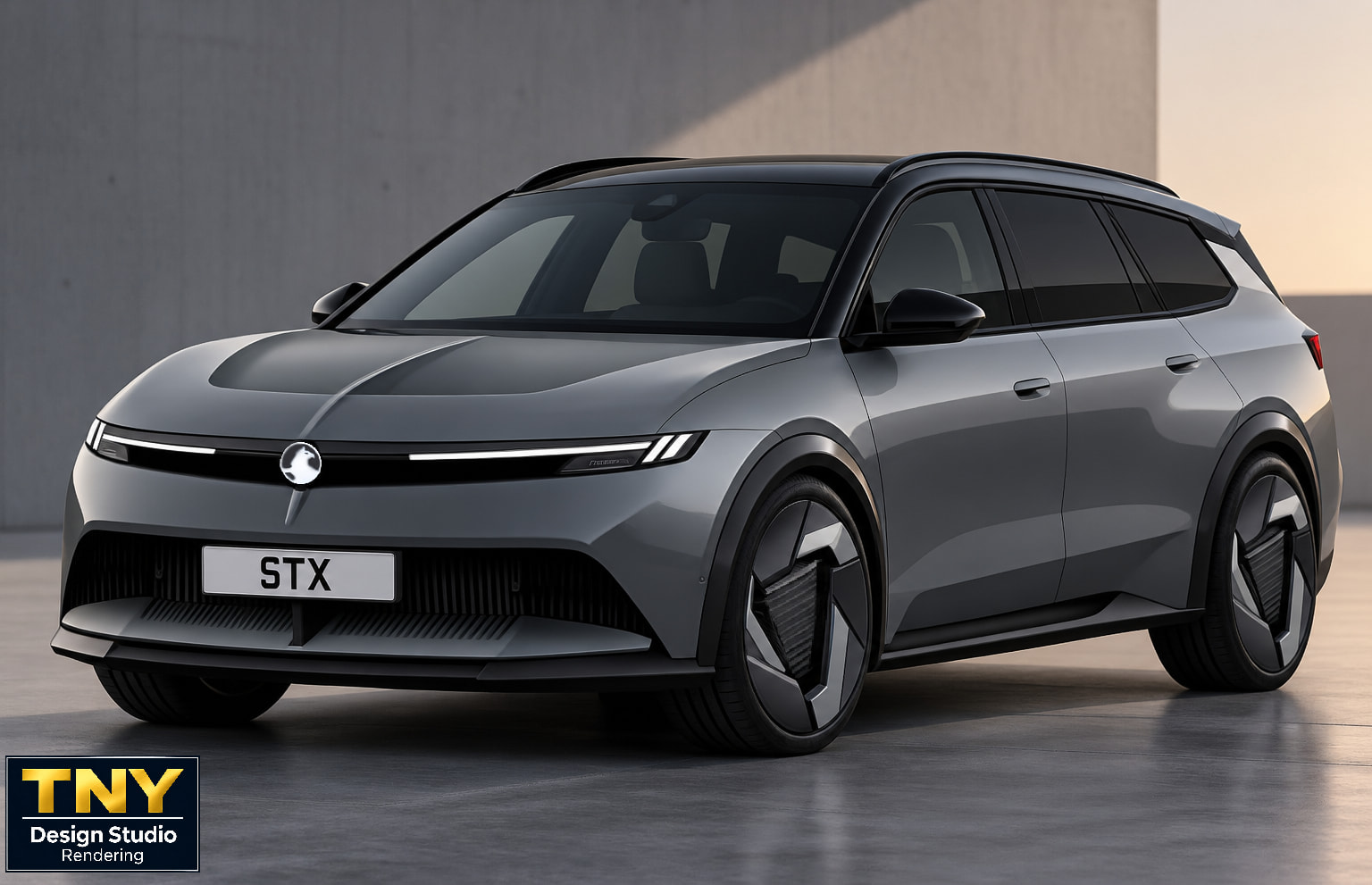
Elsewhere within Stellantis, Opel and Vauxhall are preparing one of the more intriguing concept debuts of the show.
The STX — short for Sports Tourer eXperimental — will make its world premiere in Paris, previewing both the future of the estate car and the next evolution of Opel and Vauxhall design. The first official teasers already point towards a cleaner Vizor treatment, flush surfacing and a strong focus on aerodynamics.
Our TNY Design Studio interpretation imagines how those ideas could translate into a more production-ready model, drawing on the Astra Sports Tourer while introducing slimmer lighting, cleaner surfaces and a more aerodynamic silhouette.
We have also updated our rendering with Vauxhall’s newly revealed Griffin emblem, helping place the concept within the brand’s next generation of design.
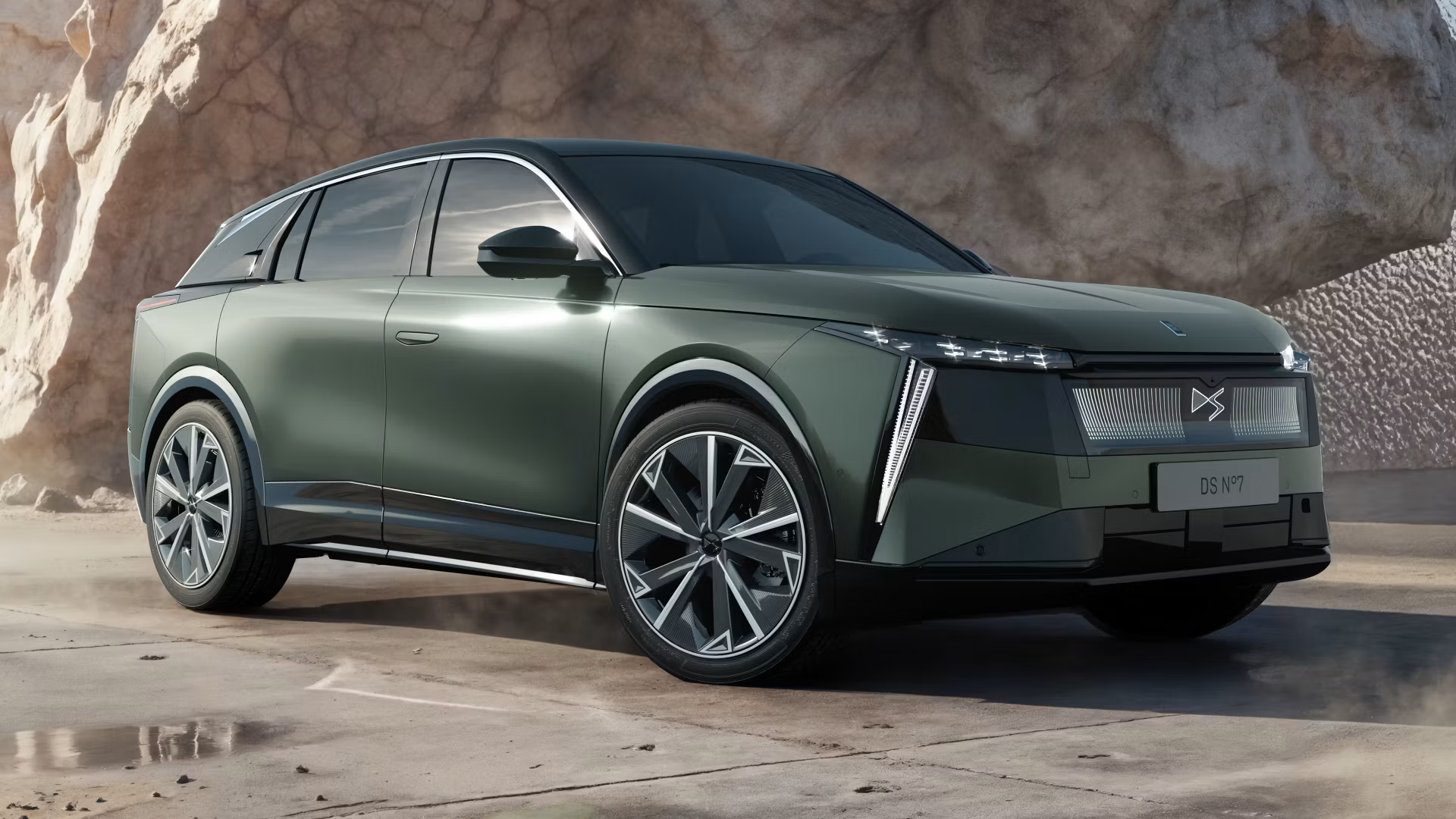
DS Automobiles is using Paris to put its renewed range firmly in the spotlight, with the new N°7 taking centre stage.
Replacing the outgoing DS 7, the N°7 is the first model renewal in DS Automobiles’ history and one of the most important cars the young premium brand has launched. Paris comes just as the SUV enters its full launch phase, with three different N°7 versions due to be displayed alongside the N°8, N°4 and DS 3.
The range includes hybrid and fully electric E-TENSE versions. The long-range electric model uses a French-built ACC battery and offers up to around 459 miles of WLTP range, while an AWD version takes output to 350hp.
For DS, the N°7 is more than another SUV: it marks the point where the brand’s newer design language, electrification and premium ambitions begin to come together in a mainstream production model.
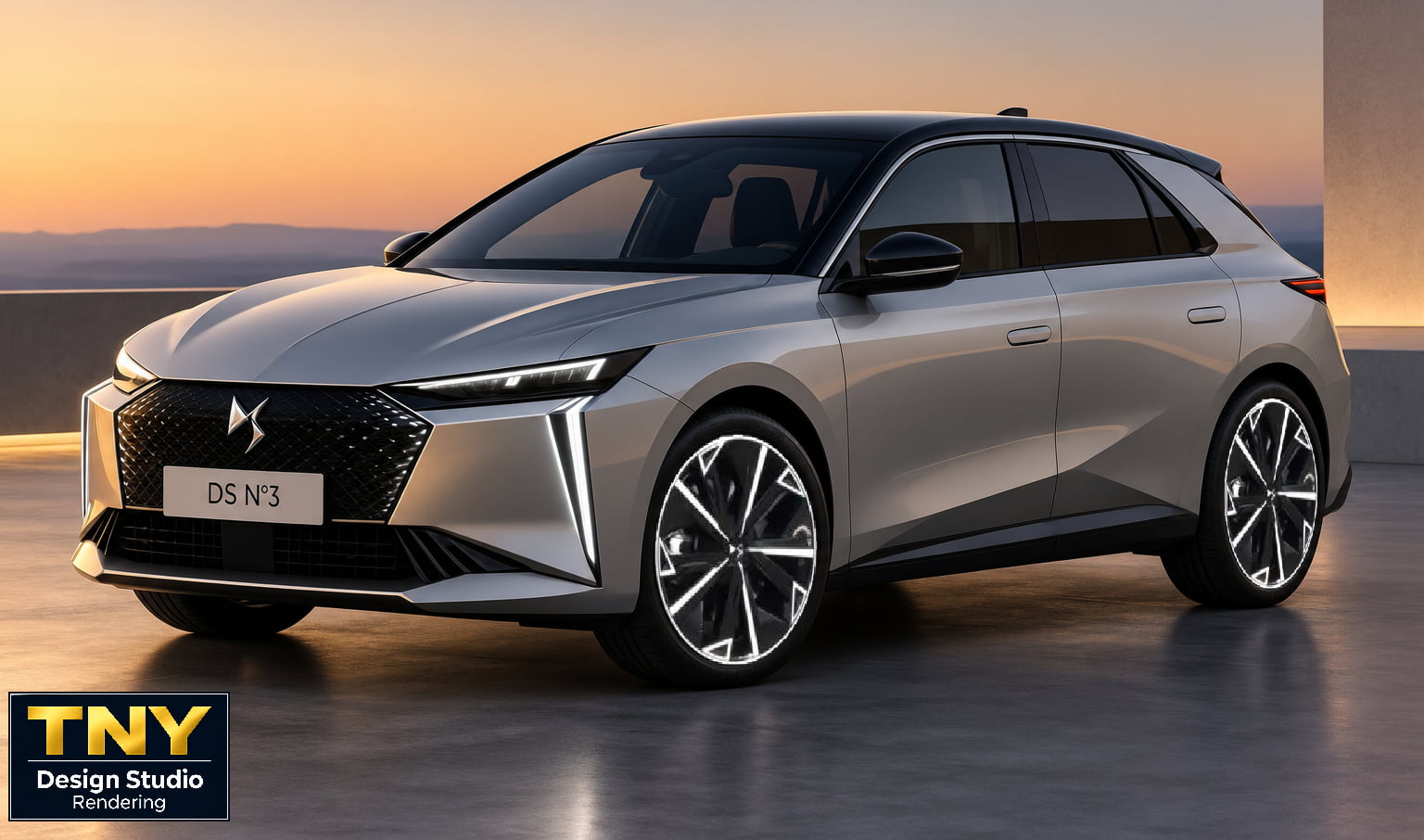
Below N°4 and the new N°7, DS still has an interesting gap to fill.
The current DS 3 remains in the range, but as a compact crossover rather than the distinctive premium hatchback that originally helped establish the DS name. Our TNY Design Studio N°3 imagines what a future return to that formula could look like: a compact five-door hatchback with a thick C-pillar, cleaner surfacing and the increasingly confident design language now seen across N°4, N°7 and N°8.
It is entirely speculative, but the timing makes the idea especially interesting. DS has confirmed that Paris will host the world debut of an as-yet unnamed exploratory concept, created specifically to preview the brand’s future design language. DS has given no indication that this concept is a N°3 or even a small car, so the link should not be overstated.
But with DS actively renewing its range, a smaller model eventually joining the new N° naming structure would make considerable sense.
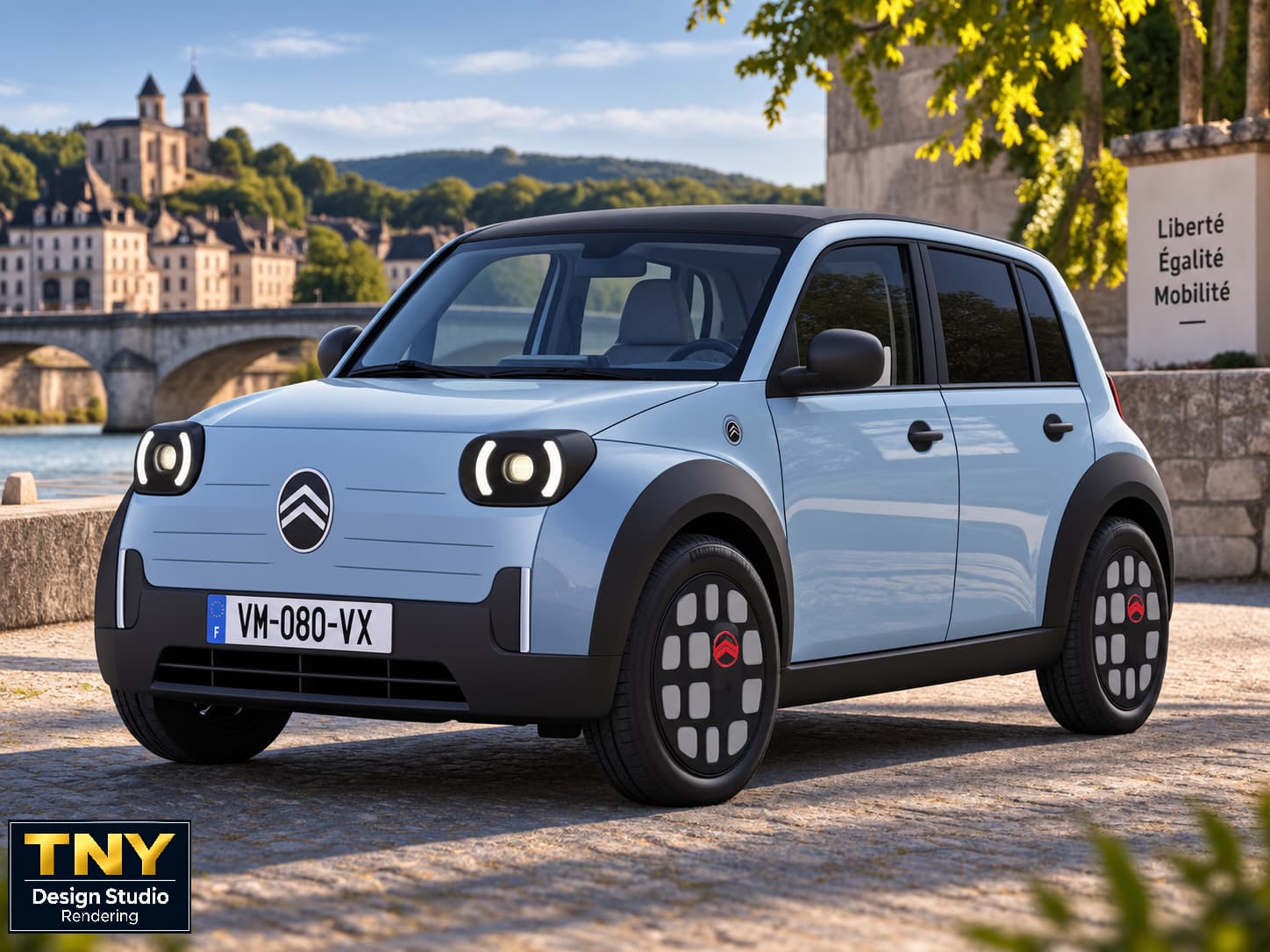
Today, the Ami covers ultra-compact urban mobility, while the ë-C3 offers a much more conventional and still relatively affordable supermini package. A new 2CV could sit neatly between the two: compact, simple and inexpensive, but with proper passenger-car usability, greater range and fewer compromises than the Ami.
That makes the idea especially interesting as Europe develops the proposed M1E category for small electric cars up to 4.2 metres long, aimed at encouraging lighter and more affordable EVs.
Our TNY Design Studio rendering imagines the 2CV filling exactly that role — a characterful, lightweight electric Citroën positioned below the ë-C3, while reviving the original car’s philosophy of accessible everyday transport rather than simply recreating its styling.
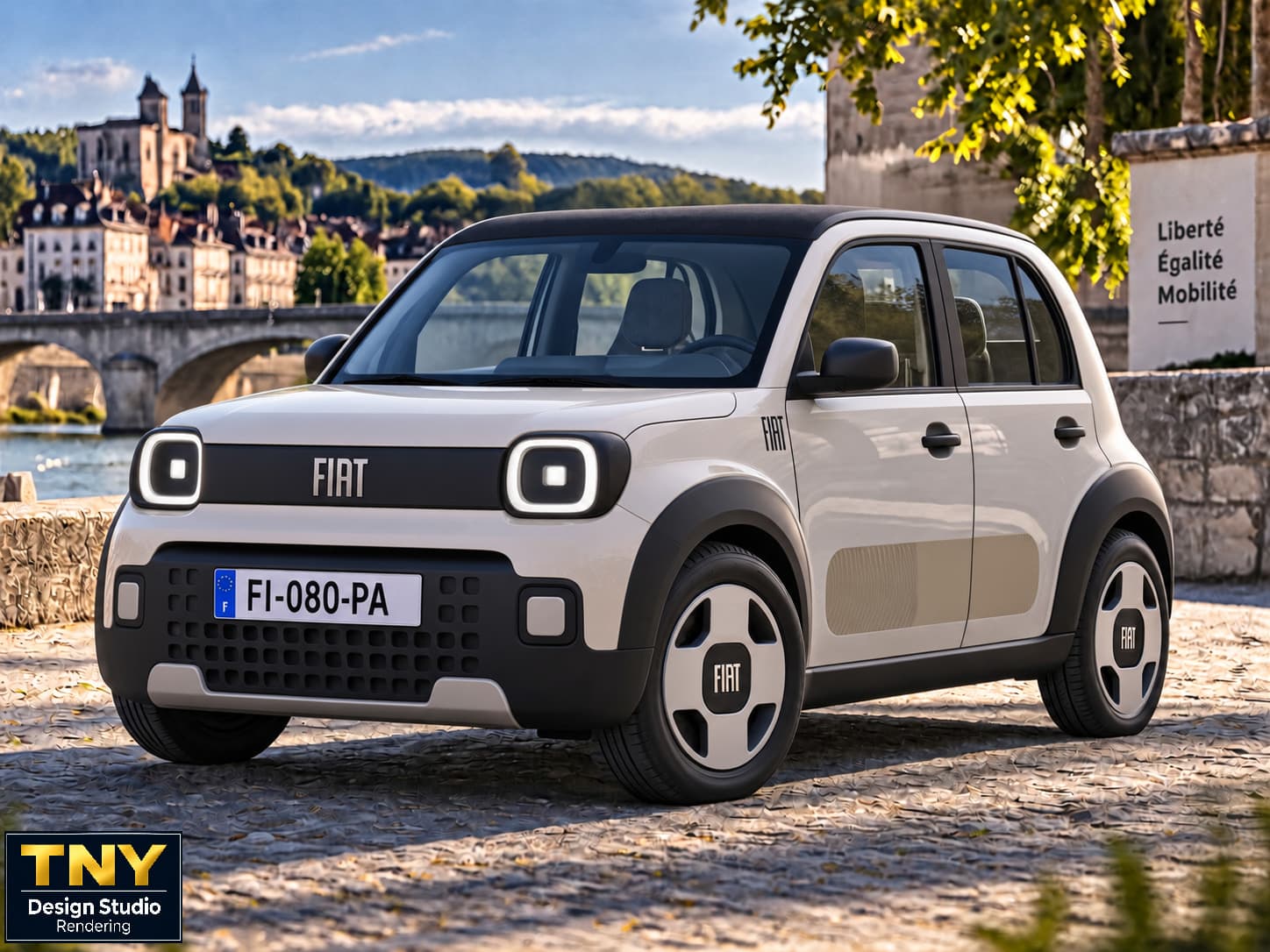
That context makes the Pandina especially interesting. The current car remains likeable and useful, but its roots now stretch back a long way, leaving clear room for a more modern successor.
Our TNY Design Studio rendering imagines one possible answer. Related in spirit to the new Citroën 2CV idea, it applies similarly simple, upright thinking to a future Fiat Pandina: compact, practical and full of character, but adapted for a more modern electric era.
The timing could make that sort of car particularly relevant. Europe’s proposed M1E category is aimed at encouraging smaller, lighter and more affordable electric cars, exactly the sort of space Fiat has historically understood better than most manufacturers.
With Fiat also preparing two small concepts for Paris, the show could offer some of the clearest hints yet at where the brand’s next wave of compact models is heading.
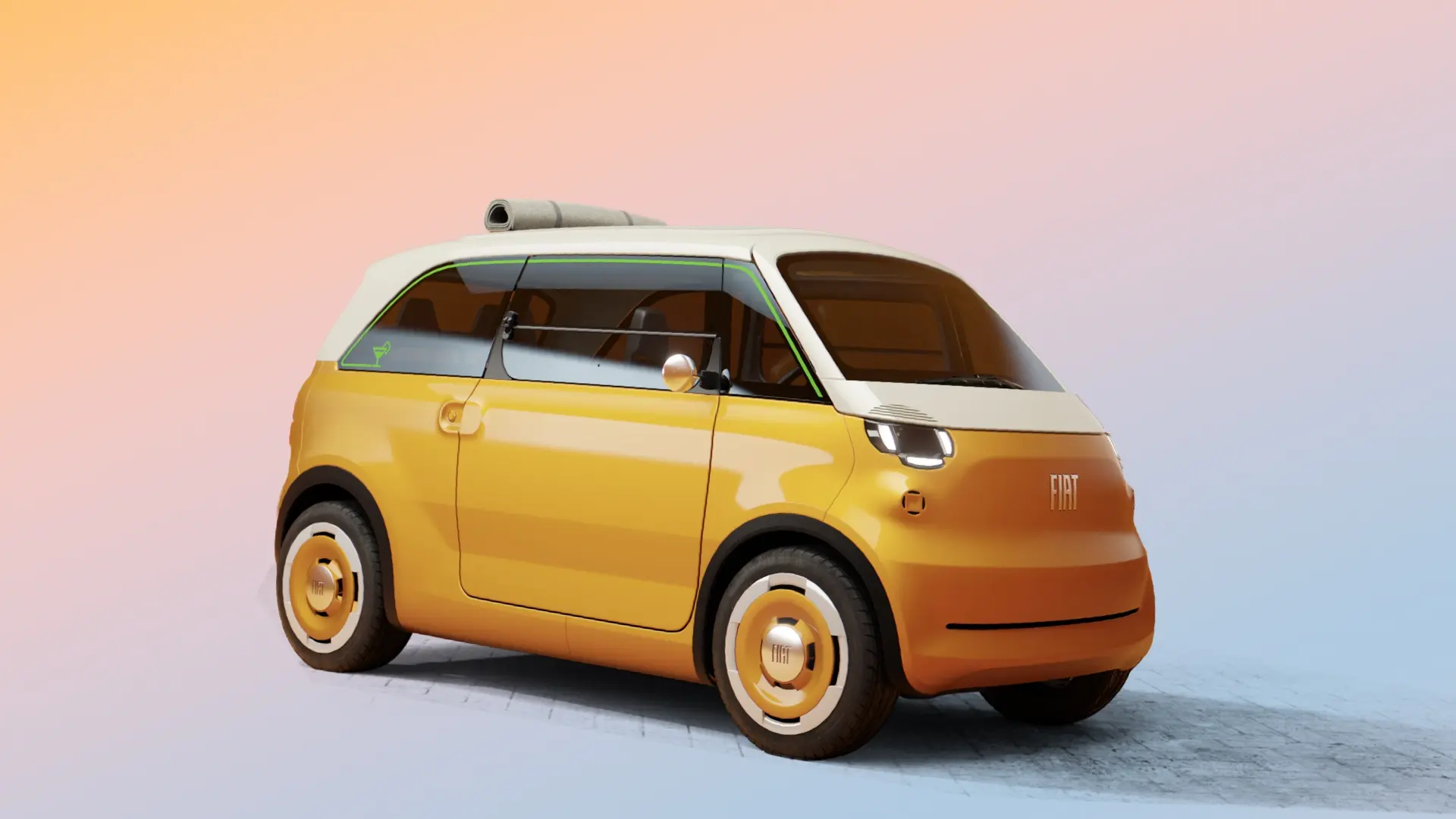
Fiat’s small-car ambitions extend below the Pandina too, with the Multiplina exploring an entirely different type of urban EV.
Inspired by the original 1956 Fiat 600 Multipla, the concept is effectively a larger, four-seat relative of the Topolino. Fiat describes it as the “missing link” between the Topolino and a conventional car, squeezing significantly greater passenger space into an extremely compact footprint.
The distinction is important. Today’s two-seat Topolino is an L6e light quadricycle, limited to 45km/h and designed primarily for short urban journeys. Multiplina has four seats and Fiat has quoted a 90km/h top speed, strongly pointing towards the more capable L7e heavy-quadricycle category, although its final homologation has not yet been confirmed.
A production version is expected around 2028. If Fiat can retain the concept’s simplicity and character, Multiplina could turn the Topolino idea into something genuinely usable for small families rather than simply two-person urban transport.
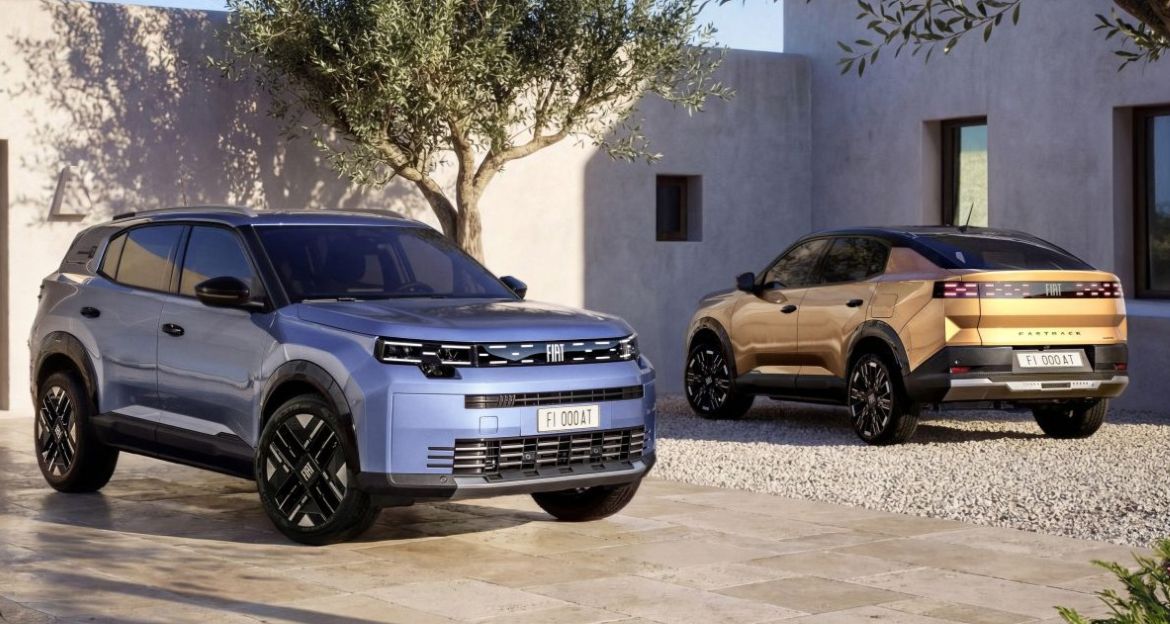
The Grande Panda has given Fiat a strong foundation for rebuilding its family-car range, and the Grizzly and Grizzly Fastback are the next major step.
Fiat sold more than 21,000 Grande Pandas in Europe during the first quarter of 2026 alone, while Stellantis says sales of its broader Smart Car family — including the Grande Panda, Citroën C3 Aircross and Opel/Vauxhall Frontera — more than doubled in the first half of the year. That gives Fiat good reason to expand the formula.
Both new models use the same flexible Smart Car architecture, but target different buyers. The Grizzly is the more conventional family SUV, focused on space and comfort, while the Grizzly Fastback keeps the same practical foundations beneath a more distinctive, coupe-like silhouette.
They matter because they turn the Grande Panda from a successful standalone launch into the starting point of a much broader Fiat family — affordable, multi-powertrain cars built from shared Stellantis hardware rather than isolated one-off models.
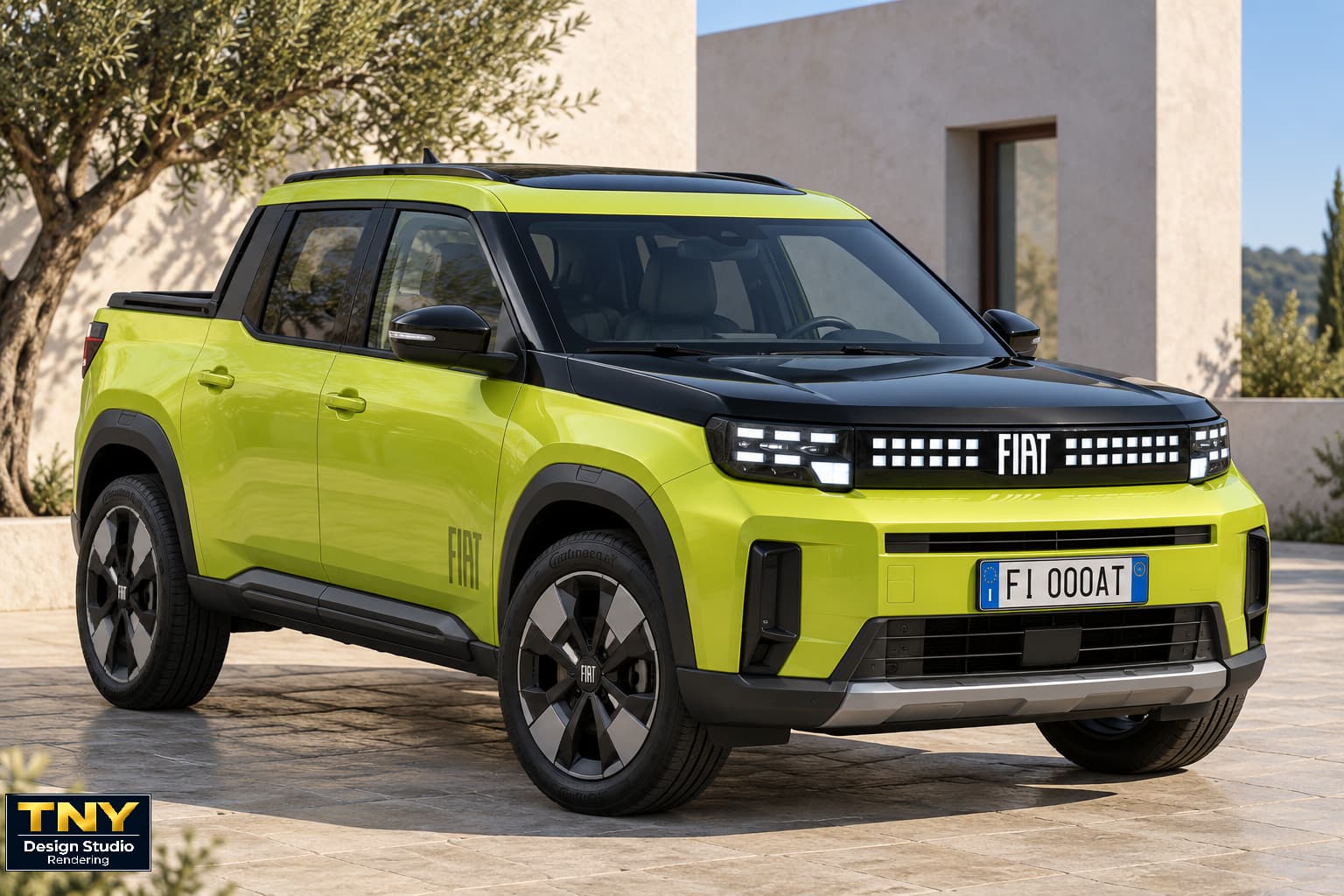
Our TNY Design Studio rendering imagines the Multiplay as the pick-up member of Fiat’s growing new family of practical lifestyle vehicles.
Its importance goes beyond a single concept. When Fiat unveiled the Grande Panda and mapped out its future direction, this pick-up was one of five preview concepts shown as part of that wider plan. Since then, three of those ideas have effectively moved into fully revealed forms, with the Multiplay now looking like the fourth piece of the puzzle.
That makes it a particularly interesting Paris prospect. A compact pick-up or leisure-focused utility model would broaden Fiat’s line-up in a way few mainstream European brands now attempt, while also reinforcing the more adventurous, flexible image Fiat is trying to rebuild.
Fiat has not yet confirmed the production engineering beneath Multiplay, but the Stellantis Smart Car platform would be the obvious fit. It already underpins Grande Panda and the wider family of related models, making it the most logical route if Fiat wants to deliver a relatively affordable, globally viable pick-up with shared components and multi-powertrain flexibility.

Fiat’s Paris story is ultimately about breadth: from tiny urban EVs and affordable hatchbacks to SUVs, fastbacks and even a possible compact pick-up. Within Stellantis, Alfa Romeo approaches the show from a very different direction.
Its headline act is Cuorerosso, a new concept that Alfa describes as a manifesto for the brand’s future. So far, the preview is deliberately vague: we know the name, the emphasis on Italian design, performance and driving emotion, but almost nothing about its proportions, powertrain or eventual production relevance.
That uncertainty is part of what makes it interesting. Alfa Romeo says Cuorerosso has been created for people who still value the relationship between driver and car, suggesting this will be more than a simple styling exercise.
The concept will make its debut in Paris on 12 October, where it should provide the clearest indication yet of how Alfa Romeo intends to evolve its design and performance identity through the second half of the decade.
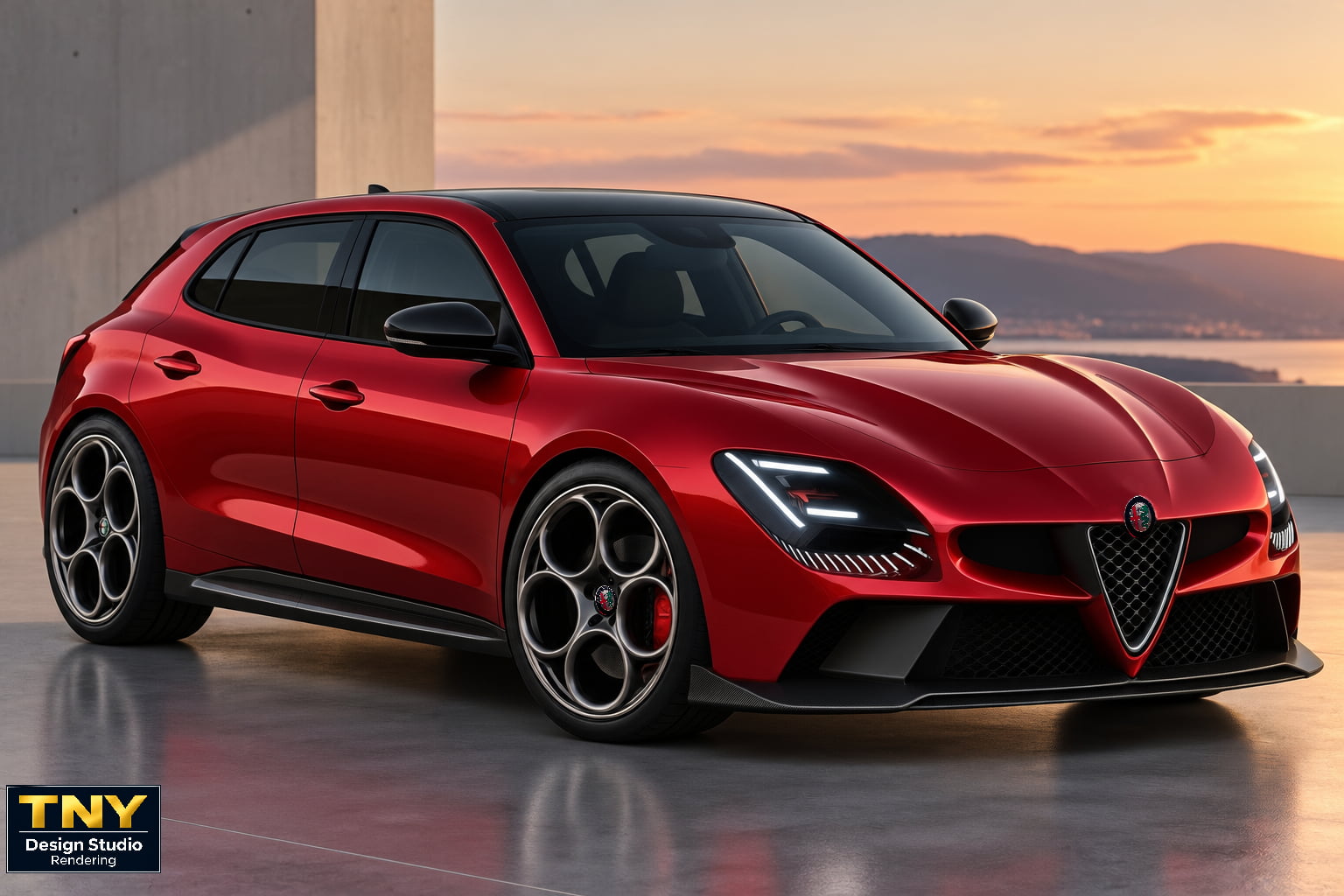
Whatever form Cuorerosso takes, Alfa Romeo already has another important new model confirmed: a return to the C-segment hatchback market.
The forthcoming car will use Stellantis’ multi-energy STLA ONE architecture and sit alongside a new C-SUV, giving Alfa a direct rival for cars such as the Volkswagen Golf for the first time since the Giulietta disappeared in 2020.
Our TNY Design Studio rendering imagines that car reviving the Giulietta name, combining a low, sporting hatchback shape with design cues from the Junior and Alfa’s latest models.
Could Cuorerosso itself preview this car? It is certainly possible, particularly with Alfa describing the Paris concept as a manifesto for its future. But so far the company has revealed nothing about its body style, dimensions or production destination.
For now, the connection remains speculation — but unlike the name and styling of our rendering, the new Alfa hatchback itself is very real.
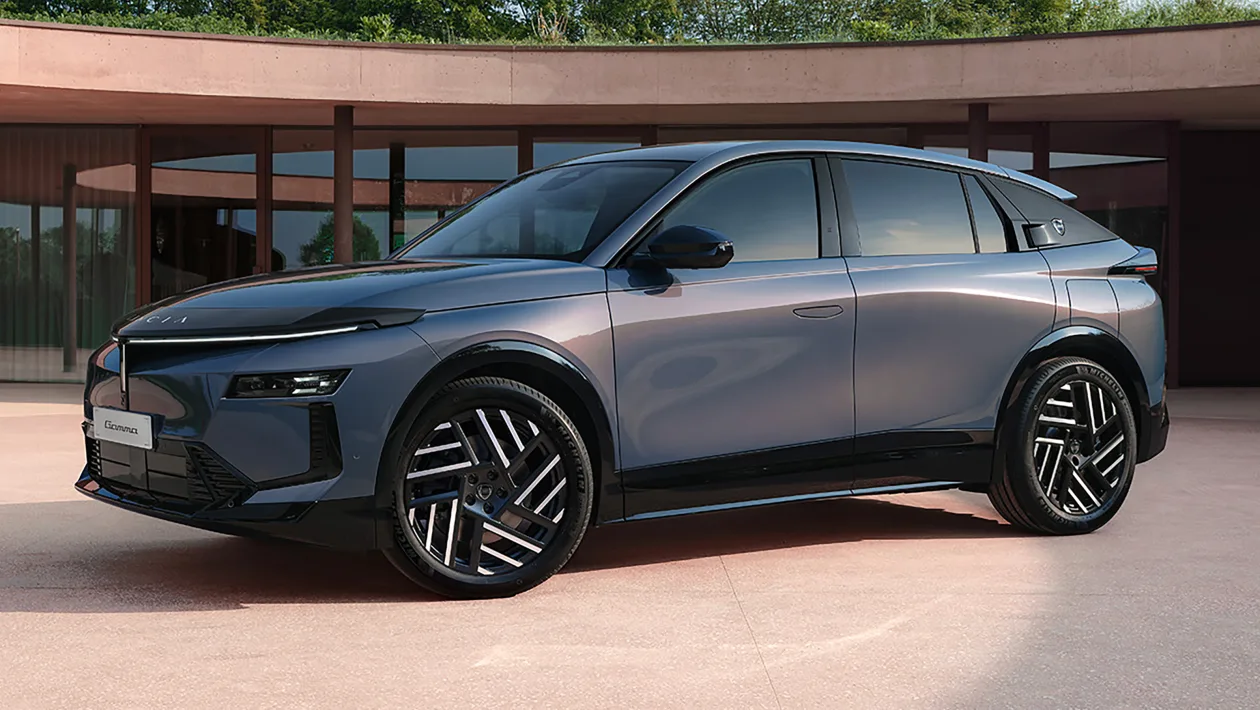
Lancia’s return continues with the Gamma, a car that matters as much for where it is built as for what it offers.
The 4.67-metre fastback crossover is designed, developed and produced in Italy, with manufacturing centred on Stellantis’ Melfi plant. For a brand rebuilding around its Italian identity, that gives Gamma considerably more significance than simply adding a second model alongside the Ypsilon.
Built on STLA Medium, the range stretches from a 145hp hybrid capable of more than 1,000km between fuel stops to fully electric versions producing 230hp or 245hp. The longest-range EV targets more than 740km — around 460 miles — while the flagship Gamma HF Integrale brings dual motors, all-wheel drive and 375hp.
Paris will display hybrid, electric and HF Integrale versions together.
Lancia is not currently sold in the UK, but Gamma shows the scale of its European rebuilding effort. It gives the brand a larger, more mature flagship while simultaneously putting Italian design, engineering and manufacturing back at the centre of the Lancia story.
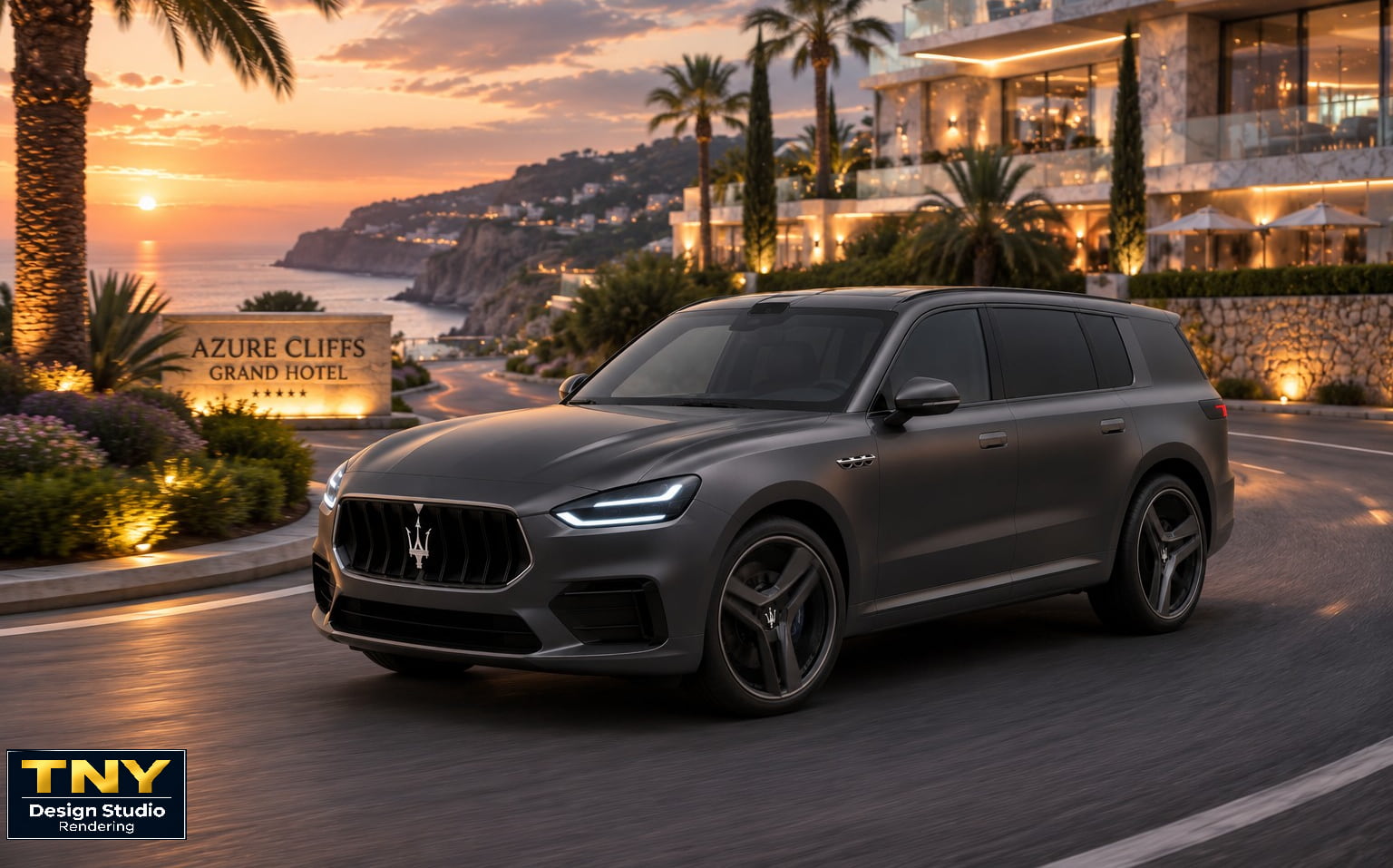
Maserati is also generating intrigue around the Paris period, with reports pointing to a new concept that could preview the brand’s next design era.
That makes our TNY Design Studio Levante particularly timely. Maserati has already confirmed that a new SUV is in development, alongside a future sports car, although neither its name nor positioning has yet been revealed.
Our rendering imagines that SUV as a second-generation Levante: a larger, more imposing companion to the Grecale, carrying Maserati’s cleaner modern design language into one of the most commercially important parts of the luxury market.
Whether Paris ultimately gives us the first real clue remains to be seen, but the direction matters. Maserati needs new product, and a larger SUV could give the brand a much clearer structure while restoring a model above the Grecale.
Taken together, Stellantis will have one of the biggest presences at Paris, with more than 60 vehicles and nine concepts spread across eight officially attending brands. From tiny urban EVs and affordable hatchbacks to performance cars, luxury models and entirely new concepts, the scale of the display underlines just how many different directions the group is developing at once.
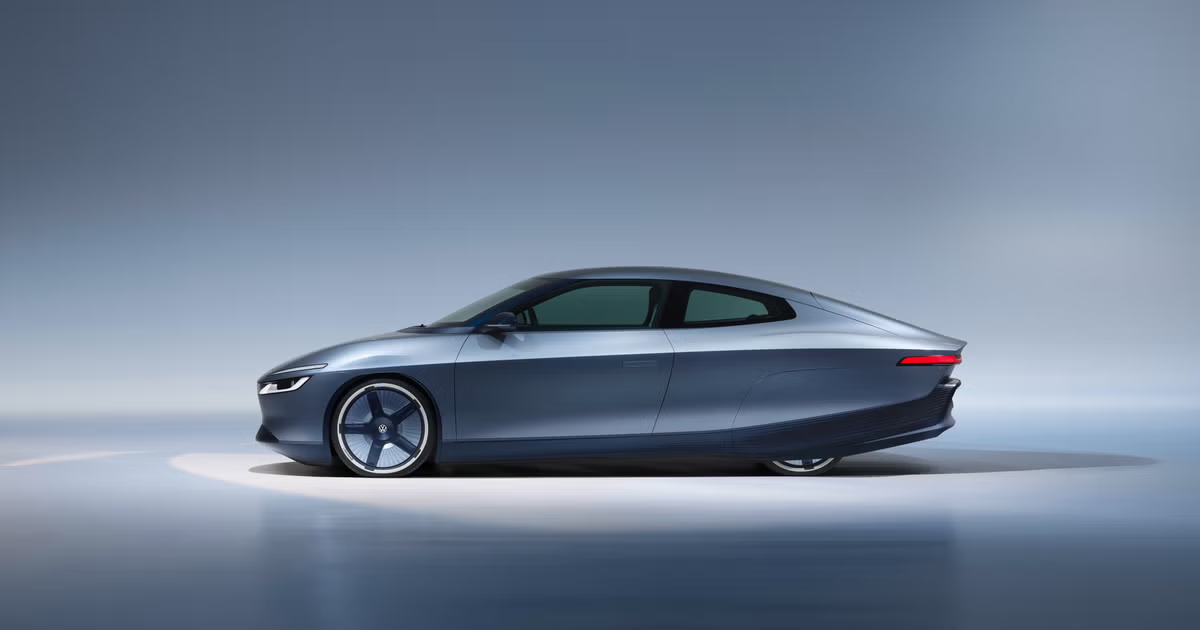
After Stellantis, Volkswagen Group brings another huge European presence to Paris, with Volkswagen itself using the event to showcase how its electric range and underlying technology are evolving.
A particularly striking example is the new Mission Efficiency concept.
In many ways, it feels like the spiritual successor to the XL1 plug-in hybrid. That limited-production car was built around extreme efficiency above everything else; Mission Efficiency takes exactly the same philosophy into the electric era.
Its drag coefficient of just 0.158 sets a new benchmark for a road-legal car. On Volkswagen’s efficiency run, it averaged just 6.89kWh/100km, demonstrating how much range can be gained through aerodynamics rather than simply fitting a larger battery.
Like the XL1 before it, Mission Efficiency is less about outright performance than proving how far careful engineering can stretch every unit of energy.
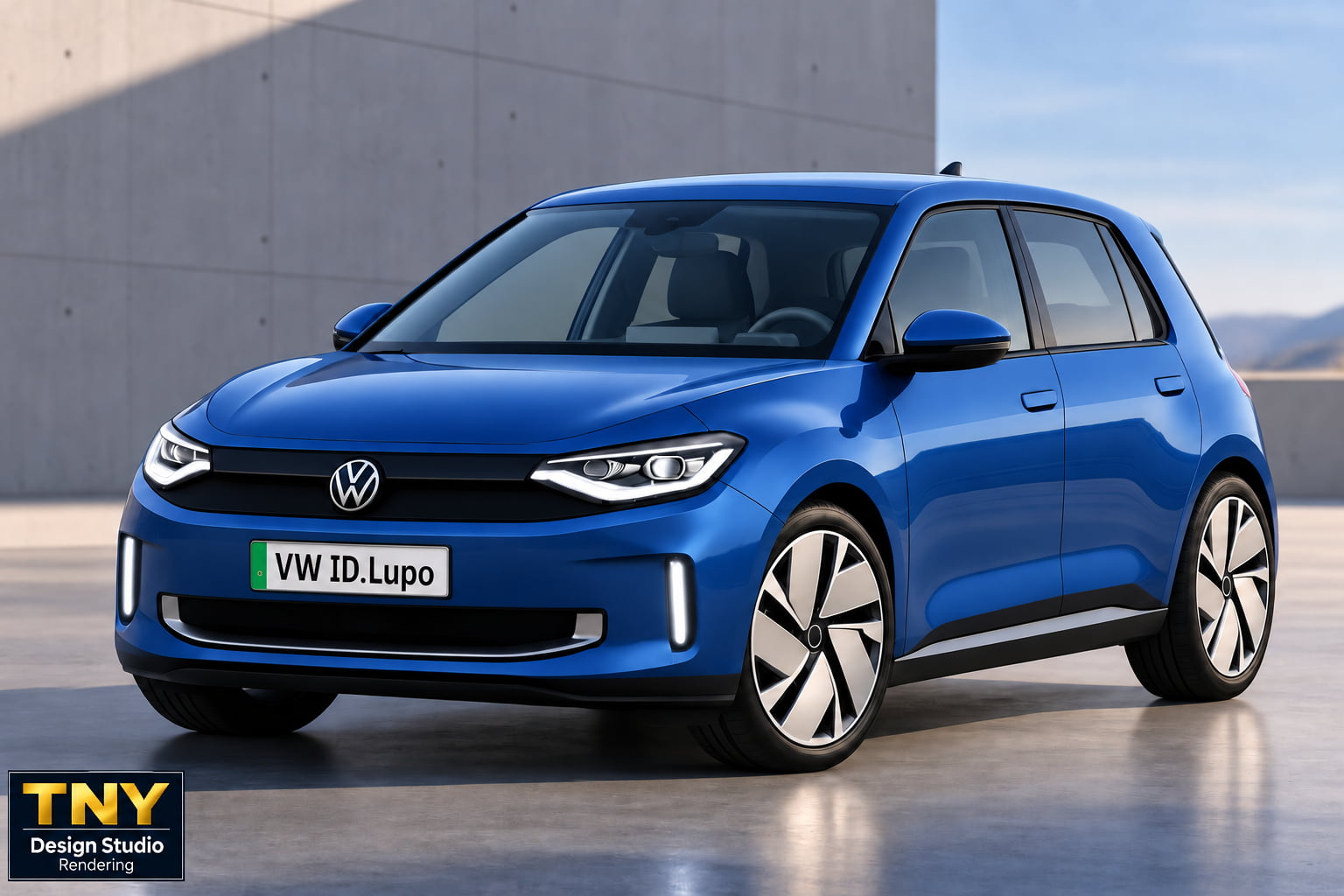
At the opposite end of Volkswagen’s electric range, one of its most important future cars could also be its smallest.
Our TNY Design Studio ID. Lupo imagines the production evolution of the ID. EVERY1 concept, revealed in 2025 as Volkswagen’s preview of a new entry-level EV. The Lupo name is our interpretation rather than a confirmed badge, but Volkswagen has already begun bringing familiar names back to its electric range.
The production car is due in 2027, with Volkswagen targeting a starting price of around €20,000. Built on the front-wheel-drive MEB+ architecture, it is intended to sit below the ID. Polo and complete Volkswagen’s new family of affordable electric cars.
That could make it particularly important. As inexpensive EVs from Dacia, Citroën, Leapmotor and others rapidly expand the bottom of the market, Volkswagen needs a genuinely low-cost electric offering of its own.
If pricing translates competitively to Britain, the ID. EVERY1’s successor could finally bring Volkswagen into the fast-growing sub-£20,000 EV conversation.
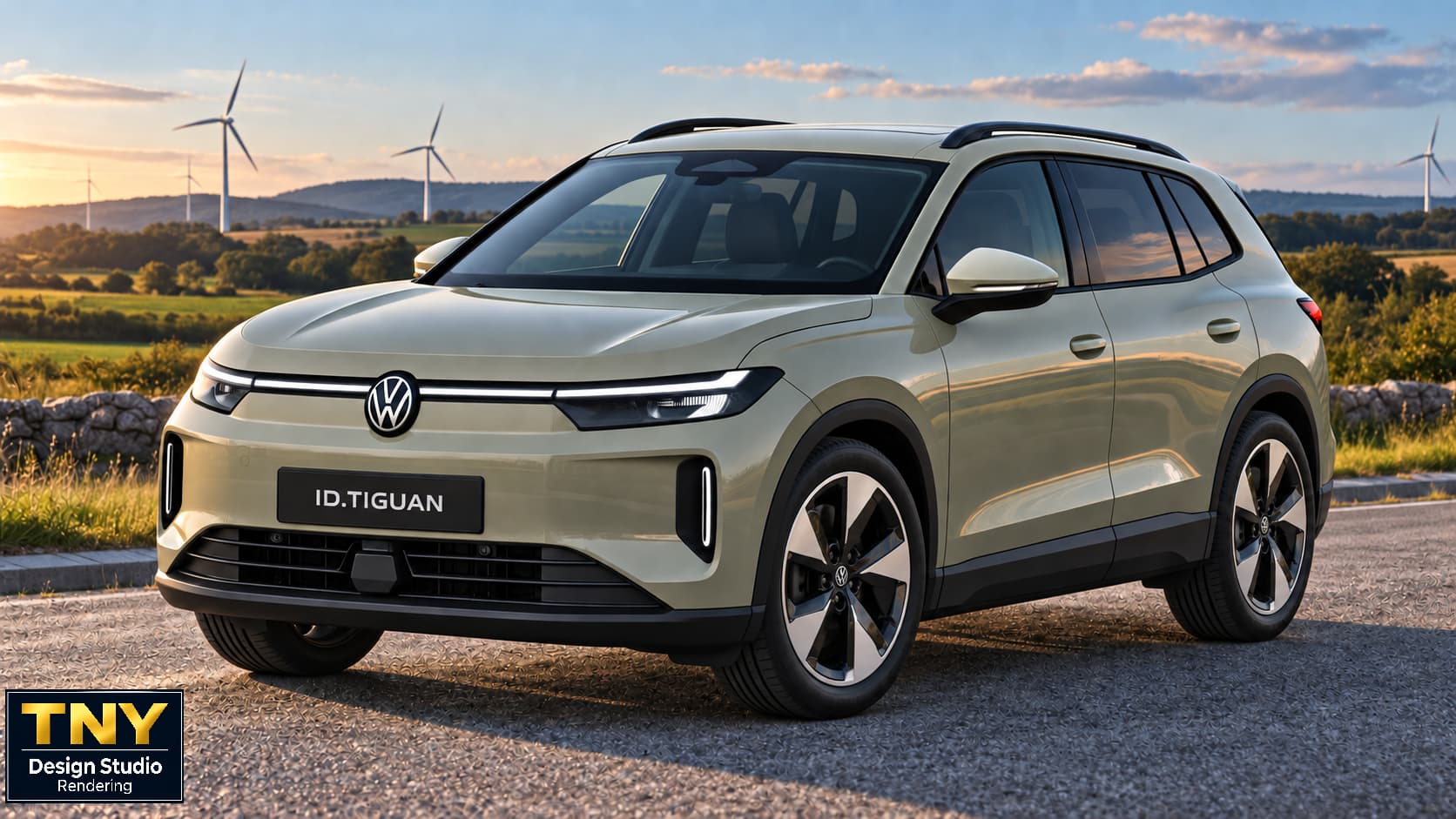
Our ID. Tiguan rendering has become considerably more timely.
Originally created as an interpretation of the updated ID.4 expected for 2027, Volkswagen has now confirmed that the next generation will instead adopt one of its best-known names. The ID. Tiguan will replace both the ID.4 and ID.5, sitting alongside the combustion and hybrid Tiguan rather than replacing it.
Our TNY Design Studio concept imagines that transition, moving away from the softer styling of the original ID.4 and towards the cleaner, more upright design now spreading through Volkswagen’s newest electric cars.
The real car is now extremely close. Volkswagen has confirmed an early-October world premiere ahead of sales beginning in early 2027, with the production model continuing on a heavily developed version of the existing electric architecture.
What began as an imagined ID.4 evolution is therefore becoming something rather more significant: Volkswagen’s electric family SUV adopting the identity of its global bestseller.
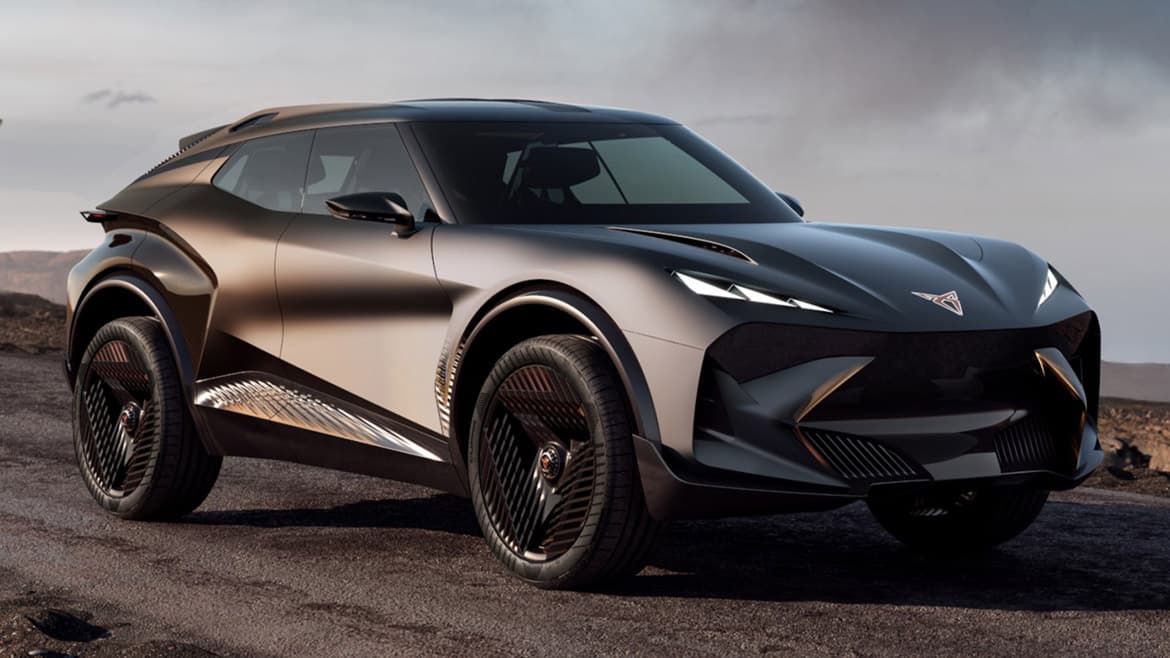
CUPRA’s Tindaya takes Volkswagen Group’s Paris story in a much more dramatic direction.
First shown as a concept in 2025, the 4.72-metre crossover was created to preview CUPRA’s next generation of design, with an aggressive stance, highly driver-focused cabin and a radical electrified powertrain concept.
Since then, its importance has grown. CUPRA has confirmed that a production Tindaya is now being developed, turning what began as a design study into the basis for a new flagship model.
Early speculation suggested it could eventually replace the Formentor, but the latest indications point elsewhere. Tindaya is expected to sit above both the Formentor and Tavascan, giving CUPRA a larger and more premium electric crossover capable of competing with cars such as the BMW iX3 and Volvo EX60.
Even so, its influence should spread much further. Tindaya effectively previews the styling and interior thinking likely to shape CUPRA’s next generation of electric crossovers.
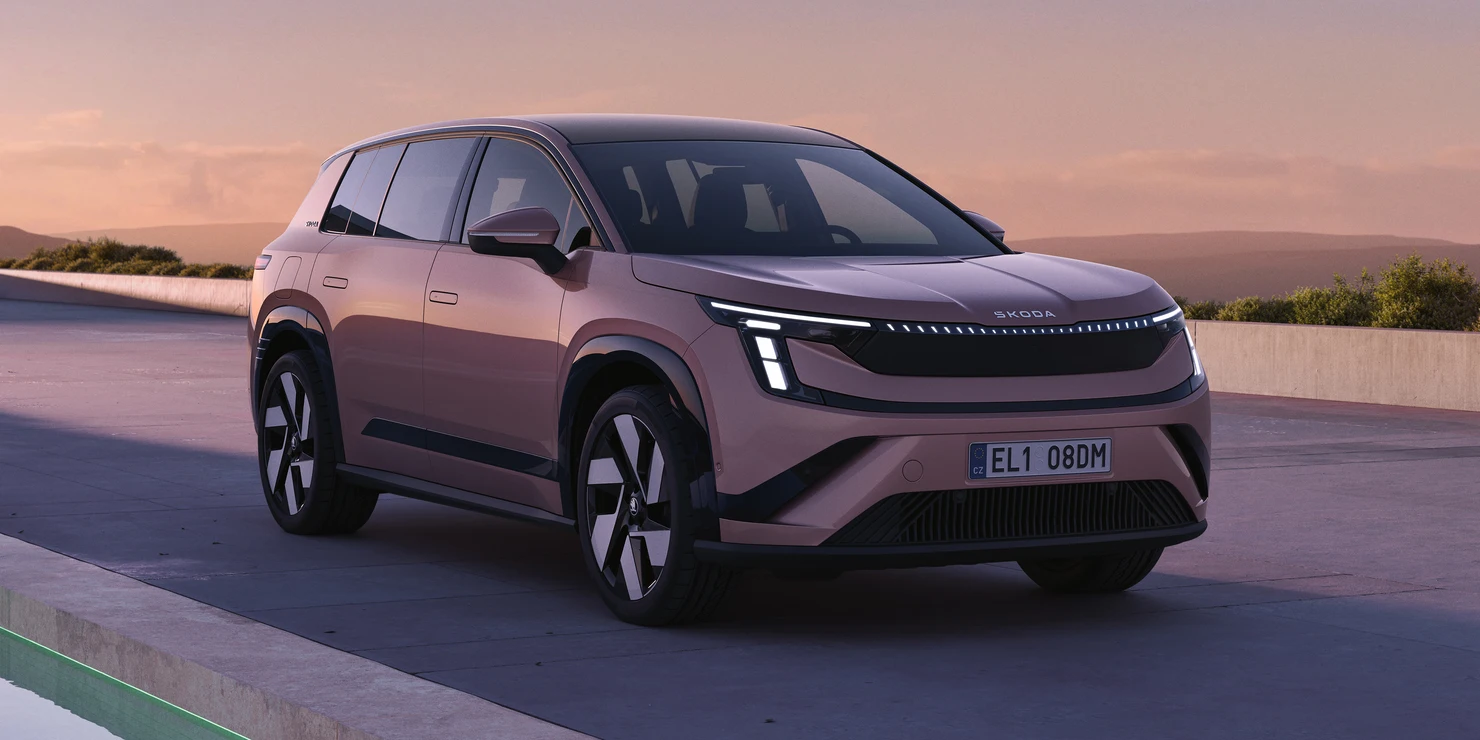
Škoda’s new Peaq gives the brand a genuine halo model in one of the fastest-growing parts of the market.
Positioned as the electric alternative to the Kodiaq, the 4.87-metre SUV becomes Škoda’s new flagship and its first full-size seven-seat EV. That alone makes it significant, but the wider market context matters too. Large family EVs are rapidly becoming a more important category, with models such as the Hyundai Ioniq 9 and Peugeot E-5008 expanding buyer choice, while long-range plug-in hybrids such as the Chery Tiggo 8 PHEV are also raising expectations around space, practicality and family usability.
The Peaq is Škoda’s answer to that shift. Built on the MEB platform, it offers up to seven seats, an 86kWh usable battery, up to 395 miles of WLTP range, and a 935-litre boot in five-seat form.
In other words, this is not simply a larger Enyaq. It is the car that pushes Škoda properly into the upper end of the family EV market.
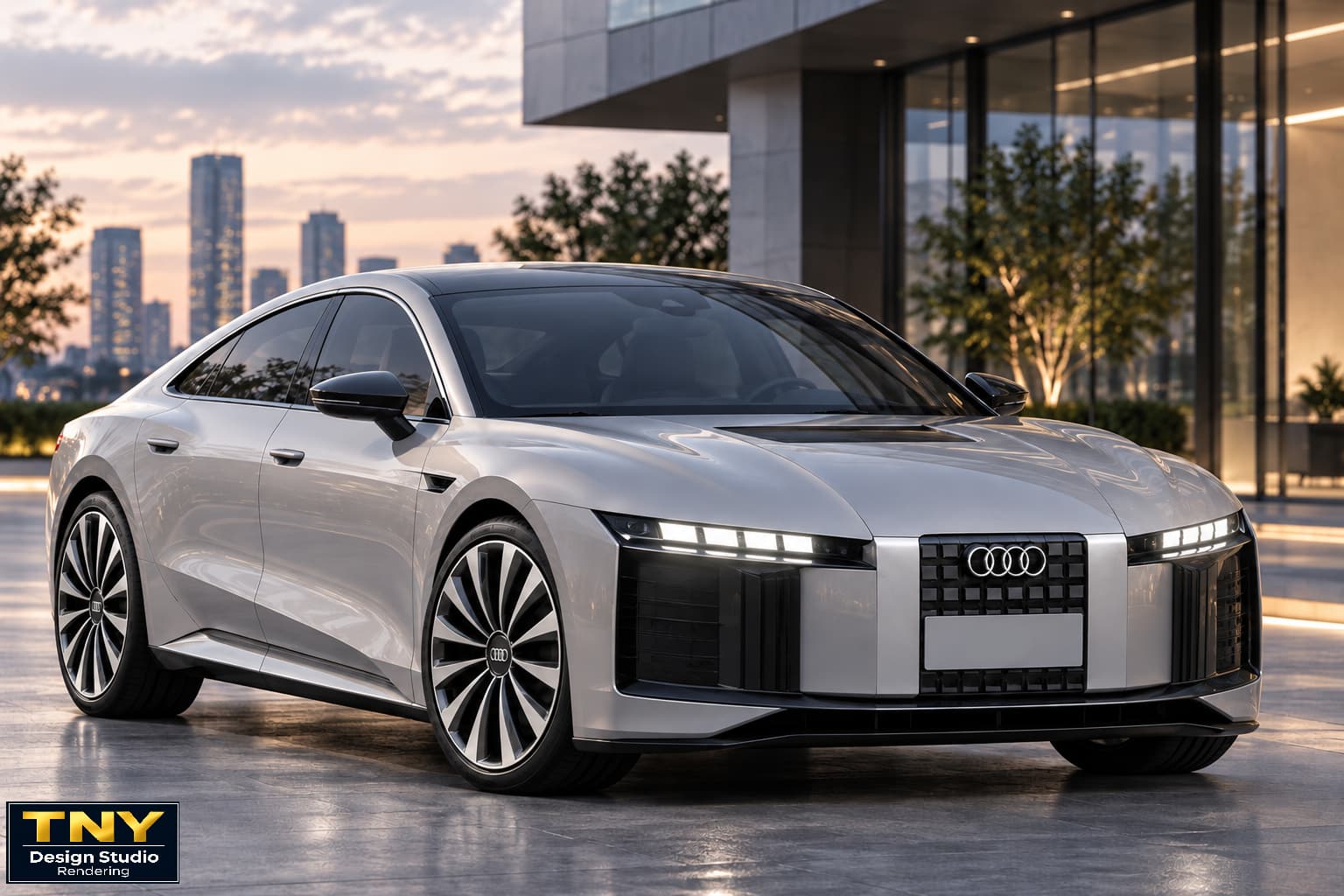
Audi could provide one of Paris’s most interesting indicators of where Volkswagen Group design goes next.
The newly revealed Nuvolari is particularly important. Beyond being Audi’s new supercar, it is the first near-production model developed around the brand’s new design philosophy: simpler surfaces, stronger proportions and a much cleaner interpretation of the four-ring identity. Audi says that philosophy will spread well beyond the Nuvolari itself.
Our TNY Design Studio A7 imagines what happens when those ideas reach a more conventional grand tourer. The rendering retains the long, low Sportback proportions associated with the A7, but adopts the cleaner surfacing and more focused detailing introduced by Nuvolari.
Audi has not confirmed a new A7 for Paris, so our interpretation remains speculative. But with Audi exhibiting in Hall 4 and holding its own press conference, the show could give us further clues about how quickly this new design era will spread.
Across Volkswagen, CUPRA, Škoda and Audi, Paris shows a group changing at both ends of its range — from affordable EVs to new electric flagships, while a fresh generation of design begins taking shape around them.
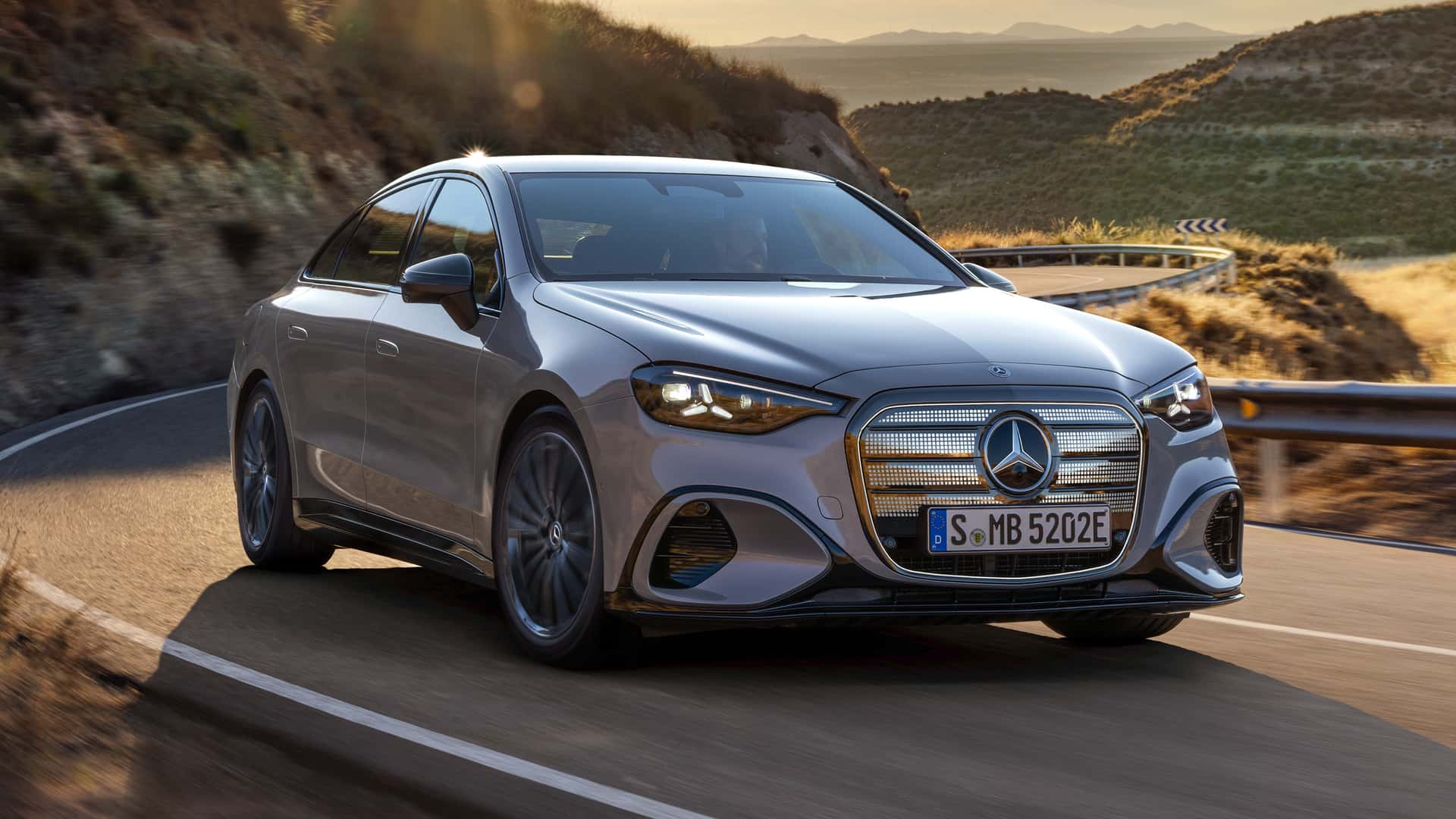
The all-new electric C-Class has been developed from the outset as an EV, rather than converted from the combustion model. In C 400 4MATIC form, its 94kWh usable battery delivers up to 473 miles WLTP, while 800-volt hardware allows charging at up to 330kW — enough to add around 202 miles in 10 minutes. A rear-wheel-drive version is expected to stretch that to roughly 497 miles.
Performance is equally serious. The C 400 4MATIC produces 360kW, reaches 62mph in 4.0 seconds and can recover energy at up to 300kW under braking.
That puts Mercedes and BMW on course for one of the most interesting executive-EV battles yet. The i3 is shaping up as a technological showcase for Neue Klasse, while the electric C-Class counters with huge range, rapid charging and a far more traditional interpretation of the compact executive saloon.
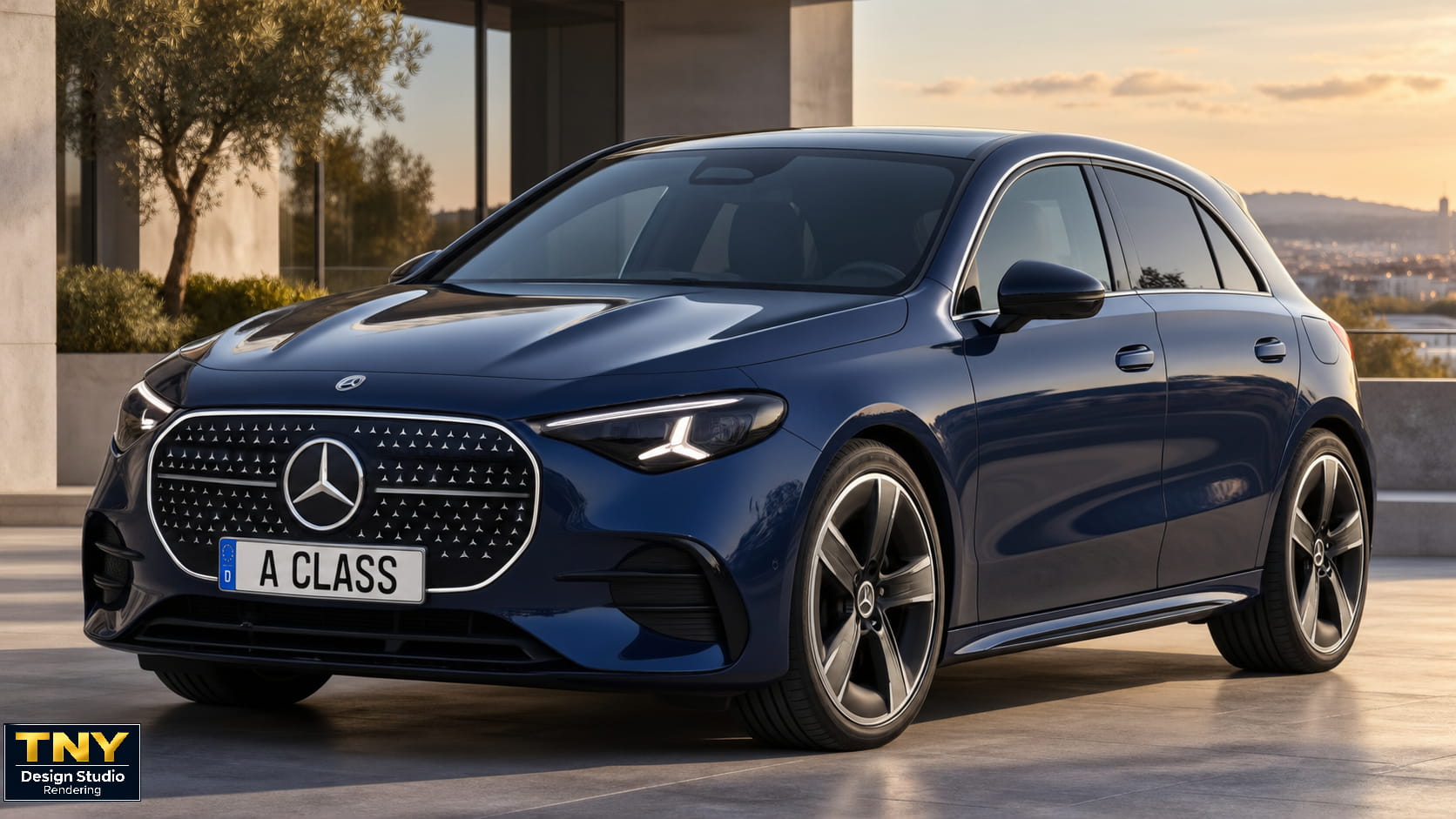
The CLA proves just how capable Mercedes’ latest compact EV technology has become — but there is still room beneath it for something smaller.
Our TNY Design Studio rendering imagines the next A-Class as a fully electric hatchback, carrying Mercedes’ latest design language and MMA-derived technology into a more compact, potentially more affordable package.
The ingredients are already impressive. The CLA 250+ offers up to 492 miles of WLTP range from an 85kWh usable battery, while its 800-volt architecture can add more than 200 miles of range in around ten minutes.
Mercedes is bringing the current A-Class Edition 140 to Paris, but has yet to reveal its eventual electric successor. With reports pointing towards a new-generation A-Class later this decade, Paris could provide an opportunity for Mercedes to start talking more openly about what comes next.
If CLA technology can successfully filter down, a compact electric A-Class could become one of Mercedes’ most important entry-level models.
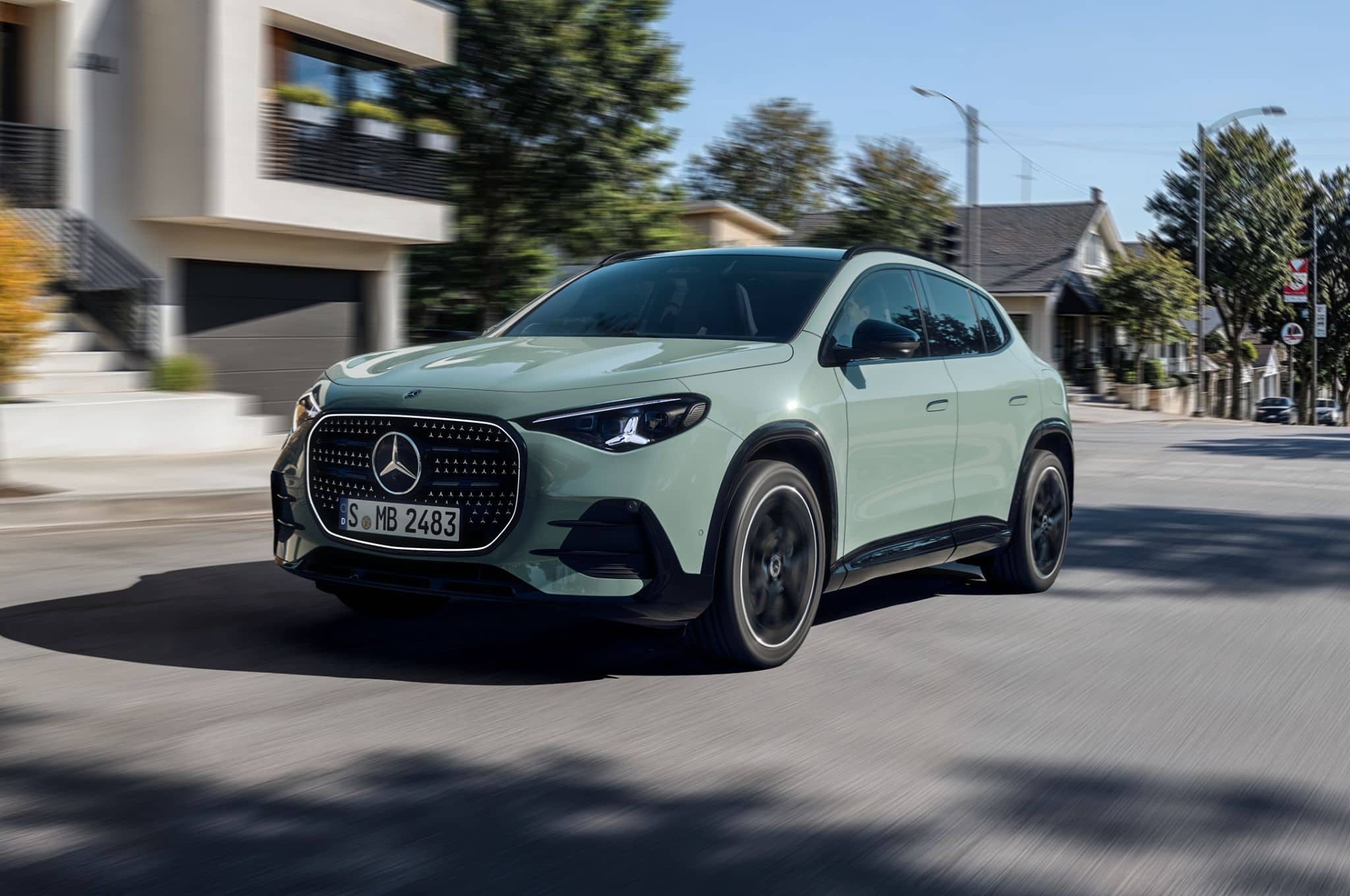
Mercedes’ compact SUV story is changing just as quickly as its saloons.
The all-new GLA will make its Paris show debut after being revealed earlier this year, bringing Mercedes’ latest electric technology into one of the most important parts of its range. Alongside hybrid versions, the new GLA is also offered as a full EV, with the long-range GLA 250+ capable of around 408 miles WLTP.
It also takes Mercedes a step closer to the electric A-Class we have imagined. The CLA and GLA now demonstrate how flexible the brand’s latest compact-car architecture can be across saloon and SUV formats; extending that technology into a smaller hatchback would be a logical next move.
Taken together, the CLA, new GLA and electric C-Class make Mercedes one of the most technically impressive brands heading to Paris. Huge range figures, 800-volt charging and rapidly improving efficiency are spreading down the line-up, while the next question is how affordable — and how small — Mercedes can make this new generation of EV technology.
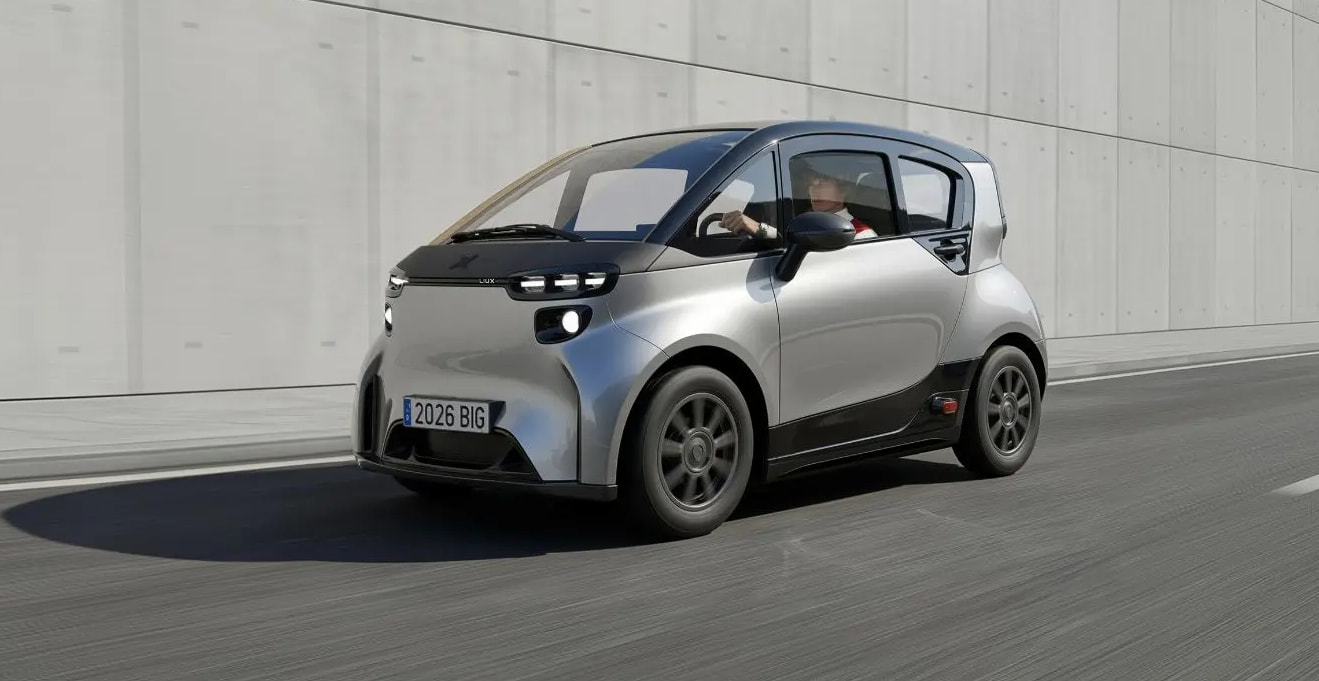
The BIG is an L7e heavy electric quadricycle, but it aims to feel considerably more substantial than most microcars. At just 2.7 metres long it seats two, offers a useful 240-litre boot and can reach around 56mph, making it far more versatile than the 28mph-limited L6e models such as the Citroën Ami.
Buyers will be offered 15kWh and 20kWh removable battery packs, with claimed ranges of around 134 and 168 miles respectively.
Its most distinctive feature, however, is the construction. LIUX uses flax-fibre composite body panels and large-scale 3D-printing techniques to reduce weight and environmental impact.
Paris gives this tiny Spanish manufacturer a rare opportunity to show that the future of affordable electric mobility does not necessarily have to look like a conventional car.
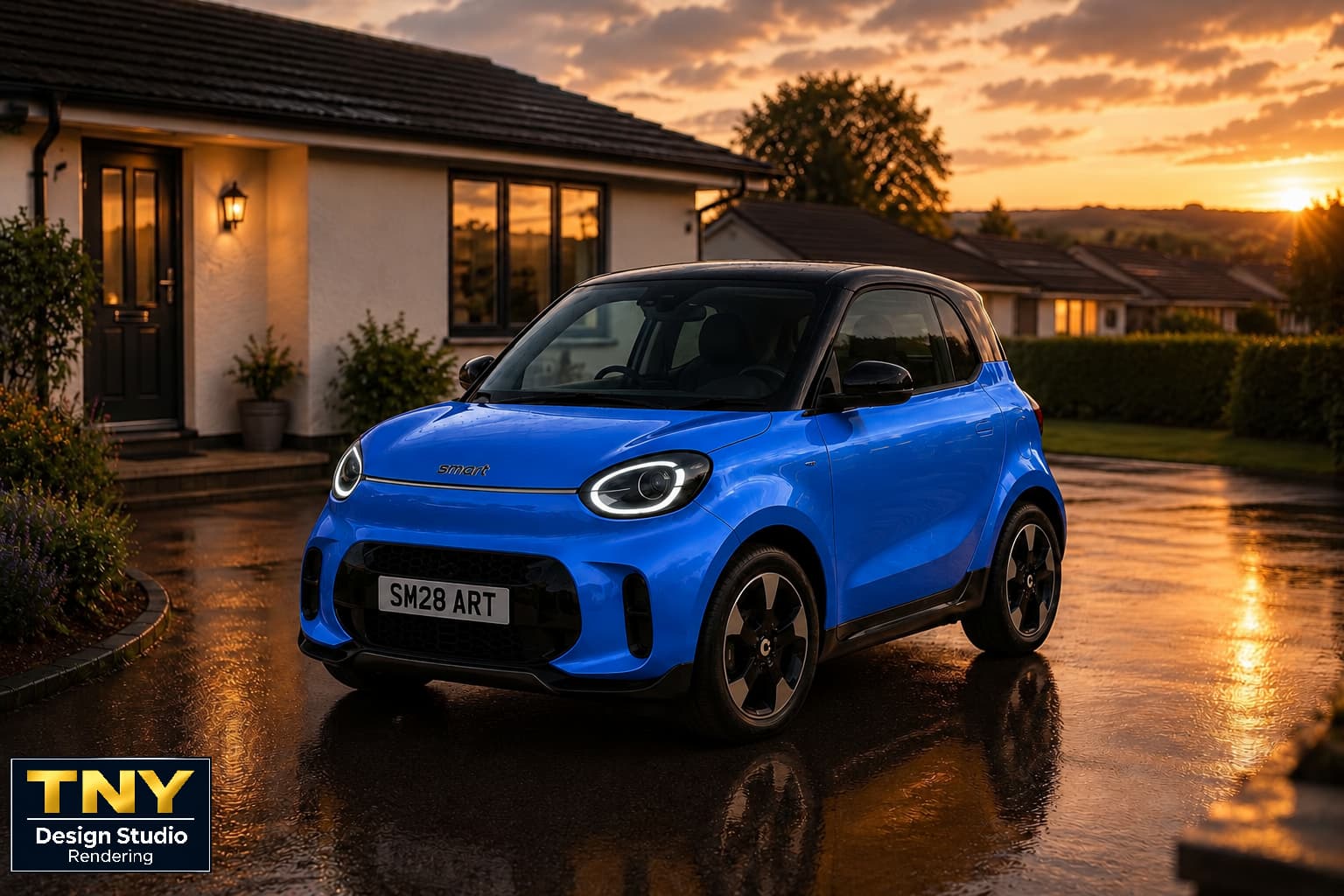
From one unconventional small EV to another, Paris will also mark the return of one of Europe’s most recognisable city cars.
The production smart #2 will make its world premiere on 12 October, reviving the two-seat formula of the original fortwo for the electric era. Our TNY Design Studio rendering imagines how the finished car could look, developing the proportions and details already previewed by Concept #2.
Smart itself neatly bridges our European and Geely coverage. The brand is now a 50:50 joint venture between Mercedes-Benz and Geely, combining Mercedes-led design with engineering and production centred in China.
That partnership has already transformed Smart into a much broader EV manufacturer, but the #2 arguably matters more than its larger models. It brings the company back to the tiny urban cars that originally made Smart distinctive.
And Geely’s influence in Europe extends much further still, as the next cars in our Paris preview from Volvo and Lotus demonstrate.
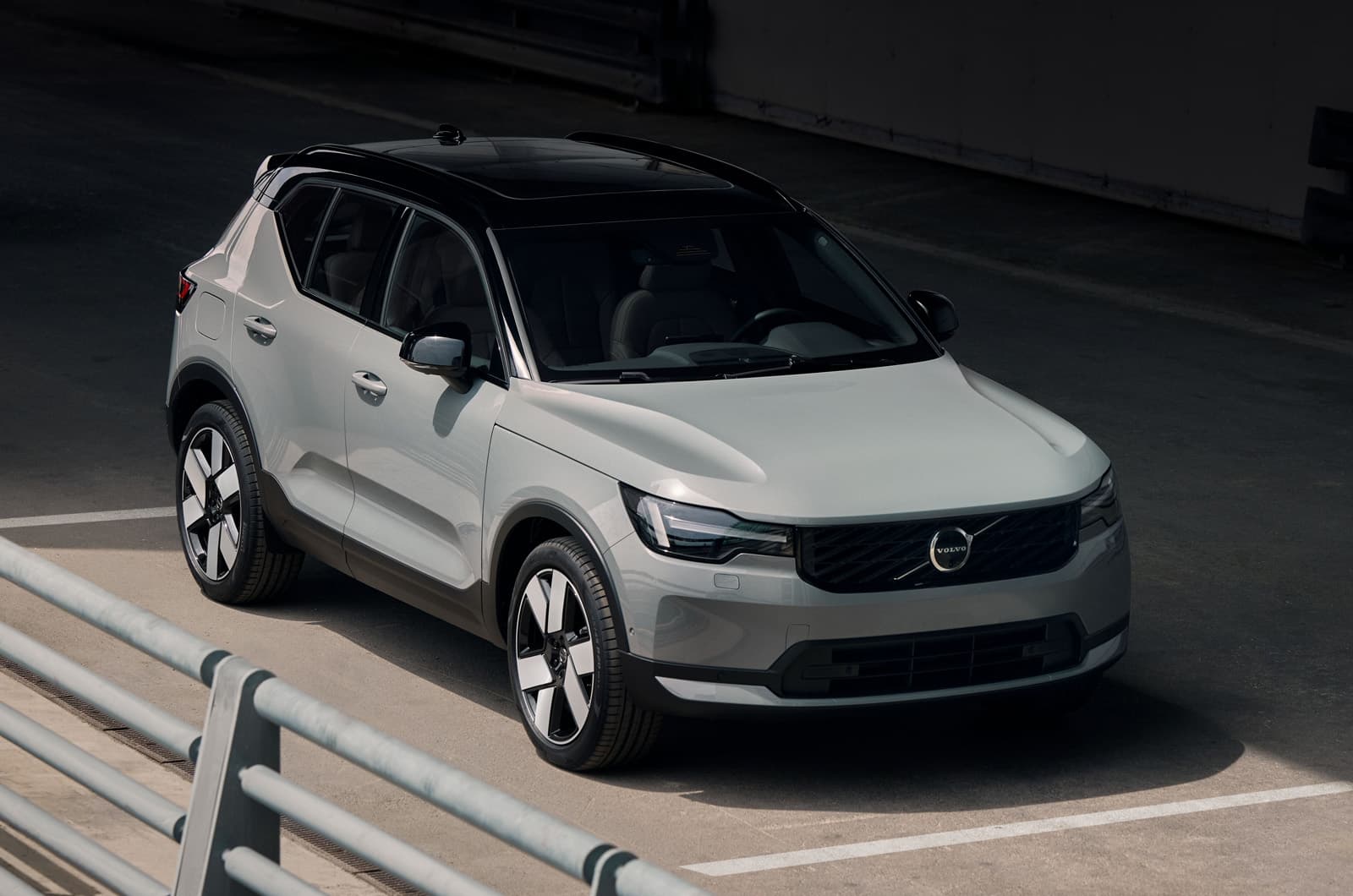
The XC40 first appeared in 2017, later spawning the electric version now known as the EX40. Rather than replacing the pair outright, Volvo has given its compact 40-series models another substantial update for 2026.
The changes go well beyond a light cosmetic refresh. The XC40 and EX40 gain redesigned Thor’s Hammer Matrix LED headlights, a new grille, reshaped bonnet, front wings and bumpers, while the rear is updated with new lights, tailgate and bumper. Inside, a larger 11.2-inch central screen and upgraded safety hardware bring the car closer to Volvo’s newer models.
For the EX40, range now reaches up to around 355 miles WLTP, while rapid charging takes roughly 26–28 minutes from 10–80%.
It is a reminder that Volvo still sees plenty of life left in one of its most successful compact SUVs.
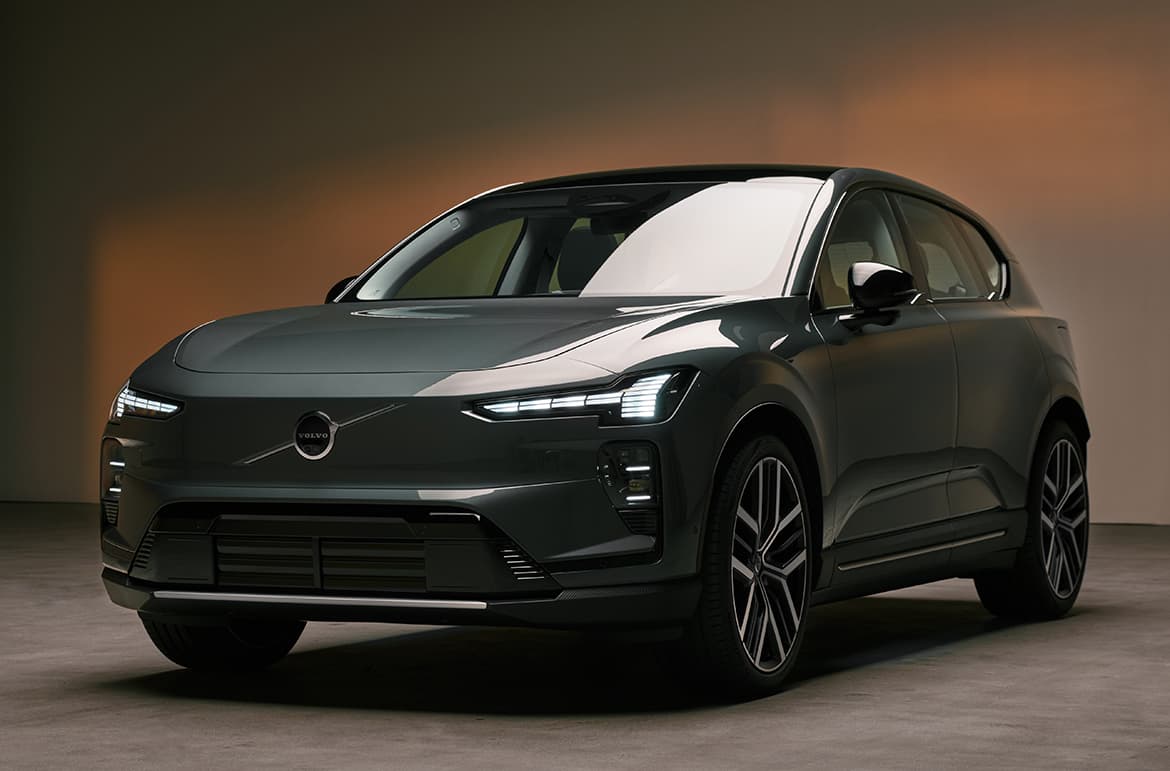
Every EX60 uses an 800-volt architecture. The range stretches from the 374hp rear-wheel-drive P6 to the 680hp P12 AWD, which can cover up to 503 miles WLTP and reach 62mph in 3.9 seconds. Charging is equally impressive: up to 400kW is available, with the P10 capable of 10–80% in around 16 minutes and as much as 211 miles added in ten minutes. UK prices start from £56,860.
Its significance goes deeper, introducing Volvo’s new SPA3 architecture, cell-to-body batteries, mega-casting and much more centralised computing.
Volvo is not abandoning hybrids either. Paris will also showcase the new long-range XC60 plug-in hybrid, capable of up to 124 miles of electric driving — more than twice the range of the previous PHEV.
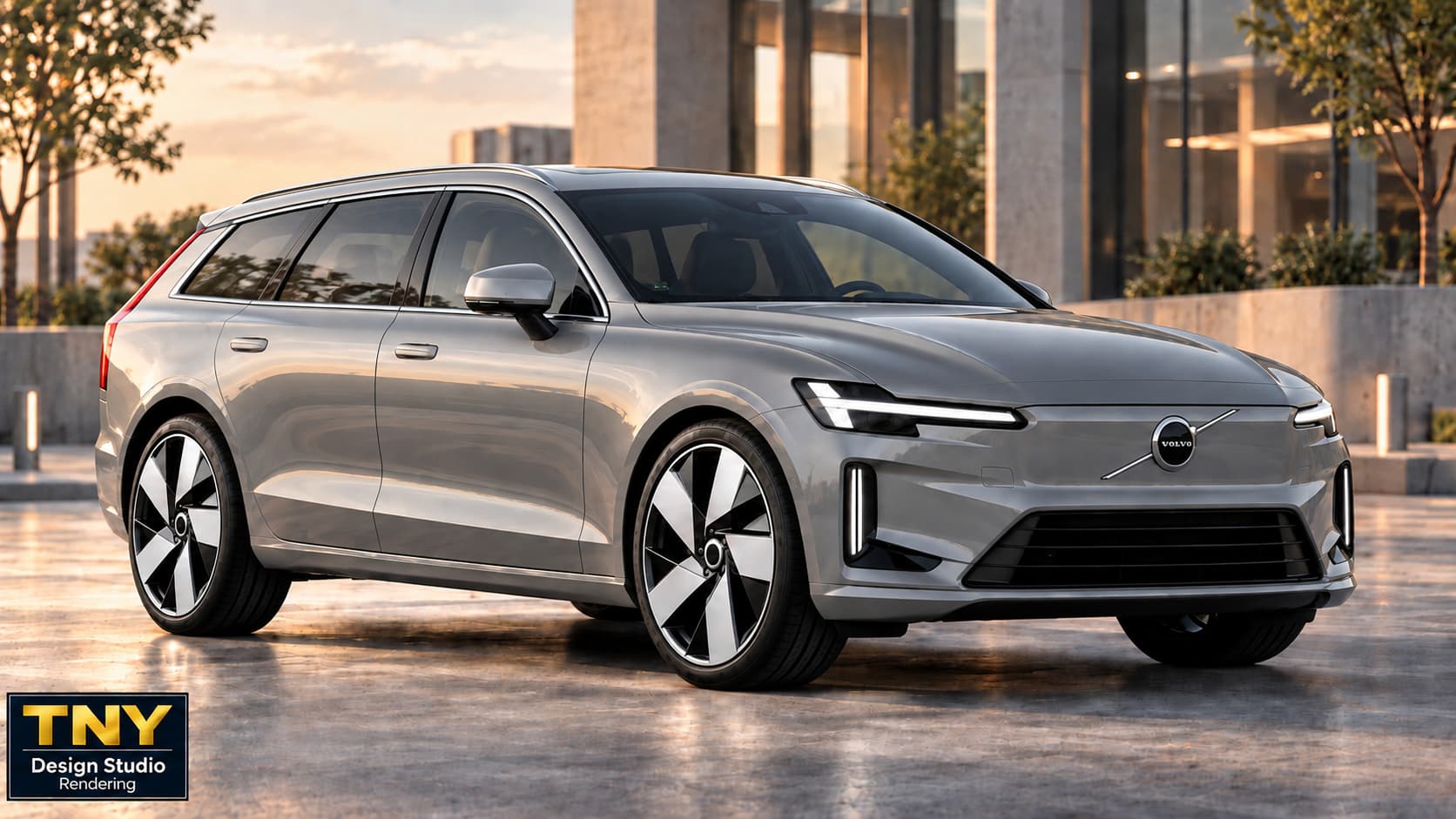
That idea is not far-fetched. Volvo has already confirmed that seven new or refreshed models are planned for Europe over the next two years, and the company has indicated that these will not all be SUVs.
Our EV60 imagines one possible outcome: a modern electric estate sitting below the EX90 and alongside the EX60, combining Volvo’s newer surfacing and lighting with the more elegant, lower-roof practicality that has long been part of the brand’s identity.
It also matters because Volvo’s estate heritage remains unusually strong. In a market increasingly dominated by SUVs, an EV60 would give the brand something more distinctive than simply another crossover — and could provide a compelling alternative for buyers who want space and usability without the height and visual bulk of an SUV.
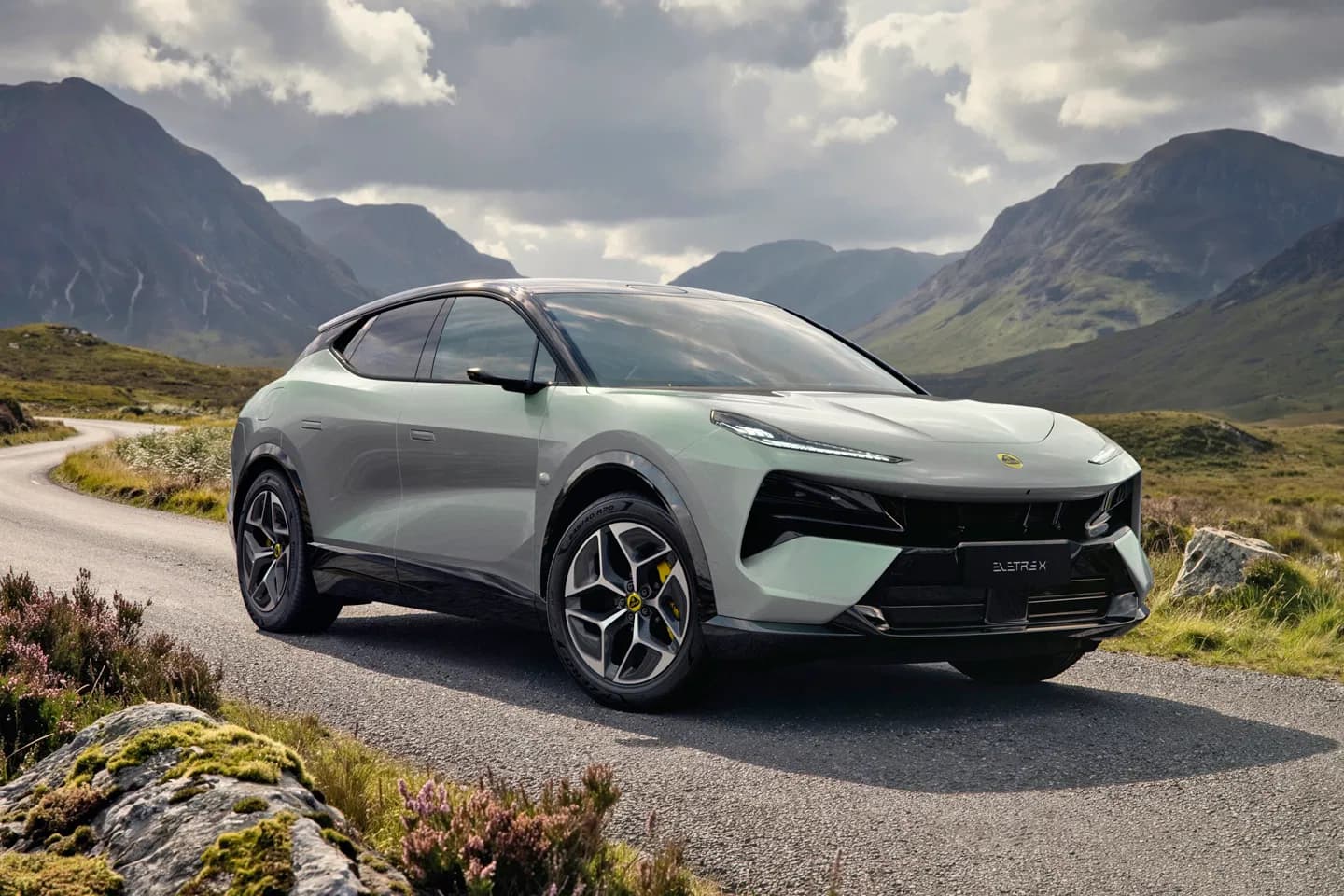
Lotus originally set out an aggressive all-electric product plan, but slower-than-expected demand in the premium EV market has pushed the brand towards a broader mix of powertrains. Hybrids are now joining the line-up rather than full electrification being the only route forward.
The Eletre X is the clearest sign of that change. Its X-Hybrid system combines a 70kWh battery, a 2.0-litre turbocharged generator and a 900-volt electrical architecture, delivering up to 952PS and 935Nm. The H1000 can reach 62mph in 3.3 seconds, while Lotus claims up to 217 miles of electric range and more than 745 miles combined WLTP. Charging is equally extreme, with a 20–80% top-up possible in around nine minutes on a sufficiently powerful DC charger.
That makes the Eletre X important beyond the model itself. Lotus is no longer simply expanding as an electric-only luxury brand; it is adapting its product strategy to a more complex market while trying to retain the performance and technical identity that sets it apart within the wider Geely portfolio.
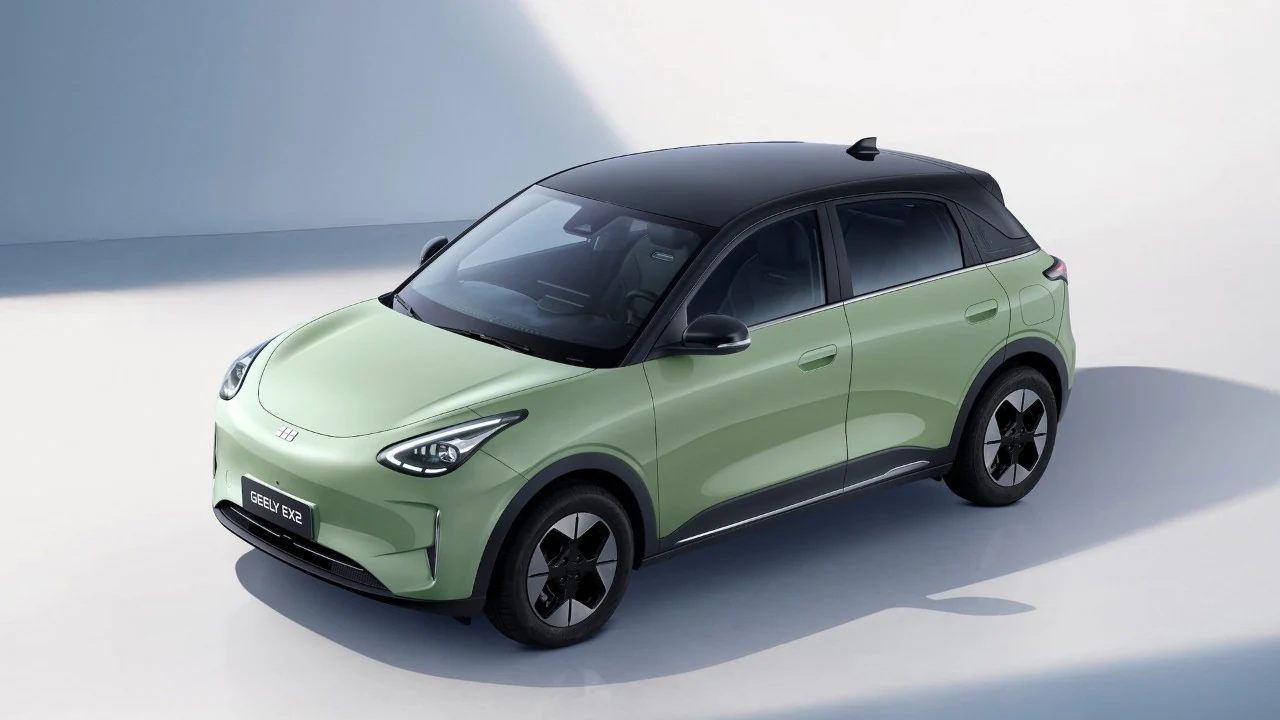
The 4.14-metre electric hatchback is built on Geely’s GEA architecture and unusually combines rear-wheel drive with independent multi-link rear suspension. European versions offer either a 35kWh battery with 82hp and 157 miles WLTP, or a 47kWh battery with 115hp and up to 214 miles WLTP. A 30–80% rapid charge takes around 25 minutes, while practicality includes a 375-litre boot and 70-litre front storage compartment. It has also achieved a five-star rating under the tougher 2026 Euro NCAP tests.
That is a very different proposition from Volvo’s EX60 or Lotus’s Eletre X, but that is precisely the point. Across Geely itself, Volvo, Lotus and the Smart joint venture, the wider group now stretches from affordable urban EVs to some of Europe’s most technically ambitious premium cars.
If Europe dominates the opening of Paris 2026, the sheer number of Chinese manufacturers arriving at the show demonstrates just how quickly the balance of the industry is changing.
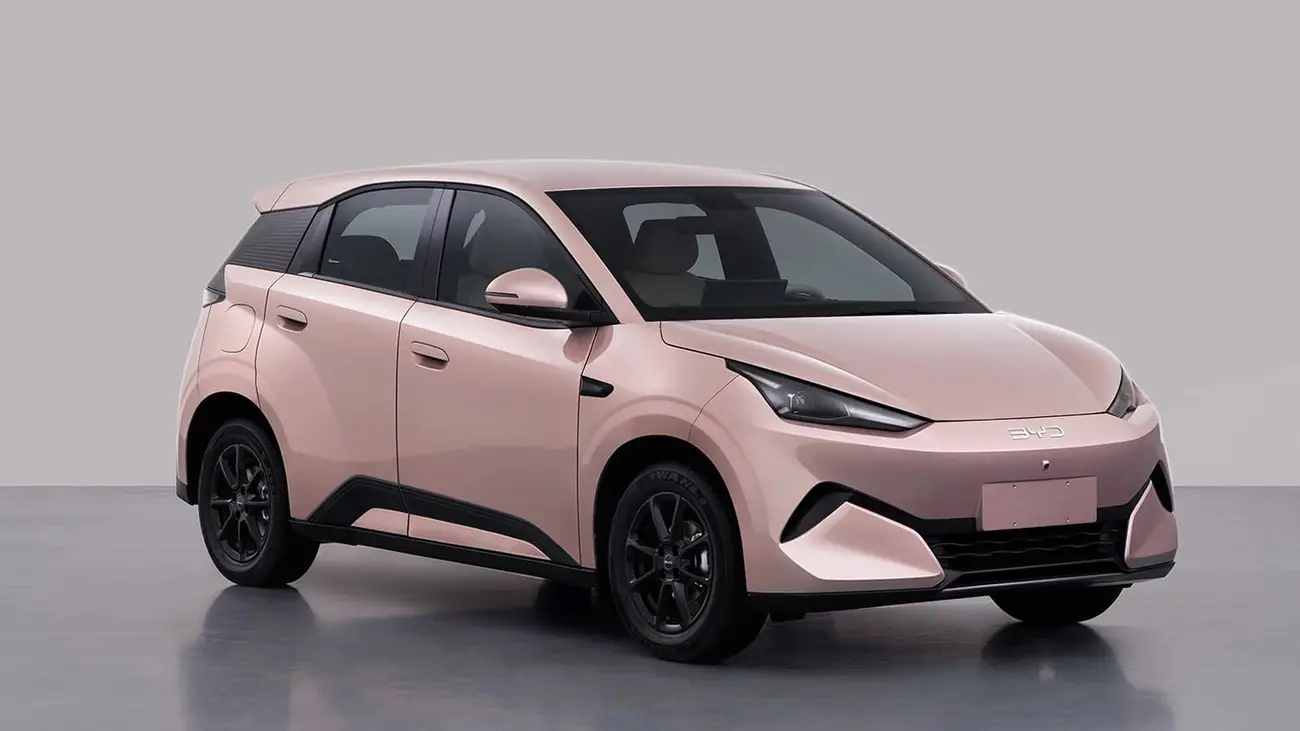
BYD provides a fitting starting point. Alongside its rapidly expanding European range, the company is promising an as-yet unnamed world premiere in Paris — and one intriguing possibility is the completely redesigned second-generation Seagull.
That connection is unconfirmed, but the timing is interesting. Revealed in China only weeks before Paris, the new Seagull has grown dramatically from 3.78 to 4.21 metres, gains a fifth seat and moves from front- to rear-wheel drive. Power rises from 74hp to 127hp, with 30kWh and 39.2kWh LFP batteries offering 199 and 261 miles respectively on the Chinese CLTC cycle. There is even a 94-litre front boot.
More than 1.5 million Seagulls have already been sold since 2023. The second generation therefore shows BYD developing an established global hit rather than simply launching another new EV — while Paris will demonstrate just how many Chinese rivals are now attempting the same expansion.
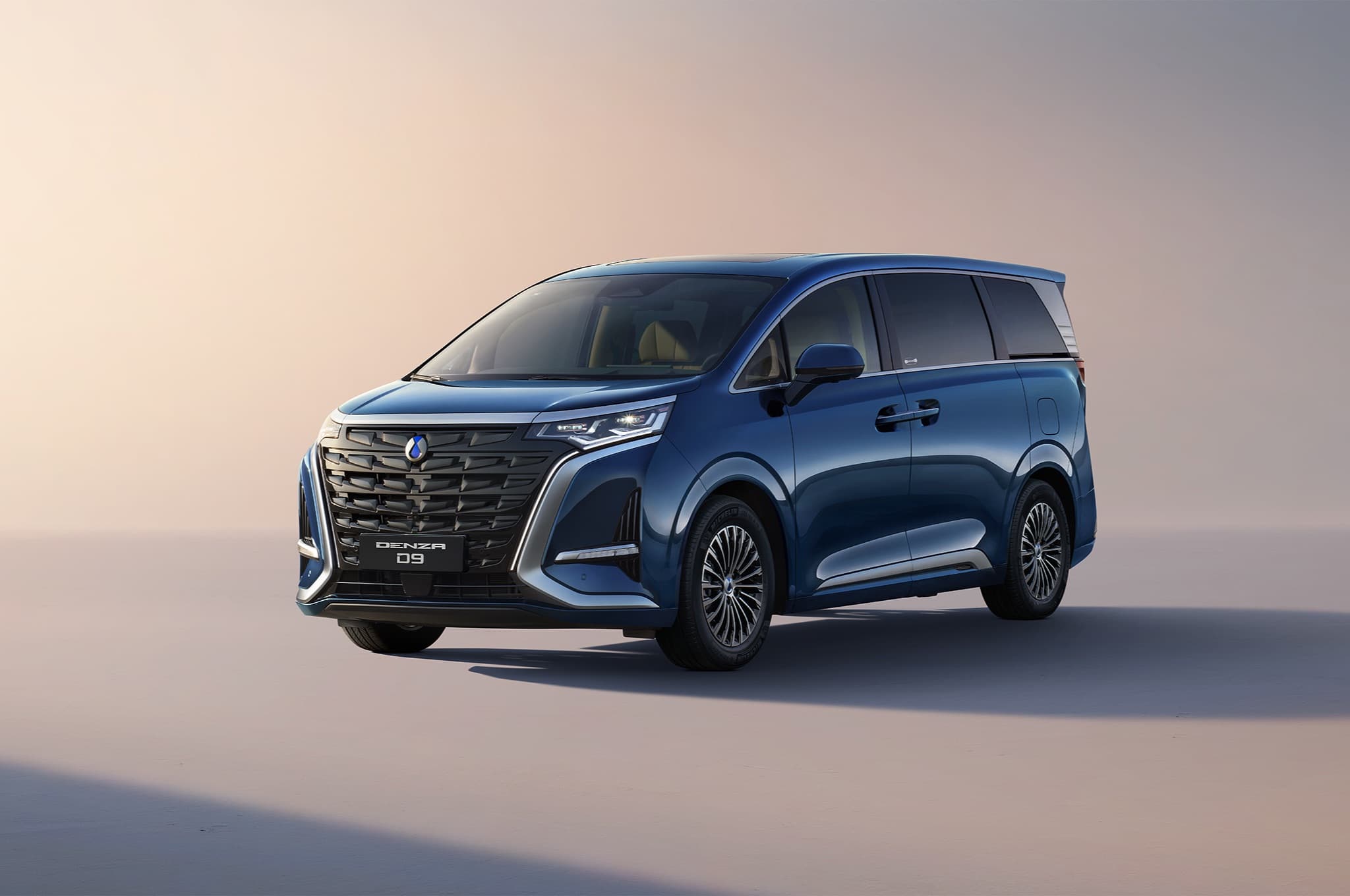
The seven-seat D9 DM-i brings something genuinely different to the group’s European range. Its plug-in-hybrid system combines a 58.5kWh Blade Battery with all-wheel drive and 353PS, delivering around 130 miles of WLTP electric range and roughly 590 miles of combined range.
At 5.25 metres long, the D9 is built around passenger space rather than SUV styling. The second row gets reclining zero-gravity captain’s chairs with heating, ventilation and massage functions, while three rows still leave useful luggage space.
For BYD Group, the D9 demonstrates how quickly its European ambitions are moving beyond mainstream EVs. DENZA is targeting buyers much further upmarket, bringing Chinese-style luxury MPVs into a segment still barely explored by established European manufacturers.
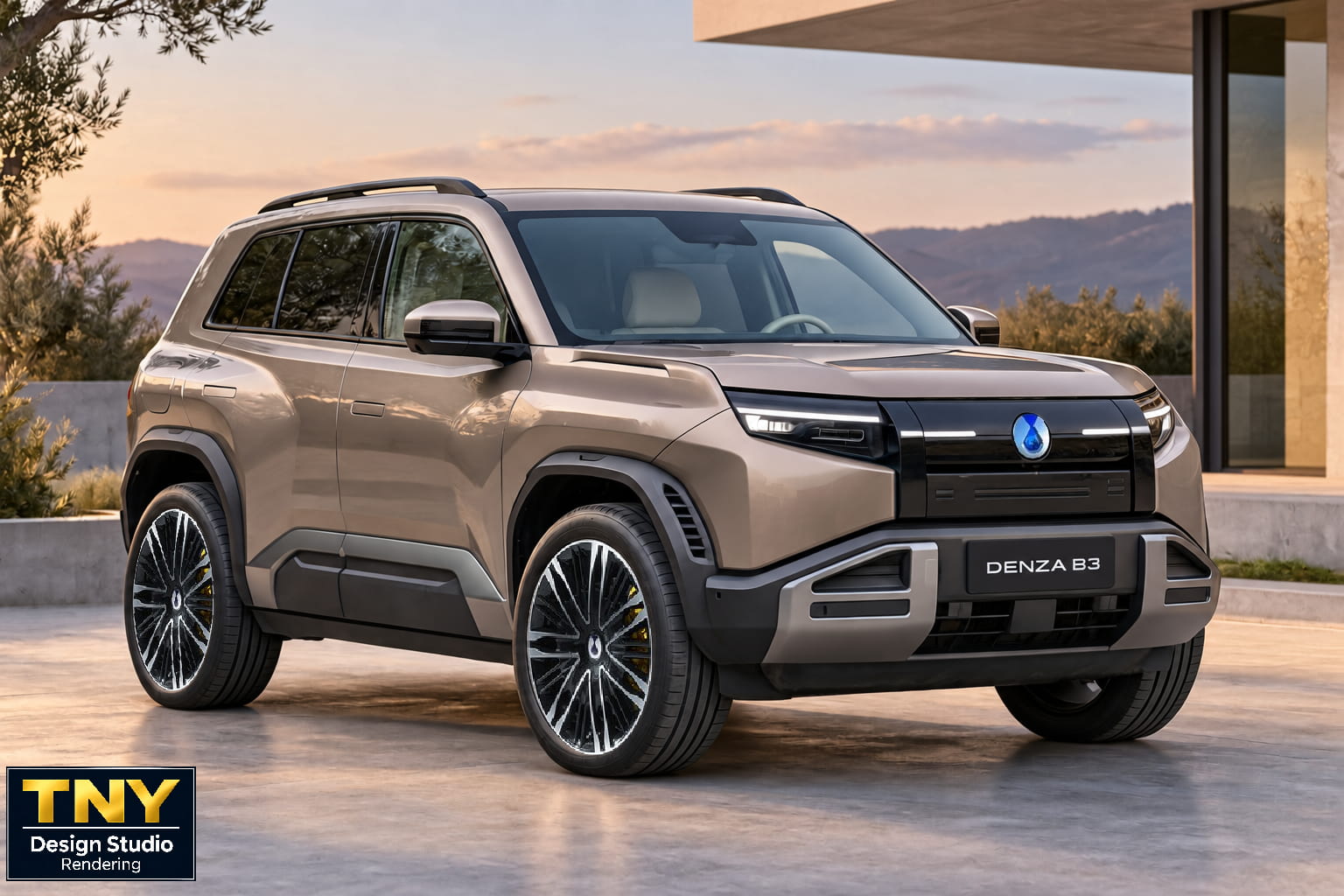
Our TNY Design Studio B3 imagines the European version of a car that already exists in China as the Fangchengbao Tai 3. The compact electric SUV is around 4.6 metres long, uses BYD’s Blade LFP battery technology and is available with rear- or all-wheel drive, with the most powerful versions producing more than 400hp.
Rebranding it as a DENZA for Europe has been widely reported, although BYD has yet to formally confirm the B3 as part of the European range. That makes our interpretation speculative, but the product itself is already very real.
And it could be an excellent addition. While the Z9GT and D9 establish DENZA as an expensive technology-led brand, a B3-sized SUV would move it into a much larger part of the European premium market.
Rather than developing an entirely new vehicle, BYD already has the foundations waiting in China — making the B3 one of the more plausible ways DENZA could rapidly broaden its European line-up.
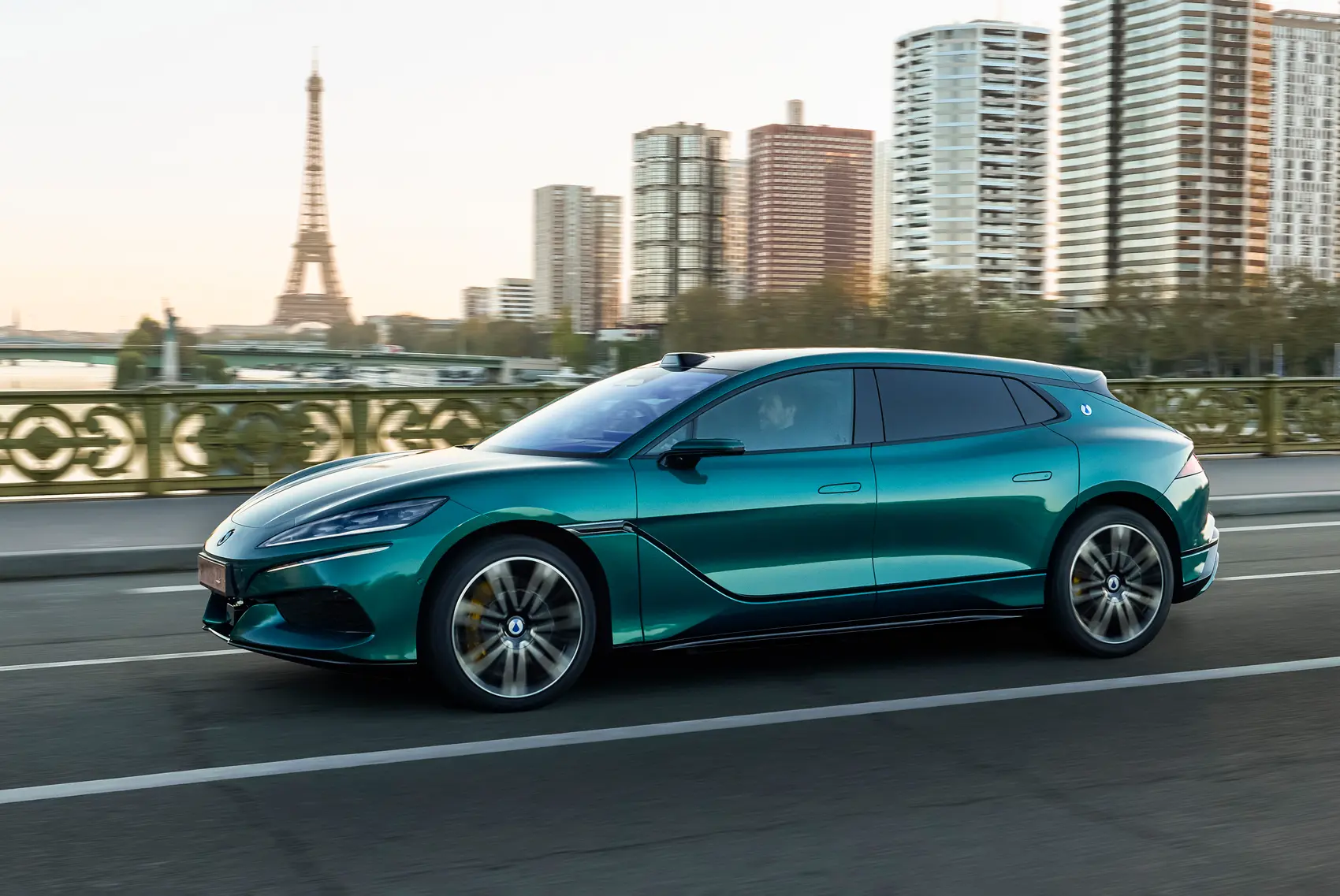
The electric version uses three motors producing more than 1,150PS and 1,200Nm, enough to reach 62mph in around 2.7 seconds. A huge 122.5kWh battery provides around 373 miles of WLTP range, while BYD’s latest Flash Charging technology can deliver extraordinarily high charging rates. Rear-wheel steering and individually controlled electric motors also allow the Z9GT to perform manoeuvres that would be impossible in a conventional large estate.
It is priced accordingly: UK prices start at around £105,000 for the EV, with the plug-in-hybrid Super DM version from approximately £95,000.
That makes the Z9GT a fitting conclusion to BYD’s Paris presence. From the increasingly global Seagull to the D9 luxury MPV and DENZA’s performance flagship, BYD is no longer arriving in Europe with one type of electric car. It is building an entire hierarchy of brands and models capable of competing from the affordable end of the market to well beyond £100,000.
Another Chinese manufacturer expanding at remarkable speed is Leapmotor.
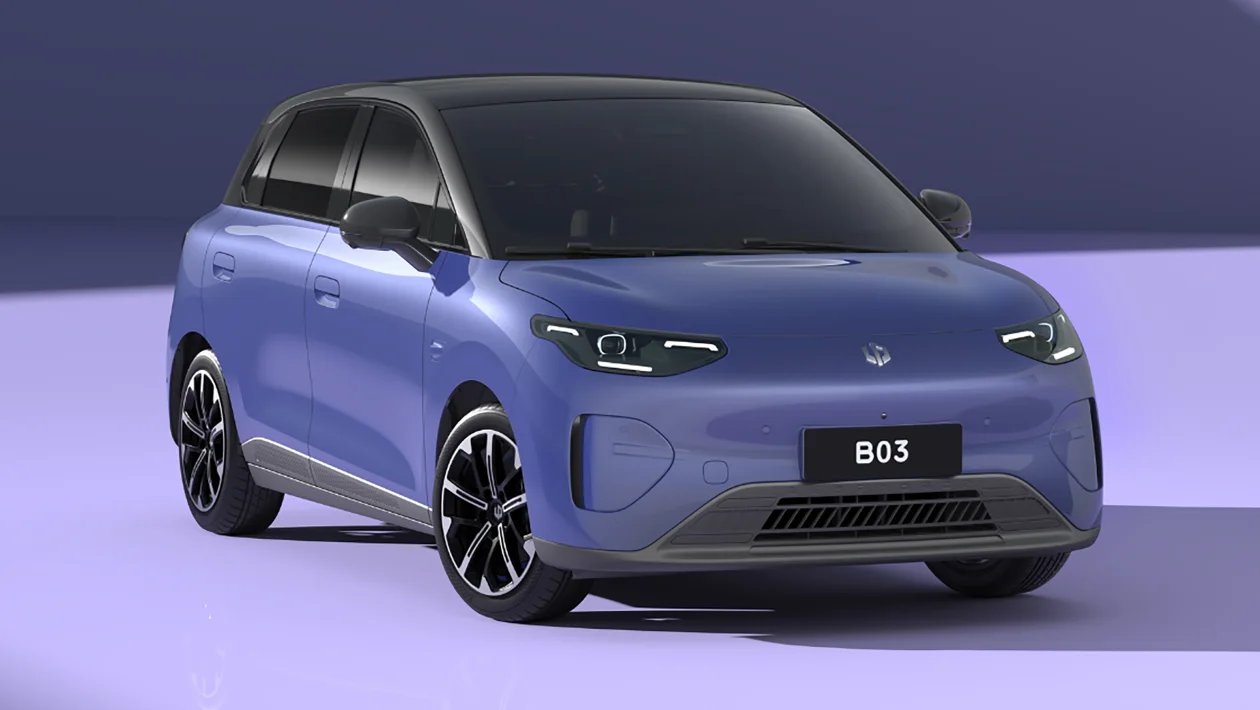
Backed internationally by its joint venture with Stellantis, the brand has gone from a relative unknown in Europe to one of China’s fastest-growing carmakers. The new B03 gives that expansion a particularly relevant product for European buyers.
Known as the A05 in China, the 4.18-metre electric hatchback will make its European premiere in Paris. It has a 2.61-metre wheelbase, five-door body and a claimed range of up to 242 miles, placing it directly into the increasingly competitive affordable-EV market.
What makes Leapmotor especially interesting, however, is the scale of its growth. The company entered 2026 targeting an extraordinary one million deliveries — a figure that still looked close to impossible halfway through the year.
By the end of June, Leapmotor had delivered just 356,487 cars, only 35.6% of its annual target. To recover, it needed to average more than 107,000 cars every month through the second half, compared with an average of only around 59,400 during the first six months.
Three months later, the picture looks remarkably different. Deliveries had reached 666,539 by the end of September, including a record 105,656 in September alone.
Leapmotor still needs roughly 333,000 cars during the final quarter — around 111,000 per month — but that is now only slightly above September’s run-rate. A target that looked almost unattainable in June is suddenly beginning to look genuinely possible.
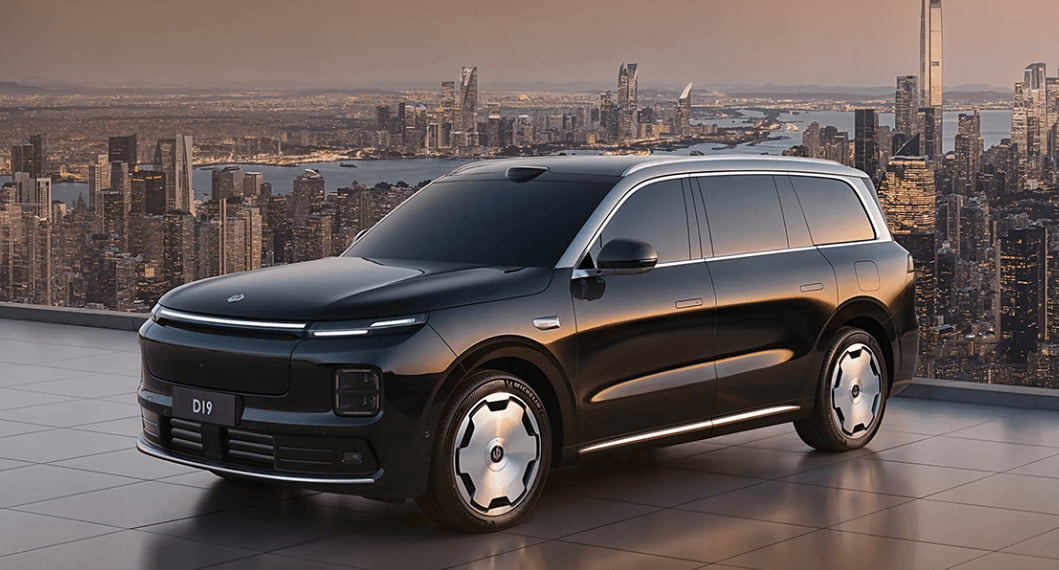
The enormous 5.25-metre D19 is Leapmotor’s flagship SUV in China and will appear in Paris as a technological showcase, although European sales have not yet been confirmed. Six- and seven-seat layouts are available, while the most powerful battery-electric version uses three motors producing 724hp and 745Nm, reaching 62mph in around 3.9 seconds. Its largest 115kWh battery provides up to roughly 423 miles on the Chinese CLTC cycle, while range-extender versions are also offered.
Leapmotor’s existing European range is improving quickly too. The new MY27 C10 now offers up to 322 miles WLTP in 299hp rear-wheel-drive form, while the flagship electric AWD produces 571hp. The updated range-extender combines around 90 miles of electric driving with more than 610 miles of total WLTP range.
Together with the B03, B03X, B10 and rapidly expanding European dealer network, these cars demonstrate why Leapmotor’s extraordinary sales growth is becoming increasingly difficult to dismiss. What began as one of China’s many EV start-ups is rapidly developing into a genuinely global manufacturer with products spanning almost every major segment.
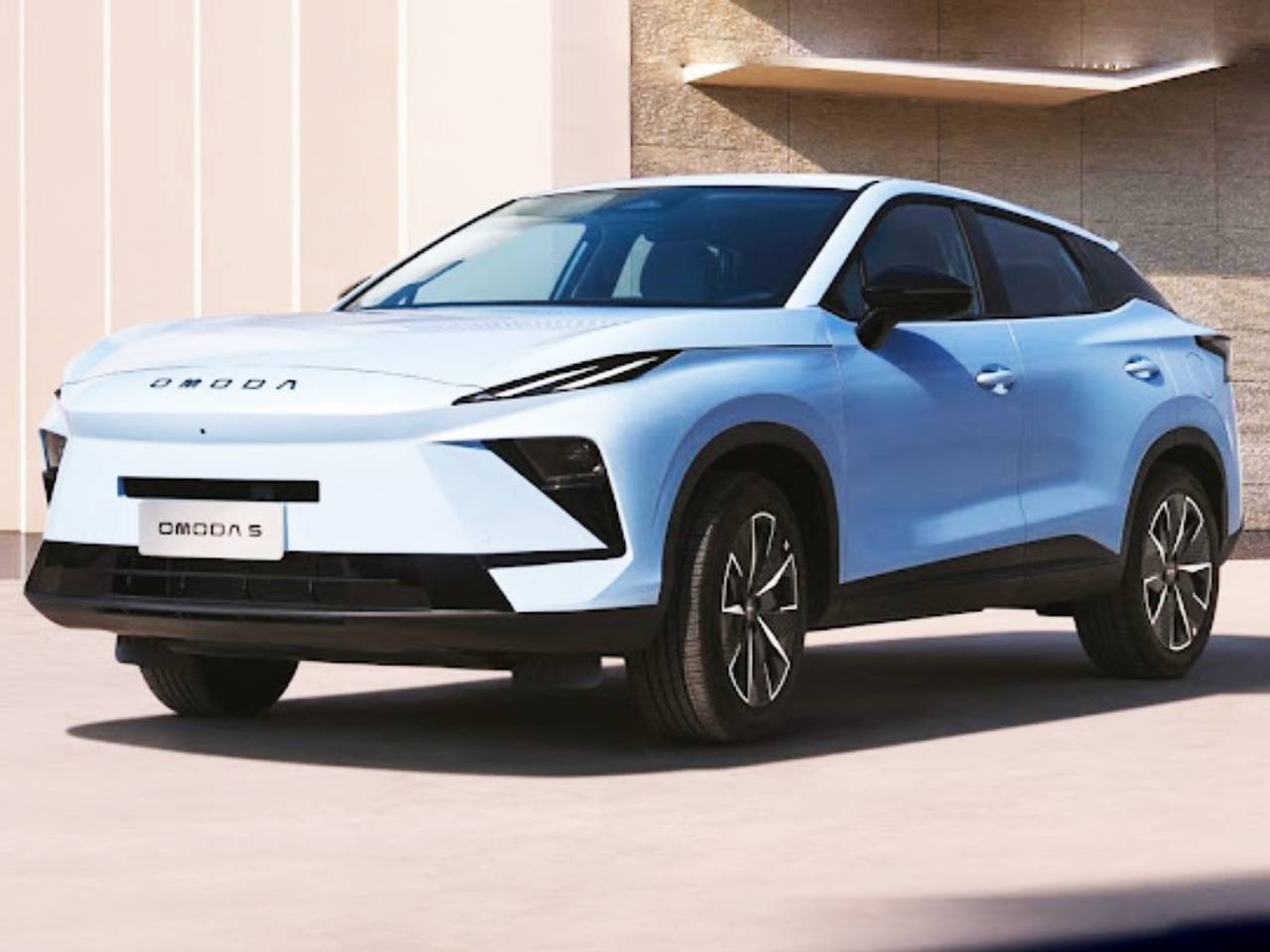
Another Chinese group arriving in Paris with increasingly serious European ambitions is Chery.
Rather than relying on a single badge, Chery is expanding through several brands including OMODA, JAECOO and Chery itself, giving the group products spanning affordable crossovers, rugged SUVs, hybrids and increasingly ambitious electrified models.
The updated OMODA 5 SHS-H provides a useful starting point. It is currently the smallest model in OMODA’s European range and, for 2026, gains a cleaner front-end design alongside the brand’s first full-hybrid powertrain.
A 1.5-litre turbocharged petrol engine works with an electric motor and 1.8kWh battery to produce around 224PS and 295Nm. It reaches 62mph in 7.9 seconds, while claimed economy is 52.2mpg. UK prices start at around £25,755.
Those figures make it a relatively conventional proposition compared with some of the more extreme Chinese cars in Paris — but that is precisely why it matters. Chery Group is no longer arriving in Europe with novelty products; it is building a broad, mainstream range designed to compete directly with established European, Japanese and Korean brands.
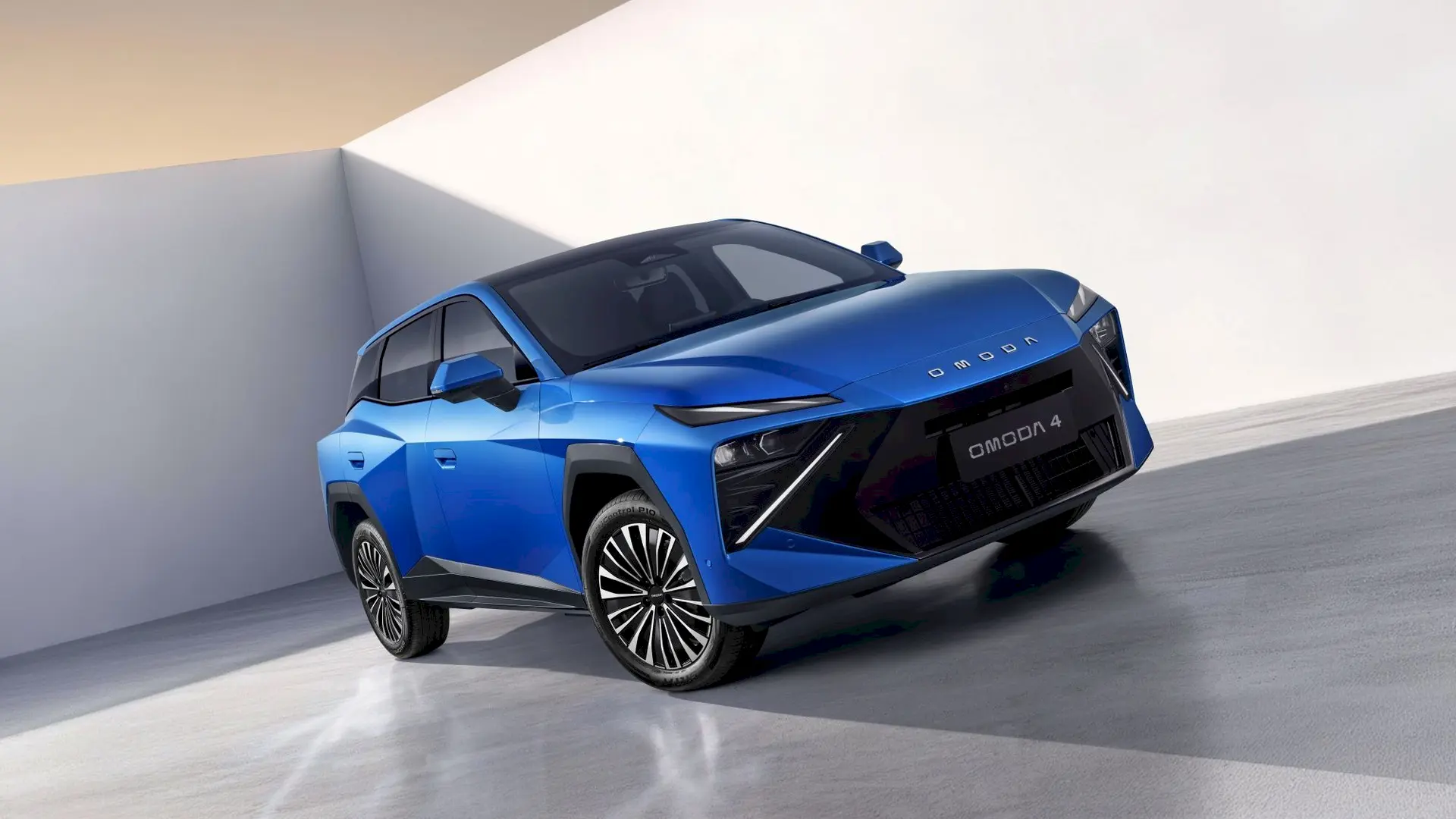
The OMODA 5 may currently be the smallest model in the brand’s European range, but that is about to change.
Sitting beneath it will be the new OMODA 4, becoming the brand’s true entry-level model and potentially one of its most important European launches.
At 4.42 metres long, it is aimed squarely at the crowded compact-crossover market, but OMODA is trying to differentiate it with much more angular “Cyber Mecha” styling and a technology-heavy interior built around its new Super AI Cockpit.
The European SHS-H full hybrid combines a 1.5-litre turbocharged petrol engine with an electric motor and small 1.83kWh LFP battery. Combined output is 224PS, with 295Nm of torque and 0–62mph taking around 8.1 seconds. Boot capacity is 346 litres.
For OMODA, the 4 matters because it pushes the brand into a much larger, more price-sensitive part of the European market — exactly where Chinese manufacturers are increasingly becoming difficult for established brands to ignore.
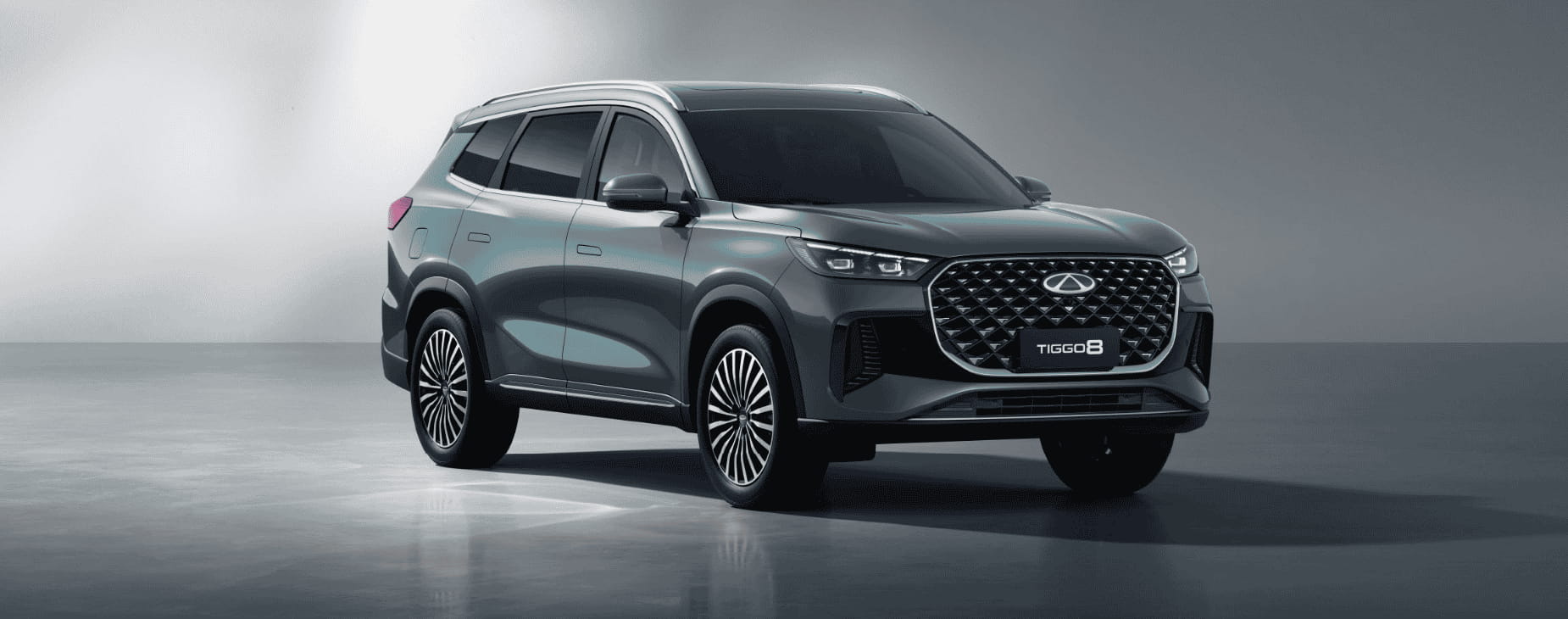
The TIGGO 8 is a 4.73-metre seven-seat SUV, yet UK prices start at just £28,545 for the 147PS 1.6-litre petrol model. The plug-in-hybrid TIGGO 8 Super Hybrid is only £33,545, despite combining a 1.5-litre turbocharged engine with an 18.4kWh battery and 204PS output.
It can travel up to 56 miles on electric power alone, while Chery claims as much as 750 miles of total range. For a large seven-seat family SUV, those figures make the TIGGO 8 one of the clearest examples yet of how aggressively Chinese manufacturers are competing on price and specification.
JAECOO will also be represented in Paris, although there is no similarly major new-product reveal to headline this section. That is hardly a weakness: models such as the JAECOO 7 are already well established with British buyers, while the newer JAECOO 5, E5 and flagship JAECOO 8 have rapidly broadened the range.
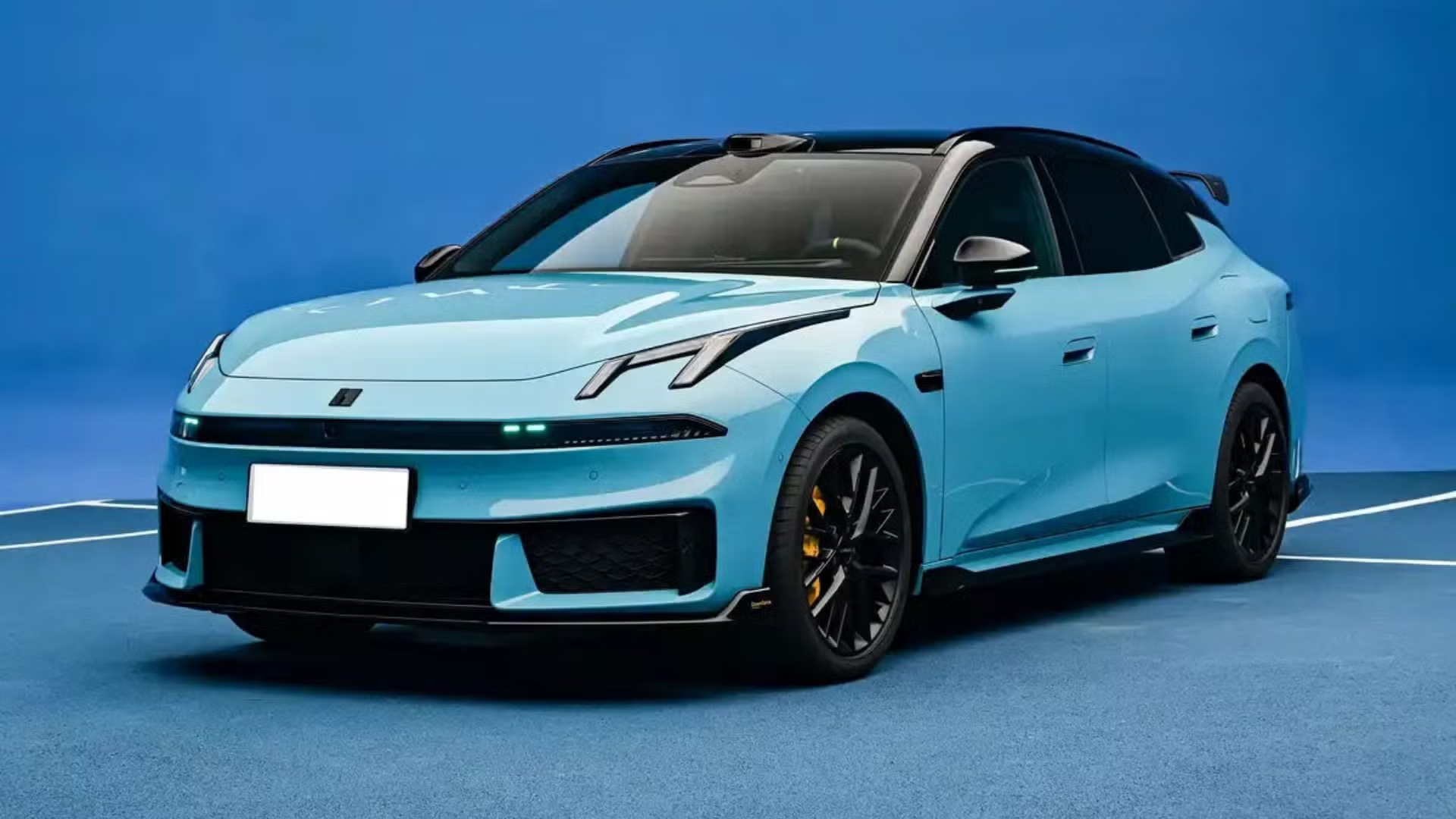
Staying in China, Lynk & Co brings another striking alternative to the SUV-heavy market: the 07 GT performance estate.
Following cars such as the DENZA Z9GT, it is further evidence that Chinese manufacturers are beginning to explore body styles European brands have increasingly neglected. The 07 GT is Lynk & Co’s first Sport Touring model and will make its European debut in Paris, ahead of a European-market version planned for 2027.
At 4.85 metres long with a 2.84-metre wheelbase, it is a substantial five-seat estate, offering up to 614 litres of luggage space.
The Chinese model uses Lynk & Co’s EM-P plug-in-hybrid system. Rear-wheel-drive versions produce 402hp, while the flagship all-wheel-drive model develops 523hp and 765Nm, reaching 62mph in around 4.0 seconds.
A 28.3kWh battery provides up to roughly 124 miles of CLTC electric range, while total combined range can exceed 880 miles. Final European specifications are still to come, but the 07 GT already gives Lynk & Co something genuinely distinctive as it expands further across Europe.
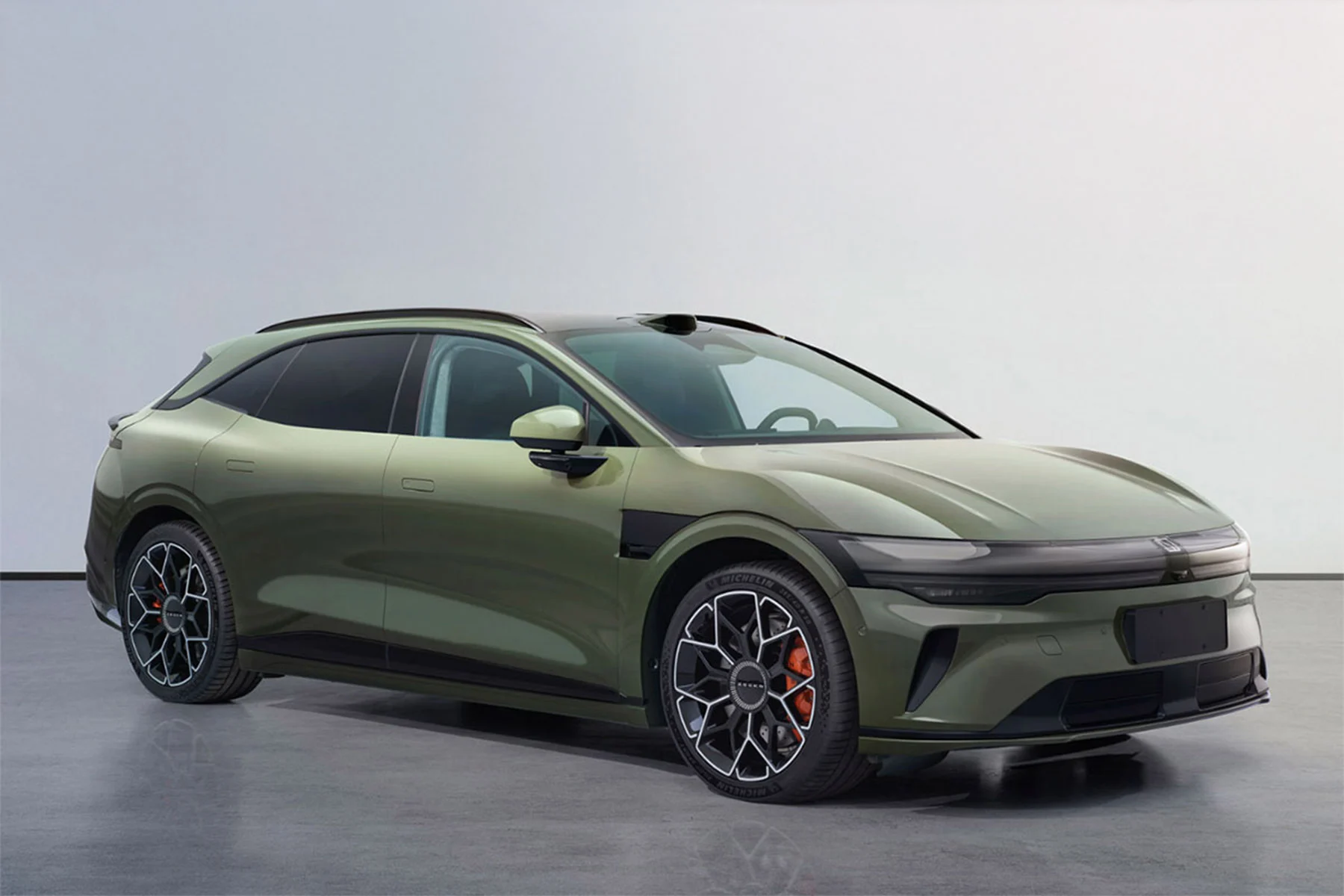
At 4.82 metres long, it combines a low, sleek grand-touring profile with the practicality of a five-door estate, while underneath sits some of Geely’s latest EV hardware. Every version uses an 800-volt electrical architecture, allowing strong range figures alongside very rapid charging.
The long-range rear-wheel-drive model uses a 100kWh battery and offers up to 407 miles WLTP, while producing 421hp. At the other end of the range, the dual-motor Privilege AWD develops 646hp and reaches 62mph in just 3.3 seconds.
Charging is one of the 7GT’s biggest strengths. Depending on battery version, 10–80% can take as little as 13 minutes, while around 211 miles can be added in ten minutes on a sufficiently powerful charger.
Alongside the Lynk & Co 07 GT and DENZA Z9GT, the 7GT helps show just how broad China’s new generation of estate cars is becoming — from long-range plug-in hybrids to extremely fast-charging, high-performance EVs.
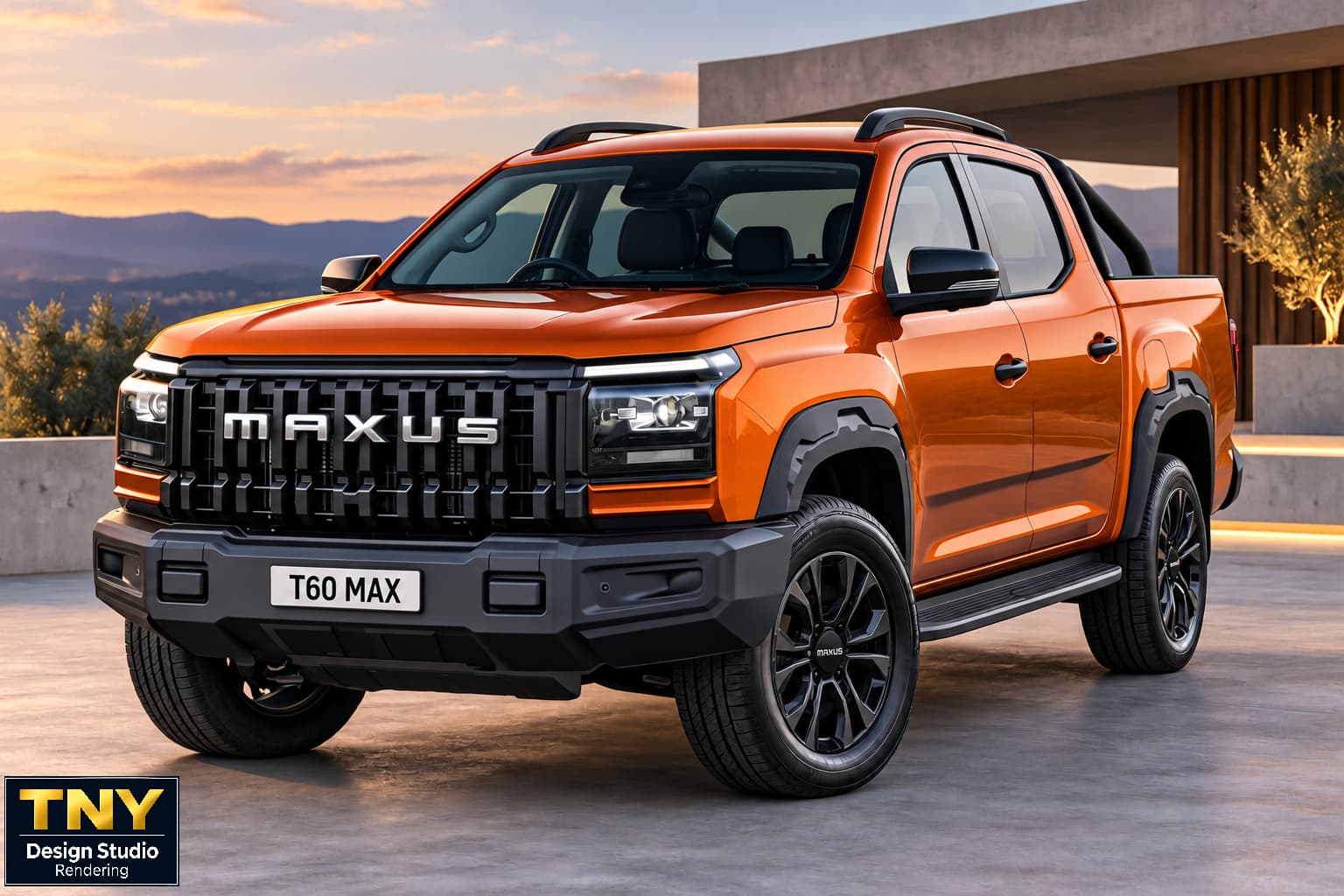
The facelifted T60 MAX is particularly interesting. Our TNY Design Studio rendering takes the newer Asia-spec truck as its starting point, but reworks the front end into something we think could sit more naturally in the European MAXUS range.
Underneath, however, the biggest change may actually be a step backwards on paper. The current European T60 MAX uses a 2.0-litre bi-turbo diesel producing around 215hp and 500Nm, whereas the newly announced facelift is being quoted with a 163hp 2.0-litre diesel producing around 400Nm.
It still retains the figures that matter for work, including a payload of more than a tonne and 3,500kg towing capacity, but the sizeable reduction in power is an intriguing change for a pick-up that originally made strong performance one of its selling points.
MG may not be exhibiting in Paris this year, but parent company SAIC will still have a meaningful presence through MAXUS — and the revised T60 MAX shows another side of the enormous Chinese group.
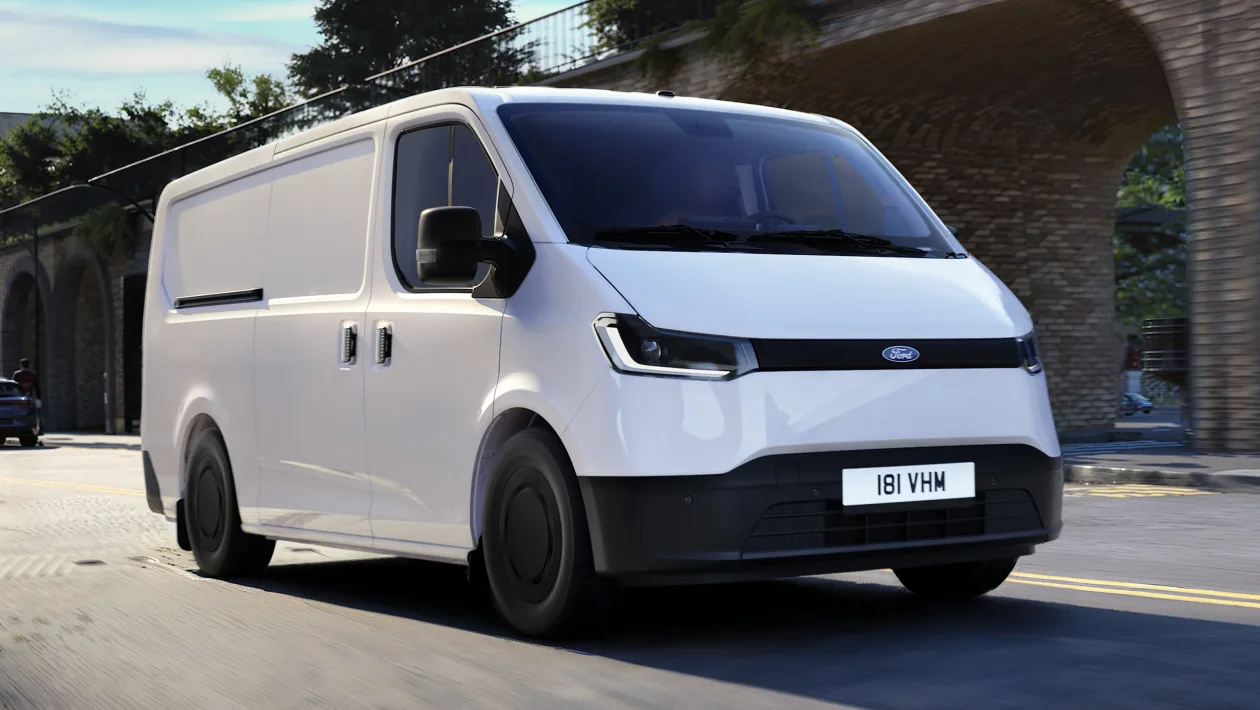
The new Transit City has been developed with Jiangling Motors and is produced in Nanchang, but it has been engineered for markets including Europe. It also gives Ford a particularly affordable new entry into the electric-van market, with UK prices starting at £29,421 excluding VAT.
Its specification is deliberately simple. A 56kWh LFP battery feeds a 150PS front-mounted motor, delivering up to 158 miles WLTP. Ford chose durable lithium-iron-phosphate chemistry to help balance cost, weight and longevity, while 87kW DC charging allows 10–80% in around 33 minutes.
Practicality is a major strength. The compact L1H1 offers up to 6.4m³ of load space and 1,085kg payload, while the larger L2H2 stretches to 8.5m³ and 1,275kg.
It is an unusual starting point for Ford’s Paris presence, but an appropriate one: Chinese-built, American-branded and aimed squarely at European buyers.
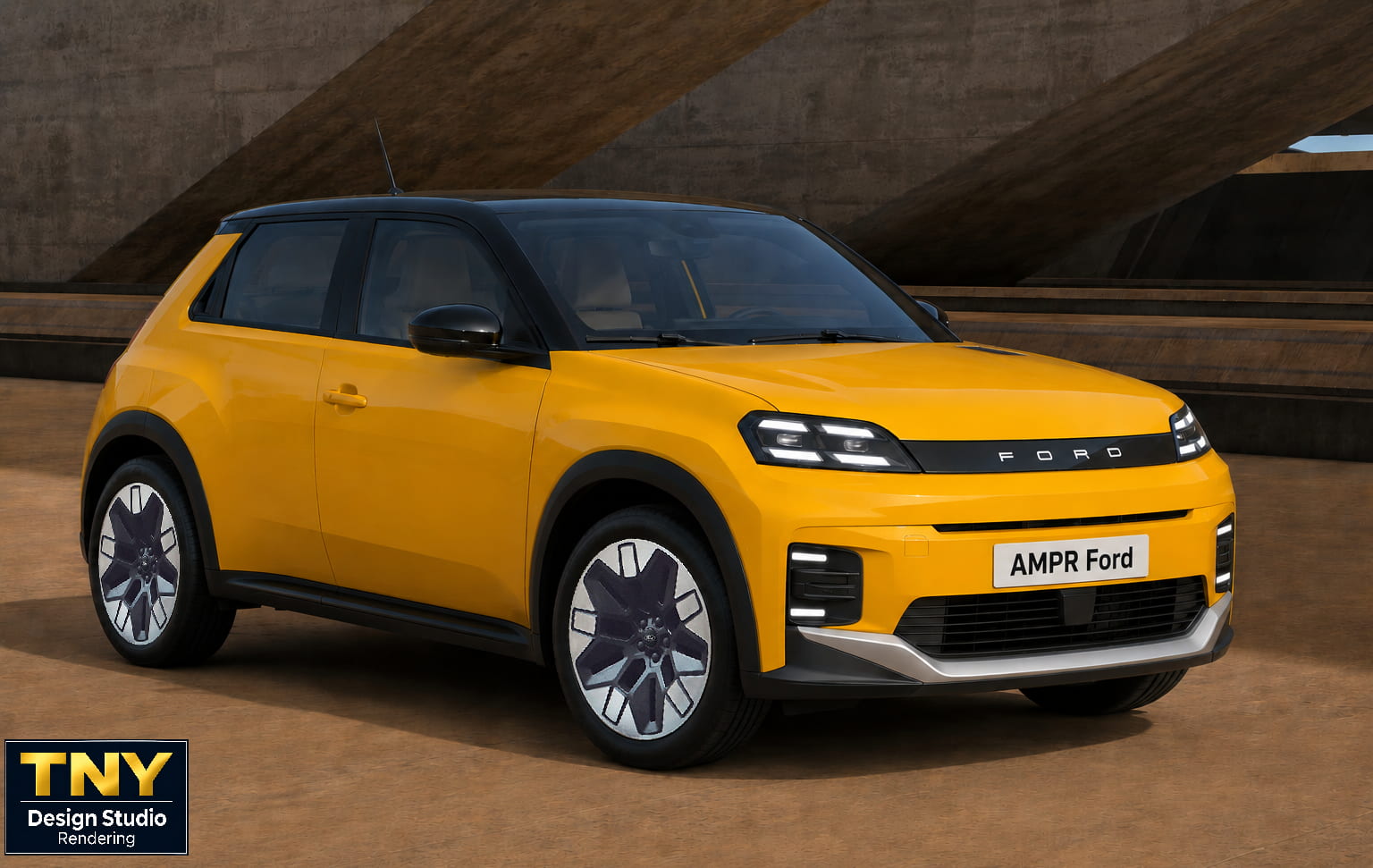
We already know one major part of what comes next. Ford and Renault Group have agreed to develop two new affordable Ford electric cars using Renault’s Ampere architecture, with production taking place in northern France. The first is due in showrooms in early 2028.
Our TNY Design Studio rendering imagines what one of those cars could become: a reborn electric Fiesta based around the same compact foundations that underpin the Renault 5.
The Fiesta name is entirely our speculation, but the concept itself is not. Ford says the two Ampere-based cars will be designed by Ford, tuned with distinctive Ford driving characteristics and form the beginning of a wider new European product offensive.
If Paris provides our first real glimpse of that programme, it could be one of Ford’s most significant announcements at the show.
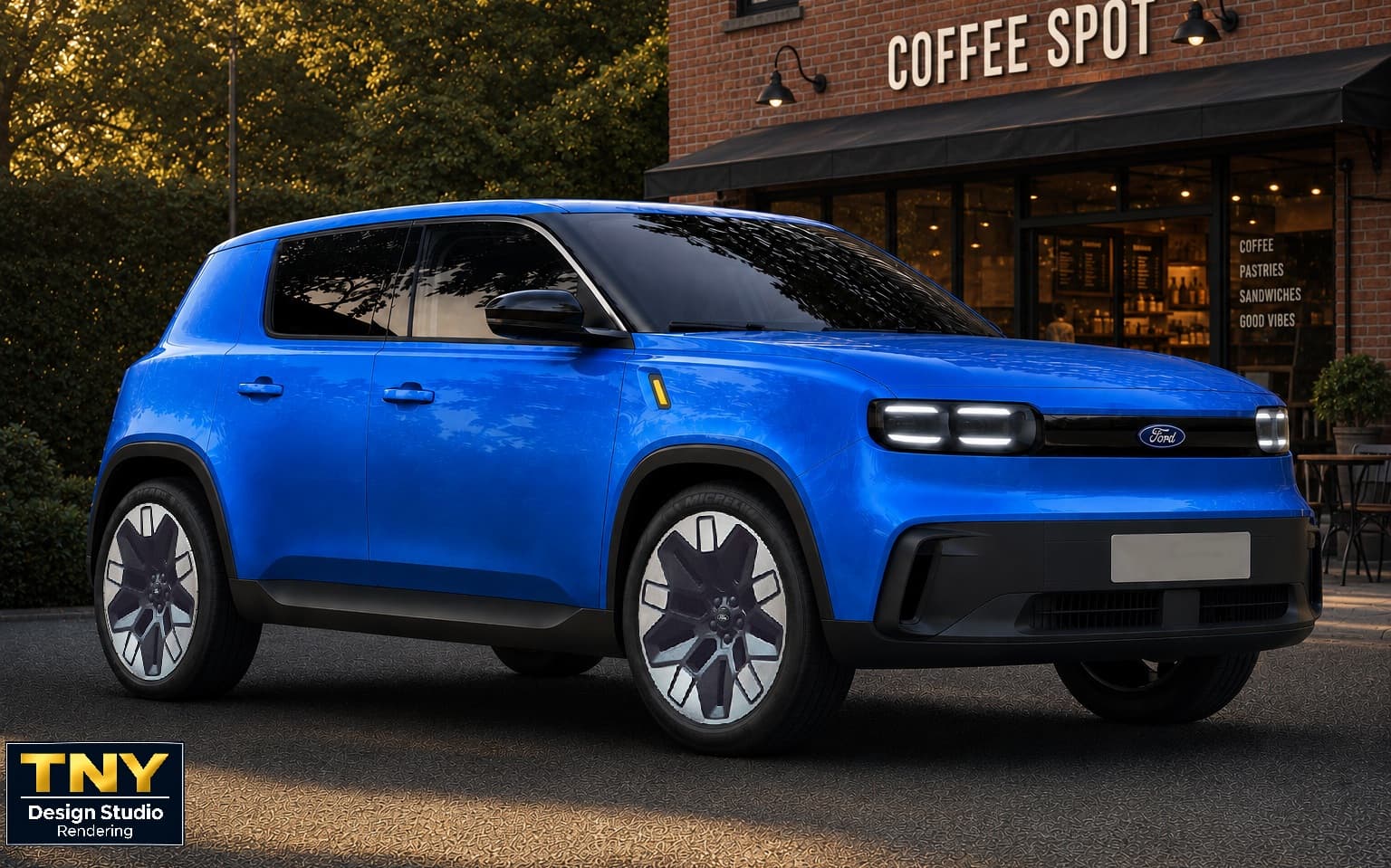
The compact crossover has become one of Ford’s most important models in Europe, combining mainstream appeal with the sort of size, price point and practicality that now sit at the heart of the market. That makes it an obvious candidate for the brand’s next major electric step.
Our TNY Design Studio rendering imagines a future Puma developed from the same AmpR Small foundations as the Renault 4. Those underpinnings could prove an excellent fit: they are already designed for compact, relatively affordable electric cars, while the Renault 4’s taller, more versatile format shows how the architecture can support a crossover shape rather than just a hatchback.
For Ford, that could be exactly what is needed. A Renault-based Fiesta would give the company an entry-level EV, but a Puma counterpart could deliver the higher-volume family model required to rebuild Ford’s presence in Europe’s most important segments.
Taken together, Transit City, Ford’s confirmed Paris announcements and our Fiesta and Puma interpretations suggest a brand trying to reconnect with Europe through a new generation of more accessible electric vehicles.
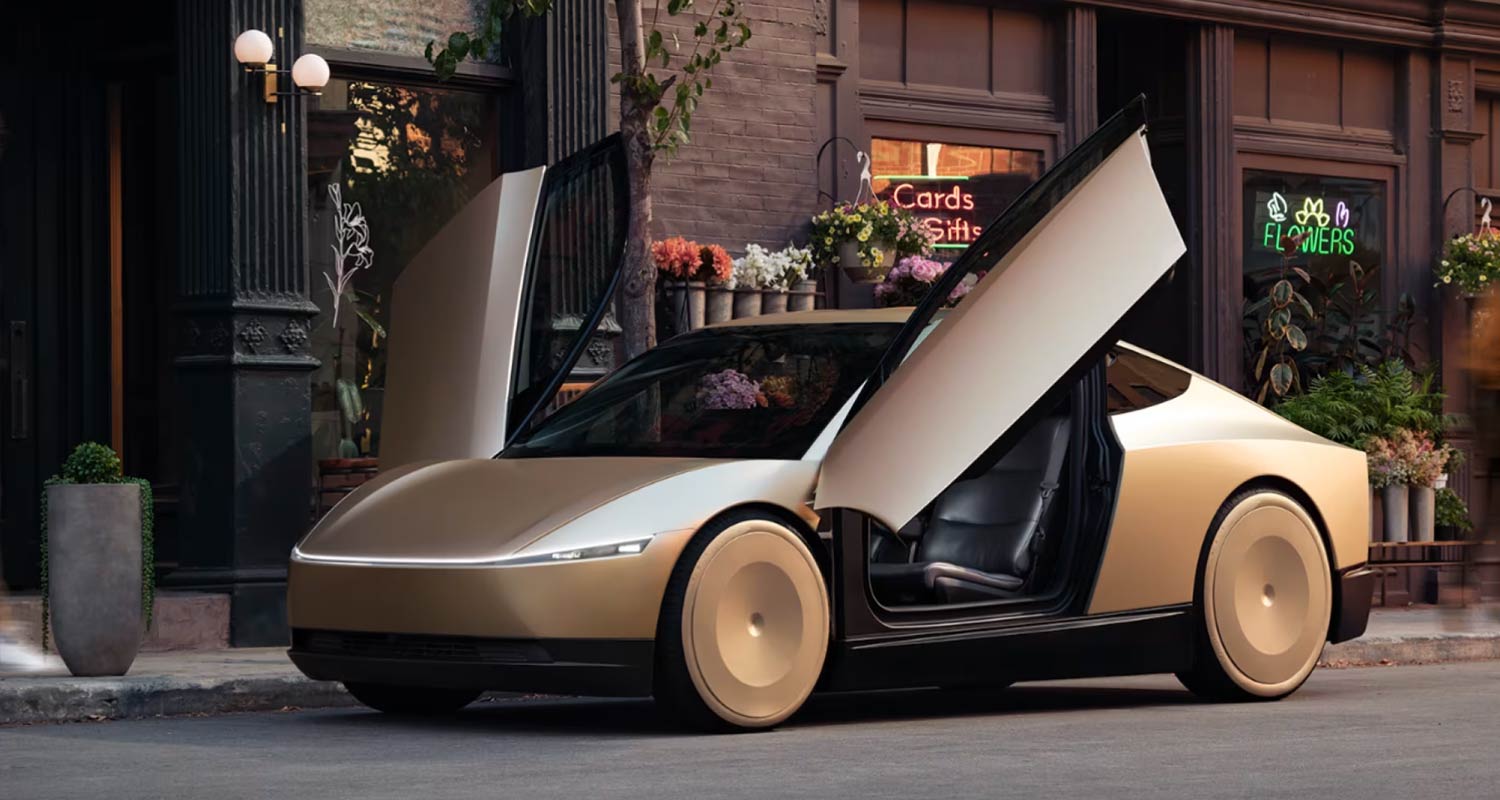
Designed from the outset as a fully autonomous robotaxi, the two-seat EV has no steering wheel, accelerator or brake pedal. Instead, passengers get a simple cabin centred around a large touchscreen, butterfly-style doors and a surprisingly useful 572-litre rear luggage compartment.
What makes its Paris appearance particularly significant is that Cybercab has now moved beyond the original show-car stage. Tesla began production during the first half of 2026, with engineering vehicles already operating on public roads and examples now forming part of its developing US Robotaxi operation.
Tesla has still not published conventional figures such as battery capacity or WLTP range, because Cybercab is being positioned primarily as part of a transport service rather than a normal privately owned EV.
That makes it one of the clearest examples in Paris of the car industry moving beyond simply electrifying existing vehicle formats.
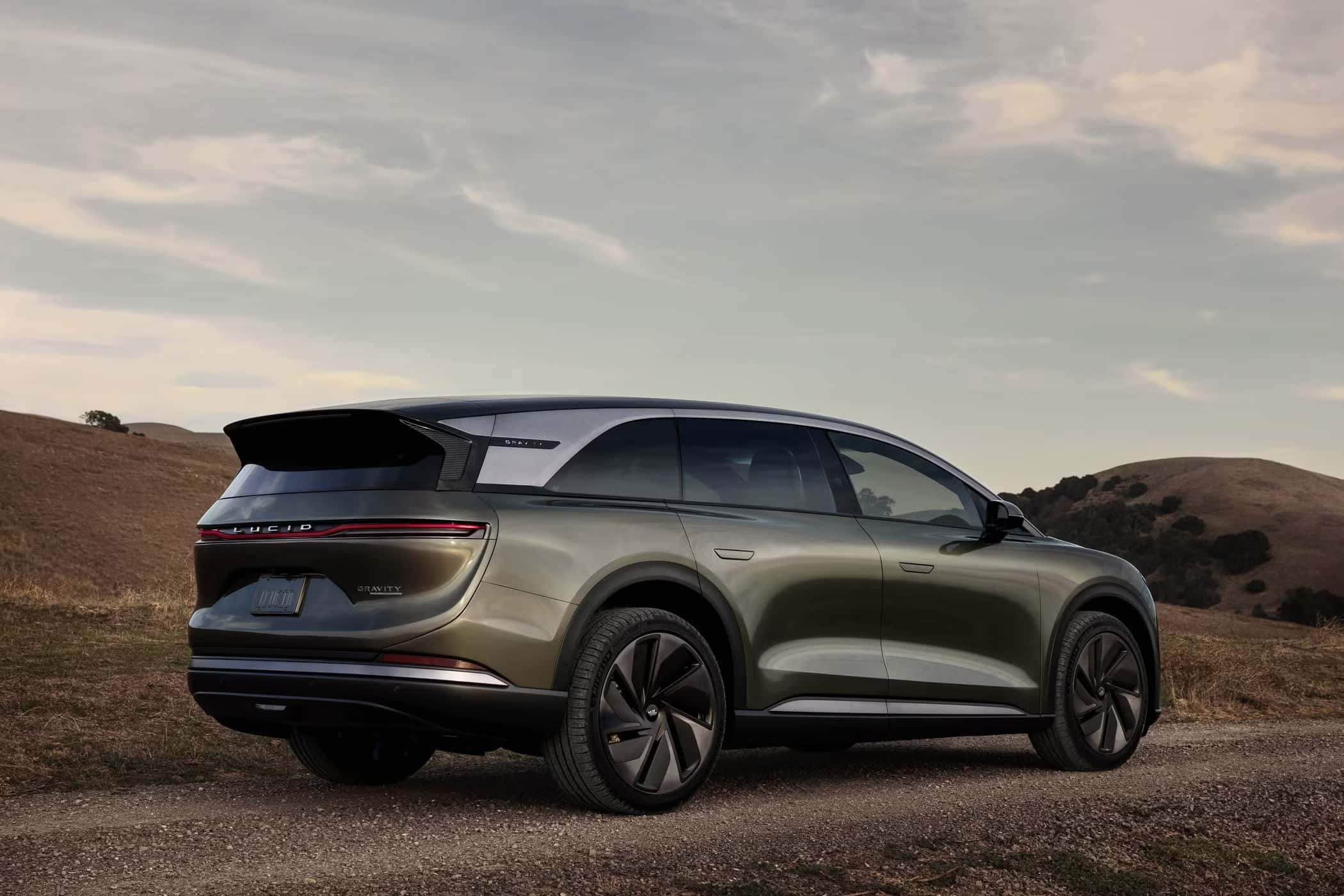
The California-based manufacturer is still a relatively small player in Europe, but its technology has consistently punched far above its sales volume. The Gravity is the clearest example yet: a full-size three-row luxury SUV with seating for up to seven, yet performance more normally associated with a sports car.
European Gravity Grand Touring models produce 839PS and 1,232Nm, reaching 62mph in just 3.6 seconds. A huge 123kWh battery delivers up to 465 miles WLTP, while its 926-volt architecture supports charging at up to 400kW — enough to add roughly 249 miles in 14 minutes.
Despite measuring just over five metres long, it can also tow up to 2,500kg and offers optional rear-wheel steering.
For Lucid, Gravity matters because it takes the efficiency and high-voltage technology developed for the Air and applies it to the far larger SUV market — giving the brand a model with much broader global potential.
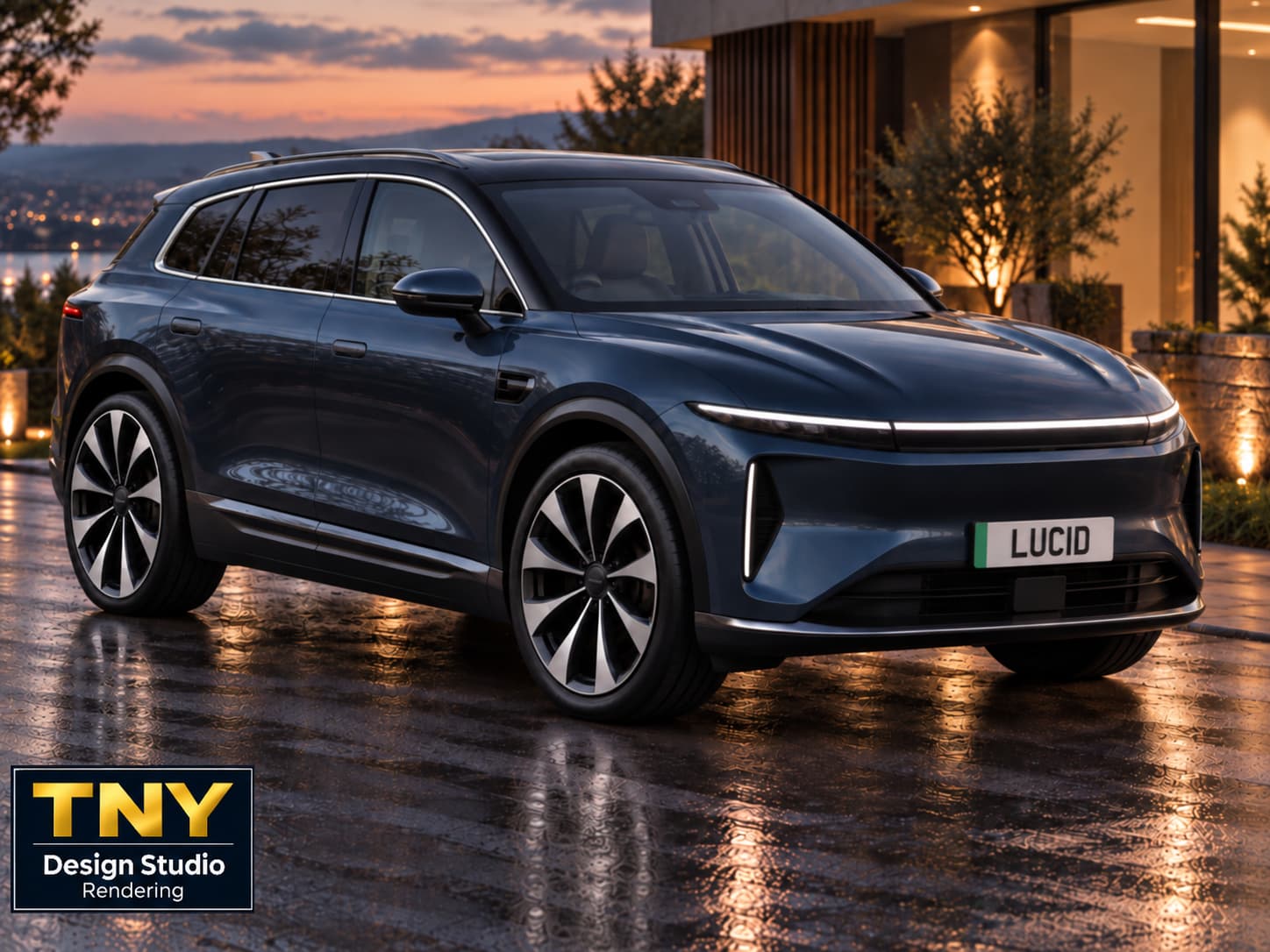
Our TNY Design Studio rendering imagines the more rugged member of Lucid’s new midsize family. Unlike the Air and Gravity, this new platform has been developed with right-hand drive in mind from the outset, opening the door for Lucid to finally establish itself properly in the UK. The sleeker Cosmos is expected to arrive first, with Earth following as the more adventurous SUV derivative.
Just as importantly, these cars move Lucid into a much more attainable part of the premium market. The company is targeting a starting point below $50,000 for its midsize range, while retaining the efficiency, interior quality and performance associated with its much more expensive cars.
Underneath is an all-new 800-volt platform and Lucid’s new Atlas electric drive unit, designed to be smaller, lighter, simpler and considerably cheaper to manufacture than its existing motors.
For Britain, that combination could be transformative: Lucid quality and technology, right-hand drive from the outset, but at prices much closer to a BMW iX3 or Volvo EX60 than a six-figure luxury EV.
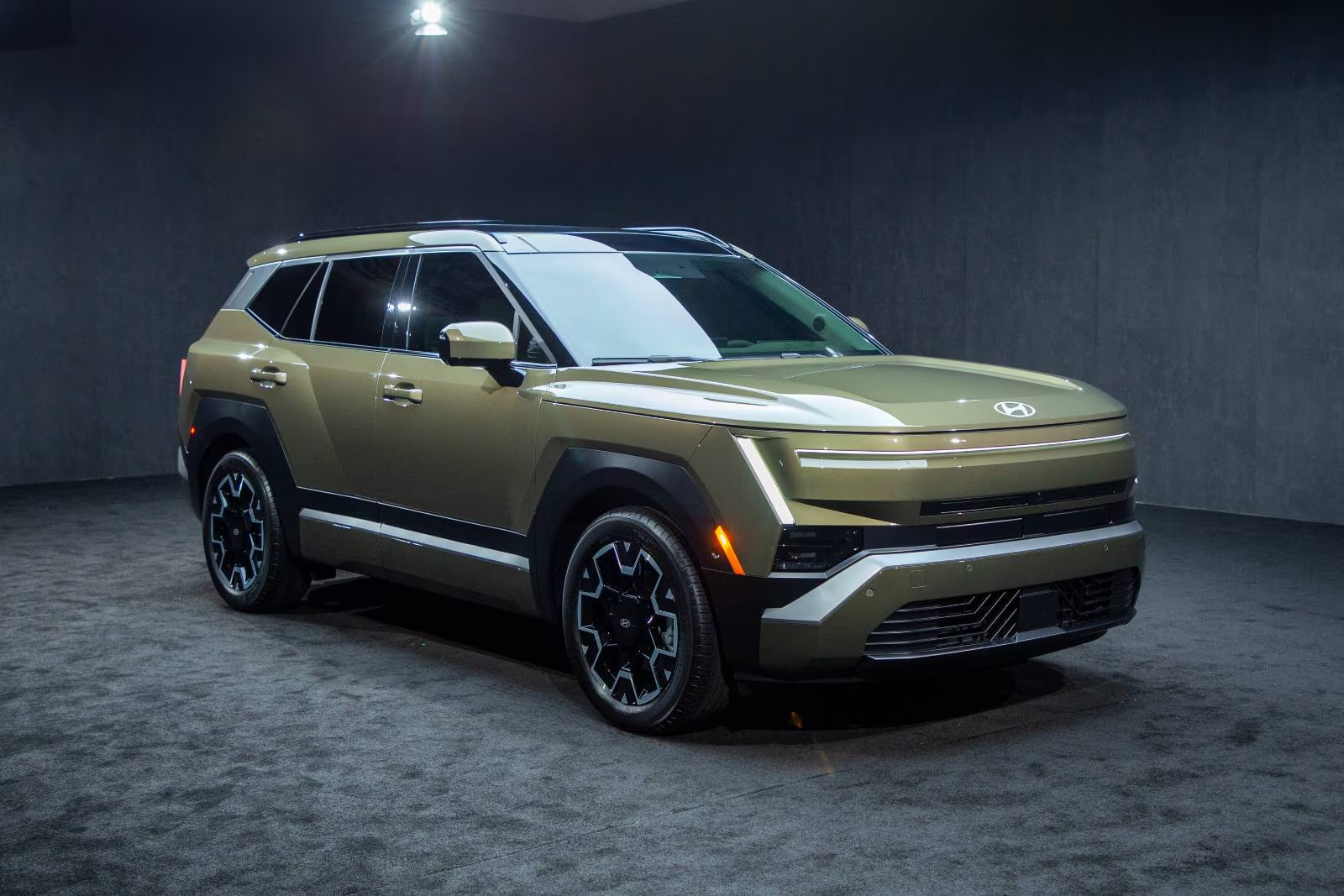
The current Tucson still feels remarkably fresh despite arriving back in 2020, and it remains a major seller for Hyundai. That makes the arrival of an entirely new generation particularly significant rather than simply overdue.
The new Tucson grows to 4.56 metres long, becoming 35mm longer and wider than before, while a longer and more flexible cabin gives Hyundai additional family-car space. European production continues in the Czech Republic.
Electrification remains central, with hybrid and plug-in-hybrid powertrains forming a major part of the range, while Hyundai also introduces its new Pleos Connect infotainment system and a much cleaner interpretation of its latest “Art of Steel” design language.
Paris will provide another important moment for the new Tucson, with Hyundai confirming that an additional dynamically styled version will make its debut at the show.
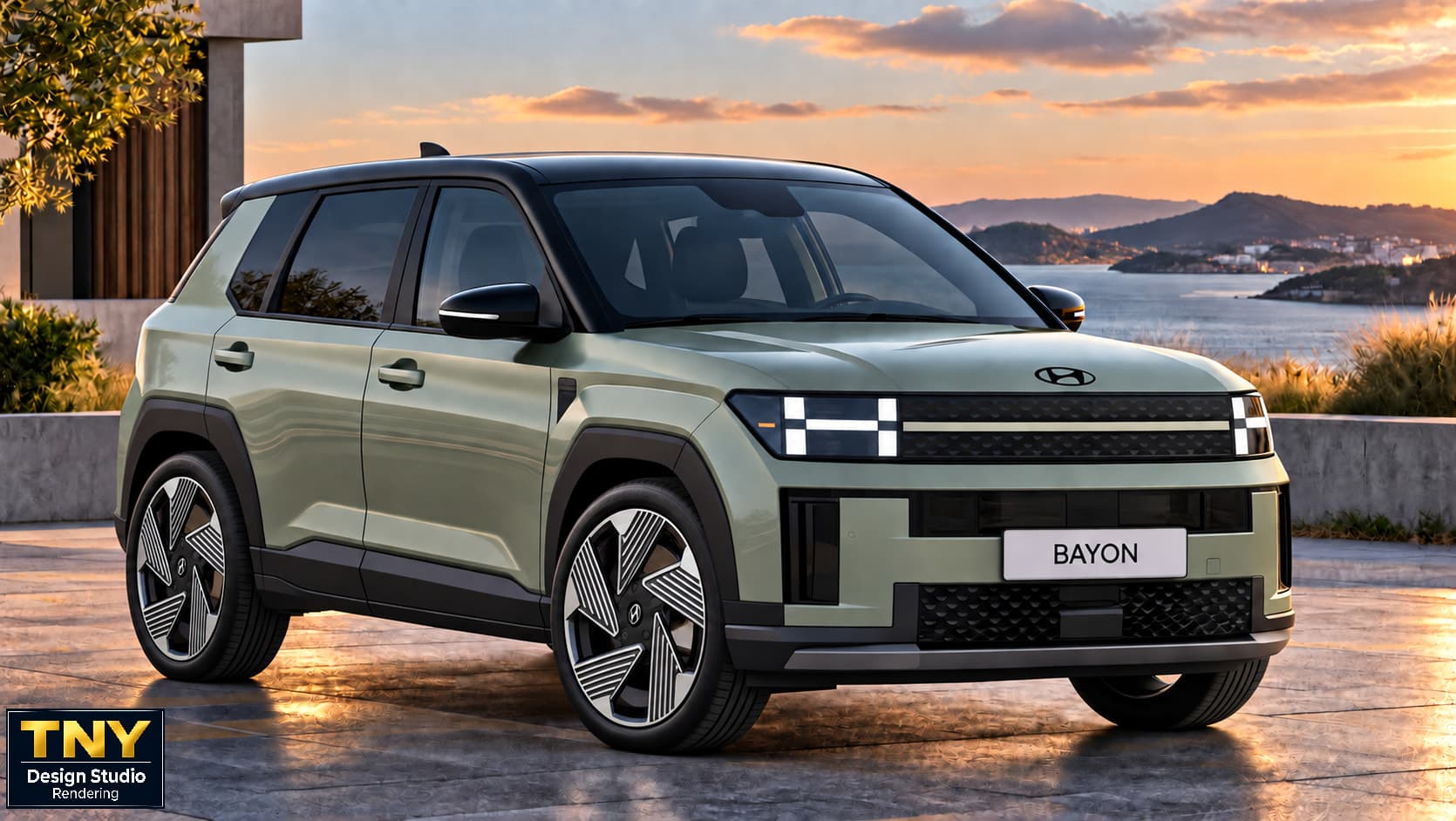
Hyundai has now confirmed that the new-generation Bayon will make its world premiere at the Paris Motor Show, replacing a model that remains an important entry point to its European SUV range.
But the market around it is changing remarkably quickly. The newly launched IONIQ 3 starts at £22,245 in the UK, and has now qualified for the full £3,750 Electric Car Grant, bringing its effective entry price down to an extraordinary £18,495.
That potentially creates a real challenge for the new Bayon. Hyundai will effectively have a purpose-designed 4.1-metre EV, with a 42.2kWh battery and 213 miles of WLTP range, entering the market for less than many conventional small petrol crossovers.
The Bayon still has a role for buyers wanting a familiar petrol or hybrid SUV, but Paris should reveal how Hyundai intends to keep that proposition compelling when its own EV range is becoming this affordable.
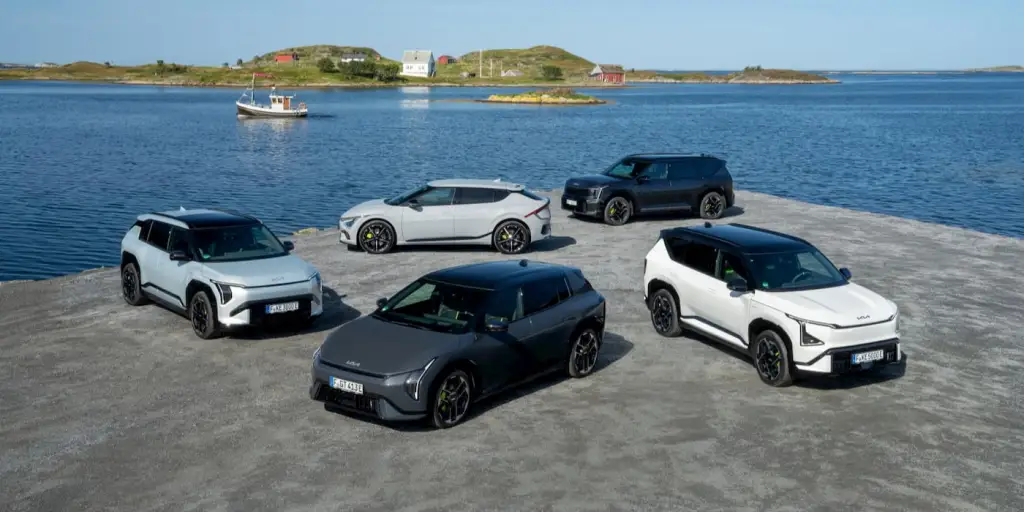
For the show, Kia is bringing its entire electric GT family together in one place, with performance versions of the EV3, EV4, EV5, EV6 and EV9 all appearing side-by-side in Paris. It gives the brand one of the broadest electric performance line-ups of any mainstream manufacturer.
The range now stretches from compact crossovers and family cars through to large SUVs. Even the smaller models gain all-wheel-drive performance hardware and dedicated chassis tuning, while the EV6 can produce up to 650hp and the flagship EV9 carries the same performance philosophy into a huge three-row SUV.
What is striking is how normal this has become for Kia. GT is no longer a single halo derivative; it is developing into a complete performance sub-range spanning almost every major EV segment.
Together with Hyundai’s increasingly affordable electric cars, Paris shows just how much ground Hyundai Motor Group now covers — from the £18,495 IONIQ 3 to genuinely high-performance premium EVs.
From Korea, our preview moves to Japan — although the Japanese presence in Paris is noticeably thinner this year, with several major manufacturers absent from the show.
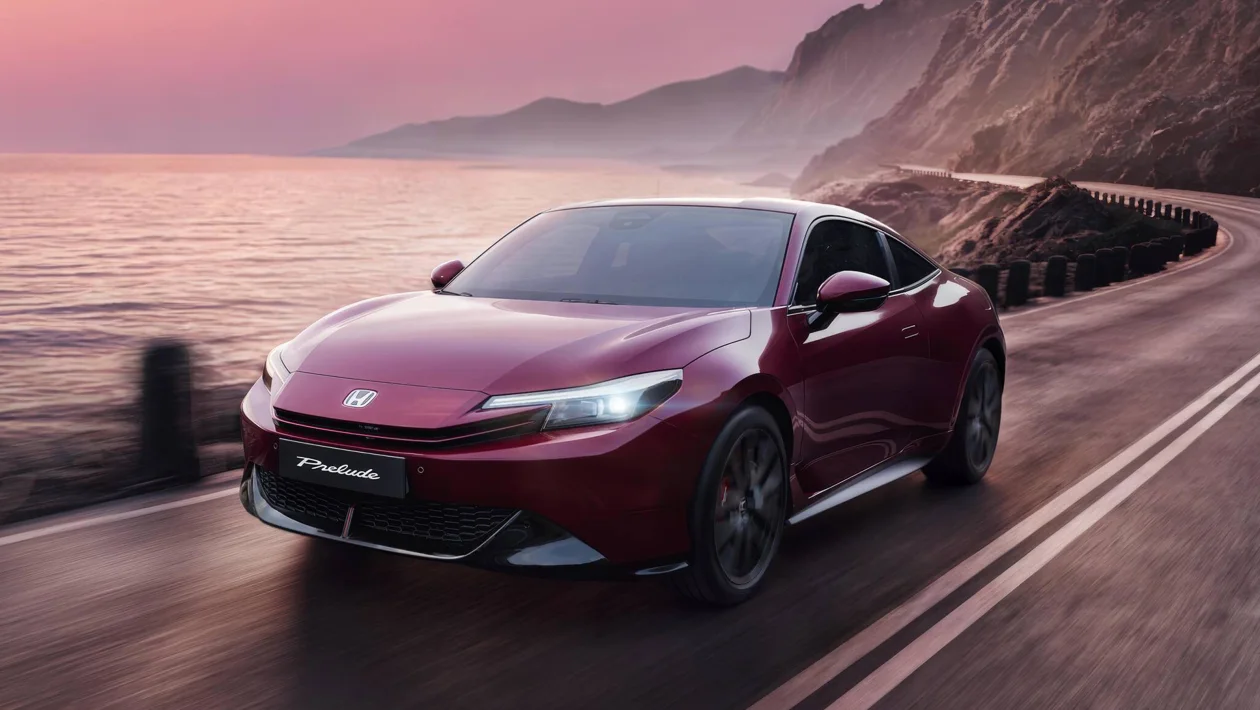
Honda is one of the exceptions, returning to the Paris Motor Show for the first time since 2018 and putting the revived Prelude at the centre of its display.
The coupe brings something Honda’s European range has been missing: a genuinely emotional halo model. Its 2.0-litre e:HEV system produces 184PS and 315Nm, while Honda’s S+ Shift technology simulates rapid gear changes and works alongside chassis hardware influenced by the Civic Type R.
The recently announced 2027 Limited Edition adds a richer Crystal Garnet Metallic finish, black 19-inch wheels, red brake calipers and a burgundy-and-black interior, giving the Prelude a more distinctive flagship feel.
It does not transform the mechanical package, but that is almost beside the point. At a show where Honda is also celebrating 60 years of car sales in France, the Prelude provides something its efficient Jazz, HR-V and Civic hybrids cannot quite replicate: desirability, heritage and a reminder that Honda still wants driving enjoyment to matter.
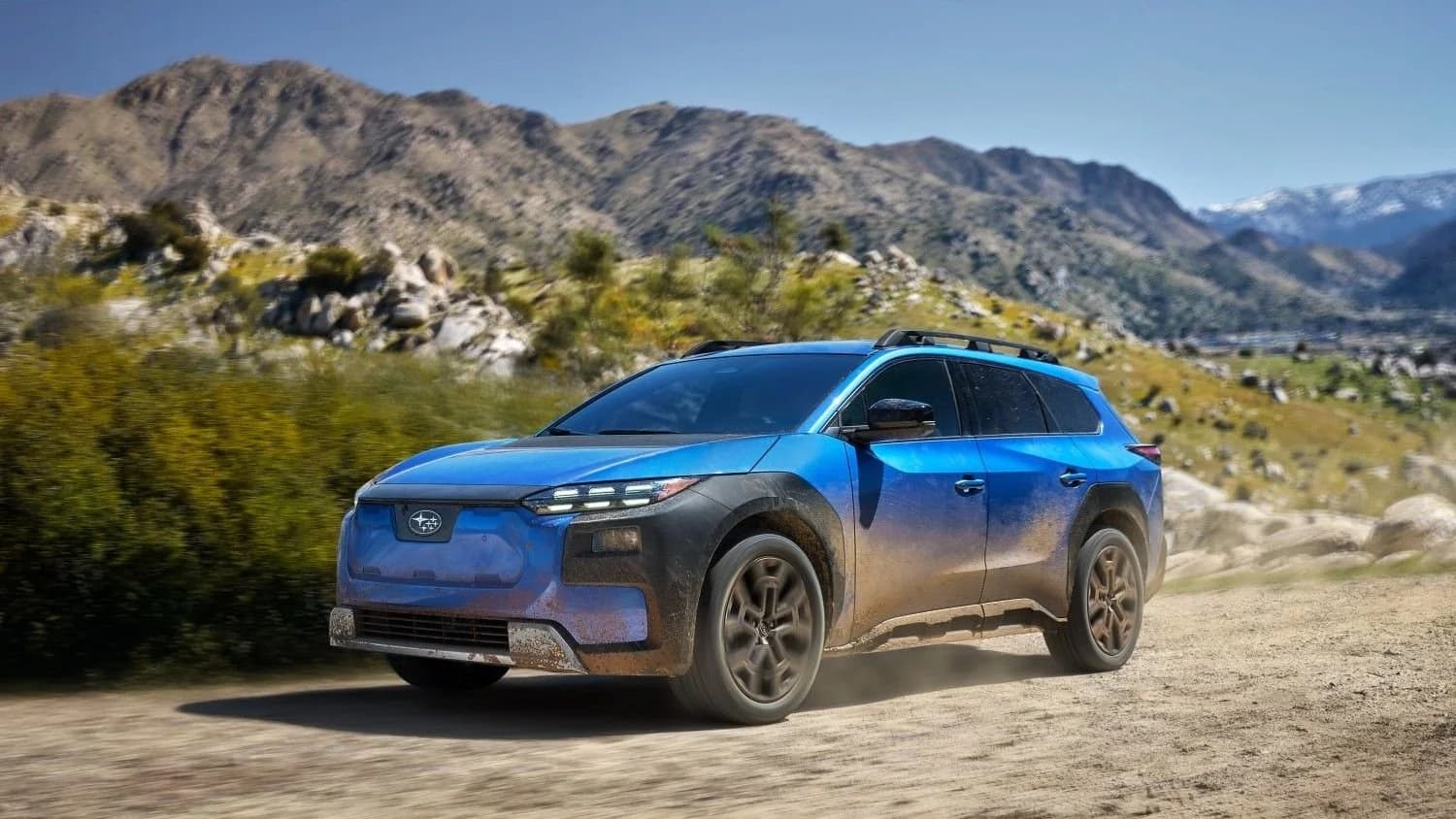
The new E-Outback is an important car for Subaru because it translates one of the brand’s best-known nameplates into the electric era without abandoning the qualities that made the Outback popular in the first place. Rather than chasing a sleek crossover-coupé look, it stays focused on practicality, all-weather security and genuine usability.
The figures are strong too. Subaru quotes 375hp, a 74.7kWh battery, up to 327 miles WLTP range, 0–62mph in 4.4 seconds, 211mm of ground clearance and 1,500kg towing capacity. In other words, it is not just an electric estate in name: it is intended to remain a proper Subaru.
That gives Japan a neat conclusion. With several major Japanese manufacturers absent from Paris this year, the brands that are present need to make their appearances count — and Subaru does exactly that by bringing something distinctive.
It also feels like an appropriate way to end the entire piece. From affordable European EVs and huge Chinese expansion to American tech statements, Korean value and Japanese reinvention, Paris 2026 is shaping up to be one of the broadest and most revealing motor shows in years.
Image copyright remains with the respective manufacturers, brands and rights holders unless otherwise stated. Images labelled or described as TNY Design Studio are original TNY-created speculative renderings. All other manufacturer imagery is used for editorial and informational purposes, with ownership retained by the original rights holders.
You should also read:

TNY Market Watch: Nine Family Car Bargains with Savings Up to £11,000
Buying a practical family car doesn't have to mean spending £30,000 or more. While new-car prices have climbed considerably in recent years, pre-registered vehicles and discounted new-stock clearance offers continue to provide some remarkable bargains, often with thousands of pounds knocked off the original list price. From compact crossovers and spacious family…
What Are the Best Fun Cars You Can Buy for £6,000?
A £6,000 budget opens the door to a surprisingly varied selection of interesting used cars. Rather than simply chasing the newest or lowest-mileage option, this is the point where buyers can start looking for something with real character. That might mean a proper rear-wheel-drive coupé, a lightweight hot hatch, a rare premium…

From Budget EVs to Supercars: Three Chinese Brands to Watch
Chinese carmakers are no longer simply arriving in Europe with a handful of cheap EVs. They are building factories, expanding dealer networks, developing premium sub-brands and, in some cases, moving faster than many established manufacturers can comfortably match. Three names in particular show just how varied that expansion has become. BYD brings…
What Does £1,500 Buy in 2026? Eight Used Cars We’d Look At
Cheap cars do not automatically have to mean bad cars. At the bottom end of the used market, £1,500 will inevitably involve compromises — higher mileage, older interiors and the odd cosmetic scar — but there are still plenty of genuinely useful, dependable cars available for the money. The trick is looking…

MAXUS Pre-Reg Watch: Five Big Discounts Worth Knowing About
MAXUS has become one of the more interesting value brands in the UK commercial vehicle market, with a range that now stretches from diesel and electric vans to pickups and large MPVs. Backed by SAIC Motor, it has steadily built its case around equipment, electrification and aggressive pricing. That value argument becomes…
Rebuilding Nissan: The Cars That Could Fix Its Confusing European Line-Up
Around 20 years ago, Nissan changed the shape of the mainstream car market. The Qashqai replaced the dependable but forgettable Almera and helped turn the crossover into a family-car staple. The Juke followed, proving equally disruptive, while in 2010 the Leaf brought electric motoring to the masses. All three were game-changing cars…

Beat the 76-Plate Hype: 10 Pre-Reg Cars Under £16,000
With the new 76 registration arriving on 1 September, thousands of buyers will be preparing to collect a brand-new car. But having the latest number plate can come at a considerable cost. Today, the choice of new cars costing less than £16,000 is remarkably limited, with just three models starting below our…
Three Cars, One Mission: Peugeot's Bold New Premium Small Car Strategy
Twenty years ago, Peugeot offered one of Europe's broadest B-segment line-ups, with hatchbacks, estates, convertibles, people carriers and overlapping generations all competing for buyers. Today, just the 208 and 2008 remain. However, that could soon change. Growing evidence from Peugeot's product roadmap and Stellantis' wider platform strategy suggests the French manufacturer could…