Ford Van Guide
Ford has been one of the defining names in British commercial vehicles for more than six decades, with the Transit becoming a familiar sight on building sites, delivery rounds and motorways across the country.
Today's Ford Pro range is broader than ever, stretching from compact city vans to large commercial vehicles capable of carrying substantial loads. Petrol, diesel, plug-in hybrid and electric powertrains provide plenty of choice, while several body lengths, roof heights and specialist conversions make Ford one of the most versatile manufacturers in the UK van market.
Current Models
Commercial van prices exclude VAT unless otherwise stated. Dimensions are length × width × height in millimetres, excluding mirrors. Cargo volumes refer to standard panel vans unless otherwise stated.
Ford Transit Courier (24-)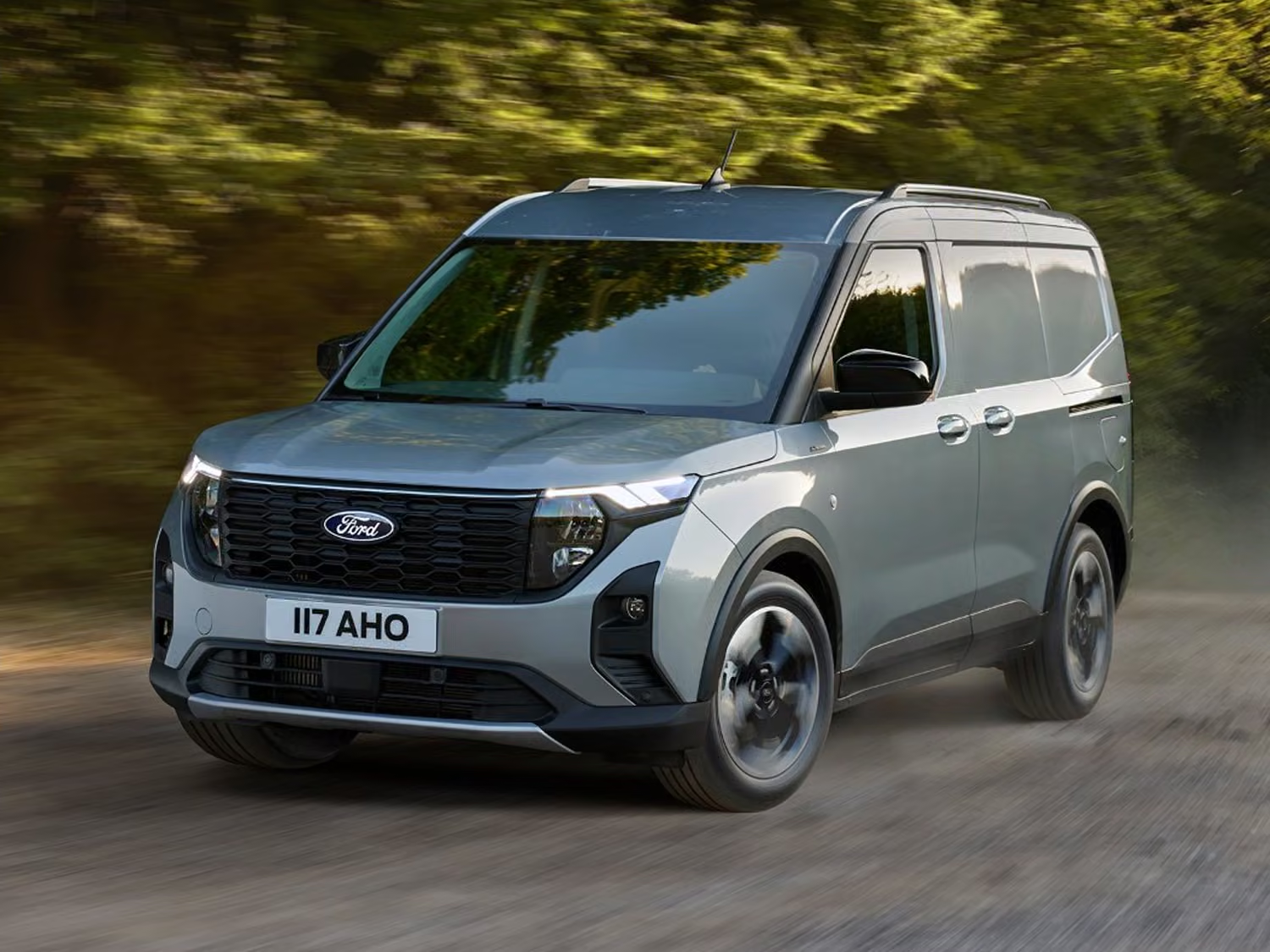 | RRP From: £17,800 + VAT |
The latest Transit Courier represents a significant step forward for Ford's smallest conventional van. Introduced in 2024, the second-generation model grew considerably compared with its predecessor, offering a more practical load compartment, improved technology and a much stronger presence on the road.
Despite its compact dimensions, the Courier provides almost three cubic metres of cargo capacity, with enough room between the wheel arches for a Euro pallet. A load-through bulkhead extends the maximum load length to 2661mm, making it surprisingly useful for carrying longer materials and equipment.
The petrol range uses Ford's familiar 1.0-litre EcoBoost engine, while the 1.5-litre EcoBlue diesel provides an alternative for higher-mileage drivers. The fully electric E-Transit Courier offers a 46kWh battery, 136PS electric motor and a WLTP range of up to approximately 200 miles, depending on specification.
For businesses that rarely need a large van, the Courier could be an ideal choice. It combines useful cargo capacity with supermini-like manoeuvrability, while its comparatively low purchase price makes it one of the more accessible vehicles in Ford's commercial range.
Ford Transit Connect (24-)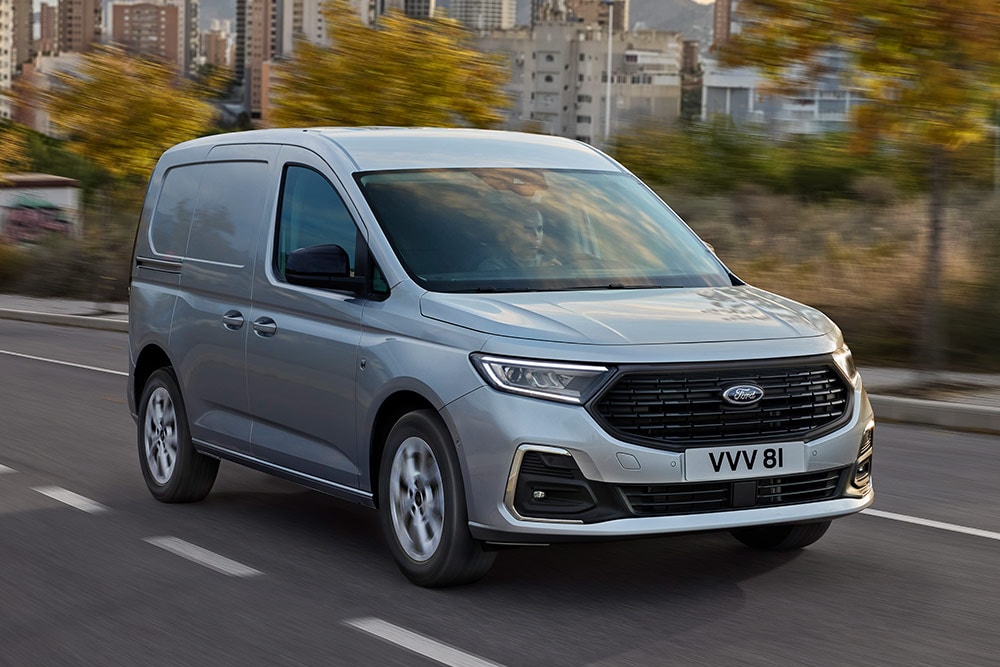 | RRP From: £24,600 + VAT |
The third-generation Transit Connect arrived in 2024, marking a major change for Ford's compact commercial vehicle. Rather than developing the model entirely independently, Ford partnered with Volkswagen, with the latest Connect sharing its platform and much of its engineering with the Volkswagen Caddy.
Available in two body lengths, the Transit Connect provides between 3.1 and 3.7 cubic metres of cargo capacity. Its relatively square load area, sliding side doors and compact exterior dimensions make it particularly well suited to tradespeople, delivery businesses and operators requiring a practical van without moving into the larger Transit Custom or Transit City
Diesel models use a 2.0-litre EcoBlue engine with 102PS or 122PS, while a 150PS plug-in hybrid introduces an interesting alternative. The PHEV combines a petrol engine with an electric motor and offers up to approximately 73 miles of WLTP combined electric range, potentially allowing many local delivery routes to be completed without using petrol.
Ford Transit City (26-)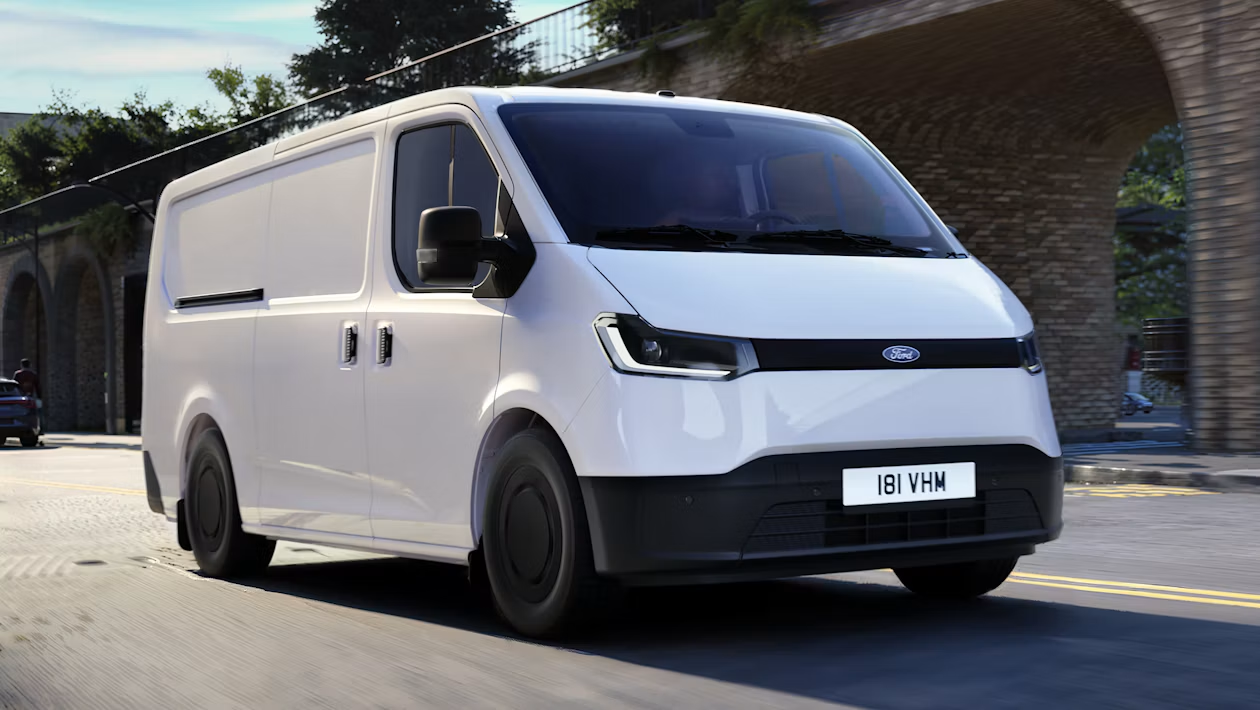 | RRP From: £24,000 + VAT |
The Transit City is an entirely new addition to Ford's commercial vehicle range, introduced in 2026 with a particular focus on affordability and urban deliveries. Unlike the electric versions of existing Transit models, it has been developed specifically as a straightforward electric working van, with equipment and engineering chosen to keep costs under control.
Two panel-van configurations are available, with the compact L1H1 providing 6.4 cubic metres of cargo space and the larger L2H2 increasing this to 8.5 cubic metres. Payload capacities of up to 1085kg and 1275kg respectively make the Transit City particularly interesting for operators carrying heavy goods around towns and cities.
Both versions use a 56kWh lithium iron phosphate battery and a 150PS electric motor, with a WLTP combined range of up to 158 miles in the smaller version. This is considerably less than some long-range electric vans, but Ford has prioritised predictable urban routes, modest running costs and useful carrying capacity rather than fitting an unnecessarily large battery.
Developed with Ford's Chinese manufacturing partner JMC, the Transit City represents a different approach to the company's commercial vehicle strategy. A chassis-cab version is also planned, opening the door to specialist conversions.
Perhaps most remarkably, the £5,000 UK Government electric van grant brings the starting price down to just £24,000 excluding VAT, undercutting Ford's considerably smaller Transit Connect. With more than twice the cargo capacity of the compact Connect, the Transit City could represent exceptional value for businesses with suitable charging facilities and predictable daily routes.
Ford Transit Custom (23-)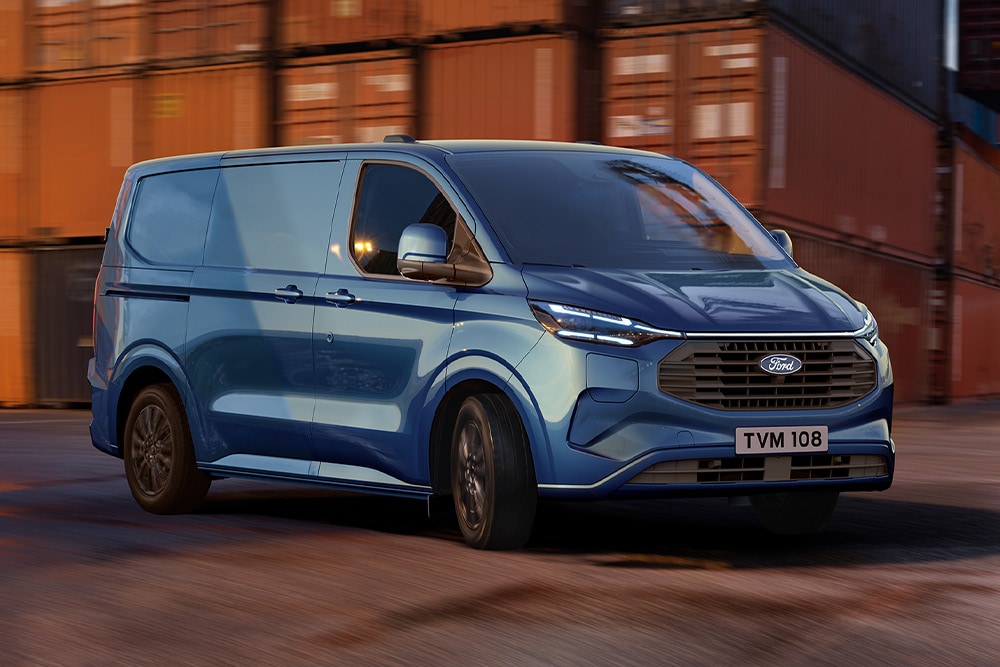 | RRP From: £35,150 + VAT |
Few vans have become as familiar on British roads as the Ford Transit Custom. Since its original introduction in 2012, it has developed an enviable reputation as an adaptable commercial vehicle, and the second-generation model introduced in 2023 builds upon that success with improved technology, greater efficiency and a completely redesigned platform.
Two body lengths provide between 5.8 and 6.8 cubic metres of cargo capacity, while the relatively low roof allows access to many car parks and height-restricted areas. Its practical load compartment can accommodate multiple Euro pallets, and the broad range of trim levels and seating arrangements makes it suitable for everything from building trades to delivery fleets.
The powertrain range is particularly extensive. Diesel versions use Ford's 2.0-litre EcoBlue engine with manual or automatic transmissions, including optional all-wheel drive on selected models. The plug-in hybrid combines a 2.5-litre petrol engine with an electric motor, while the E-Transit Custom provides fully electric propulsion with driving ranges of more than 200 miles on selected versions.
The latest Volkswagen Transporter shares much of its engineering with the Transit Custom, underlining Ford's growing role in commercial vehicle development beyond its own badge. Although newer rivals continue to challenge it, the Transit Custom remains one of the strongest all-round choices in the medium-van market.
Ford Transit (14-, updated 24-)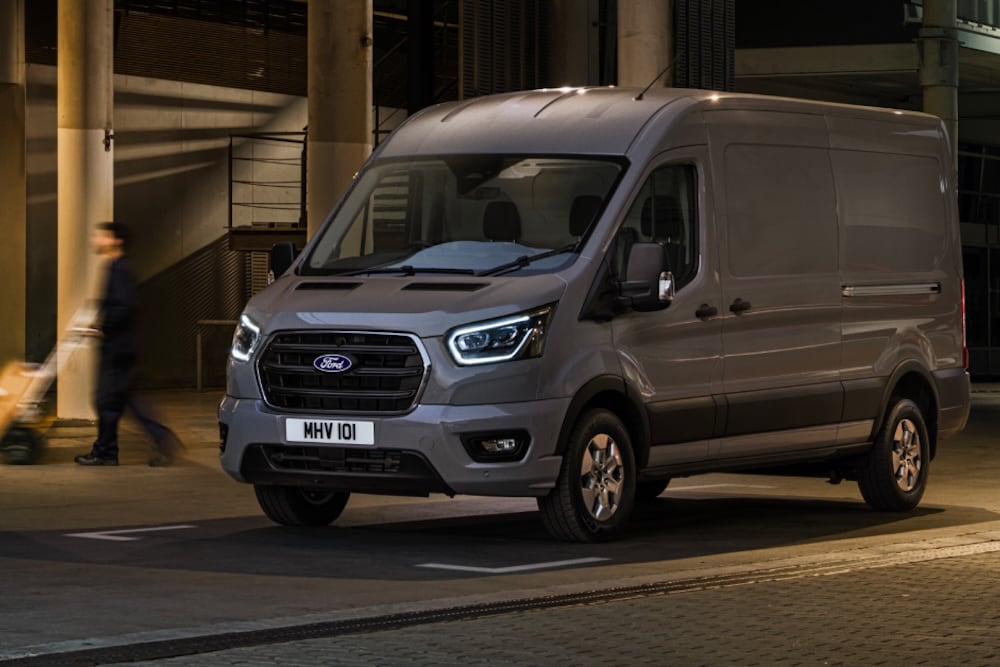 | RRP From: £44,545 + VAT |
The full-size Ford Transit is one of the most recognisable commercial vehicles. First introduced in 1965, it has become an institution in the British van market, serving generations of delivery drivers, tradespeople, emergency services and fleet operators.
The current generation arrived in 2014 and has received numerous updates since, with revised engines, improved safety systems and increasingly sophisticated connectivity. Available in several body lengths and roof heights, the Transit offers up to 15.1 cubic metres of cargo capacity, making it suitable for everything from ordinary delivery work to specialist commercial applications.
Unlike many large front-wheel-drive competitors, the Transit offers both front- and rear-wheel-drive configurations, with all-wheel drive available on selected diesel versions. This gives it considerable versatility, particularly for operators requiring higher towing capacities, heavier payloads or improved traction on difficult surfaces.
The diesel range uses Ford's 2.0-litre EcoBlue engines, while the E-Transit introduces fully electric propulsion. Battery options include 68kWh and 89kWh usable capacities, with selected enhanced-range models capable of travelling up to approximately 249 miles under WLTP testing conditions.
Ford also offers the Transit as a chassis cab, double cab, minibus and numerous specialist conversions. Heavier variants can exceed 3.5 tonnes gross vehicle weight, so buyers should check their driving licence entitlements and any applicable operating requirements before purchasing. More than sixty years after the first Transit appeared, the name remains central to Ford's commercial vehicle business.
Specifications, dimensions and prices were correct at the time of the latest update. Recommended retail prices are official UK list prices, while pre-registered and used values are approximate UK market figures and may vary depending on specification, mileage, condition and location. Recommended retail prices include any applicable UK Government electric vehicle grant where available but exclude dealer discounts, manufacturer incentives and other retail offers.

Dimensions quote vehicle width excluding exterior mirrors unless otherwise stated. Power outputs are quoted in bhp, with manufacturers' kW, PS or CV figures converted where necessary. Electric driving ranges use WLTP combined figures where available.

Unless otherwise stated, vehicle images are manufacturer press photographs provided by Ford and remain the copyright of their respective owners.
You should also read:
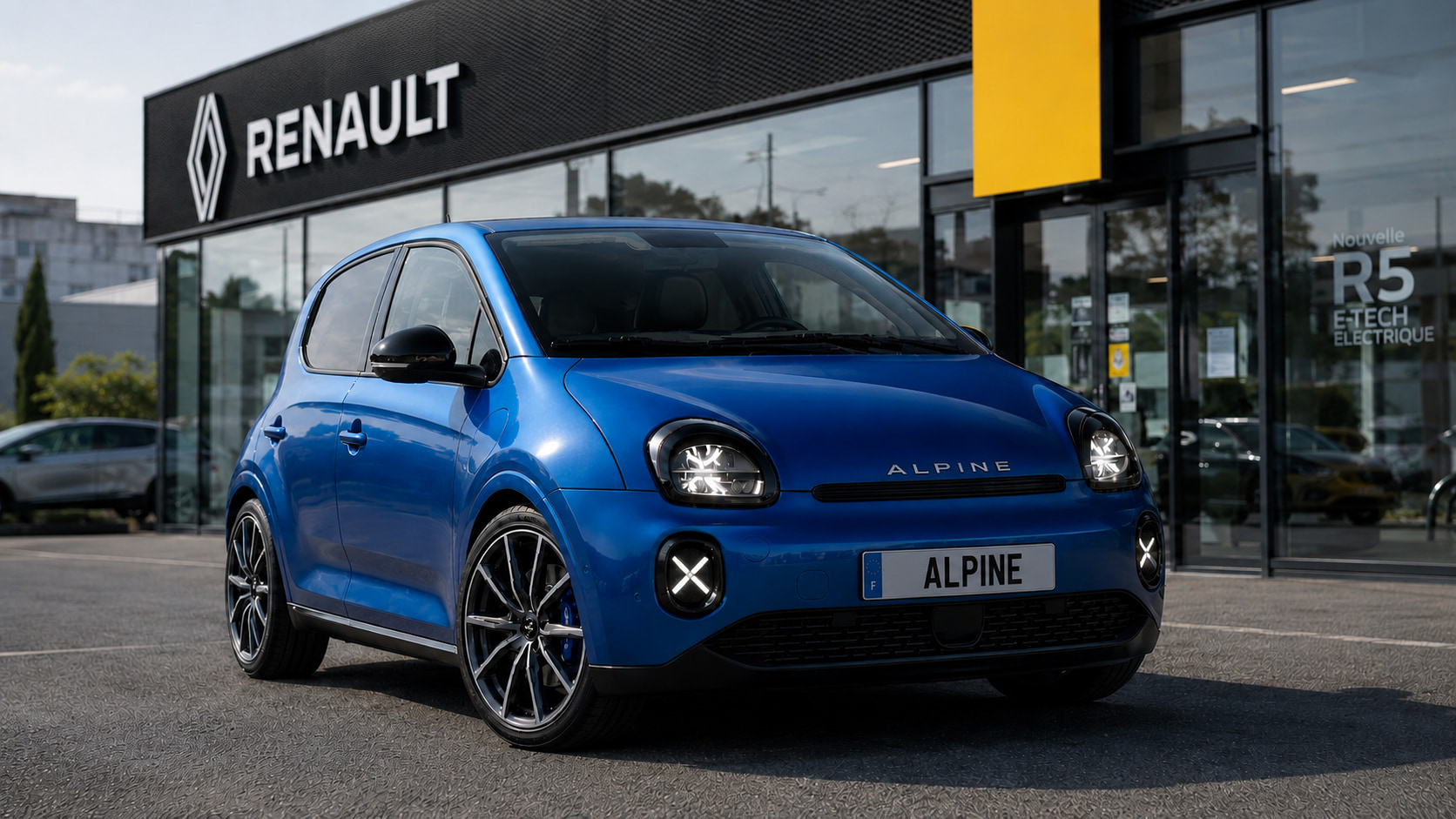
Alpine A190: The Affordable Electric Hot Hatch Alpine Should Build
Few brands have reinvented themselves as successfully as Alpine. The A290 has already shown that an electric hot hatch can be genuinely exciting, but there may still be room for something even smaller. In this Design Studio feature, we imagine the Alpine A190: a compact performance EV based on the Renault Twingo…
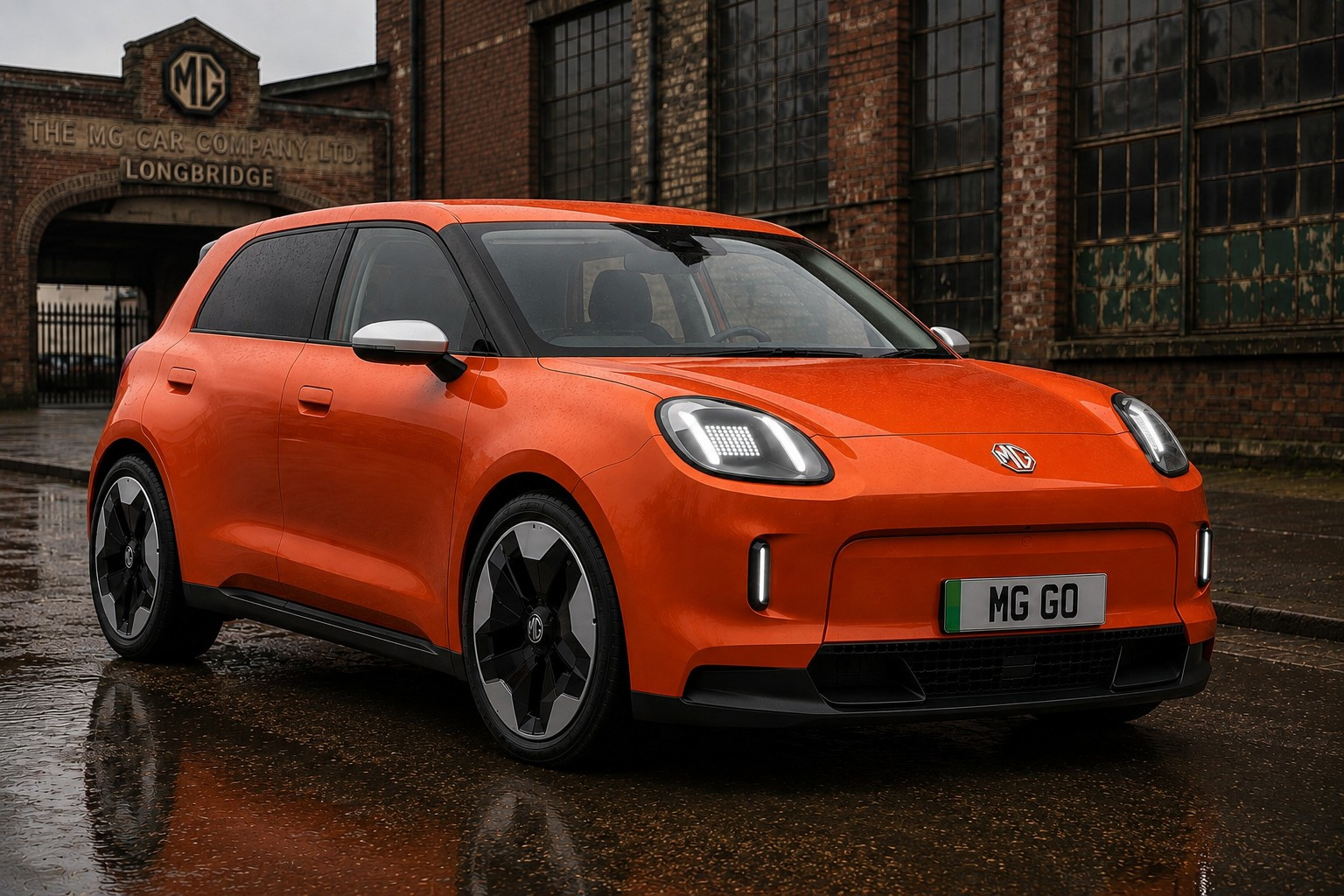
MG GO: Our Vision for Britain's Next Affordable Electric Hatchback
MG has become one of Britain's fastest-growing car brands, but one gap remains in its expanding electric line-up: a compact hatchback sitting below the MG4. In this Design Studio feature, we imagine the MG GO, an affordable electric supermini positioned as the EV sibling to today's MG3. At around four metres long,…
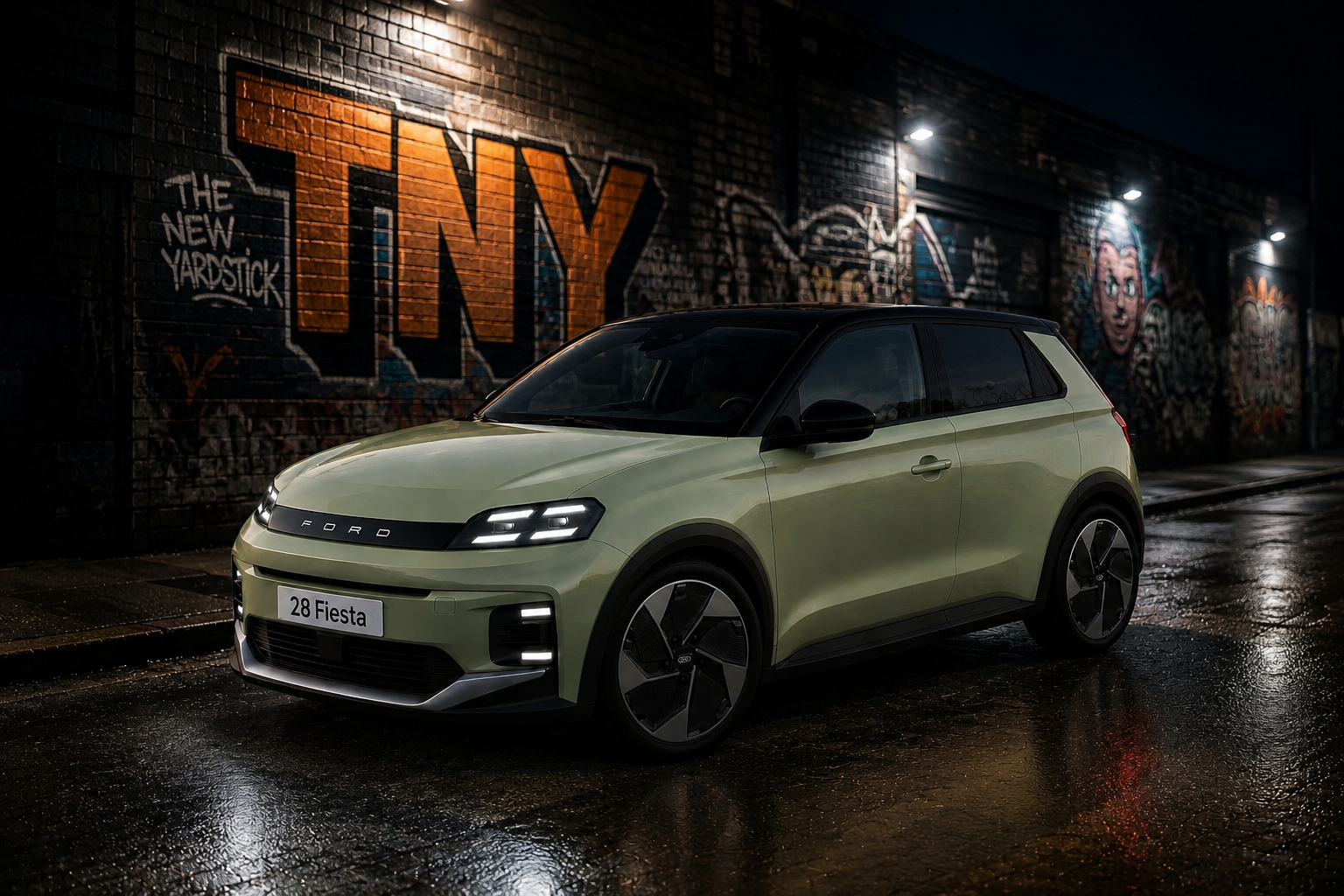
Ford's Next Fiesta and Puma? Renault May Hold the Answer
Ford's European line-up has become increasingly dependent on larger SUVs and electric crossovers, leaving a gap where affordable small cars once defined the brand. With tightening emissions regulations and fierce competition from lower-cost rivals, the company needs a fresh approach if it wants to regain momentum. One solution may already be taking…