Lucid’s UK Push – Cosmos, Earth and a Much Bigger Plan
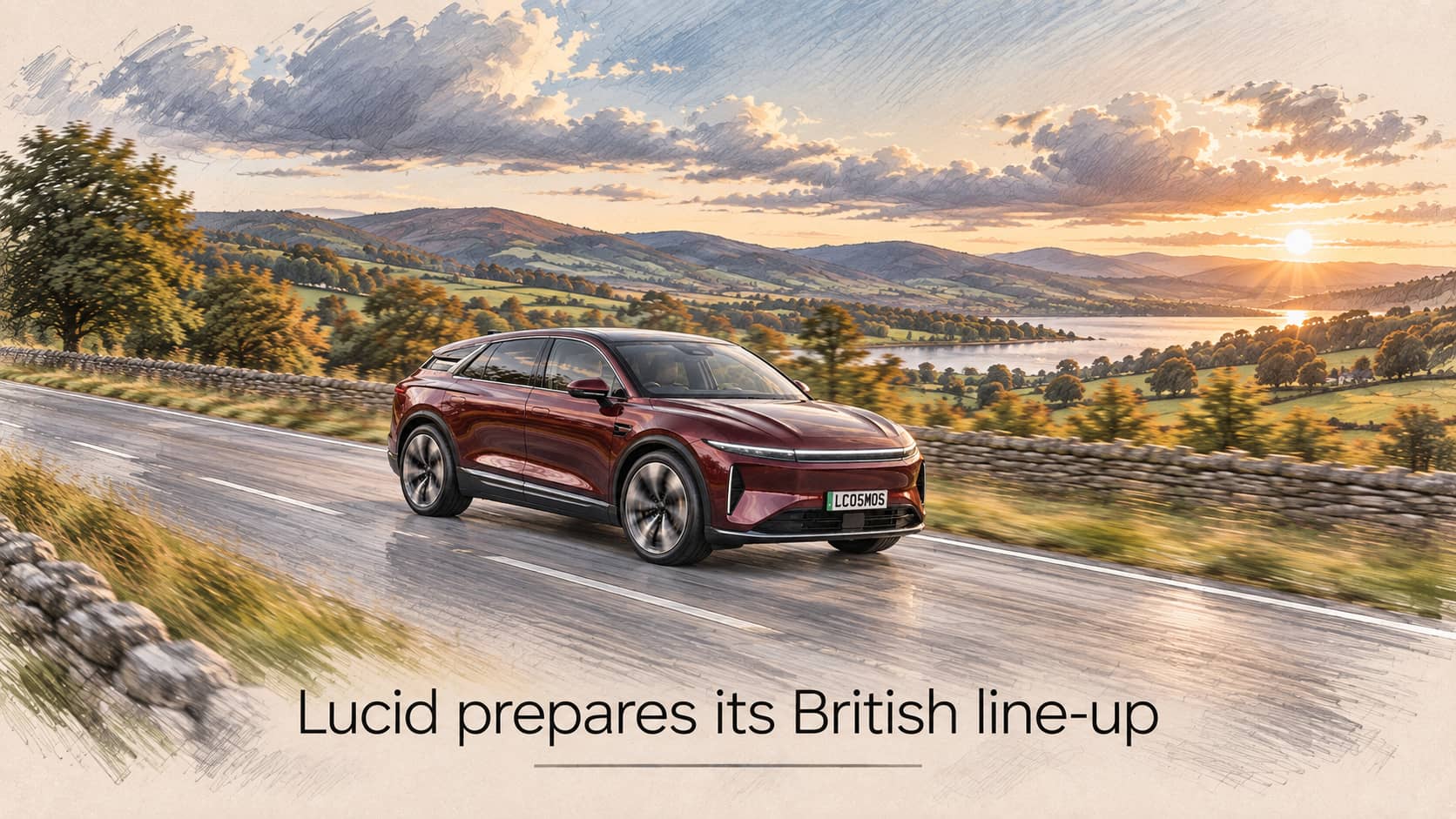
Lucid is in an unusual position. The American EV maker regularly attracts headlines about losses, cash burn and funding requirements, yet at the same time it is expanding its manufacturing footprint, attracting major strategic partners and preparing an entirely new lower-cost vehicle family for markets including Britain.
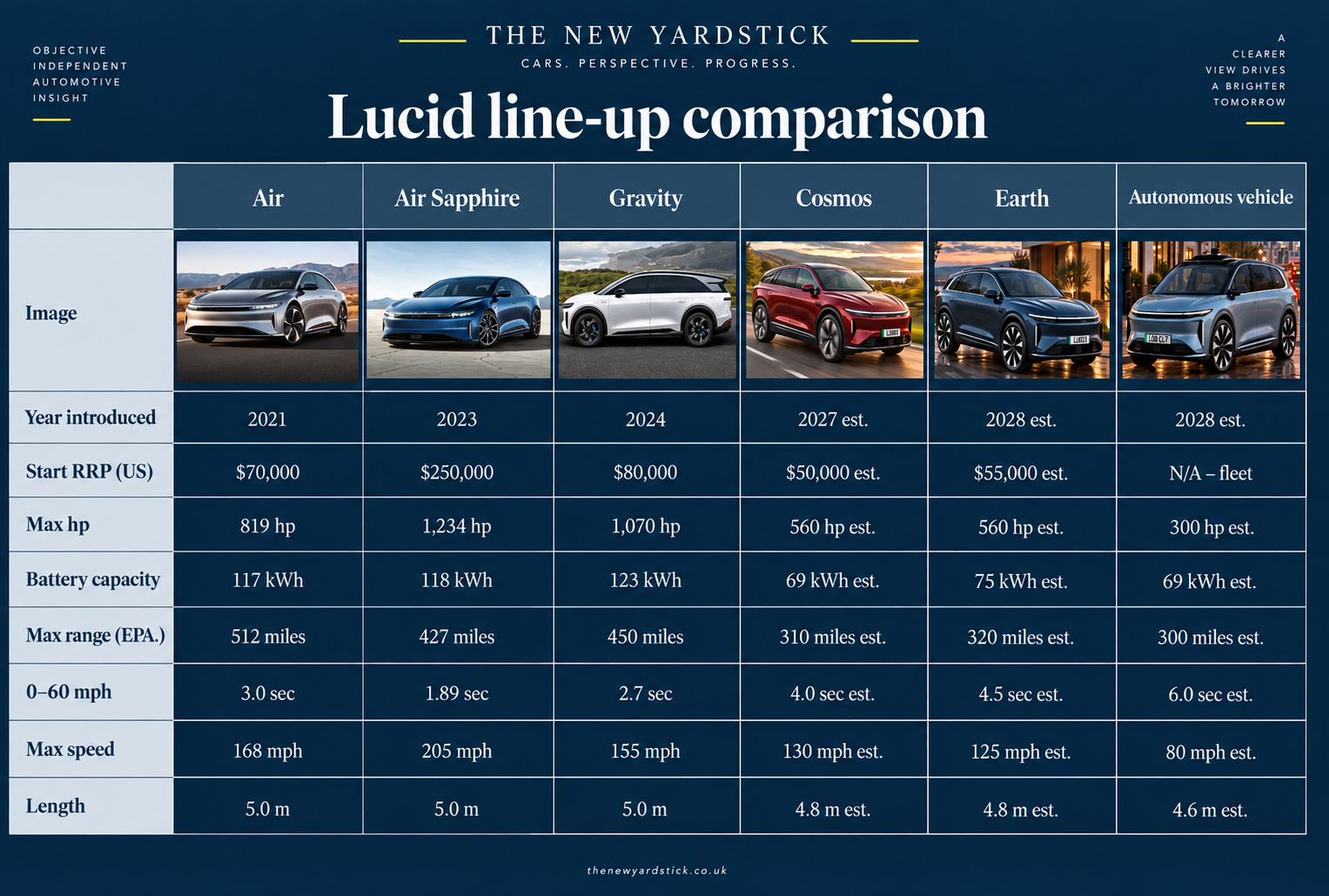
Its current cars already demonstrate just how far Lucid’s engineering can go. The Air Sapphire produces 1,234hp, reaches 60mph in 1.89 seconds and tops out at 205mph, while the opposite end of the Air’s talents is demonstrated by the Grand Touring, which offers up to 512 miles of EPA range — or around 597 miles under WLTP testing.
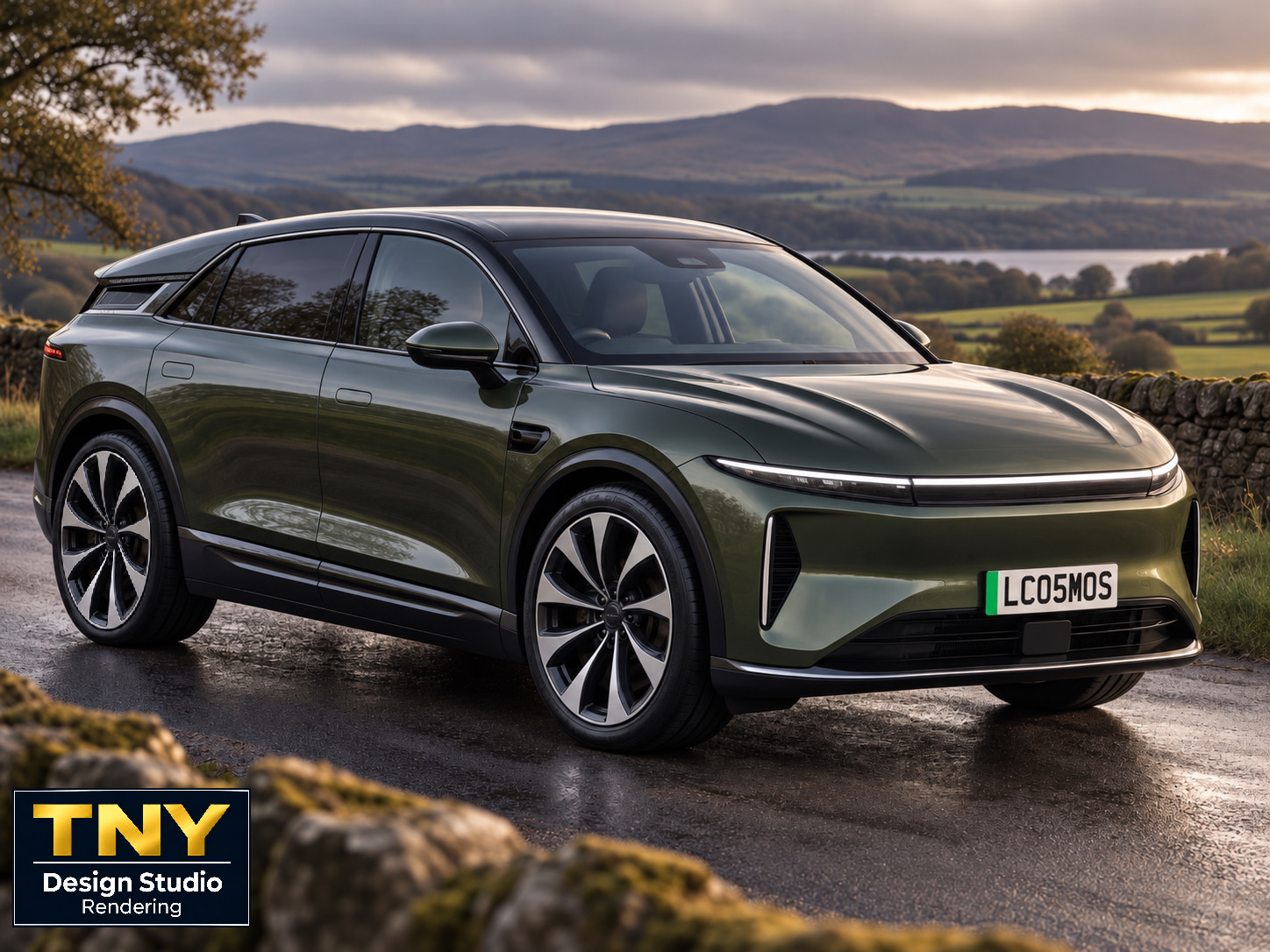
The Cosmos will be the first Lucid developed from the outset with right-hand-drive markets in mind, making it the model expected to finally bring the brand to Britain in 2027. Patent images and development cars have already revealed much of its sleek, cab-forward shape.
Underneath sits Lucid’s new Midsize architecture, using an 800V electrical system and the smaller, cheaper Atlas drive unit. Lucid says the platform will start below $50,000; for Britain, we think around £45,000 is a realistic starting point.
Exact dimensions remain unconfirmed, but its Model Y/EX60 positioning suggests something around 4.7–4.8 metres long, with a long wheelbase prioritising cabin space.
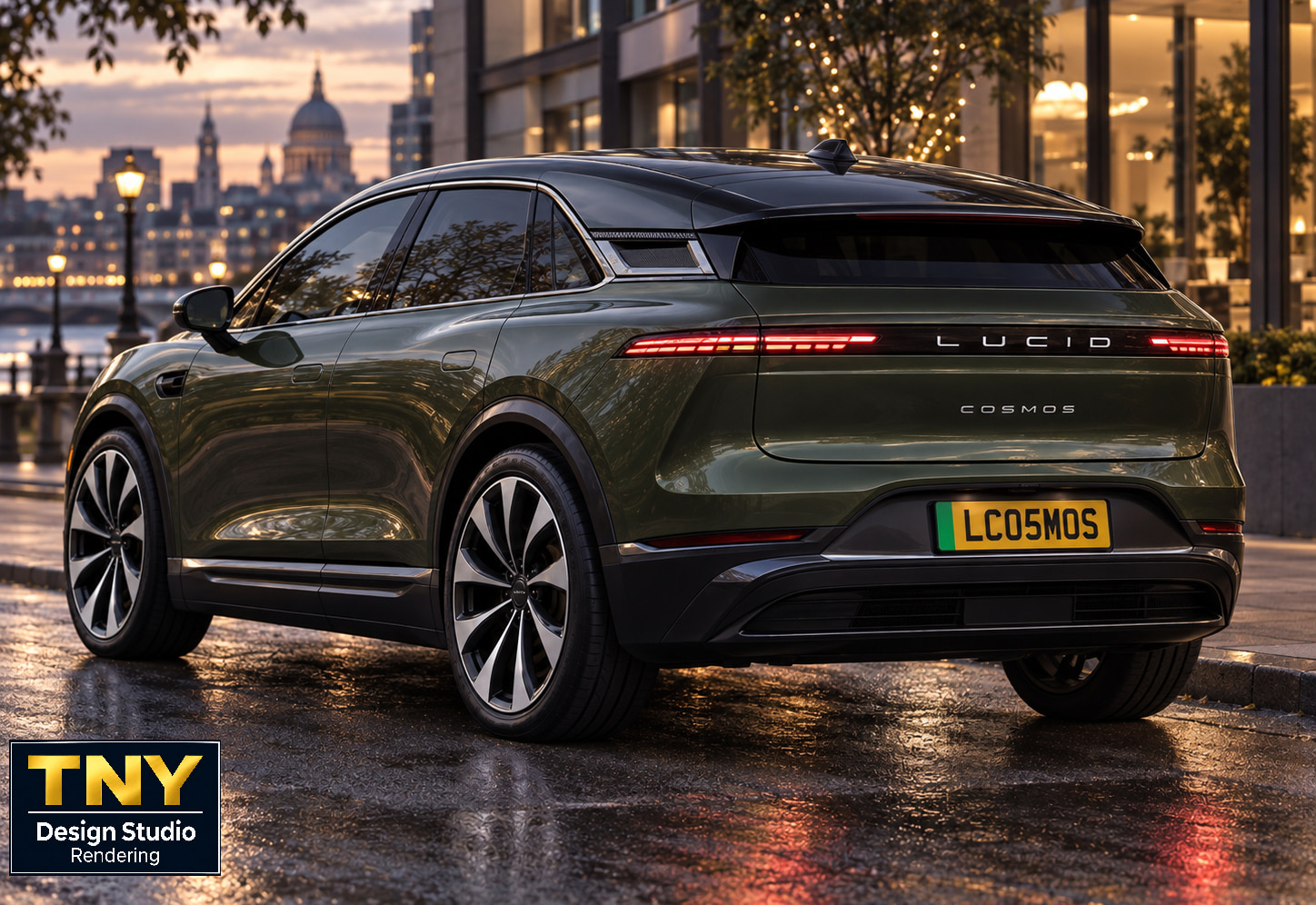
Battery chemistry is another unanswered question. Lucid has not confirmed LFP for Cosmos, although it would be a logical way of controlling entry-model costs; equally, Lucid’s strategy is explicitly based on achieving competitive range with a smaller battery, rather than simply fitting ever larger packs.
We would not expect it to chase the £37,990 Tesla Model 3 on price — Tesla should remain one of Europe’s strongest range-per-pound propositions. Instead, Cosmos looks set to occupy a more premium space: think £42,990 Mazda CX-6e at one end and the £56,860 Volvo EX60 above it, combining a plush cabin with sophisticated EV architecture and Lucid’s particular obsession with efficiency.
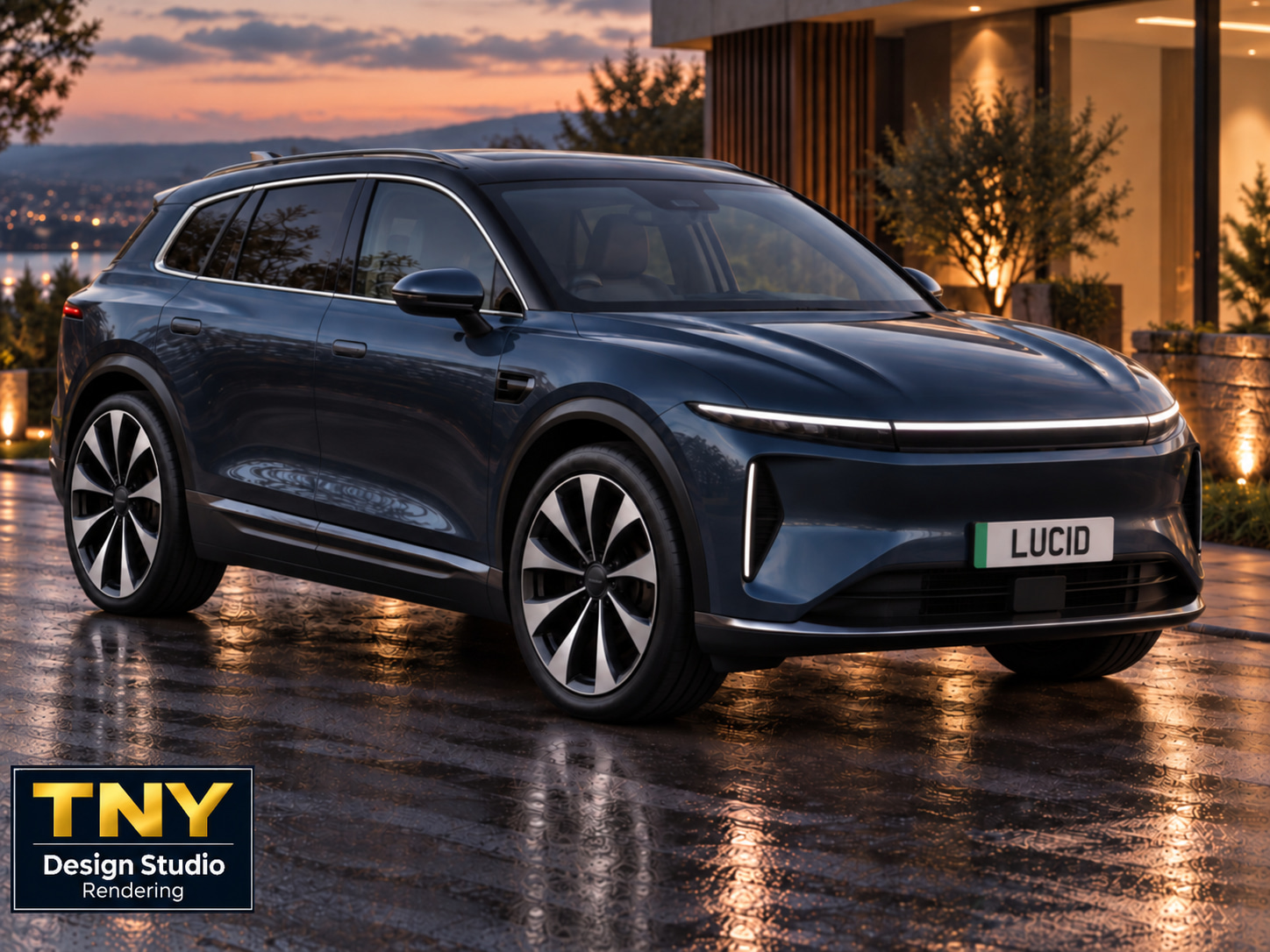
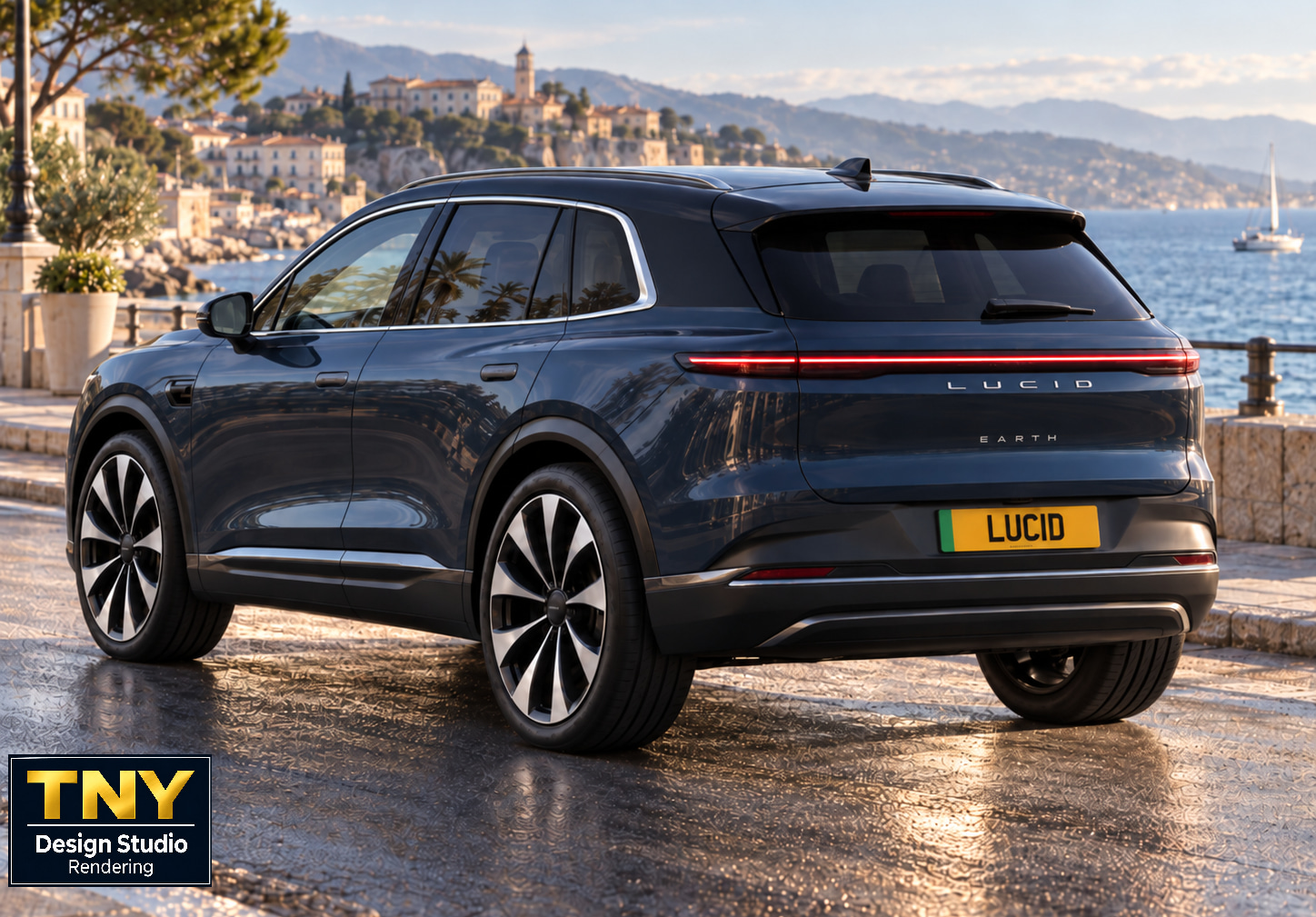
Earth takes the Midsize formula in a more practical direction. Lucid describes it as the more adventurous sibling to Cosmos, and the official covered silhouette suggests a squarer roofline and more upright rear — exactly the sort of family SUV Lucid will need if it wants meaningful volume in the premium midsize market.
Our Design Studio interpretation therefore keeps the same clean Lucid face and low bonnet, but gives Earth a more substantial body and greater emphasis on passenger and luggage space. Underneath, it should share the new Midsize architecture and Atlas drive technology with Cosmos.
For a brand currently best known for expensive Air and Gravity models, Earth could ultimately be the more important product: a direct route into the heart of the premium SUV market.
That combination of capital, manufacturing support and committed demand gives Lucid considerably more room to develop models such as Earth than many younger EV makers have enjoyed.
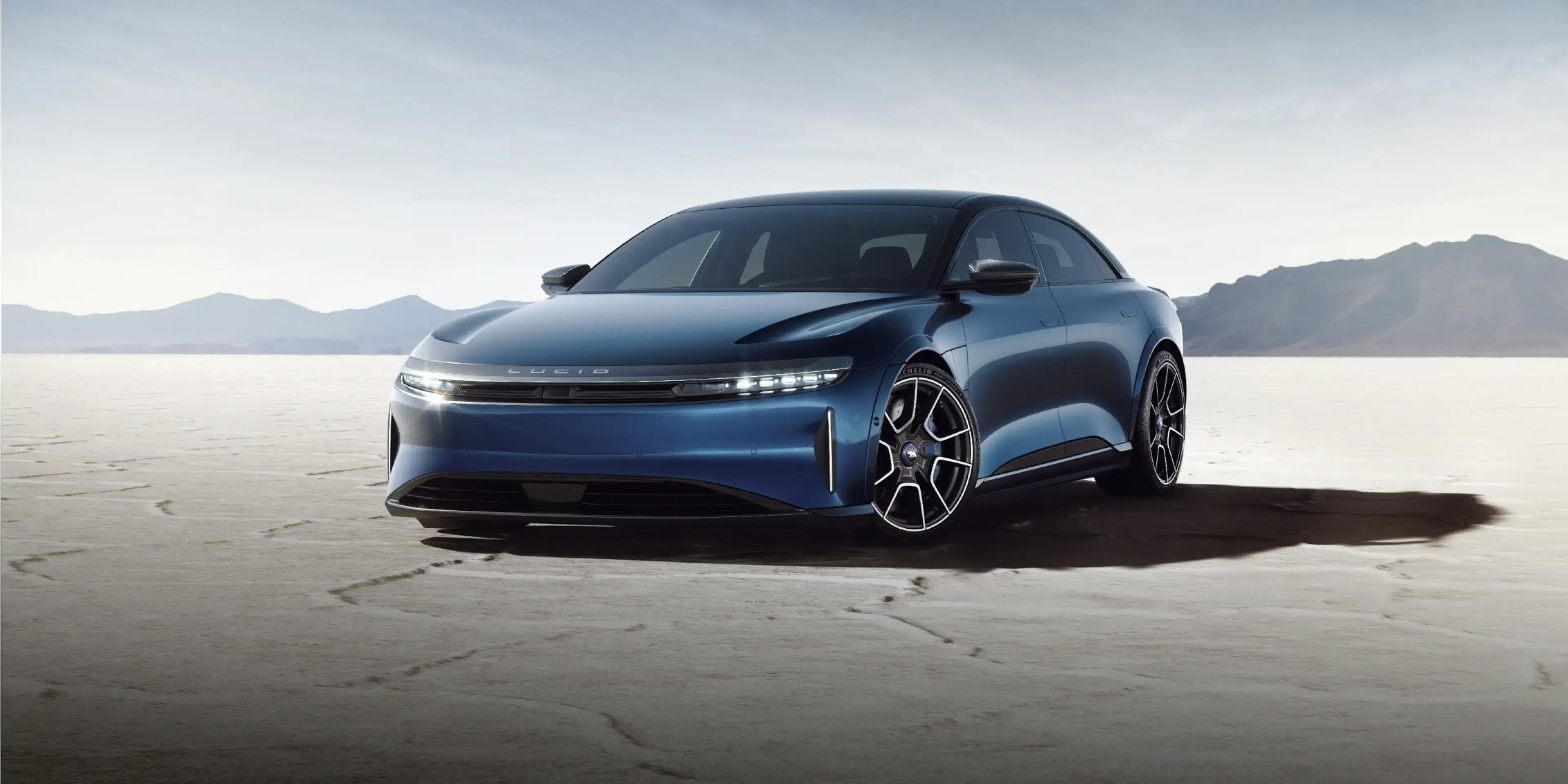
The Air Sapphire shows what Lucid has already learned to do at the very top of the market. Beyond its extreme performance, the Air combines a spacious five-metre luxury-car package with sophisticated software, high-end materials, advanced driver-assistance technology and an exceptionally aerodynamic body despite its striking design.
Gravity has since taken many of those ideas into a large SUV. The challenge now is to bring that same engineering philosophy down into cars costing far less.
Cosmos, Earth and the wider Midsize family will use simpler, lower-cost hardware such as the Atlas drive unit, smaller batteries and greater component sharing, but Lucid is clearly trying to preserve the things that made Air distinctive: efficiency, range, interior quality and genuinely advanced EV architecture. Image Credit: Lucid Motors
The next step takes Lucid beyond conventional private cars. On 17 September 2026, Lucid and European mobility company Bolt announced plans to co-develop an autonomous vehicle around the new Midsize platform.
The announcement did not disclose an investment figure or describe Bolt as taking an equity stake in Lucid, but Bolt intends to own and operate at least 25,000 vehicles across European cities.
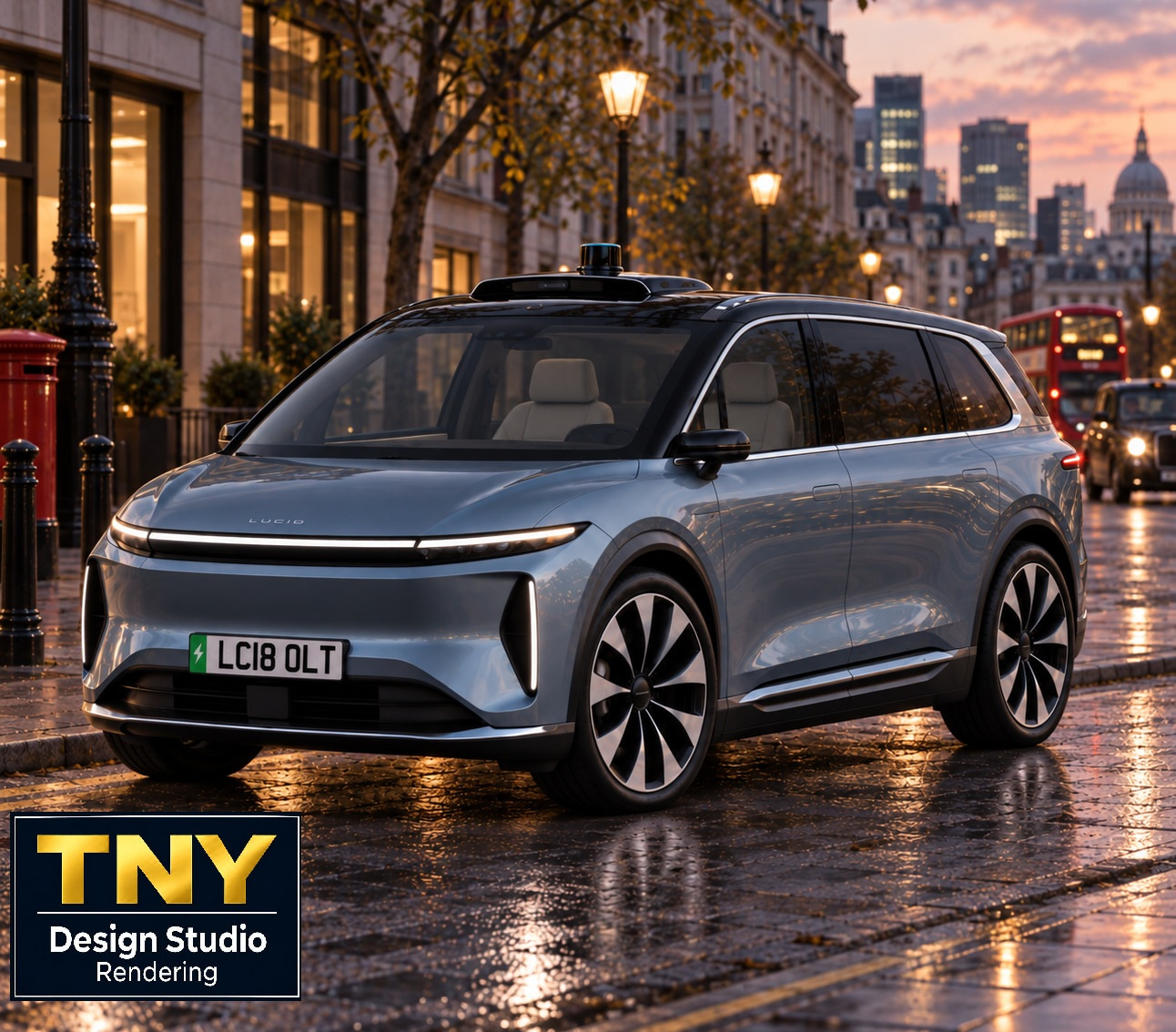
Our Design Studio interpretation imagines what that could mean: a shorter bonnet, long four-seat passenger compartment, no steering wheel and autonomous hardware integrated from the outset, rather than added later. It keeps the clean Lucid lighting and aerodynamic surfacing, but puts passenger space and easy urban use ahead of the more sporting proportions of Cosmos.
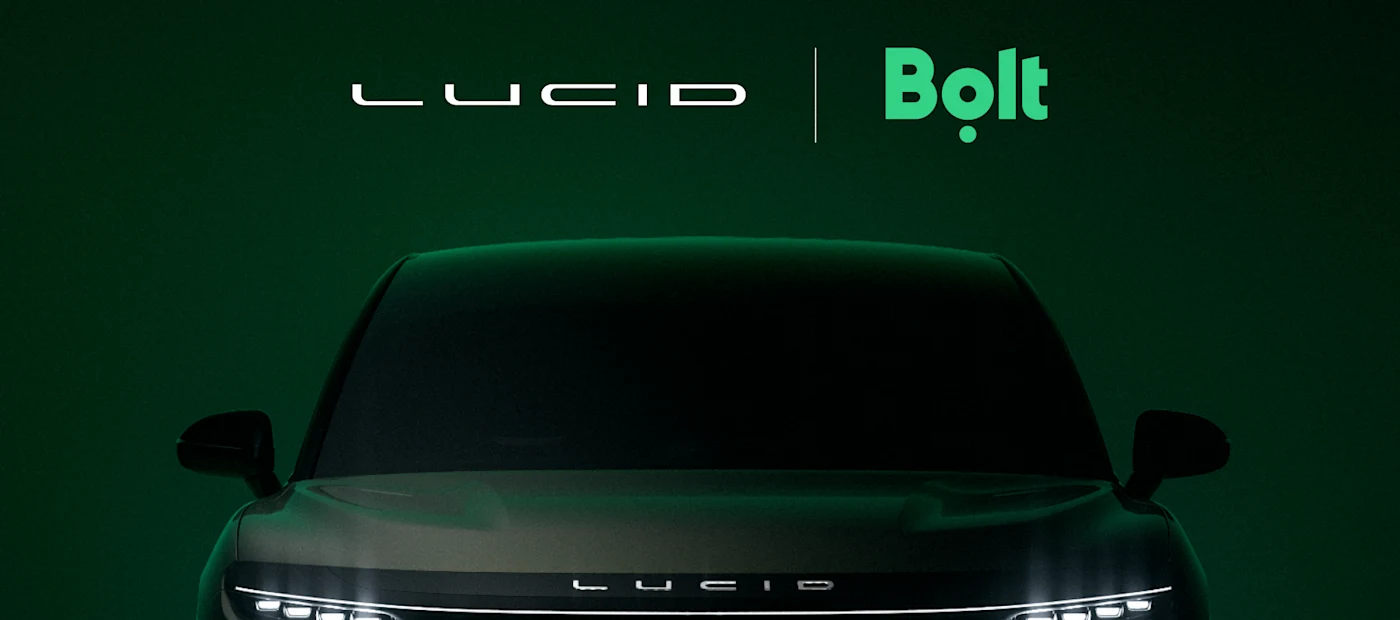
This is not simply another Waymo-style conversion of an existing production car. Lucid and Bolt say they will develop an ADS-ready vehicle from the product-development stage, using NVIDIA’s Hyperion architecture and targeting SAE Level 4 autonomy.
Bolt’s initial 25,000-car commitment forms part of its wider ambition to have 100,000 autonomous vehicles on its platform by 2035, with the Lucids expected to be produced at the company’s expanding Saudi Arabian facility.
That potentially puts the project somewhere between Waymo’s sensor-equipped Jaguar I-Pace approach and Tesla’s purpose-built two-seat Cybercab: still recognisably a car, but designed around autonomous ride-hailing from the beginning. Image Credit: Lucid Motors
Lucid’s challenge is no longer proving that it can build an impressive electric car. Air and Gravity have already done that. The next phase is about scale: taking the efficiency, performance, software and premium feel of those expensive models and making them work in products that can attract far more buyers.
Cosmos and Earth are the key to that transition, while the autonomous programme shows Lucid’s technology could also become valuable well beyond private ownership.
There are still big questions around profitability, pricing and how quickly production can ramp, but Lucid now has something many young EV brands never achieve: a recognisable design language, class-leading efficiency and highly advanced EV engineering, major financial backing and several credible routes to growth.
If the Midsize family lands at the right price, Britain could be seeing Lucid at exactly the point it starts becoming much harder to ignore.
Images: TNY Design Studio renderings are speculative interpretations based on available information at the time of publication. The comparison table combines TNY Design Studio renderings with official Lucid Motors imagery.Data: Prices are approximate US starting prices, rounded to the nearest $5,000 where stated. Estimated future-model figures are marked “est.” Specifications, range and performance figures were correct to the best of our knowledge at the time of publication and may change before production.
You should also read:
Volvo’s 13-Car Plan — Design Studio Explores the New Range
Volvo has changed dramatically under Geely ownership. What was already a respected premium brand has gained the investment, technology and global scale needed to compete far more directly with the likes of BMW and Mercedes-Benz. That is a significant shift from the Ford era, when Volvo produced some excellent cars but often…
Audi’s Next Chapter: A2, E5 and a New Push Upmarket
Audi wants to move upmarket, but its product strategy is starting to pull in two very different directions. In China, the new E5 Sportback shows just how far the brand can go, combining 800V charging, advanced software and a new generation of digital architecture developed with SAIC. In Europe, meanwhile, Audi is…
Hyundai's 100-Car Plan: What Comes Next for One of the World's Fastest-Changing Car Makers?
Twenty years ago, Hyundai was still fighting to prove that it could match the established European and Japanese brands. Today, that description feels almost unrecognisable. Hyundai has become a genuinely global manufacturer, producing everything from affordable small cars to sophisticated EVs, large SUVs and increasingly serious performance models. Now it wants to…
Dacia Bigster Not Big Enough? 6 Bigger SUVs for Under £30,000 Pre-Registered
The Dacia Bigster is one of the largest family SUVs available for under £30,000, offering exceptional value and one of the biggest boots in its class. However, every manufacturer packages its interior differently. (Image Credits: Dacia) The Bigster makes excellent use of its footprint by prioritising luggage space, meaning rear passenger accommodation…
The EV1 Shows How Kia Plans to Keep City Cars Alive
The Kia EV1 arrives at a pivotal moment for Europe’s smallest cars. With the long‑running Picanto finally reaching the end of its lifecycle, one of the last petrol city cars on the continent is bowing out. Kia’s decision to replace it with a fully electric model reflects a wider industry shift: emissions rules,…