Finding the Magic in Jazz: The Case for a Renault-Based Honda EV
Long before hybrids became mainstream, the original Insight arrived with its aerodynamic bodywork and lightweight engineering, becoming one of the world's first mass-produced hybrid cars. Honda spent decades building a reputation for clever packaging and innovative powertrains.
Its problem is Europe.
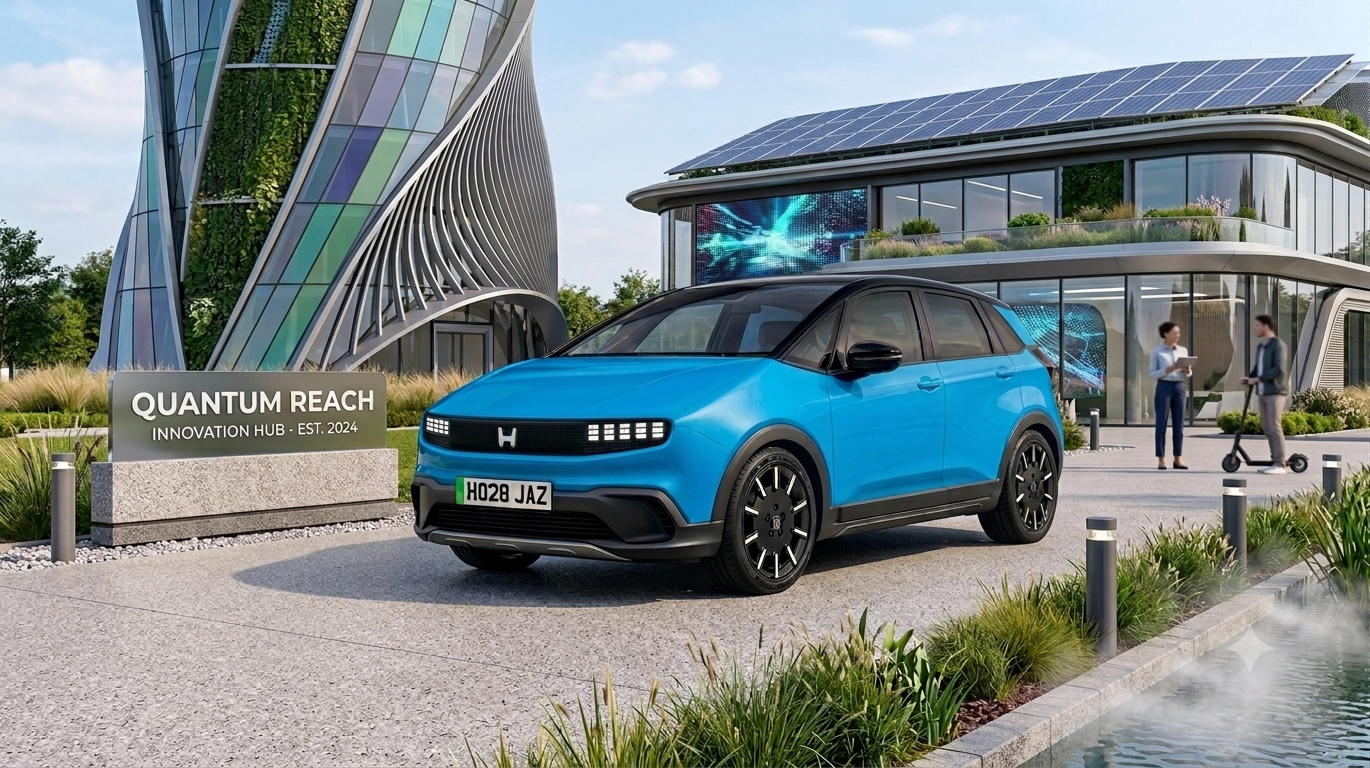
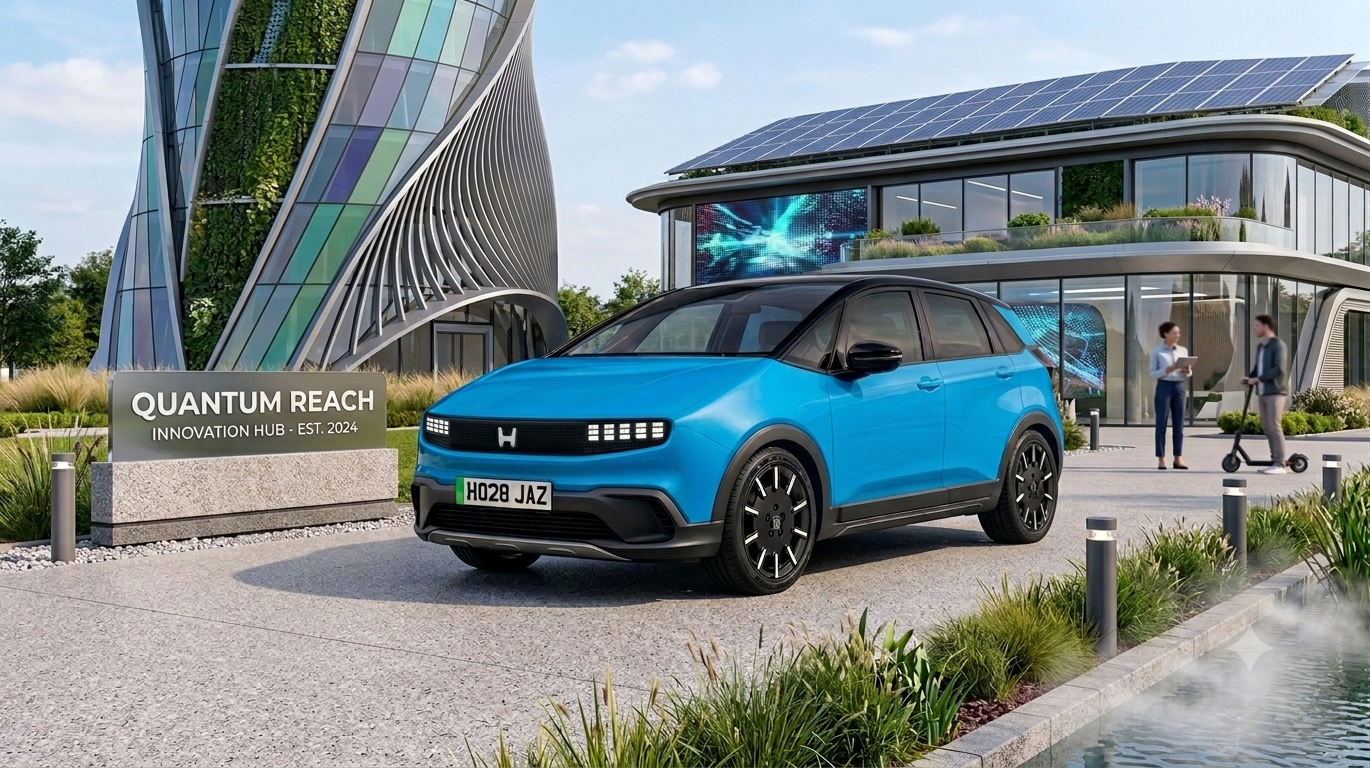
Our exclusive rendering explores how a Honda Jazz EV could look. By leveraging Renault-Nissan technology, Honda could potentially deliver a sub-£30,000 electric Jazz. AMPR's thin, flat battery architecture could help preserve interior and cargo space, allowing the Jazz to retain its famous Magic Seats. (Image credit: The New Yardstick)
Honda sold fewer than 72,000 cars across Europe last year, and since closing its Swindon plant, it no longer has a manufacturing presence on the continent. With the quiet departure of the e:Ny1, its EV lineup is in flux. While the upcoming Super-N will address the city-car gap, its niche nature is unlikely to provide the volume needed to move the needle on Honda’s European emissions position.
As it stands, aside from the £50,000 CR-V PHEV, Honda’s lowest-CO₂ model remains the 102g/km Jazz Hybrid.
That is becoming a strategic liability. With European fleet targets tightening—and averages of around 93.6g/km required—relying on hybrid alone is no longer a sustainable long-term play. For Honda, the answer may not be another expensive, clean-sheet EV project that struggles to find volume.
It could simply involve finding the magic in Jazz.
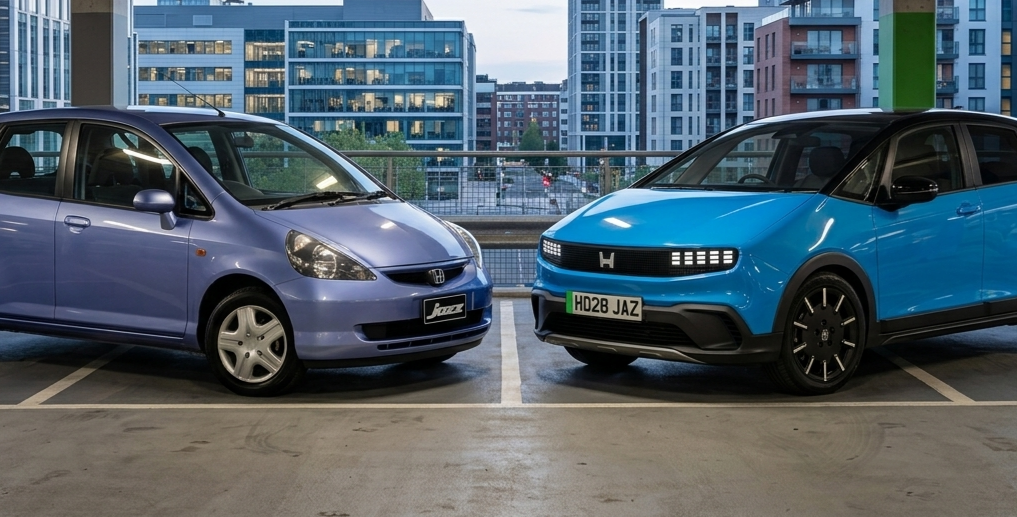
No Jazz has been manufactured in Europe since 2014. Utilising Renault's French factory would give Honda's line-up a European-built model, leaving the brand less vulnerable to future regulations. Crucially, AMPR's thin battery architecture could allow Honda to preserve one of the Jazz's defining features: its exceptionally flexible interior packaging. (image credit: The New Yardstick)
Honda's growing alignment with Nissan and, by extension, the broader Renault-Nissan Alliance ecosystem could provide exactly the technology it needs. By tapping into established architectures like the AMPR platform, Honda could solve its European emissions and volume challenges in one stroke. This wouldn't be an admission of defeat; it would be a strategic acceleration. An AMPR-based Jazz could potentially undercut the e:Ny1 by up to £12,000, while offering more space in a smaller footprint.
The idea could extend beyond Europe. In Asia, a Jazz EV could neatly bridge the gap between the Fit and the hybrid Freed. The upright mini-MVP continues to be popular in these markets, while the Fit and Freed offer Hybrid propulsion, Honda has yet to introduce an EV in this body style.

A 4.2-metre Jazz EV could sit neatly between the Fit and Freed, potentially giving Honda a practical electric family car for both European and Asian markets. (AI-generated imagery featuring Honda Fit and Freed models)

The New Yardstick — Custom Design Sketch: while the Honda e showed design personality, and the 0 concept previews a premium ambition, it's the humble Jazz that could provide Honda with EV volume in Europe. Renault's LFP batteries, Jazz's Magic Seats and Honda's reputation for clever packaging in a single package.
The irony is that Honda has built its reputation on practical, cleverly packaged family cars.
What Honda arguably lacks is not technology, but a volume electric model for ordinary buyers. The smartest electric vehicle Honda could build for Europe isn't a flagship concept or a niche city car. It’s the one their customers already know, reimagined for the electric age. Sometimes, the most 'disruptive' move a legacy automaker can make is to stop reinventing the wheel—and start electrifying the Magic Seats.
Whether Honda ever builds a Renault-based Jazz EV is another question entirely. But the ingredients already exist: a trusted nameplate, an established alliance, a proven electric platform and a growing need for affordable, practical EVs in Europe. For a company that built its reputation on making clever family cars rather than headline-grabbing supercars, finding the magic in Jazz might not just be the safest option. It could be the most Honda solution of all.
You should also read:
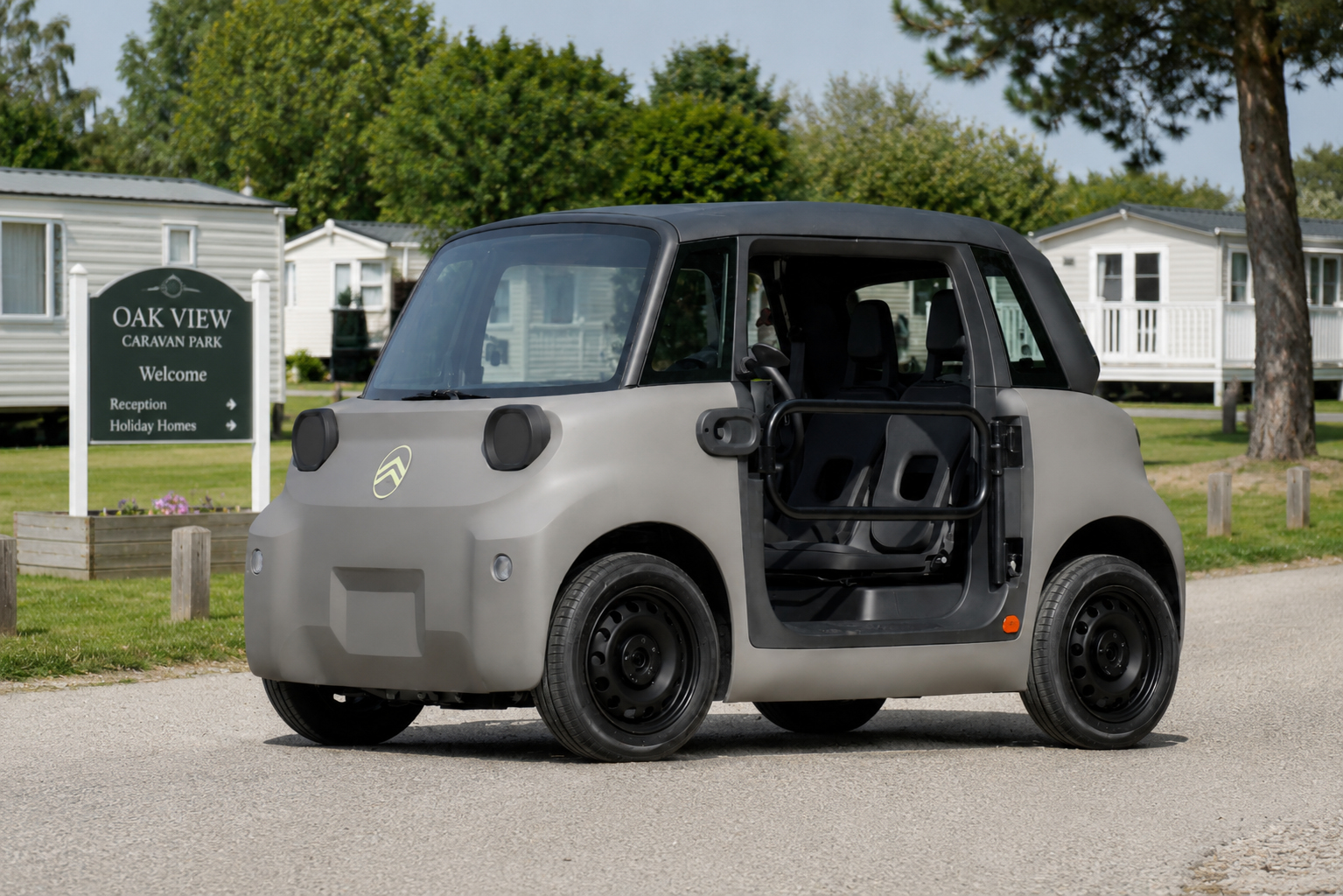
Beyond the Highway: The Case for a Stripped-Back, Industrial Ami
The Citroën Ami is one of the smartest urban vehicles of the modern era. Yet despite its tiny dimensions, minimal battery pack, and quadricycle classification, it still costs around £8,000 in many markets. The reason is simple: it has been engineered to operate on public roads. But what if it didn’t have…